Reviewed · BOHOL TOURS
Beginner Freediving Course (with Bonus Session)
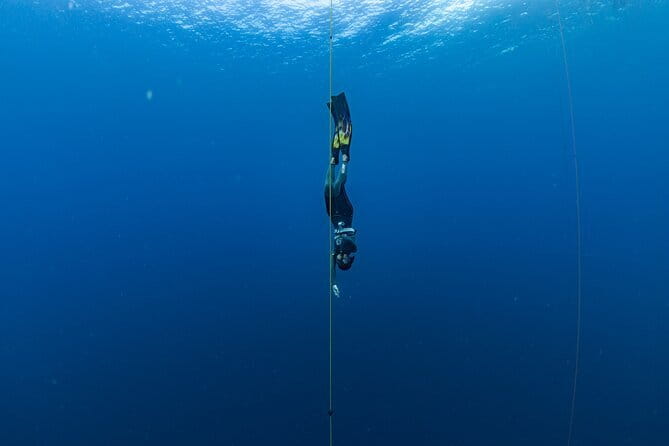
Breathe less, notice more. This Panglao course offers a calm introduction to SSI Level 1 freediving, with breathing work, safety lessons, pool practice, and open-water training at Napaling Reef. I like the small maximum of four participants, which gives instructors room to watch each person closely. I also like that hotel, airport, or port pickup on Panglao Island is included, along with equipment, an unedited photo and video package, and a completion certificate.
The main caution is the price: $416.70 per person is a serious investment for a beginner course. The training, gear, small group, and certificate help justify it, but lunch costs extra, and the published schedule describes the course as both 2.5 days and approximately three days. Confirm the exact timing, including the bonus session, before you pay.
In This Review
- Key points to know before booking
- Why this Panglao course is different from ordinary scuba
- Your first morning at Freedive Academy Panglao
- Breathing, relaxation, and pressure control
- Pool practice before the sea
- Napaling Reef and the open-water sessions
- What the $416.70 price includes
- Who will get the most from this experience
- The teaching style and safety culture
- Practical details that can make the course easier
- Is this beginner freediving course worth booking?
- FAQ
- Where does the freediving course take place?
- How long does the course last?
- How deep can beginners learn to go?
- Is equipment included?
- Is hotel pickup included?
- Is lunch included in the price?
- How many people can join the course?
- Can I cancel for a full refund?
Key points to know before booking
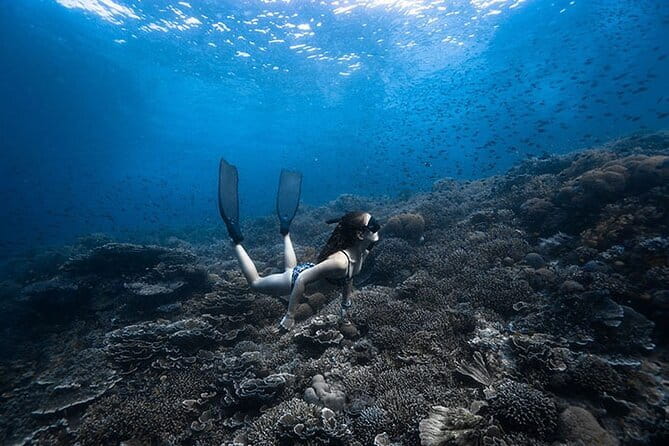
- SSI Level 1 training reaches up to 20 meters: The course teaches the foundation needed for a maximum stated depth of 65.5 feet, without tanks.
- A maximum of four participants keeps instruction personal: This matters when breathing, pressure control, and safety require close attention.
- Napaling Reef provides the open-water setting: Pool work comes first, followed by practice in the sea.
- Safety is treated as a core skill: Lessons cover pressure-related issues, breath-hold methods, relaxation, and in-water safety procedures.
- Pickup and course equipment are included: Panglao Island hotel, airport, and port transfers make the three-day plan easier to manage.
- Lunch is the one clear daily extra: You can order it a day ahead for about 250 PHP.
Why this Panglao course is different from ordinary scuba
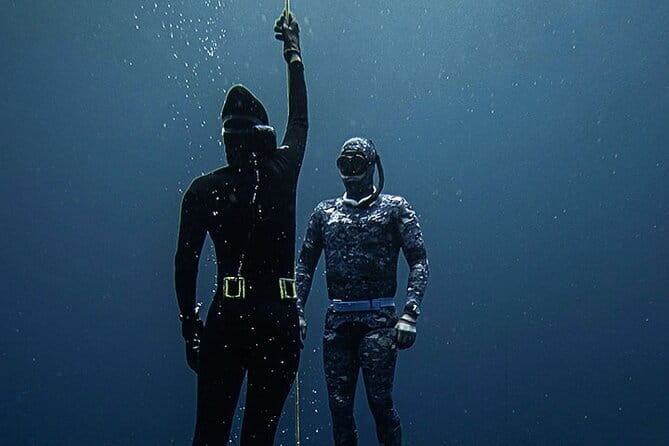
Freediving strips away much of the hardware associated with scuba. There is no tank on your back, no regulator in your mouth, and no steady stream of bubbles between you and the sea. Instead, you learn to prepare your breath, relax your body, equalize pressure, and move with control.
That simplicity is appealing, but it is not casual snorkeling. Holding your breath at depth requires proper training, and safety work is not a formality. The course puts breathing technique, relaxation, pressure problems, and rescue awareness at the center of the experience.
I would recommend this format to anyone curious about freediving but unsure how to begin. You do not need to figure out breath-hold technique from internet videos or copy what an experienced swimmer does. The point of a beginner course is to build habits slowly, with an instructor watching your form and comfort level.
The course is offered through AIDA, SSI, and Molchanovs programs, with the beginner options described as AIDA 2, SSI Level 1, and Molchanovs Wave 1. The experience described here follows the SSI Level 1 format, though you should confirm the agency and certification track selected at booking.
More Bohol trips:
- Bohol: Boat Tour to Sandbar and Snorkeling with Turtles
★ 4.3 · 186 reviews - Bohol Chocolate Hills, Tarsiers & Loboc River Shared Tour
★ 4.5 · 35 reviews - Private Bohol and Chocolate Hills with Loboc River Cruise
★ 4.5 · 29 reviews
Your first morning at Freedive Academy Panglao
The course begins at Freedive Academy Panglao on Napaling Drive 1, Panglao, Bohol. The stated operating hours are 8:00 AM to 5:00 PM every day, giving the school room to arrange a morning start and return to the same meeting point.
Pickup is included from a Panglao Island hotel, airport, or port. That is useful on a course spread over several days because you avoid arranging separate transport for each session. It also helps if you arrive without a rental vehicle or are carrying fins and other equipment.
The opening work takes place in the classroom and pool. Expect an explanation of freediving safety procedures, breath-hold skills, relaxation, and pressure-related concerns. These subjects may sound technical, but they are the part that lets you enjoy the sea with more confidence later.
The pool is especially valuable for beginners. It gives you controlled water conditions before you deal with open-water depth. You can concentrate on how your body feels, how you recover after a breath hold, and how well you stay relaxed without the added movement of the sea.
The instructors are described as patient and encouraging, with specific praise for Teo, Jomari, Ramar, Ven, Rashid, Rea, Edwin, Olga, Jomay, Scott, Vincent, Misha, and others on the academy team. That range of names suggests a sizable teaching group, but your actual instructor depends on the schedule and should be confirmed in advance.
Breathing, relaxation, and pressure control
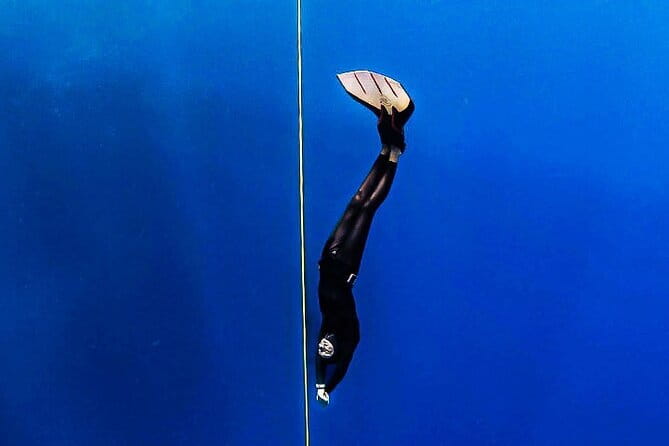
The most useful part of a beginner class is not reaching a dramatic number on a depth gauge. It is learning how to stay calm and efficient in the water.
The course covers breathing and breath-hold methods, along with relaxation. You will work on preparing before entering the water, avoiding needless tension, and returning to normal breathing afterward. These skills matter because anxiety can make a short breath hold feel much harder than it should.
Pressure is another key subject. As you descend, the water presses more strongly against your ears and other air spaces. The course discusses pressure-related issues and teaches the foundation for safer equalization. If your ears hurt, you should treat that as a reason to stop and ask for help, not as a challenge to push through.
The stated target is up to 20 meters, or 65.5 feet. That is a maximum course depth, not a promise that every participant will reach it. Your comfort, technique, health, and instructor assessment all matter. A good beginner experience is one where you finish with better control, not one where you force a particular number.
The small group makes this part more useful. With no more than four participants, an instructor has a better chance of noticing tension, rushed movement, or a problem with equalization. Several participants specifically praised the team for putting safety first and for being patient with beginners.
Pool practice before the sea
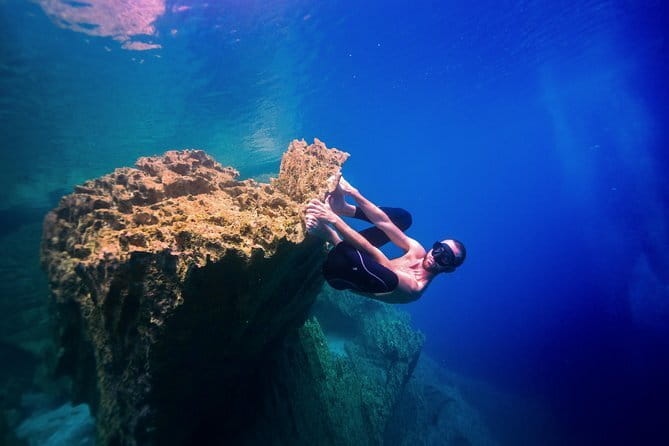
Pool sessions offer a sensible bridge between theory and open water. You can practice breath holds and relaxation without having to manage currents, visibility changes, or the movement of a reef.
This stage also helps you understand how equipment feels. Snorkeling equipment is included, and the academy provides the gear needed for the course. The information does not specify every item included or whether personal items are recommended, so ask what is supplied if you have particular equipment preferences.
I like the order of the program: classroom first, pool second, open water after that. It gives you a chance to make mistakes in a controlled setting. The course is not just a sightseeing trip with a short safety talk attached. It is structured training.
The three-day format also gives you more time than a single introductory session. The formal course duration is described as 2.5 days, while the tour summary calls it approximately three days and labels the experience with a bonus session. Since the exact bonus arrangement is not explained, ask whether it is an additional pool or open-water practice period, and when it takes place.
A completely different kind of day out:
- Bohol Chocolate Hills, Tarsiers & Loboc River Private Tour
★ 4.5 · 13 reviews - Bohol Tour Package: 3-Day Paradise Adventure
★ 4.6 · 12 reviews - Bohol Countryside Tour to Chocolate Hills and Loboc River
★ 4.5 · 11 reviews - Bohol Countryside Tour: Chocolate Hills, Tarsier and Loboc River
★ 4.5 · 10 reviews
Napaling Reef and the open-water sessions
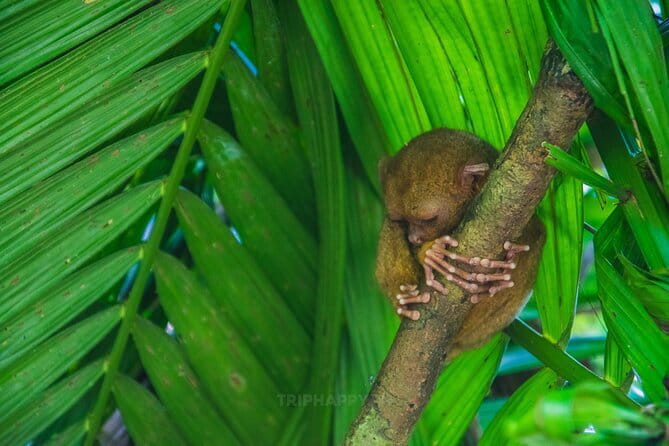
The open-water portion takes place at Napaling Reef, one of the named stops on the program. This is where the classroom ideas begin to make sense in a natural setting.
The sea adds real conditions that a pool cannot copy. You may notice changes in visibility, movement, and body position. The reef setting also gives you something to look at, rather than asking you to practice in an empty stretch of water.
The broader academy experience includes snorkeling around reef life and swimming with sardines, and several participants singled out the sardine experience as a memorable part of their time in the area. However, the beginner course information does not promise a specific sardine encounter, so I would not book this course solely for that sight. Its main purpose is instruction.
The named stop is Napaling Reef, but the schedule does not provide exact session times, water depth for each exercise, or a detailed sequence of open-water skills. That is normal for a course shaped around conditions and student progress. Still, ask for the daily plan if you need to coordinate ferries, flights, or other activities.
The activity ends back at the academy meeting point. Allow flexibility around the course rather than planning a tight connection immediately afterward, especially on the final day.
What the $416.70 price includes
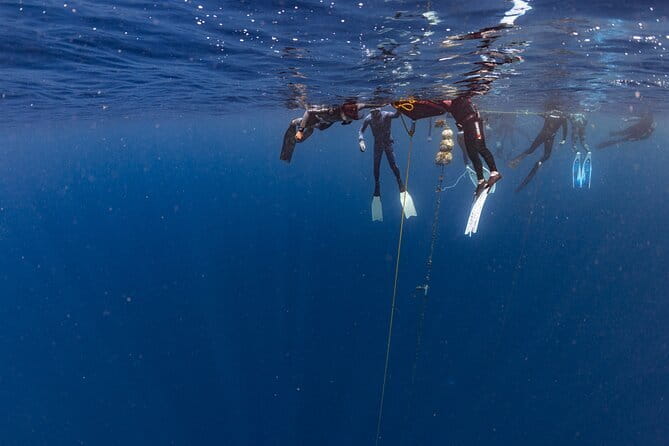
At $416.70 per person, this is not the cheapest way to spend time in Panglao. It is also more than a simple snorkeling trip. You are paying for a multi-day instructional program, a recognized beginner certification path, equipment, small-group teaching, transfers, and practice in both pool and open water.
The maximum group size of four is one of the strongest value points. Private instruction would normally cost more, while a large class can make breath-hold training feel rushed. Here, you get a more personal format without booking a fully private course.
The completion certificate adds practical value if you want to continue with more advanced freediving later. The course is designed as a foundation, so the certificate can help show that you completed beginner-level training with the chosen agency.
The included unedited photos and videos are a pleasant extra. They let you keep a record of the experience, although you should think of them as a bonus rather than the main reason to book. The listing does not specify how many files you receive, when they are delivered, or whether every participant is photographed during every session.
All fees and taxes are included. Lunch is not. You can order lunch one day ahead for about 250 PHP, which is a modest expense but worth remembering during a long course day. Ask the academy about meal timing if you have dietary needs, since the available information only gives the approximate price.
Who will get the most from this experience
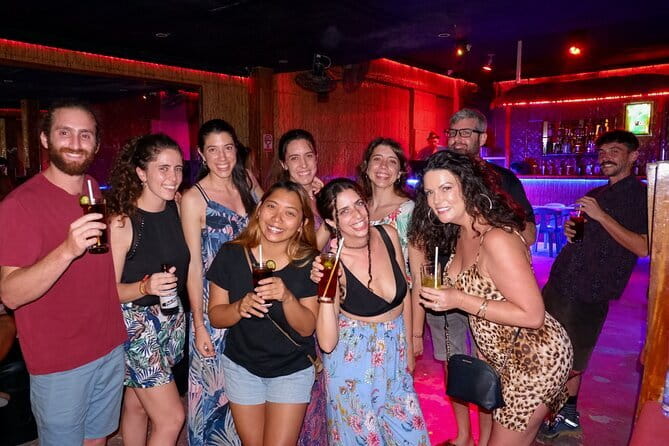
This course suits you if you want proper instruction rather than a quick introduction. It is also a good match if you enjoy water sports but find scuba equipment bulky or distracting.
You should be comfortable entering the water and willing to follow instructions carefully. The information says most participants can take part, but it does not give detailed medical, swimming, or age requirements. If you have a health condition, are unsure about breath-hold activity, or are not confident in the water, ask the provider before booking.
The course can work for solo participants, couples, or siblings. One participant described taking the three-day beginner course with a brother and praised the facility, equipment, staff, and instructors. The small group also makes it easier for companions with different confidence levels to receive individual attention.
It may not suit you if you only have one free afternoon in Panglao. Although the program is beginner-friendly, it is still a 2.5-day course, or about three days depending on how the bonus session is counted. You need to commit enough time for classroom work, pool sessions, and open-water practice.
It is also not ideal if you want guaranteed maximum depth. The 20-meter figure is the course limit, not a personal promise. Your actual progress should be based on safe technique and comfort.
The teaching style and safety culture
The strongest pattern in the available feedback is the praise for patient instructors and a strong safety focus. Teo is described as careful and encouraging. Jomari is praised for being helpful, patient, and fun. Ramar is described as clear about the sport and attentive to safety.
Other instructors receive similar praise, including Rea for her caring approach, Edwin for a relaxed manner, and Ven and Rashid for guiding beginners step by step. I would consider that especially important here because a calm instructor can make the difference between learning to relax and spending the whole session tense.
The academy also appears to welcome people who are new to the sport. Some participants with older parents enjoyed related snorkeling sessions, and one account says the staff were supportive of people with limited swimming confidence. That does not replace a formal ability requirement, but it suggests the instructors are used to adapting their approach.
Freediving safety depends on more than a friendly attitude. You need clear instruction, close supervision, and the willingness to stop when something feels wrong. The course description gives safety procedures and pressure issues a central place, which is exactly what I want to see in a beginner program.
Practical details that can make the course easier
Bring enough time and patience for all three days. The schedule is not a quick activity you squeeze between beach visits, and your progress may depend on how rested and relaxed you feel.
Wear comfortable swim clothing and plan for repeated time in the water. The academy provides snorkeling equipment, but the available information does not list every piece of gear or mention personal items such as towels, water, or sun protection. Ask before arrival if you want a precise packing list.
Use the included pickup if you are staying on Panglao Island or arriving through the local airport or port. Confirm your pickup location and timing at booking, particularly if you are arriving on the same day the course begins.
Keep your meals simple and planned. Lunch can be ordered a day ahead for about 250 PHP, but it is not included in the price. You may prefer to arrange lunch through the academy rather than leave the training area in the middle of the day.
The mobile ticket is convenient, and booking confirmation is provided at the time of reservation. Free cancellation is available if you cancel at least 24 hours before the start time. Cancellations or changes made inside that window are not accepted for a refund, with cut-off times based on Panglao local time.
Is this beginner freediving course worth booking?
I would book this course if you want a serious first step into freediving, value close instruction, and can spare nearly three days in Panglao. The strongest reasons are the four-person limit, the classroom-to-pool-to-sea progression, included equipment, pickup, and certificate.
I would hesitate if your main goal is a guaranteed sardine encounter, a one-time photo session, or the lowest possible price. Those may be part of the wider academy experience, but the clear focus here is training.
Before paying $416.70, confirm three things: which agency certification you will receive, how the bonus session fits into the 2.5-day schedule, and what equipment and media are included. If those details match your plans, this is a well-supported way to learn the basics without being thrown straight into open water.
FAQ
Where does the freediving course take place?
The course begins and ends at Freedive Academy Panglao, Napaling Drive 1, Panglao, 6339 Bohol, Philippines. Open-water training takes place at Napaling Reef.
How long does the course last?
The formal course duration is 2.5 days, while the tour summary describes it as approximately three days. The experience is also titled with a bonus session, so confirm the exact schedule before booking.
How deep can beginners learn to go?
The course teaches skills for freediving to depths of up to 20 meters, or 65.5 feet. This is the stated course maximum, not a guarantee that every participant will reach that depth.
Is equipment included?
Use of snorkeling equipment is included. The available information does not list every item of equipment, so contact the academy if you need a full gear checklist.
Is hotel pickup included?
Pickup is included from Panglao Island hotels, the airport, or the port. The activity ends back at the academy meeting point.
Is lunch included in the price?
No. Lunch can be ordered one day in advance for about 250 PHP.
How many people can join the course?
The activity has a maximum of four participants. This gives the class a small-group format.
Can I cancel for a full refund?
Yes, if you cancel at least 24 hours before the experience start time. Cancellations or changes made less than 24 hours before the start time are not accepted for a refund.
Just added in Panglao Island
- Shared Bohol Countryside Highlights Tour★ 5.0 · 1 review
- Private Departure Transfer: City Based Hotel to Panglao Airport/ Tagbilaran Port★ 5.0 · 1 review
- Capture the Culture: IG Jeep Bohol Tour★ 5.0 · 7 reviews
- Discover Freediving One Amazing Day★ 4.5 · 4 reviews
- Bohol Airport or Tagbilaran Seaport Private Transfer (one-way)★ 5.0 · 4 reviews
- Bohol Countryside Tour: Chocolate Hills, Tarsier and Loboc River★ 4.5 · 10 reviews
- Bohol Chocolate Hills, Tarsiers & Loboc River Private Tour★ 4.5 · 13 reviews
- Bohol Choco Tour with Loboc River Lunch Buffet★ 3.5 · 2 reviews
Bohol Tours, compared.
Premium Chocolate Hills, Tarsiers & River Experience
Read our review →Bohol Countryside Tour with Loboc Cruise Lunch
Read our review →
Boat Tour to Sandbar and Snorkeling with Turtles
Read our review →
Waterfall Hopping & Secret Jungle Trails Guided Tour
Read our review →