Reviewed · BORACAY TOURS
DiveGurus – Open Water Diver Course SSI/PADI
The sea changes how you see Boracay. DiveGurus turns that curiosity into a three-day SSI or PADI certification course, with classroom lessons, shallow-water practice, and four supervised boat sessions at local sites. I like the clear three-part structure, and I like that the course takes place in a small private setting rather than a large group. The main consideration is time: you need three full days and enough comfort in the water to complete every required skill.
I also like the patient teaching style repeatedly associated with instructors Brian, Max, Karlo, Andrew Gritzka, and Dom. Students describe help with mask removal, steady support for nervous beginners, and clear explanations. The $580 price is not a casual activity fee, but it covers a recognized entry-level certification course, making it easier to justify if you plan to scuba again.
In This Review
- Key points to know before booking
- What the three-day course is really like
- Day one: learning the basics before entering the sea
- Day two: confined-water practice in shallow conditions
- Day three: four boat sessions at local sites
- Why the instructors matter so much
- SSI or PADI: which certificate should you choose?
- Is $580 good value for three days?
- The meeting point and daily practicalities
- Who will get the most from this course?
- Cancellation and booking advice
- Should you book DiveGurus Boracay?
- FAQ
- How long does the SSI or PADI Open Water course take?
- Where does the course start and finish?
- How many water sessions are included?
- Is the certification recognized internationally?
- Is this a private activity?
- What is the cancellation policy?
Key points to know before booking
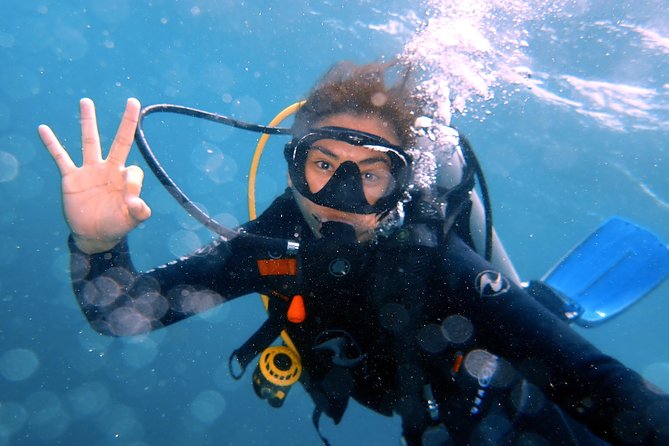
- Three days from classroom to certification: You complete knowledge work, confined-water skills, and four open-water boat sessions.
- Choose SSI or PADI: Both are internationally recognized entry-level certification paths.
- Training starts in shallow water: You learn basic equipment and safety skills before heading to local sites.
- Four supervised boat sessions: These are used to review skills and explore under your instructor’s care.
- A good choice for nervous beginners: Brian, Max, Karlo, and Andrew Gritzka are praised for patience, clear instruction, and calm support.
- Private activity format: Only your group participates, which can make questions and practice easier.
What the three-day course is really like
This is not a quick introductory splash. The Open Water Diver course is a full certification program, designed to teach the basics you need for future scuba trips.
Your three days follow a sensible order. First comes knowledge development, completed online or in a classroom. Then you work in confined water, where you can learn and repeat skills in shallow conditions. The final stage takes you into open water for four boat sessions with your SSI or PADI instructor.
That order matters. You do not begin by being dropped into a demanding site and told to figure things out. You first learn the principles, then practice the physical skills, then use them in the sea. For a first-time student, that progression can make the experience feel far less intimidating.
The course includes at least five confined-water sessions and four local open-water sessions. The exact schedule may vary, but you should expect the days to involve instruction, practice, equipment work, and time in the water. Plan your Boracay stay around the course rather than trying to squeeze it between other major activities.
More Boracay trips:
- Boracay Sunset Cruise with Party DJ & Unlimited Food and Drinks
★ 5.0 · 211 reviews - 4 Hour Private Boracay Island Hopping Tour
★ 5.0 · 167 reviews - WaterColors – Open Water Diver Certification in Boracay
★ 5.0 · 35 reviews
Day one: learning the basics before entering the sea
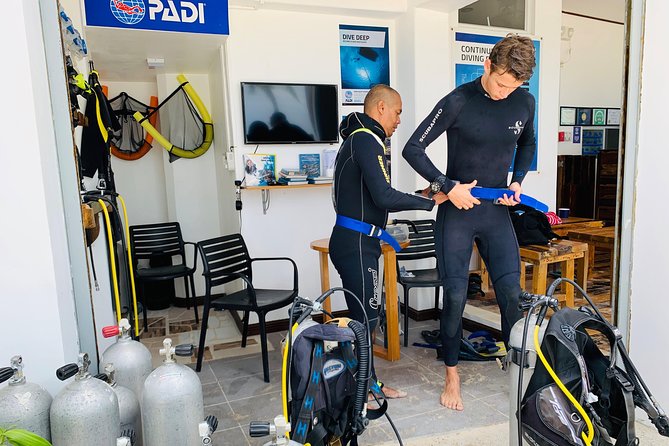
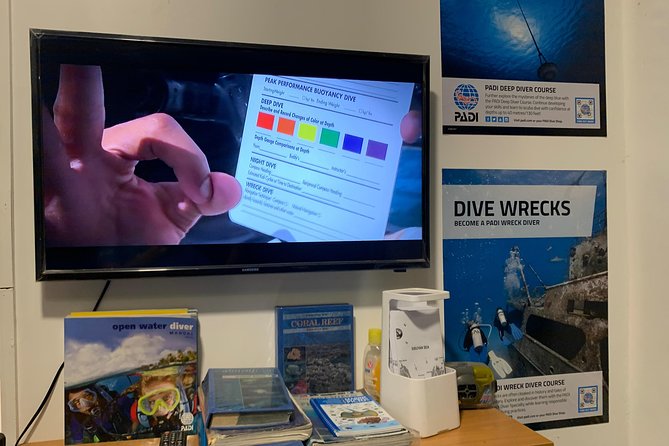
The first phase is knowledge development. You may complete this online or in a classroom, so ask DiveGurus which option applies to your booking and how much preparation you need before arriving.
This part covers the basic principles of scuba. You learn why equipment works, how to behave underwater, and what safety procedures matter. It may feel less exciting than the sea sessions, but it gives meaning to the practical work that follows.
I would not rush through this stage. First-time students often want to get straight to breathing underwater, yet the classroom portion helps you understand what to do when something feels unfamiliar. A good instructor can also use this time to answer simple questions before you are wearing a mask, regulator, and tank.
The center’s instructors receive strong praise for their teaching style. Brian is described as patient, clear, and supportive, while Max is singled out as a strong choice for PADI students. Karlo is praised for being encouraging and funny, and Andrew Gritzka is credited with making a new environment feel safe and manageable.
Those details matter more than flashy promises. Your comfort level can change from one hour to the next, especially if you have never breathed underwater. An instructor who explains a skill again, slows the pace, or helps you work through mask removal is worth far more than one who simply pushes the schedule forward.
Day two: confined-water practice in shallow conditions
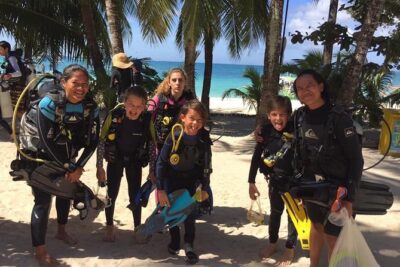
The confined-water phase is where the course starts to feel practical. You learn basic scuba skills in shallow water before using them at local sites.
At least five confined-water sessions are included. That gives you room to repeat unfamiliar tasks rather than treating each one as a one-time test. Skills such as mask removal can bother nervous beginners, and one student specifically described receiving help to overcome fear during that exercise.
This is one of the strongest reasons to choose a proper certification course instead of a brief try-out activity. You are not only being shown how to breathe through a regulator. You are building enough control to respond to common problems and continue calmly.
Your instructor will supervise the sessions, but you still need to take an active role. Listen closely, ask questions, and say when you are uncomfortable. The private format is useful here because only your group participates, giving you a better chance to receive direct attention than you might in a large class.
The supplied information does not specify the exact number of students, equipment brands, classroom hours, or daily start times. Contact DiveGurus before booking if those details affect your plans. The course is near public transportation, and the meeting point is DiveGurus Boracay on Sitio Ambulong Road, Boracay Island, Malay, Aklan.
Day three: four boat sessions at local sites
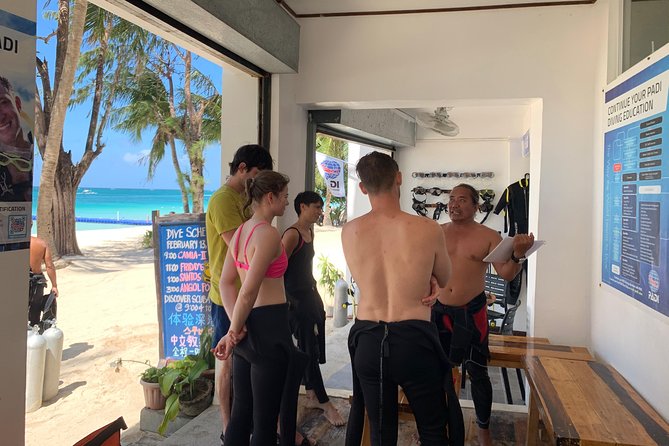
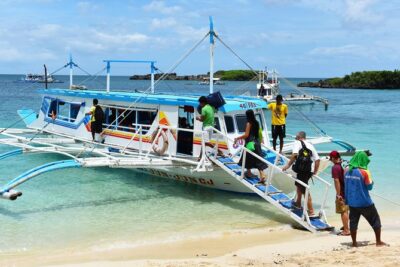
The final phase includes four open-water boat sessions at local dive sites. You review the skills from confined water, then use them in a real marine setting under your instructor’s supervision.
This is the part most people picture when they think about certification. You breathe underwater for the first time, learn to move with your equipment, and begin to notice the world below the surface. The setting is Boracay, on Panay Island, but the exact sites are not listed, so you should not book this course based on a promise of seeing a particular reef, animal, or underwater feature.
The lack of named sites is a small drawback for planners who want a precise itinerary. Conditions can affect where a boat goes, and the value of the session lies mainly in completing the training safely and properly. You should think of the local sites as your classroom, not as a guaranteed wildlife show.
Four sessions give you more than a single glimpse beneath the waves. They let you repeat key skills in open water and become more comfortable with the change from shallow training conditions to a boat-based setting. Your instructor remains with you, reviewing what you learned and guiding the sessions.
Andrew Gritzka is praised for informative, easy-to-understand instruction and for taking students to good sites while helping them feel safe. That combination is useful for beginners. You want enough guidance to stay focused, but also enough calm to enjoy the experience instead of spending every minute worrying about the next task.
A completely different kind of day out:
- DiveGurus -Scuba Diving in Boracay
★ 5.0 · 25 reviews - Scuba Diving in Boracay: SSI Basic Diver for Beginners
★ 5.0 · 20 reviews - Boracay Helmet Diving
★ 4.5 · 17 reviews - Boracay ATV Adventure
★ 5.0 · 17 reviews
Why the instructors matter so much
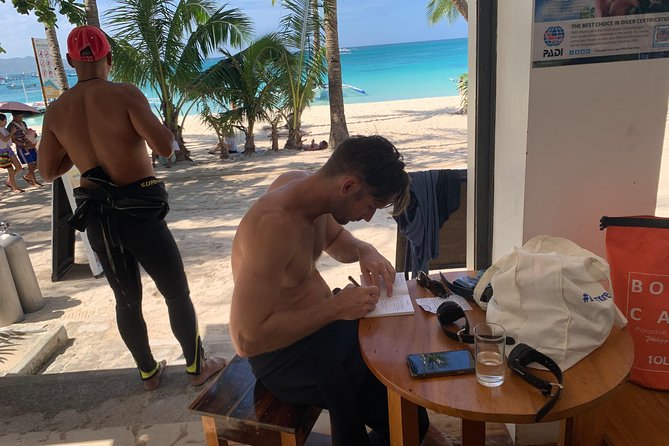
The most consistent strength here is personal instruction. Names that come up in the supplied feedback include Brian, Max, Karlo, and Andrew Gritzka, with each praised for a slightly different reason.
Brian is a strong fit if you want clear explanations and a patient pace. He is also credited with helping students who felt uneasy underwater, including people who had never been interested in scuba before the course.
Max is highlighted by a student completing a PADI certification. If you already know you prefer the PADI route, asking about Max by name could be worthwhile, subject to availability.
Karlo is described as encouraging, funny, and welcoming. That friendly approach can make a difference during a demanding three-day course, when you are learning technical skills and spending a lot of time with the same people.
Andrew Gritzka is praised for being informative, patient, helpful, and easy to understand. Students also appreciated the photos he took during the sessions, although you should confirm whether photography is included with your booking rather than treating it as a guaranteed feature.
Dom is associated with freediving instruction rather than this specific open-water certification. His inclusion in the wider feedback suggests DiveGurus also handles other underwater activities, but you should not assume a freediving session forms part of this course.
The practical tip is simple: tell the center about your experience level and any water-related concerns before you start. Students who dislike snorkeling or feel nervous about staying underwater may need a slower introduction, and the course appears better suited to that kind of honest communication than to silent bravado.
SSI or PADI: which certificate should you choose?
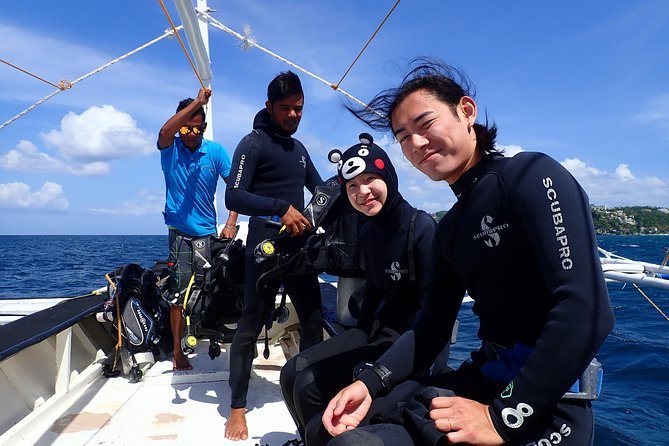
Both SSI and PADI are presented as recognized worldwide. For a first certification, the teaching structure matters more than trying to find a dramatic difference between the two names.
SSI and PADI both use the same broad progression here: study the principles, practice in confined water, then complete four supervised open-water sessions. If you already have a preference, tell DiveGurus when booking. If you have no preference, ask which program fits your future plans and the instructor availability during your stay.
The important point is that this is a basic entry-level certification. It is a starting point, not a professional qualification or advanced specialty course. You finish with the foundation needed to continue your scuba education and take part in future certified activities, subject to the rules of the operator and the conditions of each site.
I would choose the program that makes your next few years of scuba travel easiest. If friends, family, or a future training plan already use one agency, matching them may be more convenient. If not, instructor fit and schedule are sensible deciding factors.
Is $580 good value for three days?
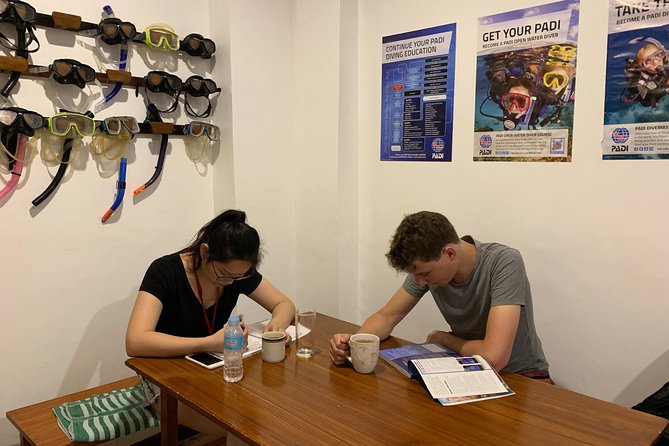
At $580 per person, this course costs far more than a single recreational water activity. That is fair because you are paying for a multi-day training program, supervised practice, boat sessions, and an internationally recognized certification.
The value improves if you expect to use the qualification again. A person who wants to scuba once during a holiday may find the price and time commitment hard to justify. Someone who has always wanted certification, plans future trips, or wants to progress beyond beginner level gets more from the investment.
The course also gives you repeated practice. At least five confined-water sessions and four open-water sessions are included, rather than one short lesson followed by a quick look below the surface. That repetition is important for building comfort and basic control.
Still, ask what the price includes before paying. The supplied details do not specify equipment rental, course materials, certification fees, meals, hotel arrangements, or transportation beyond the stated meeting point. Do not assume that free coffee, tea, rooms, or dining mentioned in connection with the DiveGurus center are included in the $580 course price.
The private activity format is another value point. Only your group participates, which may mean more direct time with the instructor. The exact group size is not provided, so ask if personal attention is your top priority.
The meeting point and daily practicalities
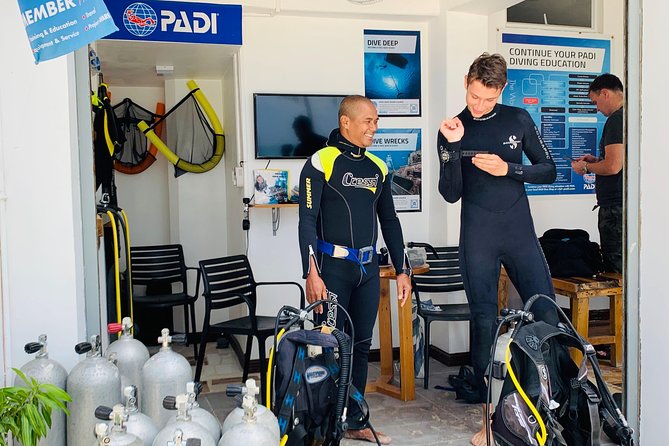
You start and finish at DiveGurus Boracay, Sitio Ambulong Road, Boracay Island, Malay, 5608 Aklan, Philippines. The activity ends back at the same meeting point.
It is near public transportation, which helps if you are staying elsewhere on Boracay. The course is described as a mobile-ticket activity, and confirmation is received when you book. Keep the booking details easy to access on your phone.
The course lasts about three days, but the information does not give exact hours. You should leave open space in your itinerary each day. Avoid booking another fixed activity that could clash with classroom time, shallow-water practice, or boat sessions.
Most people can participate, according to the supplied details. That does not remove the need to discuss personal concerns with the operator. If you are uneasy in water, say so before the first session. The strongest teaching feedback comes from instructors who helped students work through fear rather than dismissing it.
The course begins and ends at the center, but transport to and from your accommodation is not listed. Plan your own route unless DiveGurus confirms a transfer.
Who will get the most from this course?
This is a good match for you if you have wanted an actual certification rather than a one-time underwater activity. It also suits beginners who appreciate a patient instructor and a clear progression from theory to practice.
You will likely enjoy it most if you can commit three days without rushing. The course asks you to learn, repeat, and demonstrate skills, so you should arrive ready to pay attention rather than treat it as a loose holiday add-on.
It may not suit you if you want a short, low-commitment introduction. Four open-water boat sessions plus at least five confined-water sessions require time and energy. The $580 price is also a serious part of the decision.
People who are nervous about scuba should not automatically rule it out. Feedback specifically highlights support with mask removal and gradual confidence-building. But you should be honest about your concerns, follow the instructor’s guidance, and understand that certification requires completing the required skills.
Cancellation and booking advice
You can cancel for a full refund if you do so at least 24 hours before the local start time. Cancellations within 24 hours are not refunded, and changes inside that period are not accepted.
I would avoid booking the course on the last three days of a tightly planned holiday. Give yourself enough time to complete all sessions and keep a little flexibility for schedule changes. The activity is private, but no exact group size or daily timetable is provided, so confirm those points directly if they affect your plans.
Should you book DiveGurus Boracay?
Book this course if you want a real SSI or PADI qualification and can give it three focused days. The combination of classroom work, at least five confined-water sessions, and four supervised boat sessions offers a sound path for a first-time student.
I especially like the emphasis on patient instruction. Brian, Max, Karlo, and Andrew Gritzka are praised for helping beginners feel safe, understand the skills, and work past common fears. That matters more than a flashy site description when you are learning to breathe underwater.
Skip it if you only want a quick holiday activity, if $580 is beyond your budget, or if you cannot protect three days for training. Before booking, confirm the SSI or PADI option, instructor availability, what the price includes, daily hours, and whether any equipment or certification costs are separate.
With those questions answered, DiveGurus looks like a sensible choice for turning a Boracay holiday into a qualification you can use well beyond Panay Island.
FAQ
How long does the SSI or PADI Open Water course take?
The course takes approximately three days to complete.
Where does the course start and finish?
It starts and ends at DiveGurus Boracay, Sitio Ambulong Road, Boracay Island, Malay, 5608 Aklan, Philippines.
How many water sessions are included?
The course includes at least five confined-water sessions and four open-water boat sessions at local sites.
Is the certification recognized internationally?
Yes. The SSI or PADI Open Water certification is described as an entry-level qualification recognized worldwide.
Is this a private activity?
Yes. Only your group participates in the activity.
What is the cancellation policy?
You can receive a full refund by canceling at least 24 hours before the local start time. Cancellations or changes made within 24 hours are not accepted and are not refunded.
Just added in Panay Island
- 2 Days SSI Advanced Open Water Course in Boracay★ 5.0 · 3 reviews
- Discover Scuba Diving in Boracay with U/W Photo and Video★ 5.0 · 14 reviews
- Paraw Sailing Day Tour★ 5.0 · 2 reviews
- WaterColors – PADI Scuba Diver Certification in Boracay★ 5.0 · 12 reviews
- Iloilo City Tour (Garin Farm, Molo Mansion/Church, Vanishing Mansion)★ 3.0 · 3 reviews
- Mainland ZipLine Experience in Boracay★ 5.0 · 8 reviews
- Scuba Diving in Boracay: SSI Basic Diver for Beginners★ 5.0 · 20 reviews
- Mandala Wellness Spa in Boracay★ 4.0 · 5 reviews
Boracay Tours, compared.
Island and Beach-Hopping Boat Tour with Snorkeling
Read our review →
Boracay Sunset Cruise with Party DJ & Unlimited Food and Drinks
Read our review →
Helmet Diving Experience with Photos and Videos
Read our review →