
Reviewed · CEBU CITY TOURS
Cebu City Historical Tour
Cebu’s story begins in its city center. This private four-to-five-hour tour connects Cebu’s major historic sights with hotel pickup, a local driver-guide, and entrance fees included. I like the private format, which lets your group set the pace, and I like the efficient route through churches, forts, homes, monuments, and museums. The main drawback is the $92 price per person, which may feel high for a half-day outing if you are traveling alone or as a couple.
You will also visit Cebu Taoist Temple, high above the city, for a change of setting and a look at the island’s Chinese influence. The tour is practical and easy to arrange, but the accredited DOT guide is listed as an optional add-on, so confirm exactly who will lead the historical commentary before paying.
In This Review
- Key things to know before you book
- Why this half-day tour works well in Cebu
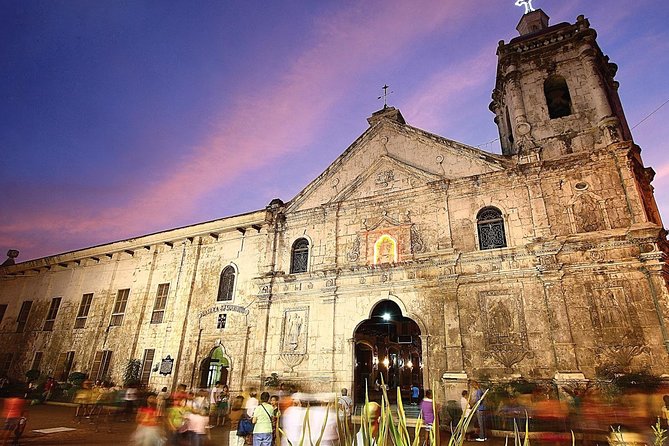
- Santo Niño Basilica, where Cebu’s story turns Christian
- Magellan’s Cross and the 1521 turning point
- Fort San Pedro, Cebu’s small triangular defense
- Yap-Sandiego Ancestral House, a look inside old Cebu
- Heritage of Cebu Monument, history in sculpture
- Museo Sugbo, a useful final chapter
- Cebu Taoist Temple, a change of scene above the city
- What the $92 price includes
- Who will get the most from this Cebu tour
- Practical advice before you go
- Should you book this private Cebu history tour?
- FAQ
- How long does the Cebu City Historical Tour last?
- What time does the tour start?
- Is hotel pickup included?
- Is this a private tour?
- What is included in the $92 price?
- Is an accredited DOT guide included?
- Are entrance fees included?
- What happens if bad weather cancels the tour?
- Can I cancel the tour for a refund?
Key things to know before you book
- Seven major stops in about four to five hours: Expect roughly 30 minutes at each site, with driving time between them.
- A private vehicle and hotel pickup are included: Pickup and drop-off cover hotels in Cebu, Mandaue, and Lapu-Lapu.
- The route covers several sides of Cebu’s past: Spanish colonial religion, military defense, Chinese-Filipino family life, local art, and museum collections all appear.
- Fort San Pedro is compact but significant: Its triangular walls cover only 2,025 square meters, making it easy to see without a long walk.
- The Yap-Sandiego Ancestral House adds atmosphere: Wood, coral stone, old furniture, religious art, and household objects make this more than a quick photo stop.
- The experience is private: Only your own group takes part, which is useful if you want to ask questions or adjust the pace.
Why this half-day tour works well in Cebu
Cebu City can feel scattered when you first arrive. Historic sites sit near busy roads, major churches share space with smaller heritage stops, and a hilltop temple is far removed from the old core. Having a vehicle and local driver-guide takes away much of the guesswork.
The tour gives you a broad introduction rather than a long study of one period. In a single morning, you move from the first Spanish-era Christian landmarks to a small coastal fort, then into one of Cebu’s oldest homes. You finish with a museum and a Taoist temple, so the day is not limited to one version of Cebu’s past.
The start time is 9:00 a.m. That leaves much of the afternoon open, a real advantage if you have only a short stay in Cebu or want time for lunch and other plans. The stated duration is approximate, four to five hours, so I would avoid scheduling a tight airport transfer immediately afterward.
The included bottled water is a small but useful touch in a warm city. Transportation, entrance fees, passenger tour insurance, and pickup are also included. Tips and anything not specifically listed are extra.
More City Tours in Cebu
- Cebu City: Whale Shark Swimming & Kawasan Falls Canyoneering
★ 4.7 · 665 reviews - Cebu City: Bohol Countryside Tour with Loboc Cruise Lunch
★ 4.5 · 488 reviews - Private Cebu & Lapu-Lapu City Tour with Uphill Spots & Lunch at House of Lechon
★ 4.5 · 168 reviews
Santo Niño Basilica, where Cebu’s story turns Christian
The Basílica Menor del Santo Niño de Cebú is the natural starting point for understanding Cebu’s Spanish and Catholic past. The basilica was founded in 1565 by Augustinian friars Andrés de Urdaneta and Diego de Herrera.
You receive about 30 minutes here, with admission included at no extra charge. That is enough for a first look, though not enough for a slow architectural study or a long period of quiet reflection if the site is busy.
The basilica matters because it connects Cebu’s present religious life with the arrival of Spanish rule. Your local guide can help explain that connection, which is more useful than simply walking in, taking a photograph, and moving on.
Keep your expectations sensible. This is a short stop in a working religious place, not a private museum visit. Dress and behave respectfully, and use the half hour to notice the building, devotional setting, and place it holds in Cebu’s identity.
Magellan’s Cross and the 1521 turning point
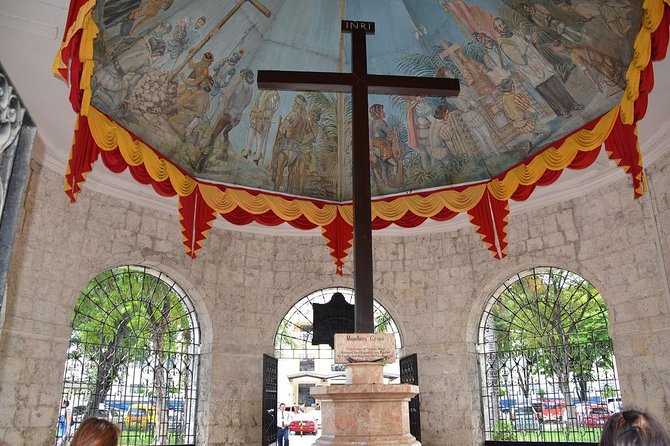
Magellan’s Cross is housed in an octagonal kiosk and marks the arrival of the Portuguese and Spanish expedition led by Ferdinand Magellan on March 15, 1521. The cross is one of Cebu’s most recognizable historical symbols.
The stop is free and lasts about 30 minutes. Since the kiosk is near the Santo Niño Basilica, the two locations make sense together. I appreciate that the tour gives you enough time to understand the connection instead of treating the cross as an isolated monument.
The important point is not just the object itself. Magellan’s arrival began a major period of contact between European explorers and Cebu, with lasting effects on religion, politics, and local culture. You will get more from the stop if you listen for that larger story.
This is also one of the places where a guide’s explanation matters most. The physical site is small, so the value comes from context. Since the tour includes a local driver-guide but lists a DOT accredited guide as optional, ask in advance how much formal guiding will be provided at each stop.
Fort San Pedro, Cebu’s small triangular defense
Fort San Pedro is described as the oldest and smallest fort in the Philippines. It covers 2,025 square meters, with walls 20 feet high and 8 feet thick. Its triangular shape has two sides facing the sea and one facing land, where the entrance gate is located.
You have about 30 minutes here, and admission is included. That is a sensible amount of time for a compact fort. You can see the basic plan, inspect the thick walls, and get a feel for how the site protected the city without committing half a day to military architecture.
I like this stop because the scale is manageable. You do not need to cross a huge complex or follow a long route. The fort’s small footprint also makes its defensive purpose easy to grasp.
The tradeoff is that 30 minutes may feel brief if you enjoy detailed military history or want time for photographs. Still, within this tour’s format, Fort San Pedro gives you a clear physical reminder that Cebu was once a strategic coastal settlement.
More History Tours in Cebu
- The Original Cebu City Historical and Food Walking Tour
★ 4.5 · 81 reviews - Cebu: Exploring Cebu City’s rich history and Uphill Tour
★ 4.5 · 68 reviews - Cebu City: Historical Street and Food Tour
★ 4.9 · 31 reviews - CEBU: Cebu City Heritage and Uphill Guided Tour
★ 4.2 · 31 reviews
Yap-Sandiego Ancestral House, a look inside old Cebu
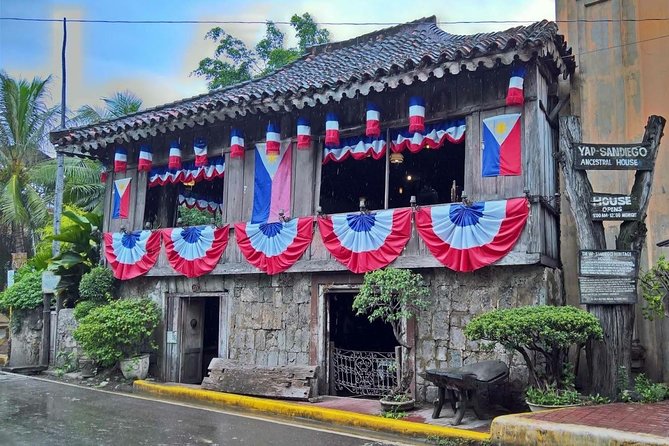
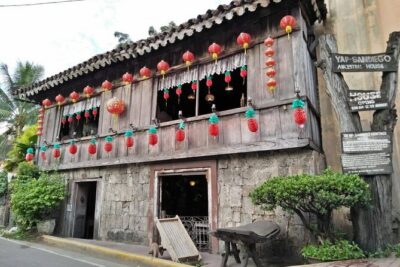
The Yap-Sandiego Ancestral House is one of the most atmospheric stops. Built around 1680 from wood and coral stone, the home blends Spanish and Chinese architectural influences.
Inside, you will find old furniture, religious art, antiquities, and household curios. The house gives you something the churches and fort cannot: a sense of domestic life. Instead of seeing only public monuments, you get a glimpse of how a prominent Cebuano family shaped and furnished its home.
Admission is included, and the planned visit lasts about 30 minutes. That should be enough to look through the rooms and take in the unusual mixture of materials and objects. If you like historic interiors, this may be the most memorable stop of the morning.
The house is not presented as a polished modern museum. Its appeal comes from its age, character, and collection of objects. Watch your footing and give yourself time to notice small details rather than rushing from room to room.
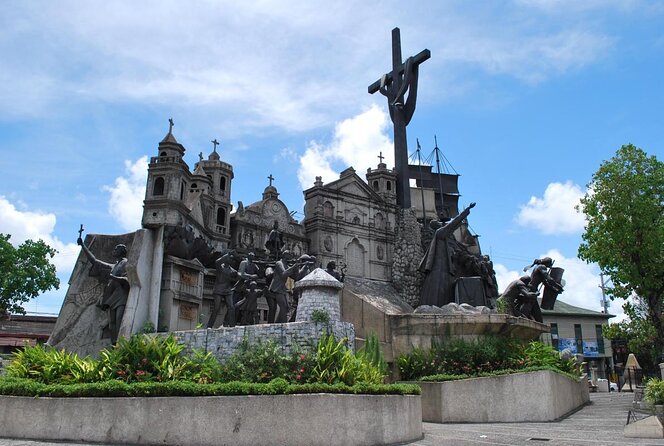
Heritage of Cebu Monument, history in sculpture
The Heritage of Cebu Monument uses large sculptures to present important events in Cebu’s past. The scene reaches from the time of Rajah Humabon to the beatification of Cebuano martyr Pedro Calungsod.
Local artist Eduardo Castrillo created the monument. It is an outdoor, visual way to approach a complicated story, especially if you do not know much about Cebu before arriving.
The visit is free and lasts about 30 minutes. I would treat it as a guided interpretation stop. The figures and scenes are easier to understand when someone explains who they represent and why they matter.
The monument cannot provide the detail of a museum collection, but it does give you a quick historical framework. It also breaks up the indoor visits and helps link Cebu’s early leadership, Christian era, and later religious memory.
Museo Sugbo, a useful final chapter
Museo Sugbo gives the tour a museum stop in Cebu City. The visit lasts about 30 minutes, and admission is included.
The information provided does not specify which galleries or collections you will see, so I would approach this as a concise introduction rather than a complete museum visit. Half an hour is enough to sample the displays, but you may want a longer return visit if you prefer reading labels and examining objects at length.
Its place on the route is valuable. After seeing landmarks in their original settings, you have a chance to encounter Cebu’s story in a museum environment. That contrast can help you connect the individual sites into a broader picture.
If museums are your main reason for touring, this schedule may move too quickly. If you want a balanced first look at Cebu, the short visit fits the day well.
Cebu Taoist Temple, a change of scene above the city
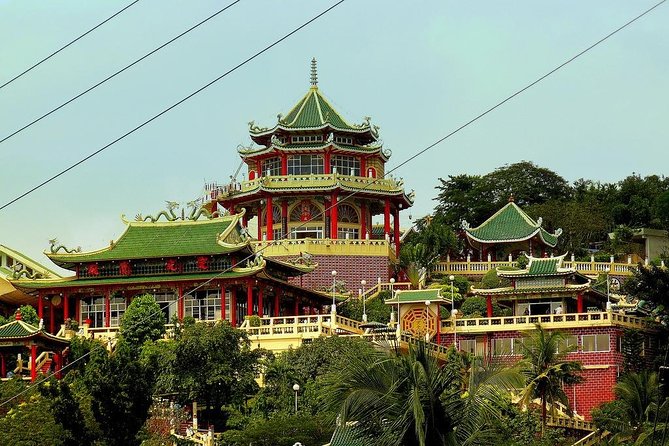
The Cebu Taoist Temple was built in 1972 by Cebu City’s Chinese community. It sits in Beverly Hills Subdivision on a small hill at an elevation of 300 meters above sea level and serves as a center for Taoism while remaining open to non-worshipers from 8:00 a.m. to 5:00 p.m.
You receive about 30 minutes here, with no separate admission fee listed. This stop adds a different cultural and religious perspective to a route otherwise centered heavily on Spanish and Catholic history.
The hilltop location also changes the feel of the day. After the old city sights, the temple offers a more elevated setting and a look at Cebu’s Chinese-Filipino heritage. Your visit should remain respectful because this is a religious place, not only a sightseeing stop.
Thirty minutes gives you an introduction, but not much time for lingering. The tour is trying to show you range, not provide a full religious or architectural lesson. That is a fair trade if you want variety in a short outing.
What the $92 price includes
At $92 per person, this is not the cheapest way to see Cebu’s historic center. The value depends heavily on your group size and how much you value convenience.
The price includes pickup and drop-off from hotels in Cebu, Mandaue, and Lapu-Lapu, transportation throughout the tour, a local driver-guide, bottled water, entrance fees, and passenger tour insurance. A private vehicle also means you are not waiting for a large group to gather or spending time on unrelated hotel stops.
For a family or small group, the private arrangement can make the cost easier to justify. You are paying for transport, planning, and a tailored pace, not just admission to the monuments. For one person or a couple on a tight budget, the price may be harder to defend, particularly because several stops are free.
The optional accredited DOT guide deserves attention. The tour includes a local driver-guide, but an accredited guide is described as an optional add-on and is also listed among the items not included. Ask what the add-on costs and what level of commentary you will receive without it.
A single rating of 4 out of 5 praised the experience as a useful way to learn about Filipino culture and history, especially for someone arriving with little background knowledge. That is exactly where this tour has its strongest value: it gives you a clear first orientation.
Who will get the most from this Cebu tour
I would recommend this experience to first-time visitors who want the main historic sights handled in one morning. It also suits families, older visitors, and anyone who prefers a private vehicle to sorting out local transport between scattered locations.
The tour is a good fit if you enjoy variety. You will see a basilica, kiosk, fort, ancestral home, sculpture monument, temple, and museum in one route. Each stop is brief, but the mix keeps the morning from becoming repetitive.
History beginners may benefit most. The route gives you names, dates, buildings, and cultural connections that make later sightseeing easier. The positive feedback specifically praised how well the experience introduced Filipino culture and history to someone with little prior knowledge.
I would be more cautious if you want slow museum time, a long food break, or detailed architectural commentary at every site. Seven stops in four to five hours require a brisk schedule. The optional accredited guide also means you should confirm the guiding arrangement before booking.
The tour is private, so you can ask for more time at a favorite stop if the schedule allows. Still, do not assume every change is possible. The itinerary has a lot to cover, and the 9:00 a.m. start is designed to keep the route moving.
Practical advice before you go
Confirm that your hotel is within the covered Tri-Cities area: Cebu, Mandaue, or Lapu-Lapu. Pickup and drop-off are included there, but anything outside those locations is not promised.
Wear comfortable clothing for a morning with repeated entries and exits. The tour includes a hilltop temple and historic buildings, though the supplied details do not specify accessibility arrangements. If anyone in your group has mobility concerns, ask the provider before booking.
Carry a little money for personal purchases and tips. Non-compulsory tipping is not included, and anything not listed in the inclusions is your responsibility.
The cancellation policy is strict: the experience is non-refundable and cannot be changed for any reason. If poor weather causes the operator to cancel, you will be offered another date or a full refund. If the minimum number of participants is not met, you will be offered another date or experience, or a full refund.
Should you book this private Cebu history tour?
Book it if you want an easy, well-rounded introduction to Cebu City and value hotel pickup, private transportation, and a route that covers the essential historic sights. The Yap-Sandiego Ancestral House and the combination of Spanish, Chinese, religious, and local perspectives give the morning more substance than a simple monument checklist.
Think twice if $92 feels steep for a short tour, or if you prefer to spend an hour or more at each museum and heritage site. Before booking, clarify the driver-guide’s role and the price of the optional accredited guide. For a first visit, especially with a family or small private group, the convenience and range make this a sensible way to get your bearings in Cebu.
FAQ
How long does the Cebu City Historical Tour last?
The tour lasts approximately four to five hours.
What time does the tour start?
The scheduled start time is 9:00 a.m.
Is hotel pickup included?
Yes. Pickup and drop-off are included for hotels within Cebu, Mandaue, and Lapu-Lapu.
Is this a private tour?
Yes. Only your group will participate in the activity.
What is included in the $92 price?
The price includes transportation during the tour, a local driver-guide, bottled water, entrance fees, passenger tour insurance, and pickup and drop-off within the Tri-Cities area.
Is an accredited DOT guide included?
A DOT accredited tour guide is available as an optional add-on. The included guide is identified as a local driver-guide.
Are entrance fees included?
Yes. Entrance fees are included, including the fee for the Yap-Sandiego Ancestral House and Museo Sugbo.
What happens if bad weather cancels the tour?
You will be offered a different date or a full refund if the tour is canceled because of poor weather.
Can I cancel the tour for a refund?
No. The experience is non-refundable and cannot be changed for any reason.
More Cebu City Trips
- Bohol Countryside Day Tour From Cebu City | Lunch at Loboc River Cruise
★ 4.5 · 157 reviews - Cebu City: City and Mountain Highlights Tour
★ 4.6 · 85 reviews - Cebu Group Tour: Best Cebu City Tour
★ 4.0 · 63 reviews - Small Group Cebu City And Uphill Mountain Tour
★ 4.1 · 59 reviews
Just added in Cebu
- Whole Day and Private Car and Van Rental to Oslob from Cebu City or Mactan★ 5.0 · 1 review
- Whaleshark & Sumilon Is and Moalboal Sardines & Turtle Tour★ 5.0 · 2 reviews
- Whale Shark Watching & Tumalog Falls & Kawasan Falls★ 5.0 · 16 reviews
- Whale Shark Watching with Sumilon Sandbar and Kawasan Falls Tour★ 5.0 · 8 reviews
- Cebu Whale Shark Encounter, Moalboal Sardines & Tumalog Falls★ 4.0 · 18 reviews
- Whale Shark Watching and Sumilon Sandbar Private Tour Package★ 5.0 · 17 reviews
- Full Day Shark Watching and Canyoneering in Cebu★ 5.0 · 15 reviews
- Group Tour of Moalboal Sardines Run & Kawasan Canyoneering★ 4.5 · 9 reviews
Cebu City Tours, compared.

Whale Shark Swimming & Kawasan Falls Canyoneering
Read our review →
Bohol Countryside Tour with Loboc Cruise Lunch
Read our review →
Bohol Countryside Day Tour From Cebu City | Lunch at Loboc River Cruise
Read our review →
The Original Cebu City Historical and Food Walking Tour
Read our review →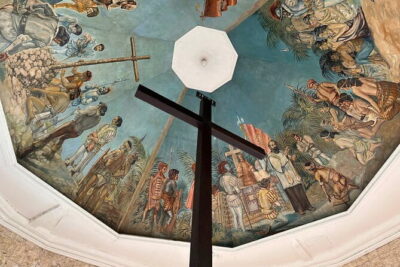
Exploring Cebu City’s rich history and Uphill Tour
Read our review →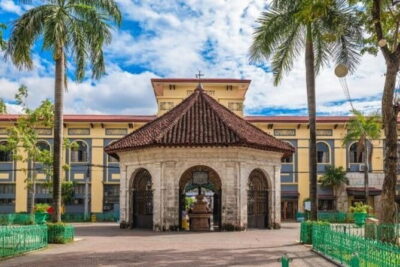
Browse the lists this tour appears in