
Reviewed · RICE TERRACES TOURS
Embark on a 7-Day Banaue-Sagada Adventure of a Lifetime
Mountain trails replace Manila traffic. This seven-day trip links Banaue, Batad, Cambulo, Bangaan, and Sagada in one demanding North Luzon journey. I like the way it combines Ifugao rice terraces, village walks, Tappiyah and Bomod-Ok waterfalls, Sumaguing Cave, and local culture instead of treating the mountains as a quick photo stop. I also like the small maximum group of 15, air-conditioned transport, and included entrance fees.
The main catch is simple: this is not a gentle sightseeing holiday. You need strong fitness and the ability to hike for six to eight hours a day, often on mountain paths. At $1,300 per person, the value depends on how much you want handled for you. It covers transport, taxes, guiding arrangements, and a full route, but you still pay for meals and must accept a strict cancellation policy.
In This Review
- Key things to know before booking
- Why this North Luzon route is worth your time
- Day 1: Banaue terraces and the first taste of mountain walking
- Day 2: Four hours on foot to Cambulo
- Day 3: Batad, Tappiyah Falls, and Bangaan
- Day 4: From the terraces to Sagada
- Day 5: Sumaguing Cave and an underground stream
- Day 6: The long walk to Bomod-Ok Falls
- Day 7: The scenic drive back to Manila
- What $1,300 includes, and what it does not
- Who should book this mountain adventure
- Should you book the Banaue and Sagada route?
- FAQ
- Where does the tour start?
- How long is the experience?
- How many people can join the group?
- What fitness level is required?
- Are meals included?
- What transportation is provided?
- Which major activities include admission?
- What happens if bad weather cancels the tour?
Key things to know before booking
- The hiking is the real center of the trip: Expect long mountain walks, including roughly four hours to Cambulo and six hours around Batad and Bangaan.
- Banaue is more than a viewpoint: You see terrace construction, irrigation, stonework, and village life tied to Ifugao traditions.
- Sagada adds a different kind of adventure: Sumaguing Cave brings underground streams, stone waterfalls, calcium formations, and wet footing.
- Meals cost extra: Set aside 150 to 250 Philippine pesos per meal per person.
- The group stays fairly small: A maximum of 15 people makes a multi-day route easier to manage than a large coach tour.
- The schedule begins early: The meeting time is 3:00 a.m., so plan for a very long first day.
Why this North Luzon route is worth your time
Banaue and Sagada offer two different views of the Philippine highlands. Banaue centers on working rice terraces and Ifugao villages. Sagada shifts toward caves, waterfalls, mountain roads, and a quieter town setting. Putting both areas into one trip gives you a much fuller picture than visiting only one destination.
I especially like that the route includes time on foot. The terraces are not simply scenery seen through a van window. You walk among them and see how water irrigation, stonework, earthwork, and regular maintenance support farming on steep slopes. That makes the famous views more meaningful.
The route also brings a useful cultural element. The Ifugao villages of Cambulo, Batad, and Bangaan are part of the experience, not just places to pass through. You should come ready for a rural setting and a slower rhythm. This is a break from Manila in every sense, though the price is a sustained physical effort.
The practical setup is straightforward. Pickup is offered, the vehicle is air-conditioned, and all fees and taxes are included. A maximum of 15 people keeps the group from becoming unwieldy. On a route with narrow paths and several long walking days, that matters.
More rice terrace trips:
- Batad Guided Tour
★ 5.0 · 78 reviews - Small-Group Weekend Hiking Tour to Banaue-Ifugao from Manila
★ 5.0 · 30 reviews - Banaue & Batad UNESCO 3days 2 nights Tour ( Private Group Tour Max 6 Travelers)
★ 5.0 · 30 reviews
Day 1: Banaue terraces and the first taste of mountain walking
The adventure begins at 3:00 a.m., an unusually early start that deserves serious thought. You will want to sleep well beforehand because the first day combines transport with a three-hour Banaue Rice Terraces hike.
Banaue is the natural opening chapter. The terraces are linked to Ifugao farming practices, including water control, stone construction, earthwork, and continual upkeep. The best part here is the connection between the scenery and the work behind it. These are not decorative steps cut into a hillside. They are agricultural systems that depend on care.
A three-hour walk is modest compared with the next two days, but it may feel harder after the early start and road journey. I would treat Day 1 as your first test of pace. Do not race ahead for photos. Save energy for the longer village-to-village hikes.
The day includes admission, which keeps the initial costs clear. Meals remain separate throughout the tour, so budget 150 to 250 pesos per meal per person. If you are watching costs, this is an important detail because seven days of paid meals add up.
Day 2: Four hours on foot to Cambulo
After breakfast, you hike for about four hours to Cambulo, the second Ifugao village on the route. The day is listed at about eight hours, so you should expect the walk, stops, meals, and time in the village to fill most of the day.
Cambulo is known for terraces with a pyramid-like appearance. The fields curve around the terrain, creating a different visual pattern from the broad views often associated with Banaue. This is one reason I prefer this route to a short viewpoint visit. You get changing angles and a closer look at how the terraces fit the land.
The drawback is that four hours is only the walking portion described for the approach. The full day can feel long, particularly if you are not used to mountain trails. The tour specifically requires above-average fitness, and this is where that warning becomes real rather than decorative.
Keep your daypack light. The provided details do not specify luggage handling, so you should confirm arrangements before departure rather than assume large bags will be carried between villages. Comfortable footwear is essential, but the tour does not list equipment, so bring what you normally trust for long hikes.
Day 3: Batad, Tappiyah Falls, and Bangaan
Day 3 is another full walking day, with about three hours to Tappiyah Waterfalls and the village and terraces of Batad, followed by roughly three hours to Bangaan after lunch. It is one of the most scenic parts of the route, but also one of the most demanding.
Batad gives you another view of Ifugao terrace design. Tappiyah adds a waterfall stop, giving the day a welcome change from fields and ridgelines. The walk is not just a transfer from one village to another. It links farming areas, water, and mountain paths into one continuous experience.
After lunch, you continue to Bangaan, the final village of this section. The six hours of walking listed for the day do not include every pause, so pace yourself from the morning. A strong hiker may find the day rewarding. Someone who normally takes short city walks may find the distance and uneven ground overwhelming.
This is also the point where the trip’s format proves useful. A coordinator and driver can manage the larger route while your attention stays on the walk. Joannah has served as a travel coordinator and Marlon as a driver on this North Luzon trip, giving you named points of contact rather than an anonymous handoff between services.
A few more Manila days worth comparing
- Intramuros, Manila: Historical Bamboo Bike Tour
★ 4.8 · 583 reviews - Experience Intramuros with Bamboo Bicycle – Ecotours
★ 5.0 · 508 reviews - Manila: Intramuros, Chinatown, and Old Manila Half-Day Tour
★ 4.8 · 475 reviews - Manila: Old & New 4-Hour City Tour
★ 4.5 · 458 reviews
Day 4: From the terraces to Sagada
Day 4 shifts from the Banaue area to Sagada, with about three hours listed for the visit. The change is welcome after two long trekking days. Sagada sits in the Mountain Province of the Cordillera Administrative Region in North Luzon, roughly 415 kilometers from Manila.
Sagada is known for its mountain setting and unusual cultural sights. The supplied schedule gives you three hours here, so do not expect a broad, leisurely survey of every part of town. This is a taste of Sagada before the cave and waterfall days that follow.
The road journey is part of the trip’s character. You move from terraces and villages to a mountain community with its own traditions and scenery. The pace remains active, but Day 4 gives your legs a partial reset.
You should also keep your expectations realistic about the schedule. The tour covers a wide section of northern Luzon in seven days, so some days will feel like transfers between major activity blocks. That is the tradeoff for seeing Banaue and Sagada together without arranging separate transport yourself.
Day 5: Sumaguing Cave and an underground stream
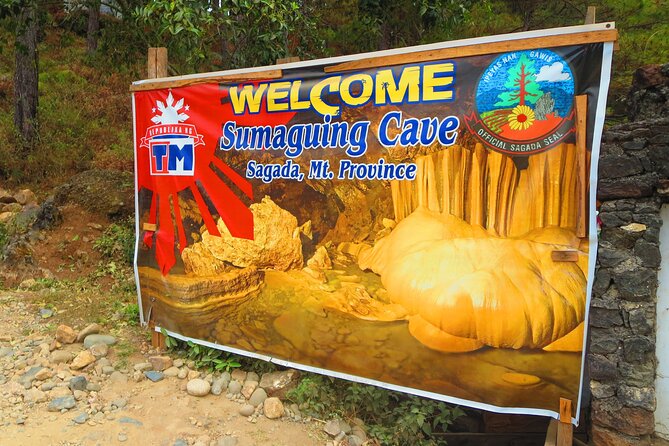
Sumaguing Cave is the tour’s most unusual activity. The visit lasts about four hours and includes an underground stream in the lower part of the cave. You can expect stone waterfalls, calcium formations, glittering walls, and stalagmites affected by water.
This is not a polished walk through a dry cave with a paved path. The description points to wet, uneven conditions and an active underground watercourse. The cave should appeal to you if you enjoy physical exploration and do not mind getting close to the natural features.
The practical issue is comfort and footing. The supplied information does not state what equipment is provided, so ask the operator what you need to bring or wear. The tour does include admission for Sumaguing Cave, but that does not automatically mean personal gear is supplied.
Four hours is enough time for the cave to feel like a major outing rather than a quick stop. It also gives Sagada a strong identity within the trip. Banaue is built around terraces and farming. Sagada adds rock, water, darkness, and a more rugged kind of walking.
Day 6: The long walk to Bomod-Ok Falls
Bomod-Ok, also called Big Falls, lies in a valley and takes roughly one to two hours to reach on foot from the main area. The complete visit is listed at about four hours, including the return and time at the falls.
The name makes sense because it is larger than Bokong Falls, another waterfall in Sagada. The walk to a waterfall hidden in a valley is the appeal here, but the return matters just as much as the outward route. You will already have several active days behind you, so tired legs can change the experience.
I like the rhythm of Day 6. After the enclosed cave on Day 5, you return to open air and a long valley walk. It also gives you one last major natural sight before the drive back to Manila.
Still, do not book this route based on the waterfalls alone. The tour requires the fitness to hike six to eight hours a day, and even the shorter listed outings add up across the week. If you have knee, balance, or stamina concerns, you should ask the operator for a detailed trail description before paying.
Day 7: The scenic drive back to Manila
The final day is a scenic drive back to Manila, with about four hours listed. After the mountain walks, the vehicle is more than a convenience. It gives you time to rest while still seeing the countryside on the return route.
The short listed duration may not describe every part of the day, since the tour itself is approximate and the full trip covers substantial distance. Treat the return as a travel day rather than a final sightseeing program. If you have a flight or fixed appointment in Manila, leave a generous margin and confirm the expected arrival time.
The air-conditioned vehicle is a useful inclusion here. Seven days of hiking and mountain roads can make a comfortable ride feel like a luxury. It also means you do not need to arrange separate transport between the major destinations.
What $1,300 includes, and what it does not
The cost is $1,300 per person. That is a substantial amount, but the value comes from the route’s breadth and the planning needed to connect remote mountain areas.
Included are an air-conditioned vehicle, all fees, and taxes. The itinerary also covers several major paid activities, including Banaue Rice Terraces Hiking Tours, Sumaguing Cave, and Bomod-Ok Falls. You are paying for a packaged seven-day journey rather than a series of disconnected day trips.
Meals are not included. The stated guide is 150 to 250 pesos per meal per person, so set aside a separate food budget. The tour information does not list accommodation details, so confirm exactly what lodging is included before booking. That is one of the most important unanswered points when judging the total value.
The maximum group size is 15. That is large enough for a social trip but small enough to make coordination more manageable. Group discounts are available, which may improve the price if you are booking with family or friends.
The experience is usually booked about 38 days ahead. That suggests you should plan rather than wait until the last minute, especially since confirmation within one day of departure is subject to availability.
Who should book this mountain adventure
I would recommend this trip to you if you want a physically active introduction to North Luzon and prefer one organized booking over several complicated transfers. It suits hikers who enjoy villages, working terraces, caves, waterfalls, and long days outdoors.
It may also work for older travelers with excellent fitness. One previous booking included a mother and her partner, both over 65, on a broader North Luzon trip, and the overall planning was praised. Age alone is not the issue here. Your stamina, balance, and comfort with six to eight hours of mountain walking matter more.
I would not choose it for a relaxed cultural holiday, a family trip with young children, or anyone who dislikes early starts and uneven trails. The 3:00 a.m. meeting time and the non-refundable booking terms make careful planning essential.
The cancellation policy is strict: once booked, the experience cannot be refunded or amended. If poor weather cancels the trip, you are offered another date or a full refund. The same applies if the minimum number of participants is not met. That protection helps, but ordinary changes to your plans are not covered.
Should you book the Banaue and Sagada route?
Book it if you want the Philippines beyond beaches and city stops. The combination of Ifugao terraces, Cambulo, Batad, Bangaan, Sagada, Sumaguing Cave, Tappiyah Falls, and Bomod-Ok Falls gives you a substantial week of active travel.
Before you pay, confirm the lodging, ask what to bring for the cave and trails, and be honest about your fitness. If you can handle the early start and repeated long hikes, this is a strong value for seeing several difficult-to-reach parts of North Luzon in one organized trip. If you want easy sightseeing, choose a slower itinerary instead.
FAQ
Where does the tour start?
The tour starts in Manila, with pickup offered. The stated meeting time is 3:00 a.m.
How long is the experience?
The experience lasts approximately seven days and six nights.
How many people can join the group?
The maximum group size is 15 travelers.
What fitness level is required?
You need a strong physical fitness level and must be able to trek through mountains for approximately six to eight hours a day.
Are meals included?
No. Meals are not included. You should prepare 150 to 250 Philippine pesos per meal per person.
What transportation is provided?
An air-conditioned vehicle is included, along with all fees and taxes.
Which major activities include admission?
Admission is included for the Banaue Rice Terraces Hiking Tours, Sumaguing Cave, and Bomod-Ok Falls. Cambulo, Bangaan Rice Terraces, Sagada, and the Manila return drive are listed without separate admission charges.
What happens if bad weather cancels the tour?
If poor weather causes cancellation, you will be offered a different date or a full refund. If the minimum number of participants is not met, you will be offered a different date or experience, or a full refund.
Just added in Manila
- Underground River with Lunch★ 3.6 · 5 reviews
- Manila Night market and Street Food Tour★ 5.0 · 2 reviews
- Cruise Shore Excursion of Taal Volcano with Lunch★ 4.5 · 4 reviews
- Unforgettable Manila Fishing Village Day Excursion 2024★ 5.0 · 4 reviews
- Ultimate 8-Day Palawan Island Tour Package from Manila City★ 5.0 · 1 review
- Tagaytay + Hidden Valley Springs: A Scenic Escape w/ Transfers★ 4.0 · 4 reviews
- Tagaytay Day Tour sightseeing with Panoramic Taal volcano view★ 5.0 · 6 reviews
- 3 Days Private Tour in Banaue Ifugao visiting Batad Rice Terraces★ 3.5 · 3 reviews
Rice Terraces Tours, compared.
Small-Group Weekend Hiking Tour to Banaue-Ifugao from Manila
Read our review →
Banaue & Batad UNESCO 3days 2 nights Tour ( Private Group Tour Max 6 Travelers)
Read our review →
5 Days Sagada Banaue Batad Discovery (PRIVATE GROUP TOUR Max 6 Travellers)
Read our review →
3-Day Sagada, Baguio, & Banaue Rice Terraces Tour
Read our review →
Banaue Rice Terraces Escape: 3 Days, 2 Nights with Transfers
Read our review →Browse the lists this tour appears in