
Reviewed · INTRAMUROS WALKS
Experience Intramuros with Bamboo Bicycle – Ecotours
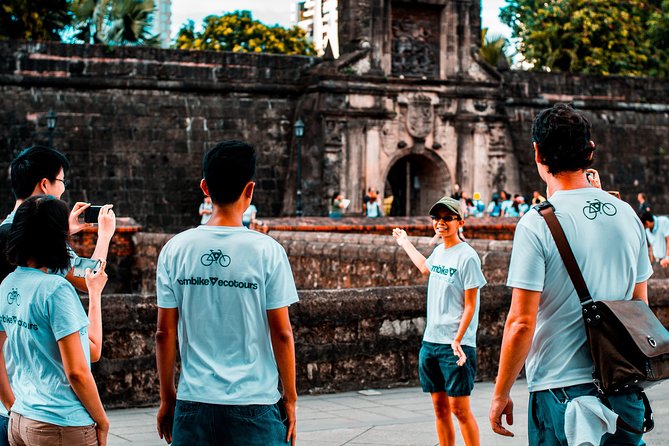
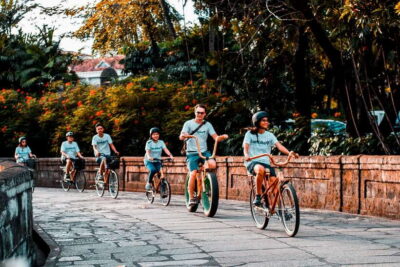
Old Manila is best seen at a slow roll. This three-hour tour pairs handmade bamboo bikes with a guided route through Intramuros, Manila’s walled Spanish-era district. I like the personal bike fitting at the start, and I like that the route reaches several major sights without turning the morning into a hard workout. The main consideration is that this is more of a sightseeing tour with short rides than a serious cycling trip.
I also like the small-group format, capped at 15 people, and the care taken on city roads. Guides such as Anj, Chi, JD, Josh, Paolo, Justine, and Mika have been praised for clear explanations and steady support. Still, pedestrians, cars, motorcycles, rain, and occasional unpleasant smells can all be part of the setting, so you should come ready for real Manila rather than a polished theme park.
In This Review
- Key points before you book
- Why a bamboo bike works so well in Intramuros
- Starting at Casa Manila and Plaza San Luis
- Japanese Cannon and the scars of World War II
- Puerta Real Gardens and the old defense system
- A break at Café Y Ruedas and a ride on the walls
- Puerta del Parian and Manila’s Chinese influence
- Plaza Roma and Manila Cathedral
- Fort Santiago is the main event
- San Agustin Church and the final return
- What the guides add to the experience
- The pace, road conditions, and weather
- Is $39 a fair price?
- Who should book this Intramuros bike tour?
- Practical details worth knowing
- Should you book it?
- FAQ
- How long is the bamboo bicycle tour?
- Where does the tour start?
- Where does the tour end?
- What sights are included?
- Do I need to bring my own bicycle?
- Is a helmet provided?
- Is the ride difficult?
- What happens if it rains?
- Are refreshments included?
- Can children join the tour?
- How many people can join?
- Can I cancel for a full refund?
Key points before you book
- The ride is flat and gentle: Most of the cycling is easy, with frequent stops for stories, photos, and short walks.
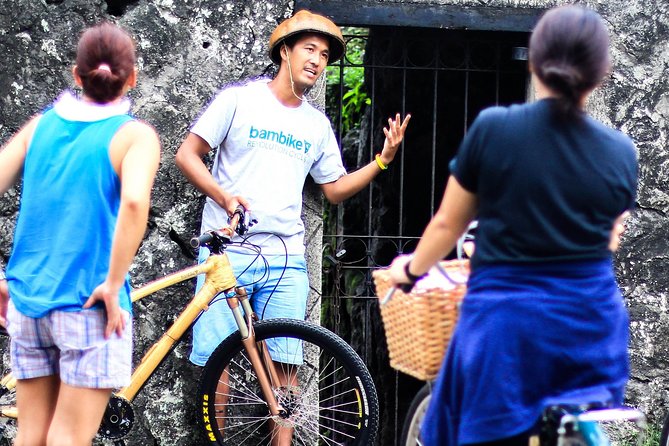
- Every bamboo bike is different: You choose a style and size at Bambike headquarters, helping you find a comfortable fit.
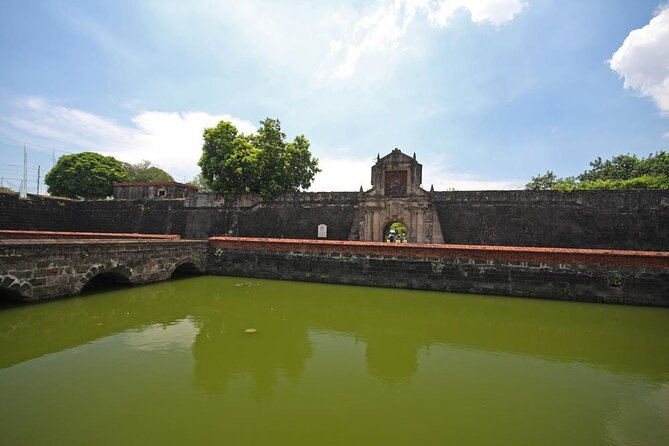
- You reach the key Intramuros sights: The route includes Fort Santiago, Plaza Roma, Manila Cathedral, San Agustin Church, Casa Manila, and old gates.
- The walls are part of the ride: You pedal along sections of Intramuros’ old defensive walls, one of the tour’s most memorable features.
- Safety support matters: Guides keep the group together and may help block traffic on busier crossings and roads.
- The finish is refreshingly Filipino: Expect bottled water during the ride, a cold towel at the end, and refreshments or snacks after cycling.
Why a bamboo bike works so well in Intramuros
Intramuros is compact, but its sights are spread across streets, plazas, gates, churches, gardens, and fortress grounds. Walking works, yet Manila’s heat can make even a short distance feel longer than it looks on a map.
A bicycle gives you a useful middle ground. You cover more ground than you would on foot, but the slow pace leaves time to look up at old walls and listen to the guide. The bamboo frame is also more than a photo prop. It gives the outing a local, low-impact character and makes the ride feel tied to the setting.
You will not spend three hours pedaling without a break. The route includes stops of five to 40 minutes, with the longest visit at Fort Santiago. That makes this suitable for people who enjoy sightseeing but do not want a demanding cycling excursion.
The bikes are chosen at Bambike headquarters in the Casa Manila complex. You fill out a waiver, then select a bike based on size and preference. Since each bicycle has its own style, this opening step is part of the experience rather than a rushed equipment handoff.
More Intramuros walks:
- Intramuros, Manila: Historical Bamboo Bike Tour
★ 4.8 · 583 reviews - Manila: Intramuros, Chinatown, and Old Manila Half-Day Tour
★ 4.8 · 475 reviews - Manila Old and New: Sightseeing Tour Including Intramuros and Fort Santiago
★ 4.5 · 377 reviews
Starting at Casa Manila and Plaza San Luis
The tour begins at Bambike headquarters in the Plaza San Luis Complex, at Real Street and M. General Luna Street. This location puts you in one of the most atmospheric parts of Intramuros before the ride even starts.
The first stop is Casa Manila, a recreation of a traditional house influenced by Spanish Colonial architecture. You get about 15 minutes here, enough for an introduction to the district’s design and social history.
Casa Manila is not presented as a long museum visit on this route. Instead, it helps you understand the kind of architecture that shaped the walled city. I would treat it as a visual orientation stop, not the main reason to book the tour.
The staff provide helmets, sunscreen, and rain ponchos when needed. Bottled water is supplied during the ride, which matters in Manila’s heat. Dress for warm weather, and bring clothes that can handle rain because the tour operates in all weather conditions unless poor conditions force a cancellation.
Japanese Cannon and the scars of World War II
Along Muralla Street, the group stops at a Japanese cannon. This short visit focuses on the Japanese Occupation and World War II, adding a more difficult chapter to the tour’s Spanish Colonial setting.
The stop lasts around 15 minutes. It may not look like a major sight at first, but it gives the guide a chance to explain how Intramuros was affected by the war. The district is not only about old churches and colonial walls. Its story also includes occupation, destruction, and rebuilding.
This is one reason the guide matters so much. A bicycle can get you to the location, but the context turns a cannon into a meaningful stop. Guides have been praised for using photographs and other visual aids to make the historical explanations easier to follow.
Puerta Real Gardens and the old defense system
At Puerta Real Gardens, you spend about 20 minutes learning about one of Intramuros’ main gates and the defenses beyond the walls. The stop shows how the Spanish authorities planned movement into and out of the city.
The setting offers a welcome change from the street. Gardens and fortifications give you room to pause, take pictures, and see the walled city as a defensive system rather than a collection of separate monuments.
The route is not built around lengthy independent exploration. The guide sets the pace, explains the location, and keeps the group moving. If you want an hour inside every garden and church, this will feel too brisk. If you want a well-organized introduction, the timing works better.
A few more Manila days worth comparing
- Manila: Old & New 4-Hour City Tour
★ 4.5 · 458 reviews - Spectacular Manila to Tagaytay: Full-Day Sightseeing Tour
★ 5.0 · 349 reviews - Makati Nightlife: VIP Access to Clubs, Rooftops & Go-Go Bars
★ 4.9 · 278 reviews - Discover Tagaytay’s Countryside: Half-Day Sightseeing Tour
★ 4.5 · 207 reviews
A break at Café Y Ruedas and a ride on the walls
The group then pedals toward the walls for a refreshment break at Café Y Ruedas. This is a practical pause in the middle of a warm ride, not just a chance to buy another drink.
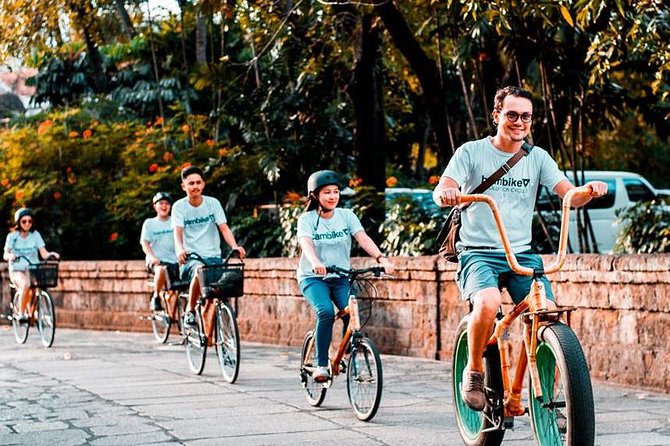
One of the tour’s best features is the chance to ride along the old Intramuros walls. From a bicycle, you experience the fortifications at ground level while moving through the district at a human pace. The wall sections also create a different view from the usual street-level church and plaza stops.
The cycling itself is generally easy and flat. Several accounts describe the ride as comfortable for a range of fitness levels, but the route is not isolated from city traffic. At times, you share roads with cars and motorcycles, and pedestrians can crowd the streets.
That is where the escort system becomes important. A second guide may ride with the group and help stop or block traffic so the riders can pass together. Even with that support, children should be confident on a bicycle, and adults should be comfortable riding in an urban setting.
Puerta del Parian and Manila’s Chinese influence
Puerta del Parian is given about 30 minutes, making it one of the more substantial stops. Here, the guide explains the gate, the public plaza, and the role of Chinese people in Philippine history.
This stop helps widen the story beyond a simple Spanish Colonial narrative. Intramuros developed through contact among different communities, and the gate gives you a place to discuss trade, movement, and the social groups connected to Manila.
The longer pause is useful because you have time to listen and look around rather than hear a quick fact before moving on. It is also a good photo stop, though the amount of free time can vary with traffic, weather, and the pace of the group.
Plaza Roma and Manila Cathedral
Plaza Roma is a short 10-minute stop surrounded by important buildings, including Manila Cathedral. The guide explains the plaza’s role and points out the establishments around it.
You then spend about 10 minutes at Manila Cathedral, described as the heart of Christianity in the Philippines. The church has a long and fascinating history, and the visit includes a look at its interior when access allows.
These stops are close together, which makes the bicycle especially useful. You are not wasting energy walking between nearby landmarks, and the guide can connect the plaza, church, and civic life of old Intramuros in one explanation.
The time inside the cathedral is brief. You should see this part as a focused introduction rather than a full church tour. If religious architecture is your main interest, you may want to return later for a slower visit.
Fort Santiago is the main event
Fort Santiago receives about 40 minutes, the longest stop on the route. This stone fortress is one of the most important places in Intramuros, with several locations tied to Philippine history.
The bicycle takes you to the entrance, but you will do some walking inside the fort. The tour information specifically notes a small amount of walking here, so wear practical shoes rather than treating this as a ride from start to finish.
Fort Santiago gives the route its strongest sense of scale. You can see why the site mattered as a defensive stronghold, while the guide points out places connected to major events and figures in the country’s past.
This is also where the fixed schedule can feel limiting. Forty minutes is enough for an introduction and key sights, but not enough for a slow examination of every corner. I would listen carefully at the start of the visit, then use spare moments for photographs.
San Agustin Church and the final return
The final listed stop is San Agustin Church, also called the Immaculate Conception Parish. The visit lasts about five minutes and introduces the church as the oldest in the Philippines and a UNESCO World Heritage Site.
Five minutes is short, especially for a church with such importance. Still, the stop lets you see one of Intramuros’ essential landmarks without adding another long walking segment to the tour.
The activity ends back at the Bambike meeting point. A cold towel is provided at the end, a small but welcome touch after riding in warm weather. Refreshments and Filipino snacks are also part of the finish, and the sweet cold treat described after some outings makes a pleasant close to the tour.
What the guides add to the experience
The strongest part of this tour is the guiding. Anj has been praised for being funny, warm, and well prepared. Chi and Chi Chi have been noted for attentive care, while JD and Josh have received strong marks for clear explanations and keeping the group safe.
Paolo is especially well regarded for telling the history of Intramuros with energy and detail. Justine has been praised for helping with photographs and maintaining a relaxed pace. Mika has also been noted for making the experience educational without making it feel stiff.
Guide quality can vary from one departure to another, but the repeated pattern is clear: the tour depends on the person leading it. A good guide turns short stops into connected stories and helps you understand why each gate, plaza, church, and wall matters.
You can also expect help with group photos. Guides may offer to take pictures, which is useful because the route includes several places where you will want a record of the bamboo bikes and old fortifications.
The pace, road conditions, and weather
The pace is slow. That is good news if you want a gentle introduction to Intramuros, but less appealing if your idea of a bike tour involves long stretches of uninterrupted riding.
The streets can be crowded with pedestrians, and some sections include cars and motorcycles. The guides work to keep the group together, but you still need to pay attention and ride confidently. Families can bring children, provided the children can handle a bicycle well in city traffic.
Rain does not automatically stop the tour. Ponchos are provided when needed, and the warm weather can make a shower manageable. Still, wet roads, limited visibility, and changing conditions can affect the experience. The operator may cancel for poor weather and offer another date or a full refund.
Some parts of Intramuros may also have unpleasant sewage-like smells. That is an environmental issue in the district, not something a bamboo bike can fix. It is worth knowing so you are not surprised if the air is less pleasant in certain areas.
Is $39 a fair price?
At $39 per person, the tour is not the cheapest way to see Intramuros. You could walk between many of the same sights for less, especially if you are comfortable finding your own route.
The value comes from the combination of equipment, guiding, safety support, and structure. You receive a bamboo bicycle, helmet, local guide, tour escort, water, sunscreen or poncho when needed, a cold towel, and refreshments after the ride. The entrance arrangement at Fort Santiago and the café stop are also included as specified for the experience.
I think the price makes sense if you have limited time in Manila or want a clear introduction without arranging each stop yourself. It is also good value for solo visitors who want a social activity, since the group size is limited to 15 people.
The price is less convincing if you are an experienced cyclist hoping for miles of riding. In that case, the tour may feel too stop-heavy. You are paying for interpretation and access to the district at an easy pace, not for distance.
Who should book this Intramuros bike tour?
I would suggest it for first-time visitors to Manila, history fans, solo visitors, couples, and families with confident young riders. It suits people who prefer short rides, regular stops, and a guide who can explain the city as you move through it.
You do not need a high fitness level for the cycling, but you should be comfortable on a bike. The route is mostly flat, yet traffic and pedestrians require awareness.
I would think twice if you dislike heat, rain, crowded streets, or fixed schedules. You should also choose a different activity if you want long, uninterrupted cycling or extensive time inside each monument.
Practical details worth knowing
The tour lasts about three hours and returns to the starting point at Bambike headquarters in the Plaza San Luis Complex. Mobile tickets are accepted, and confirmation is provided when you book.
Children must be accompanied by an adult. Service animals are allowed, public transportation is nearby, and most people can participate. Since some walking is required inside Fort Santiago, comfortable shoes are a sensible choice.
Free cancellation is available up to 24 hours before the start time for a full refund. Changes or cancellations inside that 24-hour window are not accepted for a refund, and the cut-off uses Manila local time.
Should you book it?
Book this tour if you want to understand Intramuros without wearing yourself out. The bamboo bikes are fun, the route covers the district’s major sights, and the guides add the historical detail that makes the walls and gates meaningful.
Just set the right expectations. This is a gentle, stop-and-listen sightseeing ride, not a cycling challenge. If that sounds like your kind of morning or afternoon, $39 buys a well-supported introduction to old Manila, with a cold towel and Filipino snack waiting at the end.
FAQ
How long is the bamboo bicycle tour?
The experience lasts approximately three hours.
Where does the tour start?
It starts at Bambike headquarters in the Plaza San Luis Complex, at Real Street corner M. General Luna Street, Intramuros, Manila.
Where does the tour end?
The activity ends back at the Bambike meeting point.
What sights are included?
The route includes Casa Manila, the Japanese Cannon, Puerta Real Gardens, Café Y Ruedas, Puerta del Parian, Plaza Roma, Manila Cathedral, Fort Santiago, and San Agustin Church.
Do I need to bring my own bicycle?
No. Use of a bamboo bicycle is included.
Is a helmet provided?
Yes. Helmet use is included.
Is the ride difficult?
The ride is described as flat and easy, with frequent stops. Some riding takes place on city roads shared with cars and motorcycles, so children and adults should be comfortable riding in that setting.
What happens if it rains?
The tour operates in all weather conditions, and rain ponchos are provided when needed. If poor weather causes the operator to cancel, you can receive a different date or a full refund.
Are refreshments included?
Bottled water is available during the ride, and refreshments or Filipino snacks are provided afterward as specified. A cold towel is also included at the end.
Can children join the tour?
Yes. Children must be accompanied by an adult, and they should know how to ride well because parts of the route use city roads.
How many people can join?
The tour has a maximum group size of 15 people.
Can I cancel for a full refund?
Yes, if you cancel at least 24 hours before the experience start time. Cancellations or changes made less than 24 hours in advance are not accepted for a refund.
Just added in Manila
- Underground River with Lunch★ 3.6 · 5 reviews
- Manila Night market and Street Food Tour★ 5.0 · 2 reviews
- Cruise Shore Excursion of Taal Volcano with Lunch★ 4.5 · 4 reviews
- Unforgettable Manila Fishing Village Day Excursion 2024★ 5.0 · 4 reviews
- Ultimate 8-Day Palawan Island Tour Package from Manila City★ 5.0 · 1 review
- Tagaytay + Hidden Valley Springs: A Scenic Escape w/ Transfers★ 4.0 · 4 reviews
- Tagaytay Day Tour sightseeing with Panoramic Taal volcano view★ 5.0 · 6 reviews
- 3 Days Private Tour in Banaue Ifugao visiting Batad Rice Terraces★ 3.5 · 3 reviews
Intramuros Walks, compared.
Intramuros, Manila: Historical Bamboo Bike Tour
Read our review →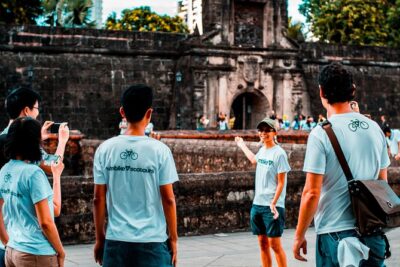
Intramuros, Chinatown, and Old Manila Half-Day Tour
Read our review →
Manila Old and New: Sightseeing Tour Including Intramuros and Fort Santiago
Read our review →
Explore Intramuros: Introduction to Philippine History
Read our review →
Experience Manila’s Heritage: Intramuros & More in Half a Day!
Read our review →
Manila by Night: Discovering City Highlights with Intramuros
Read our review →Browse the lists this tour appears in