
Reviewed · INTRAMUROS WALKS
Manila’s Walled City: Intramuros Walking Tour
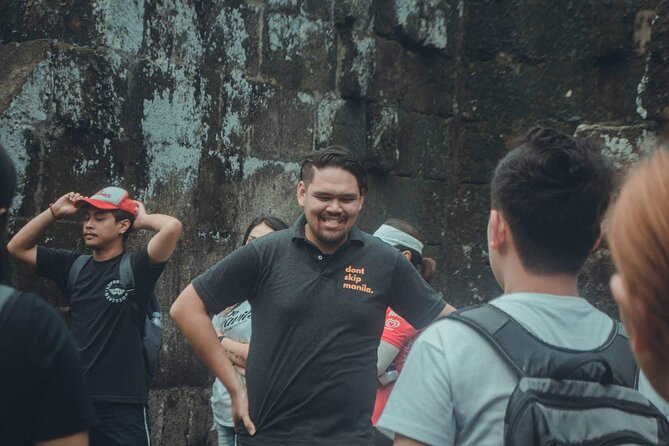
Old Manila tells its story in stone. This 3.5-hour Intramuros walk brings together Fort Santiago, José Rizal’s final days, grand churches, wartime memory, and colonial homes in one well-planned outing. I especially like the local English-speaking guides, including Andre and Ann, who are praised for clear storytelling and humor. I also like the simple street snacks and bottled water, small touches that matter under Manila’s tropical sun.
The main consideration is the heat. You will walk a moderate amount, and some stops require respectful clothing, so this is not a tour for rushing out in beachwear. The group can reach 30 people, which is manageable but less intimate than a private guide.
In This Review
- Key reasons to consider this Intramuros tour
- Why Intramuros is worth your time
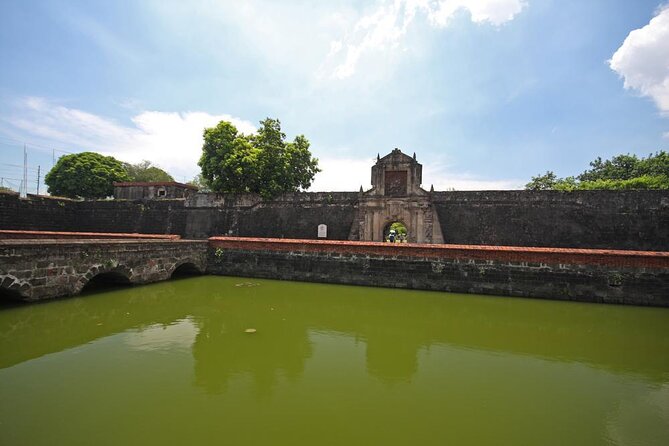
- Starting at Fort Santiago
- Remembering José Rizal at the shrine
- Manila Cathedral and the changing face of faith
- Seeing the walls by kalesa or Tranvia
- Facing the tragedy at Memorare Manila 1945
- San Agustin Church, a UNESCO site in 15 minutes
- Casa Manila and the end at Plaza San Luis
- What the guides do best
- Snacks, heat, clothing, and pace
- Is $35 good value?
- Practical details before you book
- Who should book this walking tour?
- Should you book it?
- FAQ
- How long does the Intramuros walking tour last?
- What time of day can I take the tour?
- Where does the tour start?
- Where does the tour end?
- Is admission included?
- Is food or water provided?
- How much walking is involved?
- What should I wear?
- Can I cancel for a refund?
Key reasons to consider this Intramuros tour
- Fort Santiago and the Rizal Shrine give the tour a strong historical center, linking Manila’s military past with the life of national hero José Rizal.
- San Agustin Church is a UNESCO World Heritage Site and one of the most important surviving Spanish-era churches in the Philippines.
- A kalesa or Tranvia ride offers a change of pace after walking and gives you a broader look at the walled city.
- Guides such as Andre and Ann are praised for energy, humor, clear English, and the ability to explain complicated events simply.
- Taho, ice cream, and bottled water make the outing more comfortable, especially during a warm afternoon departure.
- Morning and afternoon start times make it easier to fit Intramuros into a wider Manila schedule.
Why Intramuros is worth your time
Intramuros means within the walls, and that name explains the basic appeal. This is Manila’s old Spanish walled city, a compact area where military defenses, churches, museums, monuments, and old homes sit close together.
A walk here helps you understand that Philippine history did not begin with Spain. The tour places Manila’s past in a wider sequence, from pre-colonization peoples through Malay influences, Spanish rule, the American period, and the Japanese occupation. That broader frame matters because Intramuros can otherwise look like a collection of attractive old buildings without much connection between them.
I like this experience for its range. You do not spend three hours looking only at churches or only at ruins. Instead, you move from a fortress to a shrine, a cathedral, a war memorial, a Baroque church, and a colonial house.
The best guides also make room for questions. Andre is repeatedly praised for his energy, humor, and clear English, while Ann is described as friendly, lively, and well informed. Guide assignments can vary, but the strongest praise consistently centers on the human side of the experience: the ability to make old events easy to follow without turning the tour into a dry lecture.
More City Tours in Manila
- Manila Old & New City Walking Tour With A Guide
★ 4.0 · 9 reviews - TRANSIT CITY TOUR in MANILA
★ 4.0 · 6 reviews - Private Filipino Cooking Class in the Heart of Manila,Makati City
★ 5.0 · 5 reviews
Starting at Fort Santiago
The tour begins at 1 Sta. Clara Street, inside Intramuros, with Fort Santiago. Plan to arrive ready to walk, since hotel pickup and drop-off are not included.
Fort Santiago was first built as a citadel for the newly established Spanish city of Manila. It is the natural opening stop because it introduces Intramuros as a place of defense and government, not simply a preserved historic district.
You can expect about an hour here, with admission included. That gives your guide time to explain the fort’s role and point out its surviving structures, walls, and historical spaces. The fort is described as well maintained, and there are good opportunities for photographs.
This is also a place where the weather matters. Parts of the visit involve walking outdoors, and tropical heat can build quickly. Wear light, comfortable clothing, carry sun protection, and take the supplied water seriously rather than treating it as a decorative extra.
Remembering José Rizal at the shrine
The Rizal Shrine follows, with about 30 minutes and admission included. José Rizal is one of the Philippines’ national heroes, and he was imprisoned at Fort Santiago before his execution in 1896.
The shrine museum displays memorabilia connected with Rizal. This stop gives the fort a more personal focus. Instead of thinking only about walls, soldiers, and colonial power, you are brought into the story of a writer, thinker, and national figure whose imprisonment and death became central to Philippine identity.
The tour is particularly useful if you know little about Rizal before arriving. A guide can supply the basic political setting and explain why his story matters to the country. If you already know about him, the museum gives you a chance to connect that knowledge with the actual place where he was held.
Thirty minutes is enough for an introduction, but not for a slow museum study. If you prefer to read every display in detail, you may want additional time in Intramuros after the tour ends.
Manila Cathedral and the changing face of faith
The next stop is Manila Cathedral, officially the Minor Basilica and Metropolitan Cathedral of the Immaculate Conception. The visit lasts about 20 minutes, and there is no separate admission charge.
The cathedral helps show how Catholicism shaped the Spanish colonial city. It is also a useful contrast with Fort Santiago. One site expresses military power, while the other reflects religious authority and the public life of the colonial capital.
Keep in mind that this is an active place of worship. Casual clothing is suitable for much of the walk, but places of worship and selected museums require more modest dress. Mini-shorts and sleeveless tops can result in refused entry, so choose clothing that works for the entire route.
The short stop means you should not expect a lengthy architectural study. Its value comes from the guide’s explanation and from seeing the cathedral as part of Intramuros rather than as an isolated church.
More Intramuros walks:
- Manila Old and New: Sightseeing Tour Including Intramuros and Fort Santiago
★ 4.5 · 377 reviews - Express Bamboo Bike Tour inside Intramuros
★ 4.5 · 66 reviews - Manila: Intramuros, Chinatown, and Old Manila Half-Day Tour
★ 5.0 · 37 reviews - Intramuros Sunset Tours by Bambike
★ 5.0 · 33 reviews
Seeing the walls by kalesa or Tranvia
At some point during the route, you take a kalesa, a horse-drawn carriage, or ride the Tranvia, a tram, around the walled city. The exact option may depend on the day’s arrangements.
This is a smart break in a walking tour. After Fort Santiago, the shrine, and the cathedral, sitting back lets you see more of Intramuros as a whole. You also get a different view of the streets, walls, and historic buildings than you do on foot.
A carriage ride has an old-fashioned feel, while a Tranvia gives the outing a more group-oriented sightseeing character. The kalesa was singled out as a relaxing and novel part of the experience, especially for families.
The supplied details do not list the ride separately among the included items, so confirm the exact arrangement when booking if this matters to your budget. The description does present the ride as part of the route, but the separate admission and transport inclusions are not fully itemized.
Facing the tragedy at Memorare Manila 1945
The Memorare Manila 1945 Monument receives about 20 minutes. It remembers the lives lost during the Battle for the Liberation of Manila, fought from February 3, 1945, between Filipino and American forces and Imperial Japanese troops.
This is an important change in tone. Intramuros is often presented through Spanish colonial architecture, but the monument reminds you that the area also carries the scars of the Second World War. The stop adds modern wartime memory to a tour that begins with a 16th-century fortress.
You may find this brief visit especially useful because it prevents the old city from becoming a postcard setting. The walls and churches are visually striking, but the monument points to the human cost of Manila’s past.
There is no admission charge. The stop is short, so listen closely to the guide’s explanation and use the time to place the battle within the larger story of Manila.
San Agustin Church, a UNESCO site in 15 minutes
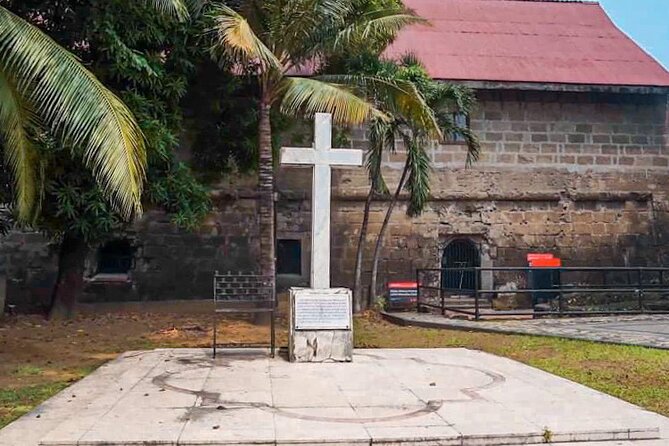
San Agustin Church is one of the tour’s most important stops. The church was completed in 1607 and is recognized by UNESCO as part of the Baroque Churches of the Philippines World Heritage listing.
The visit lasts about 15 minutes and has no separate admission charge. That is not long, but it gives you a chance to see one of the great surviving churches from the Spanish colonial period and understand why it matters.
This stop also shows the tour’s practical rhythm. You are not left in one building for an hour, then forced to hurry through everything else. Instead, the guide gives you the historical meaning of each place and keeps the group moving.
If church architecture is your main interest, you may wish for more time. For a first look at Intramuros, though, the short visit works well. Dress respectfully, avoid mini-shorts and sleeveless tops, and remember that religious sites may have their own entry expectations.
Casa Manila and the end at Plaza San Luis
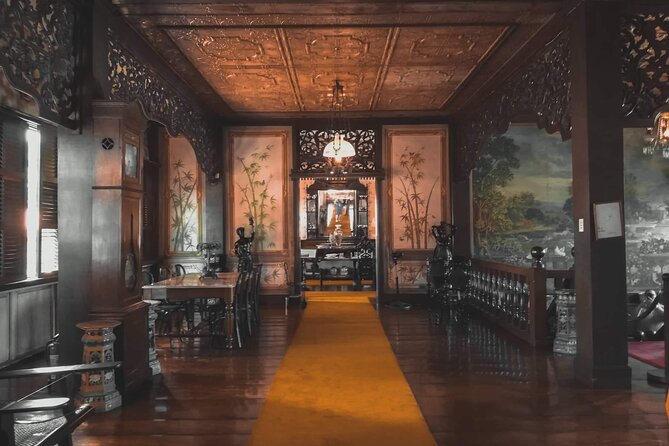
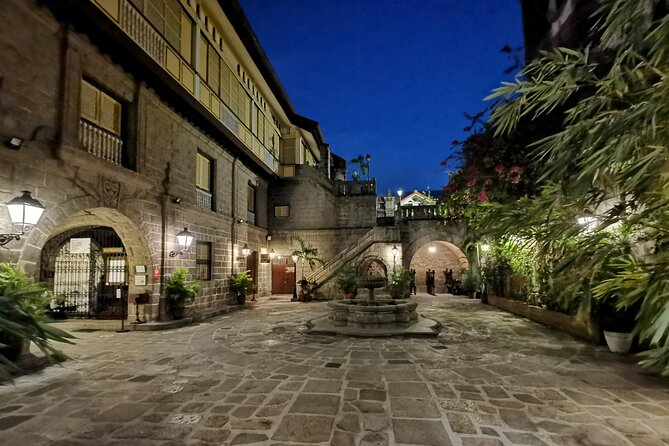
The final major stop is Casa Manila, a museum presenting colonial life during the Spanish period. It occupies a stone-and-wood structure dating to around 1850, in the Plaza San Luis complex.
Admission is included, and the visit lasts about 30 minutes. After the fortress, cathedral, and wartime monument, Casa Manila turns attention toward domestic life. You get a sense of how colonial-era households were presented through their furnishings, architecture, and daily setting.
I find this a useful ending because it rounds out the story. Fort Santiago explains power and defense. San Agustin shows religion. Memorare Manila recalls war. Casa Manila brings the discussion into the home.
The tour ends at Casa Manila in the Plaza San Luis Complex on General Luna Street. That makes the final stop convenient if you want to continue exploring Intramuros on foot, though no onward transport or hotel return is provided.
What the guides do best
The guide is the main reason this outing earns strong praise. Ann and Andre are both described as personable, energetic, funny, and easy to understand. Those qualities matter in Intramuros, where the history covers centuries and includes several colonial powers.
A good guide must move between Malay and pre-colonial roots, Spanish rule, American influence, Japanese occupation, José Rizal, and the Battle of Manila without losing the thread. The best feedback points to guides who use stories, humor, and even a visual aid booklet to make the material easier to follow.
That approach works for families, too. One account describes a teenager and a six-year-old keeping up with the pace, while another highlights the tour’s value for Canadian children of Filipino descent. The experience can give younger visitors a clear introduction without expecting them to absorb every date and political detail.
Still, your experience may depend on the individual guide and group dynamics. With a maximum of 30 people, questions may take longer in a full group, and you will not have the same freedom as on a private tour.
Snacks, heat, clothing, and pace
The tour includes bottled water and snacks. One particularly appealing detail is the chance to try simple street treats such as taho and ice cream. Taho, a sweet snack made with soft tofu, is a distinctly local touch, while ice cream offers welcome relief in hot weather.
The walking is described as moderate. You should wear comfortable shoes and casual clothing suited to a tropical climate. Morning departures may be preferable if you want cooler conditions, while an afternoon start can fit well around other Manila plans.
Do not dress only for the weather. You also need to meet the rules for churches and selected museums. A breathable outfit with covered shoulders and suitable leg coverage is the safest choice.
Children must be accompanied by an adult. The child rate applies only when sharing with two paying adults, so check the booking conditions carefully if you are traveling as a family.
Is $35 good value?
At $35 per person, this is a reasonable price for a guided half-day visit, especially because Fort Santiago, the Rizal Shrine, and Casa Manila admissions are included. You also receive bottled water, snacks, and an English-speaking local guide.
The real value is the structure. You could walk around Intramuros on your own for less, but you would need to arrange entry tickets, research the sites, connect the different eras, and decide how to use your time. The guide handles that work and gives the buildings a clear purpose.
The price is less attractive if you already know Intramuros well or want to spend long periods inside each museum. You are paying for an organized overview, not a slow specialist study.
Group discounts may be available, and the maximum group size is 30. If you are traveling with family or friends, check the current group pricing before booking.
Practical details before you book
The tour lasts approximately three hours and 30 minutes. You can choose a morning or afternoon departure, and a mobile ticket is available.
The starting point is 1 Sta. Clara Street, Intramuros, Manila. The endpoint is Casa Manila at the Plaza San Luis Complex. Public transportation is nearby, but hotel pickup and drop-off are not included.
Most people can take part, provided they are comfortable with a moderate amount of walking. The tour requires good weather, and a minimum number of participants may be required. If poor weather or an insufficient group causes cancellation, you are offered another date or experience, or a full refund.
You can cancel for a full refund up to 24 hours before the start time. Cancellations or changes made less than 24 hours in advance are not accepted for a refund.
Who should book this walking tour?
I would choose this for a first visit to Manila, especially if you want a clear introduction to Philippine history rather than a simple photo stop. It suits families, first-time visitors, and anyone who wants a guide to connect the fort, churches, museums, and wartime sites.
It is also a good choice for people with Filipino family roots who want a broad cultural and historical setting. The guide’s stories can make the landmarks more meaningful than a self-guided walk.
I would think twice if you dislike walking in warm weather, need a private pace, or want long visits inside individual museums. The schedule is organized and fairly active, with some stops lasting only 15 or 20 minutes.
Should you book it?
Yes, if you want an efficient and friendly introduction to old Manila. The strongest reasons are the well-chosen route, included admissions, local snacks, and guides such as Andre and Ann, whose humor and clear explanations help hold together a large amount of history.
Choose a morning departure for a better chance of more comfortable walking conditions. Dress modestly, wear good shoes, and treat the $35 price as payment for context and planning, not just entry tickets. For a first look at Intramuros, this tour gives you a useful foundation and leaves you at Casa Manila with plenty of historic Manila still to explore.
FAQ
How long does the Intramuros walking tour last?
The tour lasts approximately three hours and 30 minutes.
What time of day can I take the tour?
You can choose between morning and afternoon departures.
Where does the tour start?
The meeting point is 1 Sta. Clara Street, Intramuros, Manila, 1002 Metro Manila, Philippines.
Where does the tour end?
The tour ends at Casa Manila in the Plaza San Luis Complex on General Luna Street, Intramuros.
Is admission included?
Admission is included for Fort Santiago, the Rizal Shrine, and Casa Manila. Manila Cathedral and San Agustin Church have no separate admission charge listed.
Is food or water provided?
Yes. Bottled water and snacks are included. The snacks may include local treats such as taho and ice cream.
How much walking is involved?
The tour includes a moderate amount of walking. Comfortable clothing and suitable shoes are advised for the tropical climate.
What should I wear?
Casual clothing is suitable, but churches and selected museums require a dress code. Mini-shorts and sleeveless tops are not allowed at those sites.
Can I cancel for a refund?
Yes. You can cancel at least 24 hours before the experience start time for a full refund. Changes or cancellations made less than 24 hours in advance are not accepted for a refund.
More Walking Tours in Luzon
- Manila Intramuros Walking tour with Local Tour Guide
★ 5.0 · 33 reviews - Intramuros & Chinatown Manila Tour – Walking, Food & Culture
★ 4.5 · 32 reviews - Manila: Binondo Walking Tour ( Oldest Chinatown )
★ 5.0 · 30 reviews - Manila Private Walking Tour With A Local Guide (Private Tour)
★ 4.5 · 7 reviews
Just added in Luzon
- Private Filipino Cooking Class in the Heart of Manila,Makati City★ 5.0 · 5 reviews
- Villa Escudero Tour with Lunch From Manila (SHARED)★ 5.0 · 5 reviews
- VILLA ESCUDERO DAY TOUR with Carabao Cart Ride and Bamboo from Manila★ 4.0 · 6 reviews
- Villa Escudero Coconut Plantation Day Trip from Manila★ 3.5 · 9 reviews
- Skip the Line: Villa Escudero Plantation & Resort Day Pass Ticket★ 4.5 · 11 reviews
- Tagaytay Day Tour From Manila★ 5.0 · 1 review
- The Jeepney & Tuk Tuk Adventure ride with Local Guide★ 4.5 · 4 reviews
- Angeles City / Clark Airport to La Union (Bauang, San Fernando, San Juan)★ 3.5 · 4 reviews
Intramuros Walks, compared.

Intramuros, Manila: Historical Bamboo Bike Tour
Read our review →
Experience Intramuros with Bamboo Bicycle – Ecotours
Read our review →Intramuros, Chinatown, and Old Manila Half-Day Tour
Read our review →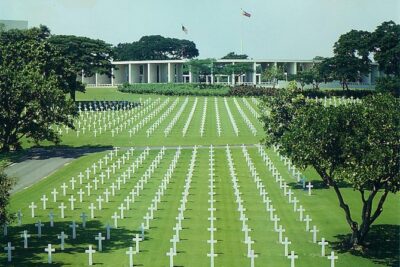
Manila Old and New: Sightseeing Tour Including Intramuros and Fort Santiago
Read our review →
Explore Intramuros: Introduction to Philippine History
Read our review →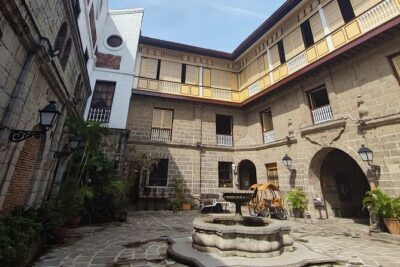
Experience Manila’s Heritage: Intramuros & More in Half a Day!
Read our review →
Manila by Night: Discovering City Highlights with Intramuros
Read our review →Browse the lists this tour appears in