
Reviewed · INTRAMUROS WALKS
Express Bamboo Bike Tour inside Intramuros
History rolls by here. This short cycling tour gives you a lively way to see Intramuros, Manila’s old walled district, without spending half a day on foot. I especially like the bamboo bicycles, which make the outing feel tied to the local setting, and the friendly guide-led storytelling at sites connected to Spanish rule, Chinese influence, and World War II. The main point to consider is the pace: with about two hours and several stops, you will see highlights rather than study each place in depth.
I also like that the group is capped at 15 people, with personal bike selection at the start. Guides such as Anj and Josh have earned praise for humor, clear explanations, and a relaxed manner. Bring patience for hot weather, traffic inside the district, and a schedule that may run closer to 1.5 or 2 hours depending on stops, weather, and the group.
In This Review
- Five things to know before you book
- Why a bamboo bicycle works so well in Intramuros
- Casa Manila: a quick look at colonial domestic life
- Japanese Cannon and the wartime chapter
- Puerta Real Gardens and the walls of Intramuros
- Puerta del Parian and Chinese influence
- Aduana Building and the machinery of colonial government
- Plaza Roma and Manila Cathedral
- What the guides add to a short route
- Price, timing, and what you receive
- Weather, comfort, and riding conditions
- Who should choose this Intramuros ride?
- Should you book the Express Bamboo Bike Tour?
- FAQ
- How long does the Express Bamboo Bike Tour last?
- How much does the tour cost?
- What is included in the price?
- Where does the tour start and finish?
- What sights are included?
- Can children join the tour?
- What happens if bad weather cancels the tour?
Five things to know before you book
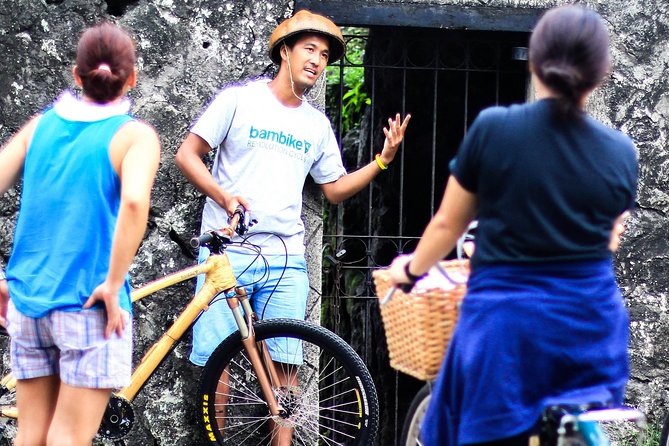
- The bamboo bike is part of the experience, not just transport: You get a comfortable eco-friendly bicycle and helmet, with your bike selected to suit your preference.
- The route covers eight major Intramuros sights: Casa Manila, Japanese Cannon, Puerta Real Gardens, Puerta del Parian, Aduana Building, Plaza Roma, and Manila Cathedral are all included after the starting point.
- Guides add the real value: Anj and Josh are specifically praised for friendly instruction, jokes, trivia, and useful explanations of Philippine history.
- Weather support is built in: Sunscreen and rain ponchos are available when needed, and the tour operates in all weather conditions unless poor weather causes cancellation.
- The express format suits a short Manila stay: At $22.40 per person, it offers a quick introduction to Intramuros, but not enough time for a slow visit inside every site.
Why a bamboo bicycle works so well in Intramuros
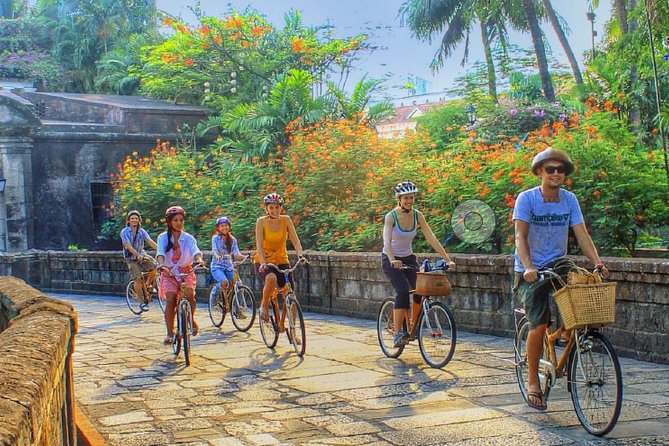
Intramuros is compact enough to explore by bicycle, yet broad enough that walking between its gates, plazas, churches, and colonial buildings can eat up valuable time. The bike lets you cover more ground while keeping the outing active.
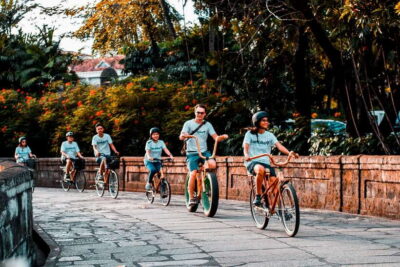
The bamboo frame gives the tour a clear local identity. You are not simply joining a standard sightseeing ride on an ordinary rental bicycle. The bicycle itself becomes part of the story, connecting the ride to eco-friendly design and the work of Bambike Ecotours Intramuros.
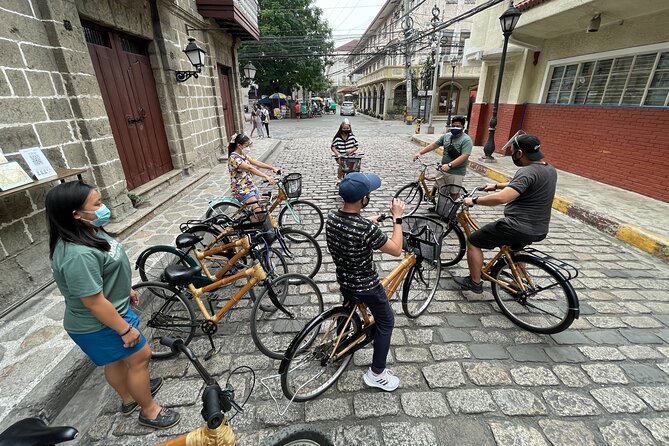
You begin at the Bambike headquarters in Casa Manila on Real Street. Staff handle waivers, explain the basics, and let you choose a bike according to your comfort. That personal choice matters. A poorly fitted bicycle can turn a pleasant ride into a chore, especially in Manila’s heat.
A helmet is included, and sunscreen or a rain poncho may be supplied when conditions call for it. Water was also prepared on at least some departures, along with practical touches such as mosquito repellent. Those extras are useful because the route is outdoors and the weather can change quickly.
The cycling itself is described as a fun workout. You do not need to be an athlete, and most people can participate, but you should be comfortable riding a bicycle for the length of the outing. Children must be accompanied by an adult.
More Intramuros walks:
- Manila Old and New: Sightseeing Tour Including Intramuros and Fort Santiago
★ 4.5 · 377 reviews - Manila’s Walled City: Intramuros Walking Tour
★ 5.0 · 82 reviews - Manila: Intramuros, Chinatown, and Old Manila Half-Day Tour
★ 5.0 · 37 reviews
Casa Manila: a quick look at colonial domestic life
The first major stop is Casa Manila, a reproduction of a traditional house influenced by Spanish Colonial Period architecture. It offers a different view of the past than a church or defensive gate.
Here, the focus is home life and the way architecture reflected colonial society. You can expect a short visit of about 15 minutes, enough for your guide to point out the building’s style and explain why this type of house matters to Intramuros.
The short stop is useful for orientation, though anyone wanting a long interior visit may find the time limited. This tour is designed to connect several places, not to give a full museum visit at each one.
Japanese Cannon and the wartime chapter
The ride continues along Muralla to the Japanese Cannon. This stop shifts the story from Spanish colonial rule to the Japanese Occupation and World War II.
A cannon may seem like a small sight compared with the district’s churches and gates, but it gives the guide a clear object around which to explain the wartime period. That change of subject helps you see Intramuros as more than a preserved Spanish quarter. The area also carries the marks of twentieth-century conflict.
You will spend about 10 minutes here. Expect interpretation rather than a long formal visit. Josh’s use of trivia and jokes has been especially well received, and that style can make difficult historical material easier to follow without turning the stop into a lecture.
Puerta Real Gardens and the walls of Intramuros
Puerta Real Gardens introduces the defensive side of the district. You will see one of Intramuros’s main gates and hear how Spanish planners used fortifications beyond the walls.
This stop lasts about 15 minutes, giving the guide room to explain the gate’s role and the wider defense strategy. The gardens also provide a change from streets and buildings, although the visit remains brief.
I like this part of the route because it connects the pieces. Casa Manila shows domestic architecture. The cannon points to wartime history. Puerta Real helps explain why Intramuros was built as a fortified center in the first place.
The ride may be comfortable in mild weather, but Manila can be hot. A helmet, water, sunscreen, and breathable clothing will help. Since the tour runs in all weather conditions, a poncho may appear when rain threatens.
A few more Luzon days worth comparing
- Intramuros, Manila: Historical Bamboo Bike Tour
★ 4.8 · 583 reviews - Manila: Guided Sunset Bamboo Bike Tour in Intramuros
★ 4.8 · 119 reviews - Boracay: ATV, Sky Bike and Zipline Adventure with Pickup
★ 4.6 · 12 reviews - Bohol Tour with Bike Zip Adventure
★ 4.0 · 1 review
Puerta del Parian and Chinese influence
Puerta del Parian is another main gate, but the historical theme changes again. Here, the guide discusses the importance of Chinese people and Chinese influence in Philippine history.
That context makes the route more than a sequence of photo stops. Intramuros developed through contact among different communities, and this gate gives you a chance to hear about a part of Manila’s past that can be missed if you only focus on Spanish buildings.
The scheduled stop is about 15 minutes. That is enough for a useful explanation and a look around, but not a long independent exploration. If you want to photograph architectural details, keep your camera ready before the guide moves the group onward.
Aduana Building and the machinery of colonial government
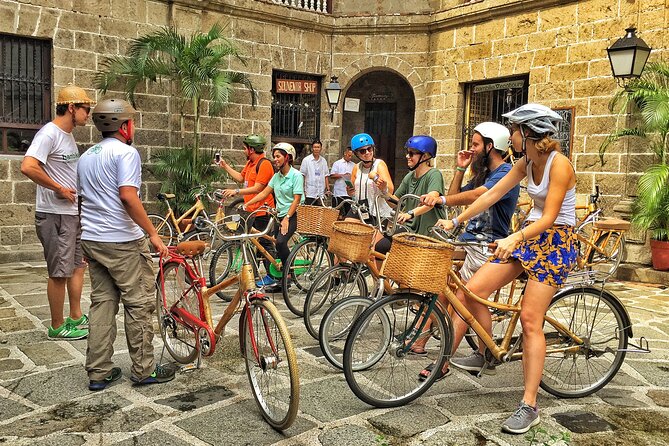
The Aduana Building, also called the Intendencia, is a Spanish colonial structure that housed government offices over the years. The stop is only about five minutes, so it functions mainly as a quick exterior viewing point and history lesson.
That short timing is one of the clearest signs that this is an express tour. You will receive a readable outline of the building’s role, but you should not expect a detailed architectural tour.
Even so, the stop earns its place. The route has already shown homes, gates, military history, and religious buildings. Aduana adds the government side of colonial Intramuros, making the district easier to understand as a working center rather than a collection of old walls.
Plaza Roma and Manila Cathedral
Plaza Roma is another short stop, listed at about five minutes. Your guide explains the public square and the buildings around it, including Manila Cathedral.
The plaza helps you see how public space worked inside Intramuros. Rather than rushing straight to the cathedral, the guide sets it within the surrounding civic and religious center.
Manila Cathedral receives a longer visit of about 15 minutes. It is described as the heart of Christianity in the Philippines, and you can expect to hear about its long history while seeing the interior.
This is likely to be one of the most meaningful stops for visitors interested in faith, architecture, or Manila’s changing past. Still, the visit is not a full religious or architectural study. Church access can also depend on conditions at the time, so dress and behave respectfully.
What the guides add to a short route
The route is fixed, but the guide’s style can shape the whole outing. Anj is praised for being informative and friendly. Josh is remembered for jokes and trivia that made Philippine history easier to understand.
That combination is important. A two-hour tour with seven stops can feel rushed if the guide simply recites dates. A personable host can keep the group moving while making each place feel connected to a wider story.
You also receive a tour escort or host, and gratuities are included. The maximum group size is 15, which is small enough for personal attention without making the price as high as a private tour.
The experience has earned a 4.7 rating from 66 reviews, with 94 percent recommending it. Those figures suggest consistent satisfaction, especially with the guides and the overall organization. They do not remove the tour’s limits: the route is short, the stops are timed, and your experience depends partly on weather and group pace.
Price, timing, and what you receive
At $22.40 per person, the tour offers solid value if you want a guided introduction to Intramuros and prefer cycling to walking. The fee includes:
- A local guide
- A tour host or escort
- Bamboo bicycle use
- Helmet use
- Sunscreen or rain ponchos when needed
- Gratuities
Food and drinks are not included, and alcoholic drinks cost extra if available for purchase. Some departures have finished with a cool towel and non-dairy ice cream, and one praised stop included a cafe and ice cream. Treat those as pleasant additions rather than guaranteed parts of the published package.
The advertised duration is about two hours. The detailed stops add up to roughly 100 minutes, while some completed outings have taken around 1.5 hours. That difference is not necessarily a problem, but you should avoid booking a tight connection immediately afterward.
The tour begins at Bambike Ecotours Intramuros on Real Street and ends back at the same meeting point. It is near public transportation, and mobile tickets make entry straightforward once your booking is confirmed.
Weather, comfort, and riding conditions
The tour operates in all weather conditions, but poor weather can lead to cancellation with a choice of a different date or a full refund. Dress for outdoor riding, and plan for sun, heat, or rain.
The provider may supply sunscreen and rain ponchos, which is helpful, but you should still wear practical clothing and shoes. The tour includes a workout, so it is not the best choice if you want a completely passive sightseeing experience.
Most people can participate, and service animals are allowed. Children need an accompanying adult. The information does not give a minimum age, bicycle size range, or detailed accessibility specifications, so ask the provider directly if those points matter to you.
Who should choose this Intramuros ride?
I would choose this tour if you have limited time in Manila and want to see several key sites without arranging transport between them. It also fits active visitors who enjoy learning while moving, rather than sitting on a bus or joining a long indoor lecture.
It works well for first-time visitors because the guide supplies a basic framework for Spanish rule, Chinese influence, wartime occupation, public life, and Christianity. You can then return to the places that interest you most.
Families may appreciate the bicycles and shorter format, provided children can ride safely and remain with an adult. Couples and small groups get a social outing with enough structure to avoid spending time figuring out the route.
I would hesitate if your priority is detailed museum access, long church visits, or complete freedom to stop for photographs. The express format keeps the route lively, but it also means you must keep moving.
Should you book the Express Bamboo Bike Tour?
Book it if you want a reasonably priced, active overview of Intramuros with a local guide who can turn dates and buildings into a connected story. The bamboo bike, small group, included helmet, weather gear, and friendly guide style give the tour more personality than a basic self-guided ride.
Skip it if you need a slow, highly detailed historical tour or cannot comfortably cycle outdoors. Also leave extra time after the stated two hours, since actual outings can vary.
For most short Manila visits, I see this as a practical first look at Intramuros. You cover the main themes, get some exercise, and finish with a better sense of where to return for a longer visit.
FAQ
How long does the Express Bamboo Bike Tour last?
The tour is advertised as approximately two hours. Some completed outings have lasted around 1.5 hours, so allow flexibility in your schedule.
How much does the tour cost?
The listed price is $22.40 per person.
What is included in the price?
The price includes a local guide, tour escort or host, bamboo bicycle, helmet, gratuities, and sunscreen or rain ponchos when needed.
Where does the tour start and finish?
The tour starts at Bambike Ecotours Intramuros on Real Street in Intramuros, Manila. It ends back at the meeting point.
What sights are included?
The route includes Casa Manila, Japanese Cannon, Puerta Real Gardens, Puerta del Parian, Aduana Building, Plaza Roma, and Manila Cathedral, along with the starting point at Bambike headquarters.
Can children join the tour?
Yes. Children must be accompanied by an adult.
What happens if bad weather cancels the tour?
If the activity is canceled because of poor weather, you will be offered another date or a full refund. You can also cancel up to 24 hours before the start time for a full refund. Cancellations made within 24 hours are not refunded.
Just added in Luzon
- Private Filipino Cooking Class in the Heart of Manila,Makati City★ 5.0 · 5 reviews
- Villa Escudero Tour with Lunch From Manila (SHARED)★ 5.0 · 5 reviews
- Skip the Line: Villa Escudero Plantation & Resort Day Pass Ticket★ 4.5 · 11 reviews
- VILLA ESCUDERO DAY TOUR with Carabao Cart Ride and Bamboo from Manila★ 4.0 · 6 reviews
- Villa Escudero Coconut Plantation Day Trip from Manila★ 3.5 · 9 reviews
- Tagaytay Day Tour From Manila★ 5.0 · 1 review
- The Jeepney & Tuk Tuk Adventure ride with Local Guide★ 4.5 · 4 reviews
- Pagsanjan Falls Adventure with Lunch and Rapids Experience★ 4.5 · 3 reviews
Intramuros Walks, compared.
Intramuros, Manila: Historical Bamboo Bike Tour
Read our review →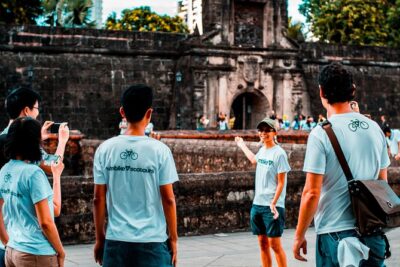
Experience Intramuros with Bamboo Bicycle – Ecotours
Read our review →Intramuros, Chinatown, and Old Manila Half-Day Tour
Read our review →
Manila Old and New: Sightseeing Tour Including Intramuros and Fort Santiago
Read our review →
Explore Intramuros: Introduction to Philippine History
Read our review →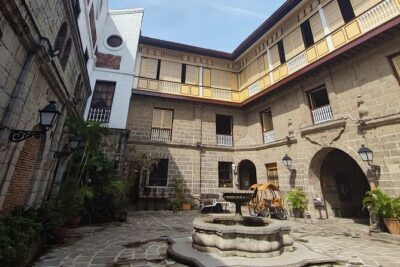
Experience Manila’s Heritage: Intramuros & More in Half a Day!
Read our review →Browse the lists this tour appears in