Reviewed · MANILA TOURS
Revolutionary Tour of Manila
Manila’s old walls still carry hard truths. This three-hour walk through Intramuros links Fort Santiago, Manila Cathedral, and San Agustin Church to the long fight for Philippine freedom. I like the focus on lesser-known patriots, and I like that the tour does not stop at Spanish rule but also explains the Philippine-American War and the Japanese occupation. The main concern is timing: church services can prevent entry, making the experience shorter than planned.
I also like the chance to visit Dr. Jose Rizal’s final prison cell and the wartime dungeons where hundreds of civilians died. Guide Jerome has earned special praise for clear English and German explanations. Still, you should confirm church access before booking, especially if seeing the interiors is important to you.
In This Review
- Key points to know before you go
- Why Intramuros is the right place to study Manila’s revolution
- Fort Santiago: one hour with the nation’s painful past
- Manila Cathedral: church and government in conflict
- General Luna Street and the Philippine-American War
- San Agustin Church: survival across several eras
- Calle Real and the changing face of Intramuros
- Guide quality and language options
- What $60 buys you
- Timing, comfort, and practical planning
- Who will get the most from this tour?
- Should you book the Revolutionary Tour of Manila?
- FAQ
- Where does the tour begin?
- Where does the tour finish?
- How long does the Revolutionary Tour of Manila last?
- What sites are included?
- Is transportation included?
- Are entrance fees included?
- Are food and drinks included?
- What languages are available?
- Is the tour wheelchair accessible?
- Can I cancel for a full refund?
- Can I always enter Manila Cathedral and San Agustin Church?
Key points to know before you go
- Fort Santiago anchors the tour: You spend about an hour at Manila’s most important military and political site.
- Rizal’s final cell adds a personal focus: The tour connects the national hero’s last days with reform, revolution, and independence.
- The dungeons are powerful but difficult: You can enter the cramped chambers linked to the deaths of 600 Filipino and American civilian prisoners of war.
- Two major churches show competing power: Manila Cathedral helps explain church and government tensions, while San Agustin Church reflects survival through repeated upheaval.
- Transport is included: This can make the route easier, and one highly positive account praised the transport as part of the fun.
- The meeting point is specific: Look for the guide holding the tour poster at Fort Santiago Gate on 18 Sta. Clara Street.
Why Intramuros is the right place to study Manila’s revolution
Intramuros is not just an old quarter with attractive stone walls. It is the part of Manila where religion, government, military power, education, and resistance repeatedly collided. A tour here works best when the streets are treated as evidence, not just scenery.
This experience follows that approach. You begin at Fort Santiago, then continue to Manila Cathedral, San Agustin Church, General Luna Street, and Calle Real. The route gives you a basic timeline, from the pre-Hispanic era through Spanish rule, the revolution, American control, and the Japanese occupation.
That range matters. A short tour cannot explain every political turn in Philippine history, but it can correct the simple idea that independence came from one rebellion or one famous figure. You get a wider view of reformists, patriots, prisoners, church leaders, soldiers, and civilians.
The published location says Nueva Vizcaya, but every named stop and the meeting point are in Intramuros, Manila. I would confirm the exact departure point when booking. The practical details point clearly to Fort Santiago Gate, 18 Sta. Clara Street.
A few more Manila days worth comparing
- Intramuros, Manila: Historical Bamboo Bike Tour
★ 4.8 · 583 reviews - Experience Intramuros with Bamboo Bicycle – Ecotours
★ 5.0 · 508 reviews - Manila: Intramuros, Chinatown, and Old Manila Half-Day Tour
★ 4.8 · 475 reviews
Fort Santiago: one hour with the nation’s painful past
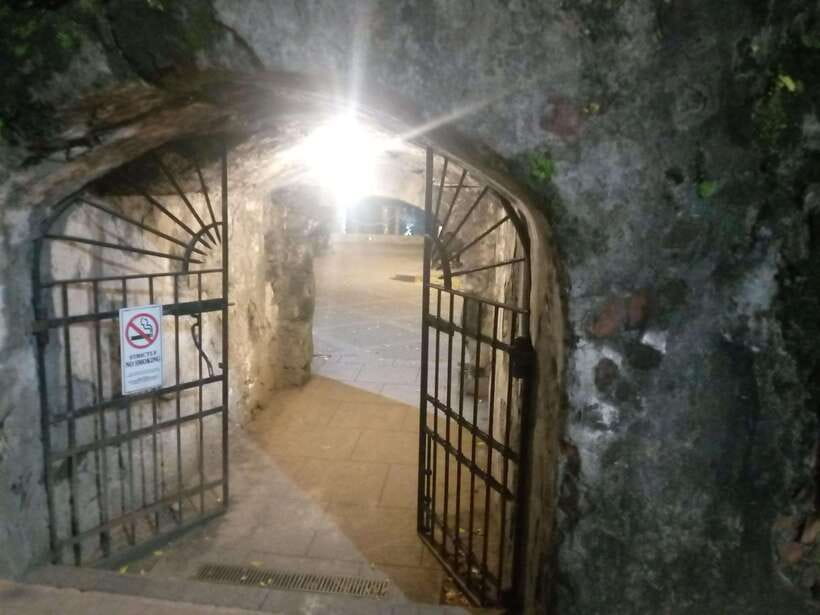
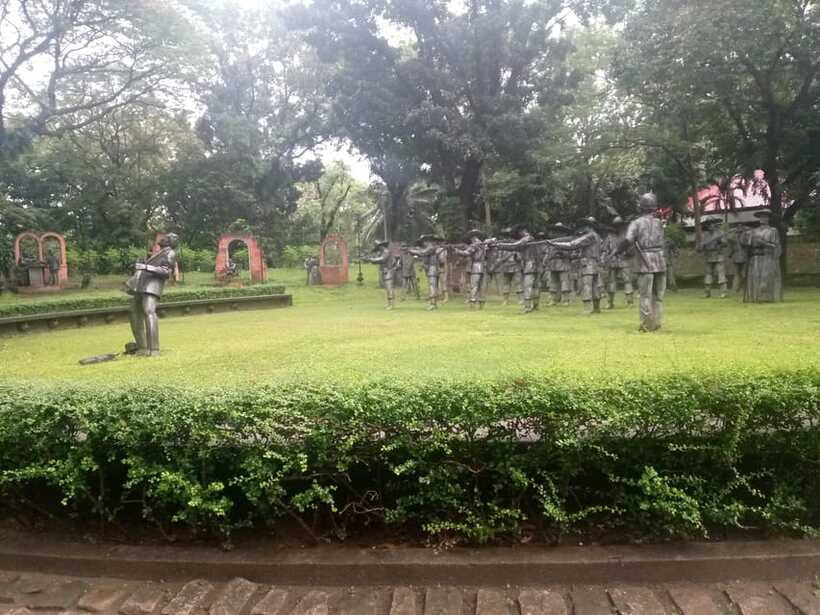
Fort Santiago is the longest stop, and rightly so. Plan on about an hour here. The fort provides the setting for the tour’s main historical thread: how foreign rule was challenged, reshaped, and eventually resisted.
You begin with the pre-Hispanic period and continue through the Spanish era, reformism, revolution, American rule, and the Japanese occupation. That broad sweep helps you place the fort in context. It was not merely a defensive structure. It also became a place of detention, interrogation, and death.
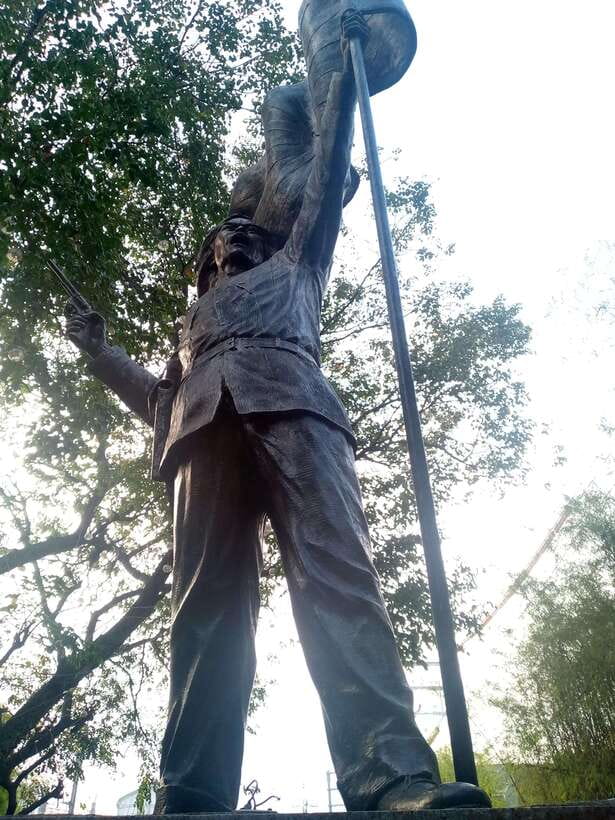
The most personal stop is the last prison cell of Dr. Jose Rizal. The tour uses it to explain the forces that shaped the country’s reform movement and revolution. Rizal’s story is often reduced to a statue, a school lesson, or a national holiday. Here, the cell gives the story a physical setting and connects his writing and ideas to the political crisis of his time.
I appreciate that the tour also gives space to unsung patriots. That is one of its best aims. You are not asked to see Philippine independence as the achievement of one celebrated man. Instead, the guide traces a longer trail of courage, reform, sacrifice, and resistance.
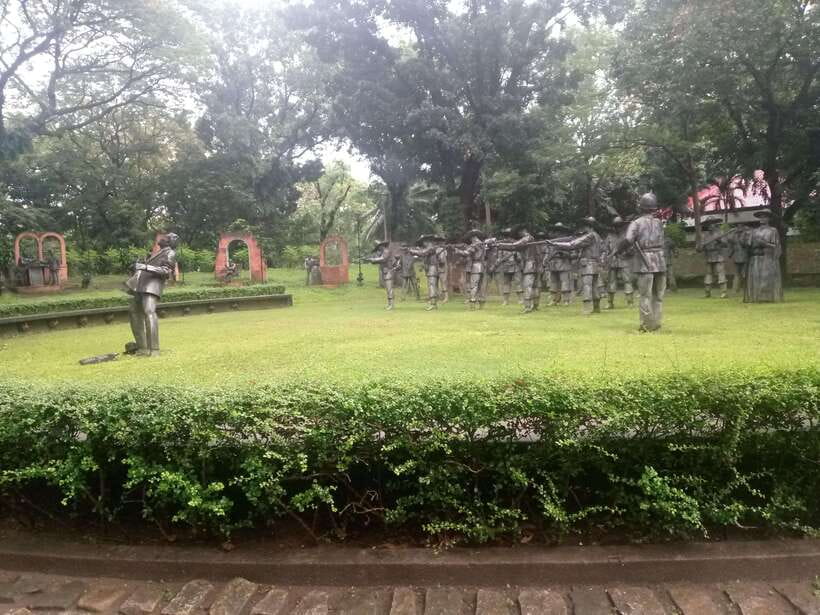
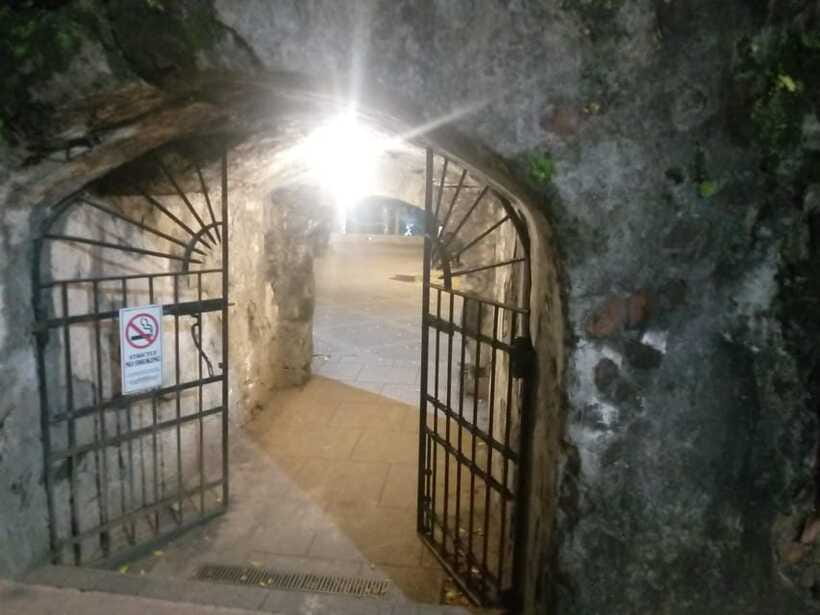
The fort’s dungeons require a different mood. The air is described as thin, and the chambers are tied to the deaths of 600 Filipino and American civilian prisoners of war. This is not a cheerful sightseeing stop, and it should not be treated as one. The experience asks you to pause and remember the people held there, including those whose names may not be widely known.
A mass grave connected with the prisoners provides another moment of remembrance. The guide’s role is important here. A strong explanation can turn a dark room and a memorial into a clear lesson about wartime suffering. The tour has received especially warm praise for detailed historical explanations, so this is likely to be one of the more substantial parts of the visit.
You should wear sensible shoes and expect the fort to be emotionally heavy. Apply sunscreen or mosquito repellent before arriving. Bare feet are not allowed, and alcohol and drugs are prohibited.
Manila Cathedral: church and government in conflict
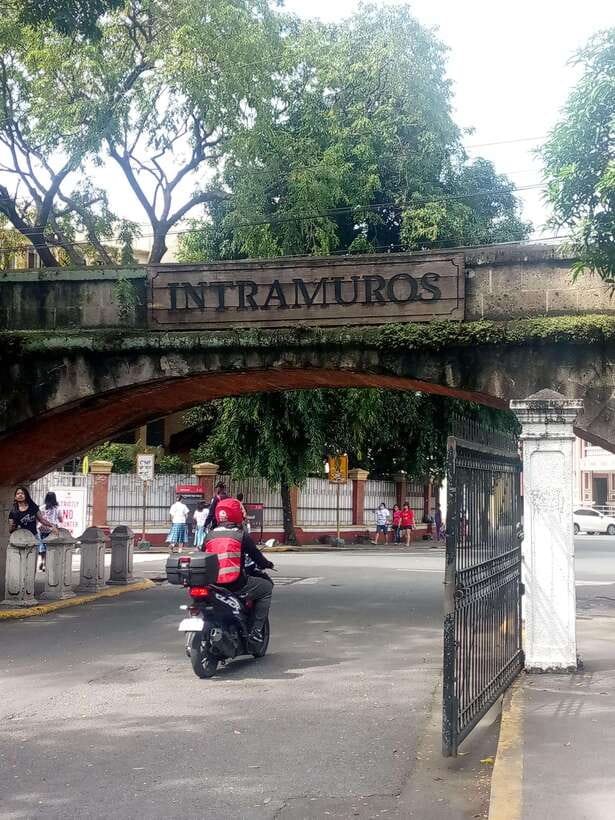
The next stop is Manila Cathedral, with about 30 minutes set aside for a guided visit. The key subject here is not only architecture or worship. The guide explains the power struggle between the church and the government.
That theme gives the cathedral a useful role in the tour. Spanish rule cannot be understood through military force alone. Religious authority affected public life, political decisions, and the shape of colonial society. By placing the cathedral after Fort Santiago, the route shows how state power and church power worked beside each other, and sometimes against each other.
The cathedral stop is also a welcome change of pace after the dungeons. You move from prison rooms and military control to a public religious space. That contrast helps you see Intramuros as a working center of authority, not simply a preserved old town.
There is one important catch. A service may prevent you from entering the church. In that case, the guide may still explain its role from outside, but the stop will not match the full interior visit described for the tour. This can also cut the total experience well below three hours.
If interior access matters to you, ask about scheduled Masses before setting out. The tour has no stated guarantee that entry will always be possible. This is the clearest practical weakness in the experience.
General Luna Street and the Philippine-American War
The walk along General Luna Street brings the story forward to the Philippine-American War. This part is valuable because many short Manila tours focus heavily on Spanish colonial buildings and give less attention to the conflict that followed.
The guide tells stories of Filipino courage and sacrifice during the war. You can use this stretch of the route to connect the political ideas introduced at Fort Santiago with the difficult reality of fighting for self-rule after Spanish control ended.
Do not expect a full military campaign in half an hour. The strength here is the human scale. You hear about choices, losses, and resistance rather than receiving only a list of dates. That helps explain why the Philippine struggle for independence did not end with the defeat of Spain.
The street itself also gives you a sense of how close the major institutions of Intramuros were to one another. The fort, cathedral, church, and old commercial district all sit within one compact historic area. That makes a guided walk useful. You are not simply moving between unrelated monuments. You are following the geography of power.
A completely different kind of day out:
- Manila: Old & New 4-Hour City Tour
★ 4.5 · 458 reviews - Manila Old and New: Sightseeing Tour Including Intramuros and Fort Santiago
★ 4.5 · 377 reviews - Spectacular Manila to Tagaytay: Full-Day Sightseeing Tour
★ 5.0 · 349 reviews - Makati Nightlife: VIP Access to Clubs, Rooftops & Go-Go Bars
★ 4.9 · 278 reviews
San Agustin Church: survival across several eras
San Agustin Church receives another 30-minute guided visit. Its main story is resilience through different periods of Philippine history.
The church gives the tour a chance to show how a building can outlast political systems, wars, and changes in Manila. The guide explains what it endured and why it remains such an important part of Intramuros.
This is also where the tour can feel more traditional. You see a major religious landmark, but the guide’s historical framing keeps it from becoming a quick photo stop. The church helps you consider how faith, colonial administration, and daily life were connected.
Again, access depends on services. If Mass is taking place, you may not be able to enter. Since the planned visit is only about 30 minutes, a delay or restricted entry has a noticeable effect on the whole tour.
Still, San Agustin Church is a meaningful final major stop. After Fort Santiago’s prisons and the cathedral’s church-state tensions, its story of survival gives the tour a broader ending. Manila’s past is not only a story of defeat and suffering. It is also a story of buildings, communities, and ideas that continued.
Calle Real and the changing face of Intramuros
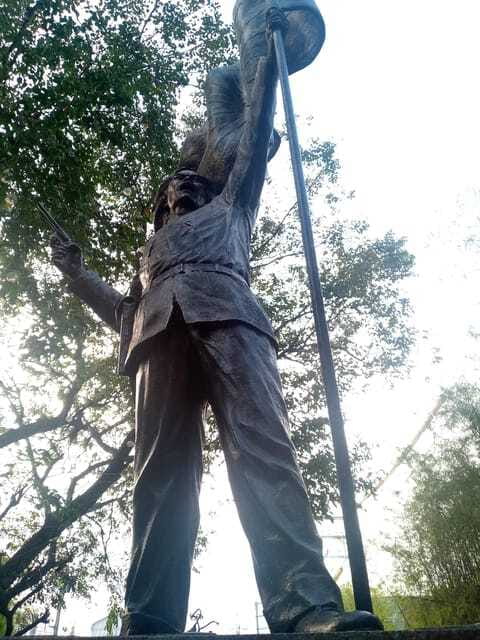
The tour finishes at Calle Real, once the downtown heart of Intramuros. The point here is change. You see how the former commercial center has become almost the opposite of what it was.
That final stop adds useful perspective. Historic districts are often presented as if they have remained frozen in time. Calle Real reminds you that cities keep changing, even when walls and churches survive. The tour ends by asking you to compare the former center of business with its present condition.
This is a short conclusion rather than another major admission site. Its value comes from the comparison. After learning about war, occupation, religion, and political power, you finish with a question about what happens to an old city center when its role disappears.
The listed drop-off points are Fort Santiago at 18 Sta. Clara Street, so you may return to the starting area. Confirm the exact end point with your guide, particularly if you have another activity booked afterward.
Guide quality and language options
The tour is offered in English and German. Jerome receives specific praise for speaking both languages well and for making the experience informative and interesting. A guide who can explain complex political changes in clear language matters more here than a guide who simply recites dates.
You should also feel free to ask about the less familiar names and stories. The experience is built around unsung patriots, not only famous figures. If you want a surface-level visit to old buildings, you can probably manage without a guide. If you want to understand why each site matters, the guide is where much of the value lies.
One especially positive account also went on to take a Chinatown tour with Jerome. That does not guarantee the same guide for every departure, but it suggests that you may want to ask who will lead your group and whether other tours are available if you are building a fuller Manila history program.
What $60 buys you
The price is $60 per person for three hours. That is not a bargain-priced walk, so the value depends on how much you want historical explanation rather than simple access to Intramuros.
The fee includes a professional guide, entrance fees, and transportation. Those inclusions matter. Fort Santiago and the churches are not merely viewed from the street, and you do not have to arrange every admission or move between stops alone.
The transport is also useful for a compact schedule. One positive account specifically described it as fun, and it adds convenience to a route that includes several separate points. The exact form of transport is not specified, so do not book based on an expectation of a particular vehicle.
Meals and drinks are not included. Three hours is short enough that this should not be a serious problem, but you should eat beforehand or carry what you need. Sunscreen and mosquito repellent are sensible additions.
The strongest value comes if you are new to Philippine history, want a clear introduction to Intramuros, or prefer a guide to connect the sites. The value drops if you mainly want to enter both churches and spend time inside them, since services can restrict access.
Timing, comfort, and practical planning
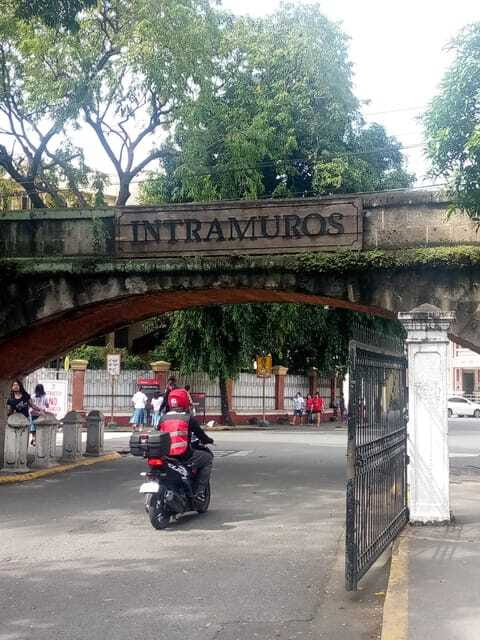
The stated duration is three hours, with Fort Santiago taking about one hour and each church about 30 minutes. The remaining time covers walking, explanations, and transport between points.
Because church access can change, you should allow flexibility. A tour affected by Mass may be shorter than three hours, while a detailed explanation at Fort Santiago could make the schedule feel full. I would avoid booking a tight connection immediately afterward.
The experience is wheelchair accessible, which makes it suitable for many people with mobility needs. You should still confirm the practical route and any access limits at the sites before booking, since the data only confirms that the activity is wheelchair accessible.
Free cancellation is available up to 24 hours before the start for a full refund. You can also reserve now and pay later, which helps if your Manila schedule is still changing.
Meet at Fort Santiago Gate. Look for the guide with the tour poster. Since the supplied location information includes Nueva Vizcaya even though the route is in Intramuros, verify the address carefully before departure.
Who will get the most from this tour?
I would choose this tour if you want a focused introduction to Manila’s political past in one morning or afternoon. It suits you especially well if you prefer clear explanations, historic sites, and stories about resistance over a casual stroll through old streets.
It is a good fit for first-time visitors who do not yet know how Rizal, Spanish rule, American control, the church, and the Japanese occupation connect. It may also suit families with older children who can handle the serious material in the dungeons.
You may want a different plan if your priority is a slow architectural visit, extended church interiors, or independent exploration. The schedule is compact, and the subject matter is weighty. A Mass can also alter the church portion without much warning.
Should you book the Revolutionary Tour of Manila?
Book it if you want a serious three-hour introduction to Intramuros with admission, transport, and a guide included. Fort Santiago is the heart of the experience, and the combination of Rizal’s cell, wartime dungeons, church-state conflict, and the Philippine-American War gives the route more purpose than a standard old-town walk.
Before paying $60, confirm two things: that the meeting point is Fort Santiago in Intramuros, and that the churches are expected to be open for entry. If both are clear, the tour offers solid value for a history-minded visitor. If church access is uncertain, book only if Fort Santiago and the wider historical explanation are enough to justify the price.
FAQ
Where does the tour begin?
It begins at Fort Santiago Gate, at 18 Sta. Clara Street. The guide carries a poster for the tour.
Where does the tour finish?
The listed drop-off point is 18 Sta. Clara Street at Fort Santiago. Confirm the exact end point with your guide.
How long does the Revolutionary Tour of Manila last?
The tour lasts three hours. The schedule includes about one hour at Fort Santiago and about 30 minutes each at Manila Cathedral and San Agustin Church.
What sites are included?
The route includes Fort Santiago, Manila Cathedral, San Agustin Church, General Luna Street, and Calle Real in Intramuros.
Is transportation included?
Yes. Transportation is included in the activity price.
Are entrance fees included?
Yes. Entrance fees are included.
Are food and drinks included?
No. Meals and drinks are not included.
What languages are available?
The live guide is available in English and German.
Is the tour wheelchair accessible?
Yes. The activity is listed as wheelchair accessible.
Can I cancel for a full refund?
Yes. You can cancel up to 24 hours in advance for a full refund. You can also reserve now and pay later.
Can I always enter Manila Cathedral and San Agustin Church?
No guarantee is stated. Religious services may prevent entry, so confirm access before booking if church interiors are essential to you.
Just added in Manila
- Underground River with Lunch★ 3.6 · 5 reviews
- Manila Night market and Street Food Tour★ 5.0 · 2 reviews
- Cruise Shore Excursion of Taal Volcano with Lunch★ 4.5 · 4 reviews
- Unforgettable Manila Fishing Village Day Excursion 2024★ 5.0 · 4 reviews
- Ultimate 8-Day Palawan Island Tour Package from Manila City★ 5.0 · 1 review
- Tagaytay + Hidden Valley Springs: A Scenic Escape w/ Transfers★ 4.0 · 4 reviews
- Tagaytay Day Tour sightseeing with Panoramic Taal volcano view★ 5.0 · 6 reviews
- 3 Days Private Tour in Banaue Ifugao visiting Batad Rice Terraces★ 3.5 · 3 reviews
Manila Tours, compared.

Intramuros, Manila: Historical Bamboo Bike Tour
Read our review →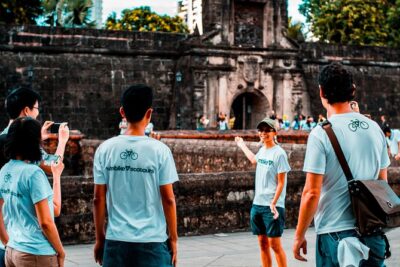
Experience Intramuros with Bamboo Bicycle – Ecotours
Read our review →Intramuros, Chinatown, and Old Manila Half-Day Tour
Read our review →
Manila Old and New: Sightseeing Tour Including Intramuros and Fort Santiago
Read our review →
Spectacular Manila to Tagaytay: Full-Day Sightseeing Tour
Read our review →
Makati Nightlife: VIP Access to Clubs, Rooftops & Go-Go Bars
Read our review →
Discover Tagaytay’s Countryside: Half-Day Sightseeing Tour
Read our review →