Reviewed · HISTORICAL TOURS
Full-Day Historical Heritage Guided Tour of Tacloban and Palo
History here is personal, not dusty. This private Tacloban and Palo tour links World War II sites, Super Typhoon Haiyan memorials, churches, government buildings, and everyday Waray culture in one well-planned day. I especially like the small private format and the chance to hear local stories about recovery after Haiyan. I also like that lunch and an air-conditioned vehicle are included. The main drawback is the pace: with nine stops and six to seven hours including road time, some visits are brief.
You begin at 8:30 a.m. and move through Tacloban, Palo, and nearby sights with a guide rather than simply ticking off monuments. Guide Jeff has earned particular praise for his friendly explanations of World War II and the 2013 typhoon. Still, this is best for you if you want an overview of Leyte’s past and present, not long, unhurried visits at every location.
In This Review
- Key points to know before booking
- Why this Tacloban tour is more than a sightseeing loop
- Sto. Nino Shrine and Heritage Museum, a lavish opening
- Leyte Landing Memorial and MacArthur’s return
- Palo Cathedral and the wartime hospital story
- M/V Eva Jocelyn and the force of Super Typhoon Haiyan
- Tacloban City Hall and Cancabato Bay views
- Leyte Provincial Capitol and the Commonwealth government
- San Juanico Bridge, the day’s broadest view
- Madonna of Japan and a message of peace
- Sto. Nino Church and a place of shelter
- What the guide adds to the experience
- Is $51 good value for six to seven hours?
- Who should book this Tacloban heritage tour?
- FAQ
- What time does the tour start?
- How long does the tour last?
- Is this a private tour?
- Is lunch included?
- Is pickup available?
- Can I cancel for a full refund?
- Should you book it?
Key points to know before booking
- World War II and Haiyan share the same route: You see the Leyte Landing Memorial alongside places linked to the 2013 storm, giving the day a strong sense of how history continues to shape local life.
- The tour is private: Only your own group takes part, so the guide can respond to your questions and adjust the conversation to your interests.
- M/V Eva Jocelyn is a powerful Haiyan site: The ship was pushed into a city street by the storm surge, making the scale of the disaster easier to grasp than a written account alone.
- Palo Cathedral served as a wartime hospital: This brief stop adds a human side to the World War II story and shows how local buildings were put to use during the fighting.
- San Juanico Bridge connects two island provinces: The 2.16-kilometer bridge gives you one of the day’s clearest views and links Leyte with Samar.
- Lunch and air-conditioning are included: That matters in a six to seven-hour outing, especially when several stops are outdoors.
Why this Tacloban tour is more than a sightseeing loop
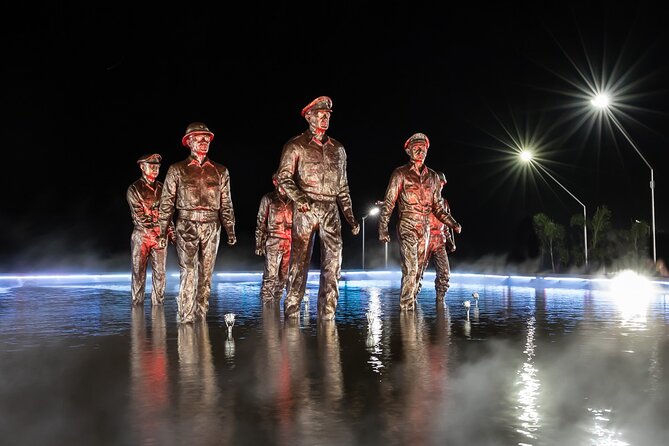
Leyte is often reduced to one famous scene: General Douglas MacArthur returning to the Philippines. That story is important, but it is only one part of this tour. You also encounter the people of the region, known as Waraynons, and hear about the struggle to rebuild after Super Typhoon Haiyan, called Yolanda by many Filipinos.
That combination gives the day its purpose. You are not moving from one unrelated photo stop to another. The route connects military history, religious life, public buildings, natural views, and disaster recovery. A guide can explain those links in a way a self-guided drive cannot.
The tour is also useful if you have only one full day in the Tacloban area. Nine stops would be difficult to organize efficiently on your own, especially when you factor in local roads, parking, and the distance between Tacloban, Palo, and San Juanico Bridge. The air-conditioned vehicle gives you a comfortable base between visits.
The tradeoff is time. Listed stop times range from 15 to 30 minutes, and the total six to seven hours includes driving. You should expect a broad introduction rather than a slow museum day. Bring questions, because the guide’s explanations are likely to add more value than the short time spent at each site.
More History Tours in the Philippines:
- Intramuros, Manila: Historical Bamboo Bike Tour
★ 4.8 · 583 reviews - The Original Cebu City Historical and Food Walking Tour
★ 4.5 · 81 reviews - Explore Intramuros: Introduction to Philippine History
★ 5.0 · 80 reviews
Sto. Nino Shrine and Heritage Museum, a lavish opening
The day begins with about 30 minutes at the Sto. Nino Shrine and Heritage Museum. The collection consists of art and furnishings given to the Marcos family during the presidency of Ferdinand Marcos Sr.
This is the longest scheduled stop, and that makes sense. The museum offers a different kind of historical record from the war memorials and churches later in the day. Here, you are looking at objects connected to political power, status, and the country’s recent past.
I would pay attention to the guide’s context rather than treating the museum as a room-by-room photo opportunity. The collection may interest you most if you want to understand the political and cultural setting behind Leyte’s public buildings and national memories.
Thirty minutes is enough for an introduction, but probably not enough for a slow examination of every item. If museum collections are your main interest, ask the guide how much time is available and use this first stop well.
Leyte Landing Memorial and MacArthur’s return
The Leyte Landing Memorial commemorates General Douglas MacArthur’s arrival in Leyte Gulf during the campaign to free the Philippines from Japanese occupation. The event helped lead to the largest naval battle of World War II.
This is likely to be the emotional high point for anyone interested in the war. The memorial gives a physical location to MacArthur’s famous return, while the surrounding setting helps you picture why Leyte mattered in the wider Pacific campaign.
The scheduled visit is only about 15 minutes, so listen closely to the explanation and take your photographs early. One useful detail from the tour experience is that the memorial was once closed for repairs, yet the company arranged access to the construction site for a visitor. That suggests the provider may make an effort when circumstances change, though access to any work area cannot be promised.
You should also keep expectations practical. A short stop does not allow for an extended military lecture or a large museum visit. Its value comes from being at the site and having someone explain the event in local context.
Palo Cathedral and the wartime hospital story
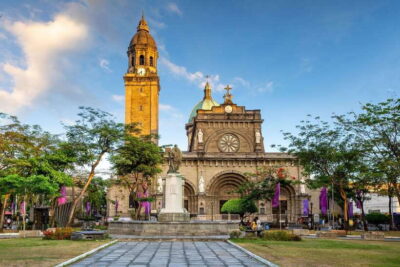
The Metropolitan Cathedral of Our Lord’s Transfiguration is usually called Palo Cathedral. It sits in the center of Palo and is one of the day’s most meaningful religious and historical stops.
During World War II, the cathedral was converted into a hospital for wounded Allied soldiers. That detail changes the way you see the building. It was not only a place of worship. In wartime, it became a place of treatment, shelter, and survival.
You have about 15 minutes here, so this is a stop for a close look at the building and a focused explanation. If you enjoy churches, you may wish the schedule allowed more time, especially since another historic church appears later in Tacloban. Still, the wartime hospital story gives this stop weight even if you are not especially interested in architecture.
A few more the Philippines days worth comparing
- Coron: Private Boat Hire with Guided Tour and Lunch on Beach
★ 4.9 · 658 reviews - From Puerto Princesa: Underground River Guided Day Trip
★ 4.2 · 167 reviews - Bohol: Guided Chocolate Hills & Tarsiers Tour
★ 4.8 · 158 reviews - Bohol: Waterfall Hopping & Secret Jungle Trails Guided Tour
★ 4.7 · 158 reviews
M/V Eva Jocelyn and the force of Super Typhoon Haiyan
At the M/V Eva Jocelyn Shrine, you confront the 2013 disaster in a very direct way. Seventeen ships ran aground during Super Typhoon Haiyan, and the M/V Eva Jocelyn was pushed into the middle of a street by the water surge.
That fact is hard to picture until you see the ship memorial. The site turns an enormous storm into something tangible. You can better understand the force of the water and the disruption faced by people in Tacloban.
The stop lasts about 15 minutes, but its importance goes beyond the clock. The guide’s role here is especially valuable because the tour also focuses on the stories of people who rebuilt their lives after the storm. You are given a chance to connect the physical remains of Haiyan with the human cost and recovery that followed.
This part of the day may be emotional. It is not presented simply as a dramatic photo stop. The stated focus on local stories and resilience gives it a more respectful purpose. If you prefer only light sightseeing, this section may feel serious, but that seriousness is central to understanding Tacloban.
Tacloban City Hall and Cancabato Bay views
Tacloban City Hall sits on a hill and serves as the city’s seat of government. The stop is also a chance to look across Cancabato Bay and take photographs.
After the heavier war and storm sites, this is a useful change of pace. The elevated position gives you a different view of Tacloban and helps you see the city beyond its memorials. The visit is short, around 15 minutes, so think of it as a scenic viewpoint with civic importance rather than a formal public-building tour.
If you enjoy taking pictures, have your camera ready before you arrive. The stop is designed for a quick look and photographs, not a lengthy interior visit.
Leyte Provincial Capitol and the Commonwealth government
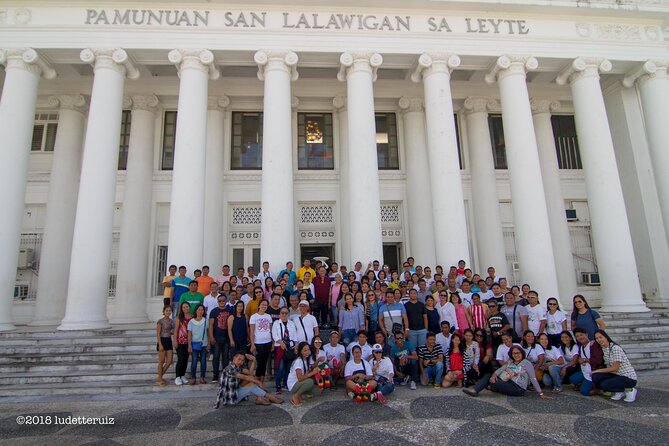
The Leyte Provincial Capitol Building adds another important layer to the route. The building served as the seat of Leyte’s government until 2019 and also housed the Philippine Commonwealth government from October 23, 1944, to February 25, 1945.
That short period places the building directly within the wartime story you have been following since the Leyte Landing Memorial. It was not merely a local administrative office. For several months, it played a national role during the return of the Commonwealth government.
The 15-minute visit is enough to appreciate the building’s importance and hear the basic timeline. You may want to ask the guide to explain how the capitol’s role fits with MacArthur’s landing and the liberation campaign. This is one of the stops where a guide’s storytelling makes a bigger difference than the building itself.
San Juanico Bridge, the day’s broadest view
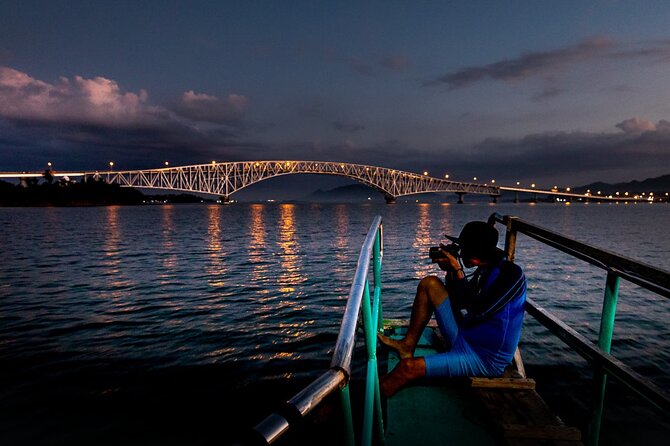
San Juanico Bridge stretches 2.16 kilometers over the water between Leyte and Samar. It was once the longest bridge in the Philippines and remains one of the region’s best-known sights.
This stop offers a welcome visual break. After several sites tied to conflict, politics, and disaster, you get open water, a long crossing, and a clear sense of the connection between two islands. It is also a practical reminder that Leyte’s identity is linked to its neighboring province.
The scheduled time is about 15 minutes, so do not expect a full bridge crossing on foot or a long scenic pause. The tour includes road travel, and the bridge may be viewed as part of that movement. You should keep your camera ready and ask the guide where the best quick viewpoint is.
One limitation is that the tour does not include bicycle use. That will not matter to most people on a guided vehicle tour, but cyclists should not assume a bike is part of the experience.
Madonna of Japan and a message of peace
The Madonna of Japan is a peace monument honoring soldiers who fought and died during World War II. It was erected 33 years after the war and represents improved relations between Filipinos and Japanese people.
This is a quiet counterpoint to the military sites. The memorial does not focus only on victory or defeat. It points toward remembrance, reconciliation, and the long effort to make peace after a destructive conflict.
A 15-minute visit is enough to see the statue and hear its meaning. The monument stands on a rocky piece of land, adding a distinct setting to the stop. I would listen for the guide’s explanation of how local memory handles both the suffering of war and the need for better relations afterward.
Sto. Nino Church and a place of shelter
The final stop is Sto. Nino Church in Tacloban, another important local landmark. The church has survived typhoons and earthquakes and was partly damaged during Super Typhoon Haiyan. It also provided shelter during the storm.
This stop brings several of the day’s themes together. You have seen a cathedral used as a World War II hospital, a ship thrown into a street by Haiyan, and now a church that offered protection during the same storm. Buildings here are not just old structures. They are part of how communities endure crisis.
The visit lasts around 15 minutes, so you will receive a concise look rather than a long church tour. Still, it is a fitting final stop because it shifts attention from national events to the role of local institutions in ordinary people’s lives.
What the guide adds to the experience
The strongest feature of this tour is the guide-led storytelling. The stops themselves are worthwhile, but several are small or brief. Without explanation, you could easily see a church, a government building, or a memorial and miss why it matters.
Guide Jeff is praised for being friendly and well-informed, with particular skill in explaining the culture and history of the island. He also provides added background on World War II and the 2013 typhoon. If Jeff leads your tour, ask him to connect the sites rather than giving you isolated facts.
The focus on Waray culture is another advantage. You are introduced to the people called Waraynons and their stories of rebuilding after Haiyan. That makes the tour more than a military-history circuit. It gives you a closer look at how local identity and memory shape Leyte.
Because this is a private activity, only your group participates. That is useful if you want to ask questions, spend a little longer at one location when possible, or discuss subjects that interest you. It also means the quality of the day depends in part on the guide assigned and how actively you take part.
Is $51 good value for six to seven hours?
At $51 per person, the price is reasonable if you want a packaged day with transportation and lunch. You are also paying for planning, a private group, and a guide who can explain the meaning behind nine different sites.
The value is strongest for visitors who do not have their own vehicle or who want to combine Tacloban and Palo efficiently. Hiring separate transport, arranging every stop, and finding historical background would take time and may cost more, though exact independent costs are not provided here.
The price is less compelling if you want long visits at each site. The schedule is full, and travel time is included in the six to seven hours. Think of the tour as an efficient regional overview with a personal guide, not as nine fully developed attractions.
Lunch is included, as is an air-conditioned vehicle. Those details matter in the Philippines, where a day moving between outdoor sites can become tiring. A mobile ticket and pickup option also make the outing easier to manage, though you should confirm the pickup details when booking.
The tour is booked an average of 42 days ahead, so planning early is sensible, especially if your dates in Leyte are fixed. Confirmation is normally provided at booking, subject to availability for reservations made within 12 hours of departure.
Who should book this Tacloban heritage tour?
I would choose this tour if you have one day in the area and want the main historical, cultural, and Haiyan-related sights in a single outing. It suits you especially well if you prefer context and conversation over independent wandering.
It is also a good match for first-time visitors to Leyte, families who value an air-conditioned vehicle, and anyone interested in the link between World War II and modern local life. People drawn to churches, memorials, government architecture, and regional views will find plenty to discuss.
You may want another plan if your priority is extended museum time, independent photography, or a relaxed schedule. The short stops leave little room to linger, and the day covers a lot of ground. You should also be comfortable with serious subject matter, since the Haiyan stories are a central part of the experience.
Most people can participate, and service animals are allowed. The tour is near public transportation, but it is designed around its provided vehicle. Free cancellation is available up to 24 hours before the start time. Poor weather may lead to a different date or a full refund.
FAQ
What time does the tour start?
The tour starts at 8:30 a.m.
How long does the tour last?
The total duration is approximately six to seven hours, including travel time between attractions.
Is this a private tour?
Yes. Only your own group participates in the activity.
Is lunch included?
Yes. Lunch and an air-conditioned vehicle are included in the tour price.
Is pickup available?
Yes. Pickup is offered, although the supplied information does not specify the pickup locations.
Can I cancel for a full refund?
Yes. You can cancel at least 24 hours before the experience start time for a full refund. Cancellations or changes made less than 24 hours in advance are not accepted for a refund. Poor weather may result in a different date or a full refund.
Should you book it?
Book this tour if you want a well-rounded first look at Leyte, with World War II, Haiyan recovery, churches, civic history, and Waray culture all in one day. The private format, included lunch, air-conditioned transport, and strong guide feedback make $51 a fair price for the time and planning involved.
Skip it if you want to linger at every site or spend most of your day in one museum. The route is busy and some stops last only 15 minutes. For you, the best reason to book is not the number of places visited. It is the chance to understand what those places mean, especially through the local stories connected to war, disaster, and recovery.
Just added in the Philippines
- Underground River without Lunch★ 4.7 · 3 reviews
- Underground River with Lunch★ 3.6 · 5 reviews
- Waves & Wonders: Siargao Private Tour M Adventure★ 5.0 · 1 review
- Twin Treasures: Discovering Dumaguete and Valencia★ 3.4 · 5 reviews
- Manila Night market and Street Food Tour★ 5.0 · 2 reviews
- Trekking to see the beautiful view of Cebu City★ 3.3 · 4 reviews
- Sohoton Cave and Natural Bridge Park Adventure Tour★ 5.0 · 1 review
- Tri island tour: Naked Island, Daku Island and Guyman Island★ 5.0 · 3 reviews
Historical Tours, compared.
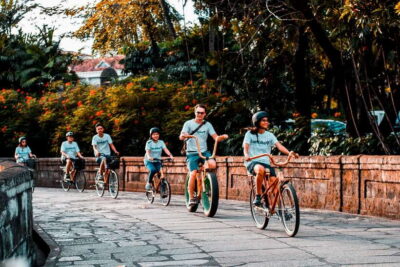
Intramuros, Manila: Historical Bamboo Bike Tour
Read our review →
The Original Cebu City Historical and Food Walking Tour
Read our review →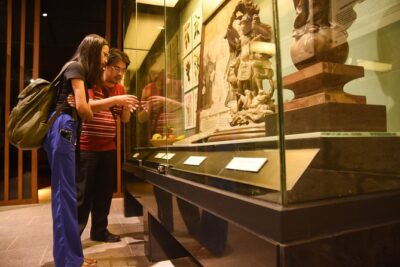
Explore Intramuros: Introduction to Philippine History
Read our review →
Experience Manila’s Heritage: Intramuros & More in Half a Day!
Read our review →
Exploring Cebu City’s rich history and Uphill Tour
Read our review →