
Reviewed · INTRAMUROS WALKS
Intramuros: Guided Tours by a Historian and Academic
History gets personal here. This 3.5-hour private walking tour brings Intramuros to life through historian and University of the Philippines Manila educator Alvin Campomanes. I especially like the use of old photographs and the attention to sites that are not clearly marked. One consideration: the tour is conducted in English and includes a fair amount of walking in Manila’s heat.
I also like that this is more than a parade of dates and buildings. Campomanes connects Fort Santiago, Plaza Roma, the Battle of Manila, and everyday colonial life, giving you reasons to think about how Philippine identity was shaped. The main drawback is that food and transportation are not included, so you must arrange your way to Fort Santiago and plan refreshments yourself.
In This Review
- Key points about this Intramuros tour
- Why a historian changes the Intramuros experience
- Starting at Fort Santiago and the site of Maynila
- Reading power in Plaza Roma
- Pausing at Memorare-Manila 1945
- Riding the tranvia through old Manila
- San Agustin Church, the survivor of Intramuros
- Casa Manila and the private life of the colonial elite
- What the three-and-a-half-hour format feels like
- Is the $288 group price worthwhile?
- Who will enjoy this tour most?
- Should you book Alvin Campomanes’ Intramuros tour?
- FAQ
- Where does the Intramuros tour meet?
- How long does the tour last?
- How many people can join the private group?
- What language is the tour conducted in?
- Are entrance fees included?
- Is transportation included?
- What happens in extreme weather?
Key points about this Intramuros tour
- Historian Alvin Campomanes leads the walk: He teaches in the Department of Social Sciences at the University of the Philippines Manila, bringing an academic eye and an engaging speaking style.
- Fort Santiago begins the story: The tour starts at a site linked to the precolonial settlement of Maynila and later used by Spanish, British, American, and Japanese forces.
- Historical photographs add unusual detail: Campomanes uses images from different periods to show how places changed and to explain events that are not always marked on site.
- A tranvia ride breaks up the walking: You will ride a traditional-style streetcar through Intramuros, adding a pleasant change of pace.
- San Agustin Church is a major highlight: This UNESCO World Heritage Site is the oldest stone church in the Philippines and the only Intramuros church to survive the Second World War.
- Casa Manila closes the visit with domestic history: Its recreated 19th-century bahay na bato shows how Manila’s colonial elite lived behind closed doors.
Why a historian changes the Intramuros experience
Intramuros can be visited on your own, but its walls and churches do not explain themselves. You see Spanish-era stone, rebuilt streets, memorials, and old plazas, yet the meaning of each place depends on knowing what happened there before.
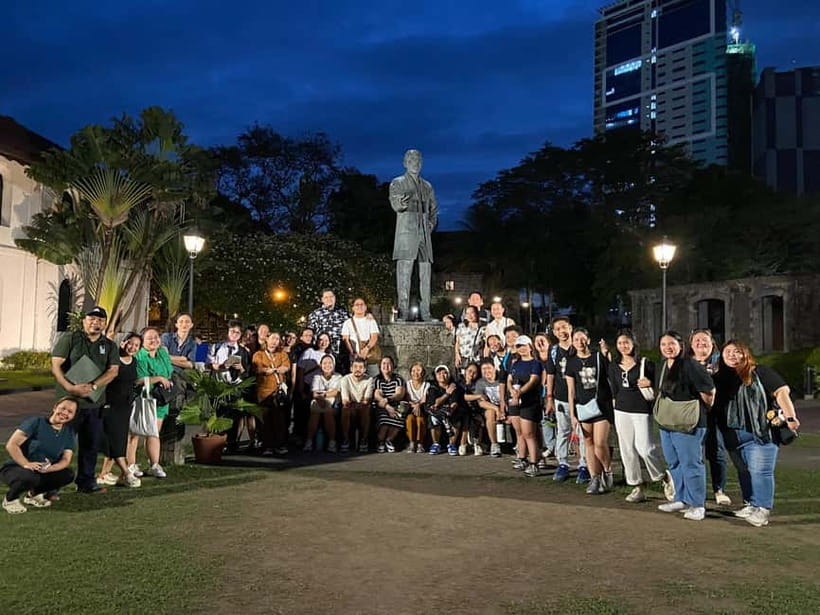
That is where Alvin Campomanes makes a real difference. He is not simply guiding you from one attraction to the next. As a historian and university faculty member, he places each stop into a wider story about Maynila, Spanish rule, war, religion, politics, and Philippine national identity.
I like this approach because it leaves room for questions and reflection. The tour does not treat colonial history as a collection of pretty facades. It asks you to consider who held power, whose stories were recorded, how Manila changed, and what was lost.
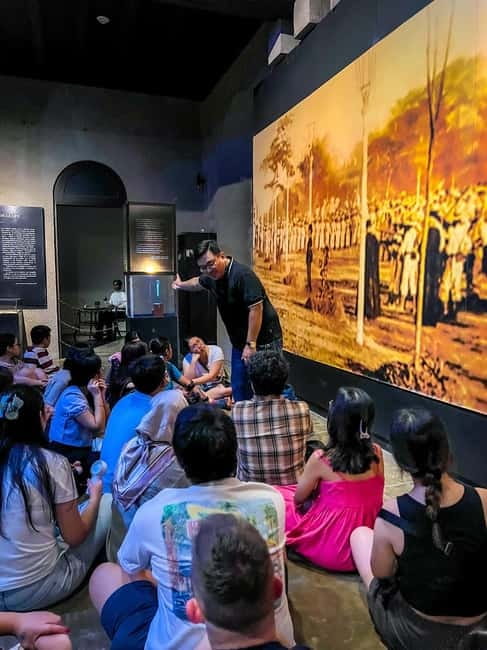
Campomanes is also praised for using historical photographs during the walk. This is especially useful in Intramuros, where many buildings were destroyed, damaged, or reconstructed. A photograph can show you what a square or street looked like before the Second World War, helping you read the present-day scene with sharper eyes.
He also points out locations that may have no large plaque or obvious marker. That gives the walk a sense of discovery without turning it into a treasure hunt. You are still seeing the major sites, but you also learn why less famous corners matter.
More Intramuros walks:
- Intramuros, Manila: Historical Bamboo Bike Tour
★ 4.8 · 583 reviews - Experience Intramuros with Bamboo Bicycle – Ecotours
★ 5.0 · 508 reviews - Manila: Intramuros, Chinatown, and Old Manila Half-Day Tour
★ 4.8 · 475 reviews
Starting at Fort Santiago and the site of Maynila
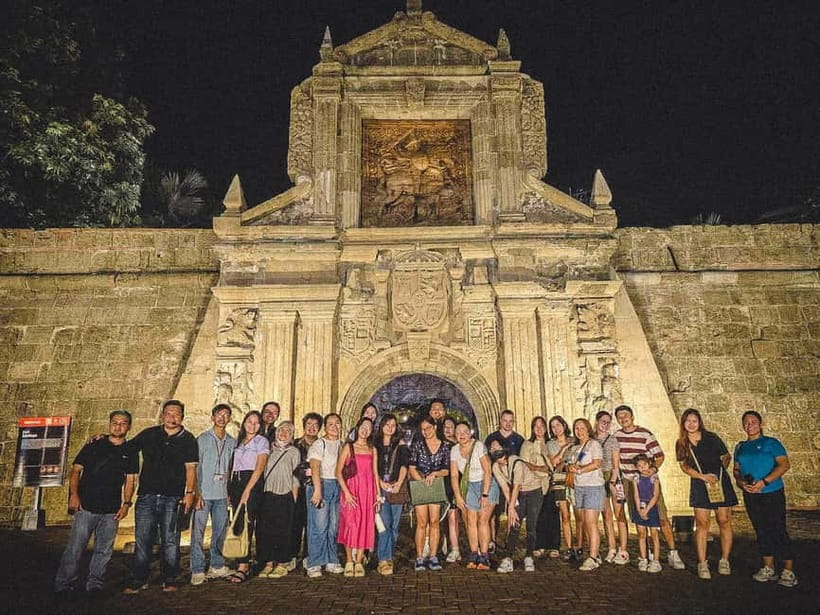
Meet at the entrance gate of Fort Santiago in Intramuros. This is a sensible starting point because the fort introduces several periods of Philippine history in one place.
Fort Santiago was built on the site of a precolonial settlement called Maynila. That detail matters. Intramuros is often presented mainly as a Spanish colonial district, but the ground beneath it had significance before Spanish rule. Beginning here helps correct the idea that Manila’s story started with European arrival.
The fort later served as a military headquarters for Spanish, British, American, and Japanese forces. Each power left its mark on Manila, and the fort gives Campomanes a clear setting for explaining those shifts.
You will also visit the Rizal Shrine, a modern museum devoted to José Rizal. Rizal is the Philippines’ most honored hero and patriot, so this stop connects the physical site of Intramuros with the intellectual and political movement that challenged colonial rule.
Expect the fort to be one of the more serious portions of the tour. It is not only about walls and military structures. It is also about resistance, memory, and the way national heroes are presented to later generations.
The included entrance fee means you do not need to buy a separate ticket for Fort Santiago. The tour also offers skip-the-ticket-line access, which can help keep the group moving during busy periods.
Reading power in Plaza Roma
From Fort Santiago, the tour continues to Plaza Roma, Intramuros’ main public square. The plaza was once the center of Spanish religious and political authority in the colony.
Three important buildings surround it: the Manila Cathedral, Ayuntamiento, and Palacio del Gobernador. Together, they show how religion, civil administration, and colonial government worked side by side.
This is one of the places where a guide’s explanation adds much more than a quick photograph. A square may look open and calm today, but its surrounding buildings reveal how authority was arranged. Campomanes can help you understand why this space mattered and how it functioned within Spanish Manila.
The plaza also makes a useful contrast with Fort Santiago. The fort reflects military control, while Plaza Roma presents the public face of government and religion. Seeing both in sequence gives you a clearer picture of how Intramuros operated as the original city of Manila and the capital of the Spanish East Indies.
You should expect pauses for explanation here, not just a short stop for pictures. If you enjoy architecture, politics, or the structure of colonial cities, this may be one of the most rewarding parts of the walk.
Pausing at Memorare-Manila 1945
The tour then reaches the Memorare-Manila 1945 monument. This memorial commemorates the devastating death toll from the Battle of Manila in 1945.
That event is essential to understanding why Intramuros looks the way it does today. The district was heavily damaged during the battle, and its destruction changed the physical appearance of old Manila forever.
The monument provides a moment to slow down. After military history at Fort Santiago and colonial authority at Plaza Roma, the focus turns to civilian suffering and the cost of war.
I appreciate that this stop is included rather than treating Intramuros as an architectural display. A visit can easily become a search for old walls and churches, but the memorial reminds you that people lived, died, and endured hardship here.
Campomanes’ use of historic images is likely especially helpful around this part of the tour. Comparing wartime photographs with the present site can make the scale of the destruction easier to grasp. You may leave this stop with a more careful understanding of why so much of Intramuros has been restored or recreated.
A few more Manila days worth comparing
- Manila: Old & New 4-Hour City Tour
★ 4.5 · 458 reviews - Manila Old and New: Sightseeing Tour Including Intramuros and Fort Santiago
★ 4.5 · 377 reviews - Spectacular Manila to Tagaytay: Full-Day Sightseeing Tour
★ 5.0 · 349 reviews - Makati Nightlife: VIP Access to Clubs, Rooftops & Go-Go Bars
★ 4.9 · 278 reviews
Riding the tranvia through old Manila
At some point, you will board a tranvia, or streetcar, for a ride through Intramuros. The ride adds variety to a walking tour that lasts three and a half hours.
It also gives you a different view of the district. On foot, you focus on walls, doorways, monuments, and details at eye level. From the tranvia, you can take in the wider streets and the contrast between heritage sites and modern-day activity.
Do not think of this as a major transport service. It is part of the sightseeing experience and a pleasant break for your feet. The ride also fits the setting, since streetcars were once part of Manila’s urban life.
Because the tour includes both walking and the tranvia, comfortable shoes remain important. Bring water, food or snacks, sunscreen, and an umbrella. Rain gear and insect repellent are also sensible, since the experience takes place outdoors for much of its duration.
The tour provider does not include transportation to Intramuros or meals. You must make your own way to the Fort Santiago entrance, so allow enough time to reach the meeting point without rushing.
San Agustin Church, the survivor of Intramuros
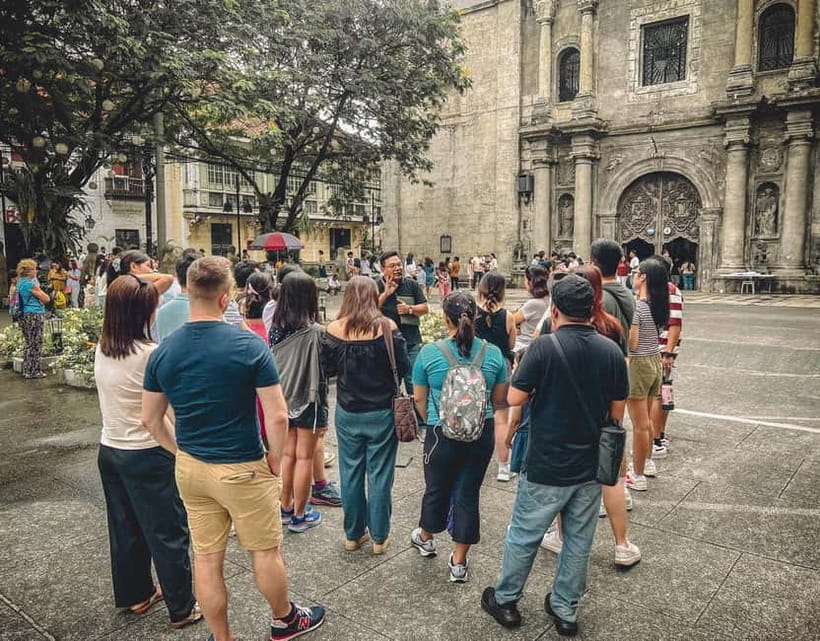
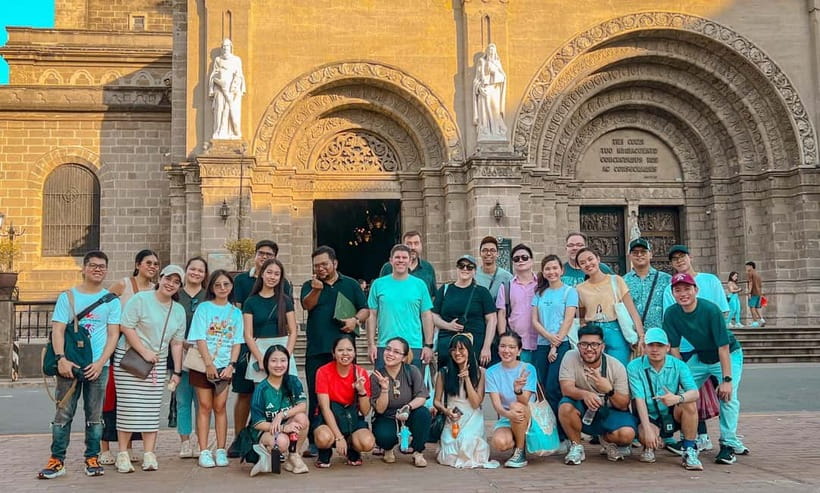
San Agustin Church is one of the tour’s essential stops. It is the oldest stone church in the Philippines, a UNESCO World Heritage Site, and the only Intramuros church to survive the Second World War.
That survival gives the building unusual importance. In a district where war erased so much, San Agustin offers a direct link to the colonial period through its architecture and ecclesiastical treasures.
The church is known for its baroque design. You can expect the guide to explain more than its age, pointing out why its form and surviving contents matter within Philippine religious and architectural history.
I would give this stop proper time rather than treating it as a quick church visit. Even if you are not especially interested in religious buildings, San Agustin helps explain the role of the Catholic Church in Spanish Manila.
The church also raises useful questions about preservation. What does it mean to protect a colonial building in a country with a complicated colonial past? How should a site be remembered when it survived a war that destroyed much of the surrounding district? These are the kinds of questions that make this tour more thoughtful than a standard sightseeing circuit.
Casa Manila and the private life of the colonial elite
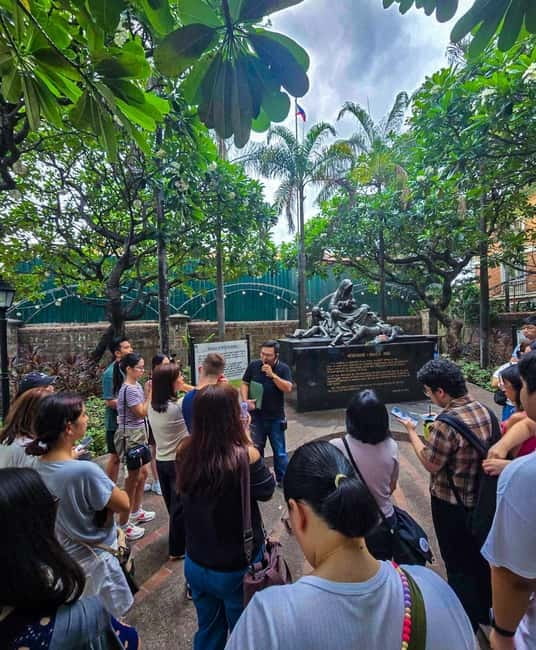
The final main stop is Casa Manila, a carefully recreated 19th-century bahay na bato, or stone house. It offers a look at the domestic life of Manila’s colonial elite.
This is a welcome change in scale. Fort Santiago and Plaza Roma tell you about power, armies, government, and public institutions. Casa Manila shifts the focus indoors, toward rooms, possessions, and the routines of wealthy families.
Because Casa Manila is a recreation, you should not mistake it for an untouched original residence. Its value lies in showing how a particular class lived and in helping you picture the social world behind Intramuros’ formal buildings.
The included entrance fee is useful here, especially because Casa Manila is one of the tour’s required stops rather than an optional add-on. The house gives the itinerary a satisfying final chapter: after seeing the public face of colonial Manila, you get a glimpse of its private side.
This stop is also a reminder that colonial society was unequal. A recreated elite home cannot represent everyone who lived in Manila, but it can show the comforts and customs available to those at the top.
What the three-and-a-half-hour format feels like
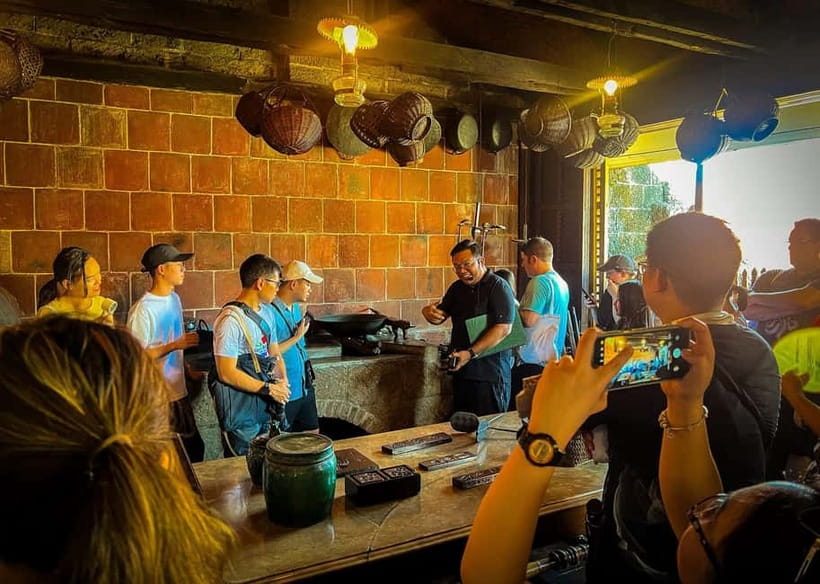
Three and a half hours is long enough to create a connected story without taking up an entire day. The route includes Fort Santiago, Plaza Roma, Memorare-Manila 1945, a tranvia ride, San Agustin Church, and Casa Manila.
The pace will depend on questions, photographs, weather, and the time spent at each site. Since this is a private group, you are not tied to the needs of a large crowd. Up to five people can book together, making it a good fit for a family, a small group of friends, or a study-focused visit.
The private format is important here. A historian-led tour works best when you can ask about confusing or sensitive subjects. You may want to discuss Spanish rule, José Rizal, the Battle of Manila, or the meaning of restored heritage buildings. A small group gives you more room for that conversation.
The physical demands are moderate but real. You will be walking outdoors and dealing with Manila’s heat or rain. This experience is not suitable for wheelchair users, children under two, babies under one, or people over 95. Anyone with medical needs should bring personal medication and plan carefully for the weather.
Tours are cancelled only in extreme weather conditions, specifically when a Tropical Cyclone Wind Signal has been raised. Ordinary heat or rain is not described as a reason for cancellation, so pack an umbrella and rain gear rather than assuming the tour will stop.
Is the $288 group price worthwhile?
The price is $288 per group of up to five people. That works out to $57.60 per person if five people share the cost, though the value is different for smaller groups.
For a group of five, I consider the price reasonable if you want a private, academic-level introduction to Intramuros. You are paying for the guide’s time, the private format, coordination, photography, entrance fees to Fort Santiago and Casa Manila, a souvenir, and an e-certificate upon request.
For one or two people, the per-person cost is much higher. In that case, you should book because you specifically want a historian and the chance to ask questions, not simply because you need a basic orientation to Intramuros.
The strongest value comes from the quality of interpretation. Campomanes teaches history at a university, uses old photographs, and points out places that are easy to miss. If that sounds more useful to you than a short, general introduction, the price has a clear reason behind it.
Food and transportation are not included, so budget separately for getting to Fort Santiago and for drinks or a meal. The tour listing identifies the meeting point as the entrance gate of Fort Santiago in Intramuros, Manila. Since the general location is also described as Nueva Vizcaya, confirm the exact meeting details before booking and follow the Manila meeting point provided for this activity.
Who will enjoy this tour most?
I would recommend this experience to anyone who wants context, not just photographs. It is particularly well suited to students, educators, history enthusiasts, heritage advocates, and Filipino visitors thinking about national identity and cultural memory.
Foreign visitors will receive a strong introduction to the forces that shaped the Philippines. You will encounter precolonial Maynila, Spanish authority, Catholic institutions, military occupation, wartime destruction, and the continuing work of heritage preservation.
Families with older children may also find it worthwhile, provided the children can manage a long, discussion-heavy walk in English. The tour is not designed for toddlers or babies, and the subject matter may be too serious for very young children.
You should think twice if you want a light sightseeing outing with little walking or minimal explanation. This is an academic tour in the best sense, but that means it may feel more focused and reflective than a casual city stroll.
The experience is also a good choice for repeat visitors to Manila. If you have already seen the main Intramuros buildings, Campomanes’ historical photographs and attention to unmarked locations may give you a different way to understand familiar streets.
Should you book Alvin Campomanes’ Intramuros tour?
Book it if you want Intramuros explained by someone who teaches history, not simply recited as a list of dates. The combination of Fort Santiago, Plaza Roma, the 1945 memorial, the tranvia, San Agustin Church, and Casa Manila gives you a well-shaped visit from precolonial Manila to modern heritage concerns.
I would be especially keen to book this for a small group of up to five people. Sharing the fixed price improves the value, and the private setting gives you room to ask direct questions.
Skip it if you prefer to explore independently, dislike extended walking, or need a wheelchair-accessible route. Otherwise, bring good shoes, water, sun protection, rain gear, and an open mind. This is a serious history tour, but it is also lively, human, and enjoyable.
FAQ
Where does the Intramuros tour meet?
The meeting point is the entrance gate of Fort Santiago in Intramuros, Manila.
How long does the tour last?
The tour lasts 3.5 hours.
How many people can join the private group?
The price covers a private group of up to five people.
What language is the tour conducted in?
The live tour guide conducts the experience in English.
Are entrance fees included?
Yes. Entrance fees to Fort Santiago and Casa Manila are included.
Is transportation included?
No. Transportation to the meeting point is not included. Food and drinks are also not included.
What happens in extreme weather?
The tour is cancelled only when extreme weather conditions occur, specifically when a Tropical Cyclone Wind Signal has been raised. In that case, you may request a refund or reschedule the booking.
Just added in Manila
- Underground River with Lunch★ 3.6 · 5 reviews
- Manila Night market and Street Food Tour★ 5.0 · 2 reviews
- Cruise Shore Excursion of Taal Volcano with Lunch★ 4.5 · 4 reviews
- Unforgettable Manila Fishing Village Day Excursion 2024★ 5.0 · 4 reviews
- Ultimate 8-Day Palawan Island Tour Package from Manila City★ 5.0 · 1 review
- Tagaytay + Hidden Valley Springs: A Scenic Escape w/ Transfers★ 4.0 · 4 reviews
- Tagaytay Day Tour sightseeing with Panoramic Taal volcano view★ 5.0 · 6 reviews
- 3 Days Private Tour in Banaue Ifugao visiting Batad Rice Terraces★ 3.5 · 3 reviews
Intramuros Walks, compared.
Intramuros, Manila: Historical Bamboo Bike Tour
Read our review →
Experience Intramuros with Bamboo Bicycle – Ecotours
Read our review →Intramuros, Chinatown, and Old Manila Half-Day Tour
Read our review →
Manila Old and New: Sightseeing Tour Including Intramuros and Fort Santiago
Read our review →
Explore Intramuros: Introduction to Philippine History
Read our review →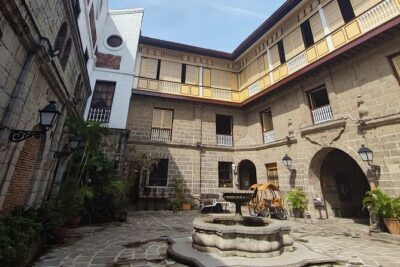
Experience Manila’s Heritage: Intramuros & More in Half a Day!
Read our review →Browse the lists this tour appears in