
Reviewed · INTRAMUROS WALKS
Manila: Fort Santiago Guided Tour
Fort Santiago puts Manila’s past within arm’s reach. I like the tour’s focus on Dr. Jose Rizal’s prison cell and the dungeons where about 600 people died during the final days of the Japanese occupation. I also like that the guide connects the fortress to the wider story of Manila, from Rajah Sulayman’s pre-colonial settlement to the Philippine Revolution.
The main drawback is the amount of walking, often under the sun, with limited suitability for children under seven, wheelchair users, and people with mobility impairments. The tour is listed at $20 per person, a fair price if you want context and storytelling rather than simply wandering through stone walls on your own.
In This Review
- Key points at a glance
- Why Fort Santiago is more than an old fortress
- Starting with Manila before the Spanish period
- The fortress, walls, and baluartes
- Jose Rizal’s final days inside the fort
- The dungeons and the Japanese occupation
- The uprisings inside Intramuros
- Jerome’s language and guiding style
- Is $20 a fair price?
- Walking, heat, and site restrictions
- Who should book this Fort Santiago tour?
- Should you book the $20 Fort Santiago tour?
- FAQ
- Where does the tour take place?
- What is included in the tour?
- Is hotel pickup included?
- What languages are available?
- Can children join the tour?
- Can I cancel for a full refund?
Key points at a glance
- Jose Rizal’s prison cell: See the cell used by the Philippine national hero before his execution.
- Wartime dungeons: Visit the underground spaces tied to the deaths of about 600 people during the Japanese occupation.
- Intramuros uprisings: Learn about Novales’ revolt, the Sangley Uprising, and the 1896 Philippine Revolution.
- American barracks and baluartes: Walk through military remains from more than one period of Manila’s past.
- Guide Jerome’s Filipino storytelling: A highly praised guide led the tour mostly in Filipino, adding a strong local-language connection.
- Practical limits: Bring water, sunscreen, a hat, and comfortable shoes. Flash photography, food, drinks, and smoking are not allowed in the historical areas.
Why Fort Santiago is more than an old fortress
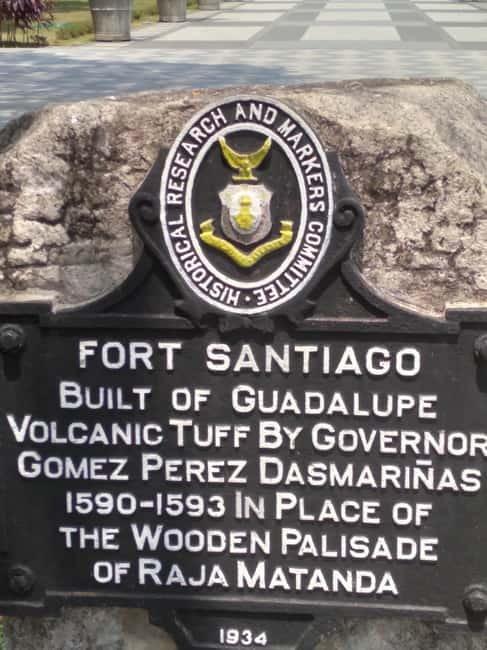
Fort Santiago is often treated as one stop inside Intramuros, but the site carries several layers of Philippine history. It began as a defensive military site during the Spanish colonial period and later served American and Japanese military purposes.
That makes the tour useful for you if Manila’s history feels scattered or hard to place. Instead of seeing a gate, wall, cell, or barracks as separate sights, you get a guided thread connecting them to the city’s political and military changes.
The tour also presents Intramuros as Spanish Manila, the colonial city built inside fortified walls. Yet the story is not only about Spanish power. The guide focuses on resistance within those walls, including Novales’ revolt, the Sangley Uprising, and the events surrounding the 1896 Philippine Revolution.
I appreciate that balance. Fort Santiago can look grand and orderly at first glance, but its past is also marked by imprisonment, revolt, occupation, and death. You are not simply walking through an attractive old district. You are following a record of struggle.
More Intramuros walks:
- Intramuros, Manila: Historical Bamboo Bike Tour
★ 4.8 · 583 reviews - Experience Intramuros with Bamboo Bicycle – Ecotours
★ 5.0 · 508 reviews - Manila: Intramuros, Chinatown, and Old Manila Half-Day Tour
★ 4.8 · 475 reviews
Starting with Manila before the Spanish period
A strong part of the experience is the opening context about Manila before Spanish rule. The tour traces the area back to the settlement associated with Rajah Sulayman, then follows the city’s transformation under colonial control.
This matters because Intramuros can otherwise feel like a self-contained Spanish town dropped into modern Manila. The pre-colonial background reminds you that the city existed before its walls, churches, barracks, and colonial administration.
I like this approach because it gives you a better way to read the fort. You can ask who controlled the area, who resisted that control, and how Manila changed as different powers used the same strategic ground.
The exact tour duration and group size are not provided, so you should not assume this is a quick walk or a private outing. Plan your schedule with room for a steady historical tour and plenty of walking.
The fortress, walls, and baluartes
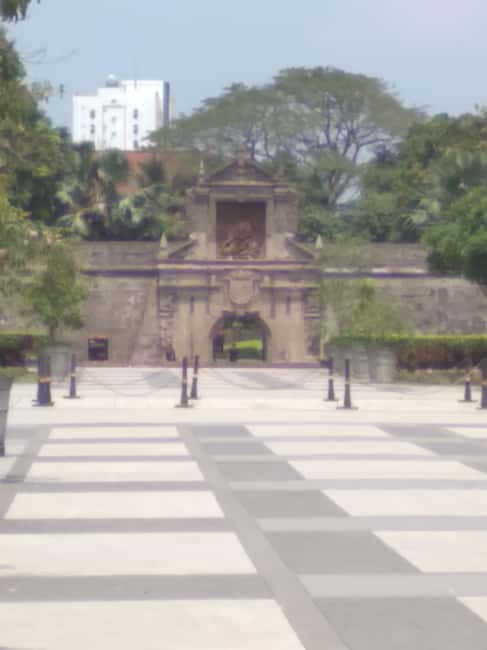
As you move through Fort Santiago, expect a mix of defensive structures, open areas, military remains, and restored historical spaces. The baluartes show how the old fortified city was protected, while the former American barracks point to a later chapter in Manila’s military story.
I find this combination more interesting than a site devoted to one period alone. The Spanish colonial era is the main focus, but the American and Japanese periods help show how Fort Santiago continued to serve military purposes after Spanish rule ended.
Your guide’s explanation is especially important here. Without context, a defensive wall may look like just another old stone structure. With the story of Intramuros and its uprisings attached, the walls become evidence of how authorities tried to control Manila and how people challenged that control.
The old American barracks also help prevent a narrow reading of the site. Fort Santiago was not frozen in the Spanish period. It remained part of the city’s military life as power shifted.
Jose Rizal’s final days inside the fort
The visit to Dr. Jose Rizal’s prison cell is one of the tour’s clearest emotional anchors. Rizal is the Philippines’ national hero, and seeing the place where he was held gives a personal focus to the wider story of colonial rule and resistance.
The cell is not simply another room on the route. It connects the 1896 Philippine Revolution to one individual whose writing and political ideas became central to the country’s national identity.
I would pay close attention to the guide here, since the value of the stop comes from the explanation around it. The tour is designed to show how Rizal’s imprisonment fits into the political tensions of the period, not just to point out where he was kept.
This is also where the mostly Filipino presentation by guide Jerome could matter. Michelle gave Jerome top marks and especially appreciated hearing the tour mainly in Filipino. If you understand Filipino, that language choice may make the discussion of Rizal and the revolution feel more natural and direct.
English and German are listed as available languages. If you prefer Filipino, ask about the language arrangement when booking or meeting the guide, since Jerome’s mostly Filipino style may not apply to every guide or departure.
A few more Manila days worth comparing
- Manila: Old & New 4-Hour City Tour
★ 4.5 · 458 reviews - Manila Old and New: Sightseeing Tour Including Intramuros and Fort Santiago
★ 4.5 · 377 reviews - Spectacular Manila to Tagaytay: Full-Day Sightseeing Tour
★ 5.0 · 349 reviews - Makati Nightlife: VIP Access to Clubs, Rooftops & Go-Go Bars
★ 4.9 · 278 reviews
The dungeons and the Japanese occupation
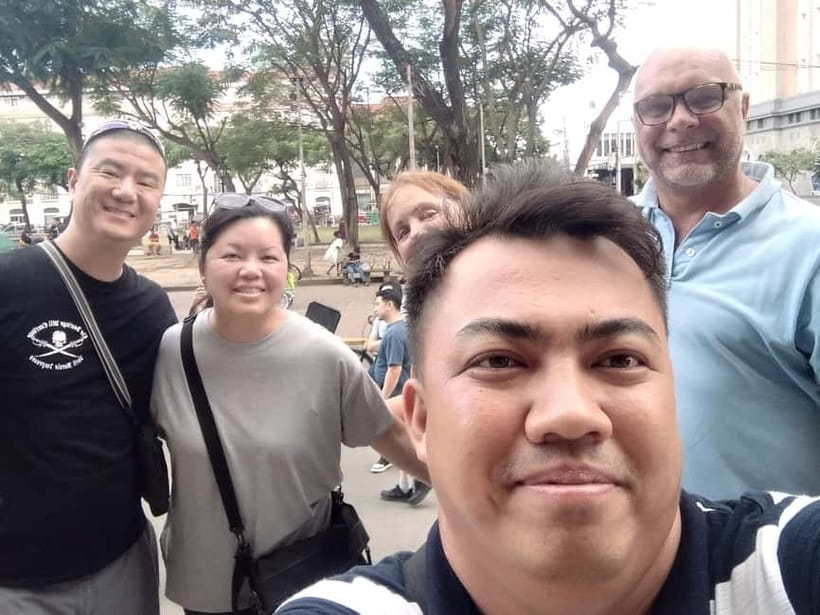
The dungeon visit is the tour’s darkest stop. About 600 people died there during the end of the Japanese occupation, giving the underground spaces a painful connection to Manila’s wartime history.
You should approach this part with respect. It is not a theatrical attraction, and the subject matter may be difficult. The experience asks you to confront what happened in a confined military space rather than keeping the visit at the level of architecture.
This stop also widens the tour beyond Spanish Manila. Much of the tour examines colonial rule and revolution, but the dungeons show the severe consequences of the Japanese occupation and the violence that marked the final period of the war.
Flash photography is not permitted inside certain areas, and you should follow the guide’s instructions. Food and drinks are not allowed inside the historical sites, and smoking is prohibited throughout the tour.
The uprisings inside Intramuros
The tour gives special attention to rebellions connected with the Walled City. You will hear about Novales’ revolt and the Sangley Uprising, then connect those episodes with the 1896 Philippine Revolution.
These subjects are useful because they complicate the usual picture of Intramuros as a purely Spanish colonial center. The walls protected authority, but they also contained opposition, tension, and attempts to change the political order.
I like that the experience puts these uprisings at the center instead of treating them as a footnote. If you already know some Philippine history, the tour can help place familiar names and events in a physical setting. If you are new to the subject, the guide’s sequence should give you a basic timeline from the pre-colonial era to modern Manila.
Do not expect every event in Philippine history to receive equal attention. This is a focused Fort Santiago and Intramuros tour, with special weight given to colonial rule, resistance, Rizal, wartime suffering, and the military use of the site.
Jerome’s language and guiding style
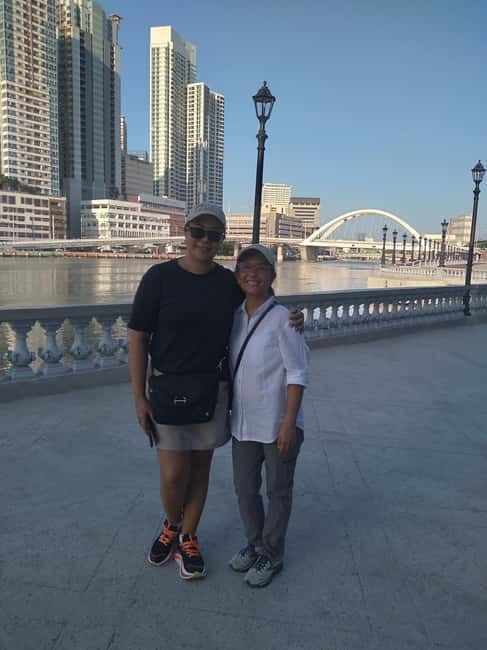
The clearest praise for this experience goes to guide Jerome. Michelle described his command of Philippine history as excellent and valued that he conducted most of the tour in Filipino.
That detail may shape your decision more than the low price. A tour about national identity, revolution, and Rizal can feel different when explained in the country’s national language. For Filipino-speaking visitors, the language may add warmth and familiarity that a standard English presentation does not always provide.
At the same time, Jerome’s availability is not guaranteed. Manila Revolution Tour provides the experience, and English and German are listed as tour languages. Ask for Jerome if that is important to you, but do not book on the assumption that he will lead every departure.
A good guide is also valuable here because the site has several periods competing for your attention. The Spanish fortress, American barracks, Japanese wartime history, and Philippine Revolution can blur together without a clear explanation. The guide’s job is to keep those chapters in order.
Is $20 a fair price?
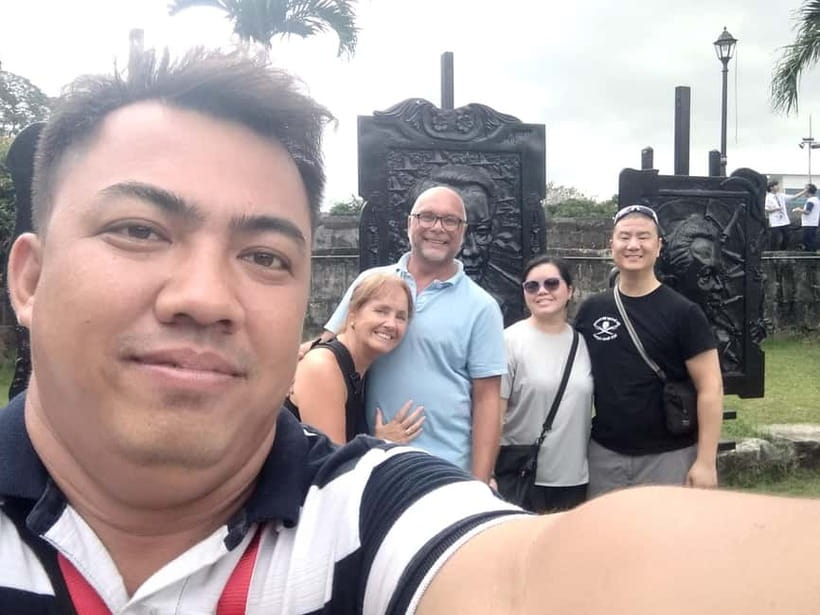
At $20 per person, this is a reasonable choice if you want a guided introduction to Fort Santiago and Intramuros. You receive a guided Fort Santiago tour, access to Rizal’s prison cell, a visit to the dungeons, and historical interpretation covering Manila and the Philippine Revolution.
The value is mainly in the explanation. You can walk around an old fort on your own, but you may miss why the baluartes matter, how the site changed under different powers, and how the uprisings relate to the Walled City.
The price does not include meals, beverages, or hotel pickup. You need to arrange your own way to the meeting point, and the supplied information does not give a duration or group size.
One odd detail deserves attention before you reserve: the location is listed as Nueva Vizcaya, while the experience itself is clearly described around Fort Santiago and Intramuros in Manila. Confirm the exact meeting point and city details before payment so you do not build your day around an incorrect location entry.
You can reserve and pay later, which helps if your Manila schedule is still changing. Cancellation is allowed up to 24 hours in advance for a full refund.
Walking, heat, and site restrictions
You need comfortable walking shoes. The route includes the fortress, military areas, dungeons, and baluartes, so this is not a sit-down history talk with a few short stops.
Bring water, sunscreen, and a hat. Food and drinks are not allowed inside the historical sites, so drink before entering or plan around the site rules. The supplied information does not state whether there are refreshment stops during the tour, so do not count on buying water inside.
The tour is not suitable for wheelchair users or people with mobility impairments. Children under seven are also not considered suitable for the experience.
Photography is allowed, but flash photography is prohibited in certain areas. Smoking is not allowed anywhere on the tour. These rules are simple, but following them is especially important in the dungeons and other sensitive historical spaces.
Who should book this Fort Santiago tour?
I would recommend it to first-time Manila visitors who want a clear introduction to Intramuros rather than a casual walk through old streets. It also suits anyone interested in Jose Rizal, the Philippine Revolution, Spanish colonial rule, or the wartime history of Manila.
Filipino-speaking visitors may find the experience especially rewarding if Jerome is available. His mostly Filipino presentation received the strongest praise, and the language can add a direct connection to the subject.
You should think twice if you dislike walking, struggle in the sun, or need step-free access. The tour also may not suit young children, since the subject matter includes imprisonment, death, and wartime suffering.
I would not choose it as a lighthearted sightseeing stop. Fort Santiago has attractive old military architecture, but its most important stories involve resistance and loss. Go ready to listen, not simply collect photographs.
Should you book the $20 Fort Santiago tour?
Book it if you want the history explained as you walk. The combination of Rizal’s cell, the wartime dungeons, American barracks, baluartes, and stories of revolt gives you a fuller picture of Intramuros than a quick self-guided visit.
The strongest reason to book is the guide, especially if you can join Jerome’s mostly Filipino tour. The main reasons to skip it are the walking, heat, access limits, and serious subject matter.
For $20, I think it offers good value for a history-minded visit to Manila. Confirm the meeting location, ask about the guide and language, wear sensible shoes, and leave enough time to move through the fortress without rushing.
FAQ
Where does the tour take place?
The experience is described at Fort Santiago and Intramuros in Manila. The supplied location also lists Nueva Vizcaya, so confirm the exact meeting point before booking.
What is included in the tour?
The tour includes a guided visit to Fort Santiago, Dr. Jose Rizal’s prison cell, the dungeons, and historical explanations about Manila and the Philippine Revolution.
Is hotel pickup included?
No. Hotel pickup is not included.
What languages are available?
English and German are listed as available languages. Guide Jerome conducted a tour mostly in Filipino, so ask about language and guide availability when booking.
Can children join the tour?
Children under seven are not considered suitable for this experience.
Can I cancel for a full refund?
Yes. You can cancel up to 24 hours in advance for a full refund.
Just added in Manila
- Underground River with Lunch★ 3.6 · 5 reviews
- Manila Night market and Street Food Tour★ 5.0 · 2 reviews
- Cruise Shore Excursion of Taal Volcano with Lunch★ 4.5 · 4 reviews
- Unforgettable Manila Fishing Village Day Excursion 2024★ 5.0 · 4 reviews
- Ultimate 8-Day Palawan Island Tour Package from Manila City★ 5.0 · 1 review
- Tagaytay + Hidden Valley Springs: A Scenic Escape w/ Transfers★ 4.0 · 4 reviews
- Tagaytay Day Tour sightseeing with Panoramic Taal volcano view★ 5.0 · 6 reviews
- 3 Days Private Tour in Banaue Ifugao visiting Batad Rice Terraces★ 3.5 · 3 reviews
Intramuros Walks, compared.

Intramuros, Manila: Historical Bamboo Bike Tour
Read our review →
Experience Intramuros with Bamboo Bicycle – Ecotours
Read our review →Intramuros, Chinatown, and Old Manila Half-Day Tour
Read our review →
Manila Old and New: Sightseeing Tour Including Intramuros and Fort Santiago
Read our review →
Explore Intramuros: Introduction to Philippine History
Read our review →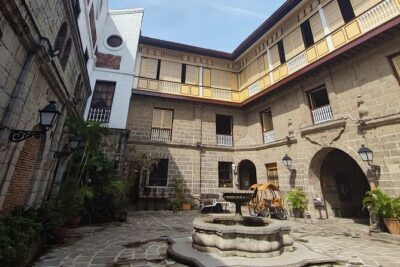
Experience Manila’s Heritage: Intramuros & More in Half a Day!
Read our review →Browse the lists this tour appears in