
Reviewed · GUIDED
Manila Hidden Gems with local guide
Manila rewards curiosity. This two-hour walk takes you from Binondo into Chinatown alleys, old structures, shopping lanes, and a traditional wet market, with a local guide helping you read the scene. I like the chance to ride an iconic jeepney or tricycle, and I like that the tour shows ordinary Manila life rather than keeping you around polished sightseeing stops.
The main consideration is that this is a walking tour through working neighborhoods, not a comfortable highlights tour. Streets can be crowded, conditions can be basic, and food tastings are not included in the $55 price, even though Filipino snacks and coffee may be part of the experience.
In This Review
- Key points before you book
- Starting at 1919 Grand Cafe in Binondo
- Chinatown alleys and Manila’s older structures
- Street food, local coffee, and what you pay for
- Riding a jeepney or tricycle
- The shopping market and wet market
- Apartments, back lanes, and ordinary home life
- What makes Mari’s local connection useful
- Safety, comfort, and the right expectations
- Is $55 a fair price for two hours?
- Who should book this Manila walk?
- Final verdict: book it for context, not comfort
- FAQ
- Where does the tour start?
- Where does the tour end?
- How long does the experience last?
- How much does the tour cost?
- Is food tasting included?
- Is local transportation included?
- What other inclusions are provided?
- How many people can join the tour?
- Is the tour available near public transportation?
- What happens if bad weather cancels the tour?
Key points before you book
- Walk through Chinatown alleyways: Begin near 1919 Grand Cafe in Binondo and move into side streets most visitors would miss.
- See Manila at street level: The route includes old buildings, local homes, apartments, shops, and back lanes.
- Ride local transport: A jeepney or tricycle ride is included, giving you a small taste of everyday travel in Manila.
- Visit a real shopping market: Expect housewares, clothes, fruit, and a wet market with low-cost local goods.
- Meet Manila through a local guide: Mari has led guests through the area where she grew up, adding a personal connection to the route.
- Keep the limits in mind: The tour lasts about two hours, caps the group at 10 people, and does not include food tasting.
Starting at 1919 Grand Cafe in Binondo
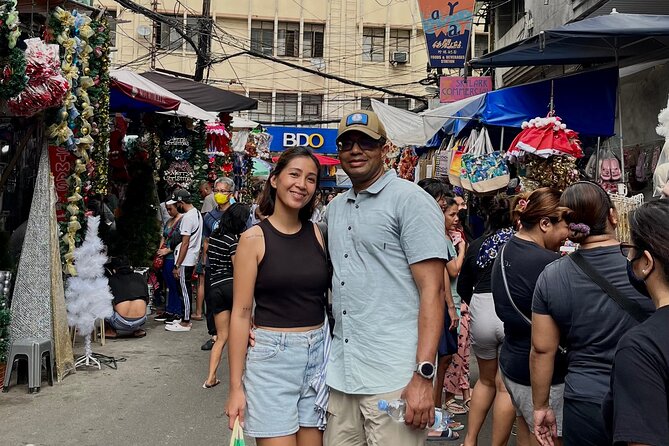
Your meeting point is 1919 Grand Cafe, at 117 Juan Luna Street in Binondo. This puts you near Manila’s Chinatown, a useful starting place for a walk that shifts quickly from recognizable city streets to narrow lanes and neighborhood markets.
The tour begins on foot. That matters because you get time to notice small details that disappear from a car window: shop fronts, household activity, food stalls, old walls, and the way commercial streets turn into residential passages.
I would arrive ready to walk at a steady pace. The tour is only about two hours, so it is designed as a compact look at several parts of the district rather than a slow, detailed visit to one site.
The group size is limited to 10 people. That is a practical advantage in tight streets. A smaller group should make it easier to hear the guide and avoid turning a narrow alley into a parade.
A few more Luzon days worth comparing
- Manila Old and New: Sightseeing Tour Including Intramuros and Fort Santiago
★ 4.5 · 377 reviews - Manila’s Walled City: Intramuros Walking Tour
★ 5.0 · 82 reviews - Manila Filipino Cooking Class: Meryenda Favorites
★ 5.0 · 80 reviews
Chinatown alleys and Manila’s older structures
One part of the route takes you through a Chinatown alley. This is not presented as a formal monument visit. Instead, you are seeing how an old district works today, with homes, shops, food activity, and foot traffic packed close together.
The route also points out old buildings and structures connected to the year 1595. That date gives the walk useful historical context, but you should not expect a long museum-style lecture or a full architectural tour. The value comes from seeing age and daily use side by side.
I like this kind of sightseeing because it makes history easier to understand. A date in a guidebook can feel remote. An old structure surrounded by shops, homes, and working streets shows how Manila’s past remains part of the present.
The tradeoff is visual clutter. This is a lived-in district, not a restored historic quarter. You may see worn surfaces, tight passages, and buildings that have changed over time. If you want spotless streets and carefully framed photo stops, this may feel rough around the edges.
If you enjoy street photography, bring a camera or phone, but use good judgment. The experience includes a photo shoot, yet this is also a residential area. Ask before photographing people, especially inside homes, near bathing areas, or during private family activities.
Street food, local coffee, and what you pay for
Food is part of the cultural focus, but the financial details are important. The experience may include sampling Filipino food, and the route is built around local cuisine, street food, and coffee. However, food tasting is not included in the tour price.
That means you should bring some extra Philippine pesos if you want to try what you see. The tour gives you access to the setting and local guidance, but you pay separately for food purchases.
This arrangement can work well. You choose what looks appealing and control how much you spend. It also avoids paying in advance for food you may not want. On the other hand, if you expect a tasting menu included in the $55 fee, you may feel the price is less attractive.
You may encounter several types of street food, along with local coffee and Filipino dishes. The supplied details do not specify exact foods, so I would treat the menu as part of the day’s discovery rather than expecting a fixed list.
The smart approach is to ask your guide what is fresh, popular, or suitable for your preferences. You can then decide whether to sample something small or simply watch the food preparation and continue walking.
Riding a jeepney or tricycle
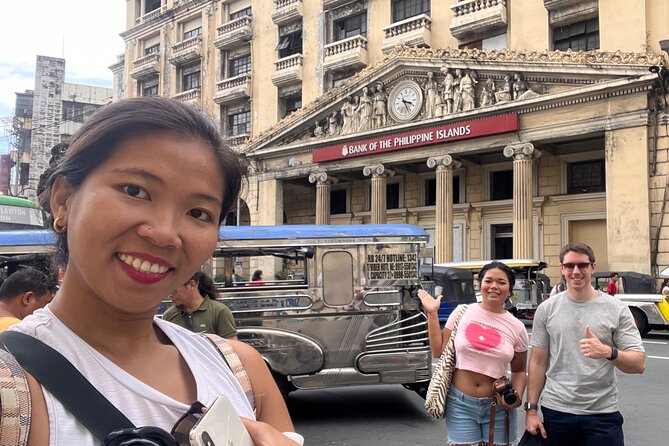
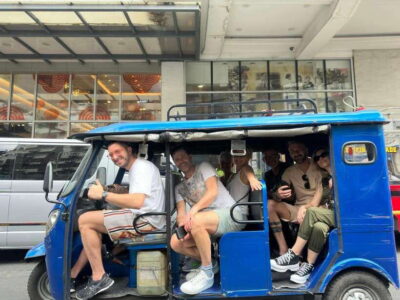
A ride on local transport is included. Depending on the route, that may be a jeepney or a tricycle. Either way, it adds a useful change of pace to a mostly walking experience.
Jeepneys are closely tied to everyday movement in the Philippines. A short ride lets you experience the practical side of Manila transport instead of only looking at it from the pavement. A tricycle offers a different feel, usually more compact and neighborhood-focused.
Do not think of this as a sightseeing vehicle. It is local transportation, and the ride is included as part of the cultural experience. The exact vehicle and riding time are not specified, so you should not book this expecting a long transport segment.
I consider this one of the strongest parts of the tour because it connects the walking route with ordinary city life. It also helps break up the two-hour stroll, which may be welcome in Manila’s heat.
A completely different kind of day out:
- Batad Guided Tour
★ 5.0 · 78 reviews - Manila Super Saver: Manila Sightseeing plus Tagaytay Tour with Taal Volcano
★ 4.0 · 75 reviews - Express Bamboo Bike Tour inside Intramuros
★ 4.5 · 66 reviews - PanoramicTagaytay Ridge Tour from Manila
★ 4.0 · 52 reviews
The shopping market and wet market
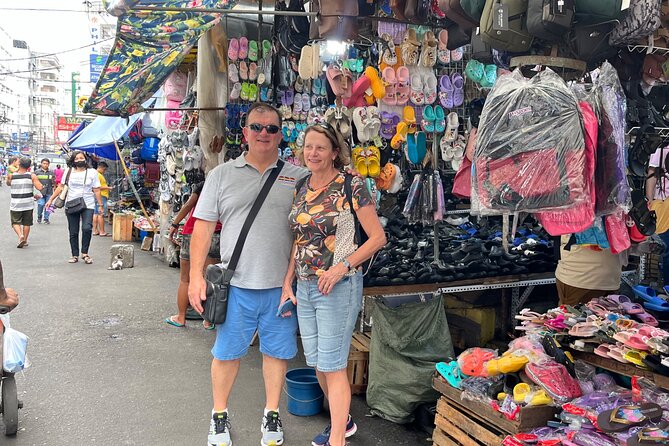
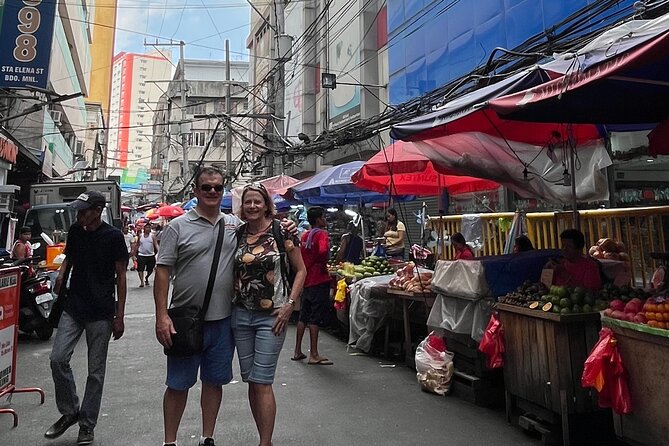
The market stop covers a broad range of everyday goods. You may see housewares, clothing, fruits, and a traditional wet market. Prices are described as cheap and reasonable, making this a good place to observe how local shopping works outside major malls.
The wet market is likely to be the most revealing part for people who want to understand daily routines. It shows food shopping as a regular household task, not a staged attraction. Expect a practical environment rather than a tidy food hall.
You can look for the difference between what is sold to local residents and what is packaged for visitors. Household goods, clothing, and fruit help show the neighborhood’s commercial rhythm. The market also gives you a chance to see how closely shopping and home life can sit together.
There is a comfort issue here. Wet markets can have strong smells, damp floors, narrow lanes, and busy foot traffic. Wear shoes with a secure grip and clothes suited to warm conditions. Since the tour is short, you may only pass through sections of the market rather than having time to shop at length.
Apartments, back lanes, and ordinary home life
The most unusual part of the walk is the chance to see the oldest apartments and less polished residential lanes. The tour describes homes where daily activities can happen in open-air settings, including bathing and dining.
This is where the experience moves beyond sightseeing. You are not simply looking at a building from the outside. You are seeing how people use limited space and how homes, lanes, shops, and public areas can overlap.
That access needs a respectful attitude. Keep your voice low, follow your guide’s instructions, and avoid treating residents as scenery. The fact that a place is unfamiliar to you does not make it public entertainment.
The tour’s appeal comes from this direct look at daily life. One account describes the route as an honest view of how many Filipino families manage hardship while remaining welcoming and energetic. That is a meaningful strength, but it also means the experience may challenge visitors who prefer easy sightseeing.
There is no need to romanticize difficult living conditions. The point is not that hardship is charming. The point is that a local guide can help you see people and neighborhoods with more care than a quick drive past would allow.
What makes Mari’s local connection useful
Mari is identified as a guide who grew up in the area. That personal link can make a real difference on a route like this, where context matters more than famous landmarks.
A local guide can explain why a street is important, how a market is used, or what you are seeing in a residential lane. Mari’s connection also appears to help create a relaxed relationship with residents. The tour has been described as welcoming, with no safety problems during the experience.
That does not mean you should stop using common city awareness. Keep your belongings secure, stay with the group, and listen to the guide when moving through narrow streets. The tour takes place in a real district, not a controlled attraction.
The guide’s role is especially important because the route includes places many first-time visitors might avoid. You are paying less for entrance tickets and more for access, explanation, and local judgment.
Safety, comfort, and the right expectations
The experience is recommended by 93 percent of participants and has a 4.8 rating from 27 reviews. Those figures suggest a strong level of satisfaction, but they do not remove the need to match the tour to your interests.
Most people can participate, and the tour is near public transportation. Still, you should be comfortable walking for two hours through urban streets and market areas. The supplied information does not provide an accessibility rating, so anyone with mobility concerns should confirm the walking conditions before booking.
Good weather is required. If poor weather cancels the tour, you are offered another date or a full refund. For a hot or rainy Manila day, this policy is worth noting before you plan other activities around the tour.
The included bottled water and welcome drink are modest but useful. You also receive a photo shoot, which may appeal to anyone who wants a record of the experience without constantly taking out a phone.
I would bring water beyond the included bottle if you need more hydration, plus comfortable walking shoes and cash for optional food or market purchases. Those are practical preparations, not extras designed to make the tour seem harder than it is.
Is $55 a fair price for two hours?
At $55 per person, this is not the cheapest way to walk around Manila. You are paying a premium for a local guide, a small group of up to 10, included local transport, bottled water, a welcome drink, and a planned route through areas you might not understand on your own.
The price makes more sense if you value access and interpretation. You are not paying for a major attraction ticket. You are paying to move through a complicated district with someone who knows the streets and can help you behave appropriately.
The value is also stronger if you want a personal look at Manila rather than a standard city highlights tour. Mari’s connection to the area adds something that a generic guide may not provide.
The price is harder to justify if you mainly want food. Tastings are not included, and the tour lasts only about two hours. In that case, a dedicated food tour might suit you better, though this experience offers a broader look at neighborhoods and transport.
Free cancellation is available up to 24 hours before the start time. Canceling within 24 hours does not qualify for a refund, and changes made during that period are not accepted.
Who should book this Manila walk?
I would recommend this tour to you if you want to see how Manila works away from major attractions. It suits people who enjoy walking, local markets, public transport, street food, and conversations about ordinary life.
It is also a good fit if you have already seen the main sights and want a different side of the city. The route offers cultural context without taking an entire day.
You may want to skip it if you dislike uneven urban conditions, open-air markets, or residential settings. It is not ideal for someone seeking a polished, air-conditioned outing with guaranteed food portions and fixed sightseeing stops.
Families should consider the group’s comfort with market smells, narrow passages, and basic surroundings. The tour says most people can participate, but it does not promise a stroller-friendly or fully accessible route.
Final verdict: book it for context, not comfort
I would book this experience if my goal were to understand Manila through its streets, markets, transport, and homes. The Chinatown alley, 1595-era structures, wet market, jeepney or tricycle ride, and local perspective create a useful two-hour portrait of city life.
The strongest reason to go is the chance to enter places that feel personal and ordinary, with Mari’s connection to the neighborhood helping guide the visit. The main cautions are the $55 price, the short duration, the extra cost of food, and the basic conditions you may encounter.
Book it when you want a frank look at daily Filipino life and are ready to be respectful. Skip it when you want a comfortable sightseeing loop or a food tasting package.
FAQ
Where does the tour start?
The tour starts at 1919 Grand Cafe, 117 Juan Luna Street, Binondo, Manila, 1006 Metro Manila, Philippines.
Where does the tour end?
The activity ends back at the meeting point.
How long does the experience last?
The walking tour lasts approximately two hours.
How much does the tour cost?
The listed price is $55 per person.
Is food tasting included?
No. Food tasting is not included, although the experience may include opportunities to sample Filipino food, local coffee, or street food at your own expense.
Is local transportation included?
Yes. The experience includes local transportation by jeepney or tricycle.
What other inclusions are provided?
Bottled water, a welcome drink, and a photo shoot are included.
How many people can join the tour?
The maximum group size is 10 people.
Is the tour available near public transportation?
Yes. The meeting point is near public transportation.
What happens if bad weather cancels the tour?
You will be offered a different date or a full refund if poor weather causes the cancellation.
Just added in Luzon
- Private Filipino Cooking Class in the Heart of Manila,Makati City★ 5.0 · 5 reviews
- Villa Escudero Tour with Lunch From Manila (SHARED)★ 5.0 · 5 reviews
- VILLA ESCUDERO DAY TOUR with Carabao Cart Ride and Bamboo from Manila★ 4.0 · 6 reviews
- Villa Escudero Coconut Plantation Day Trip from Manila★ 3.5 · 9 reviews
- Skip the Line: Villa Escudero Plantation & Resort Day Pass Ticket★ 4.5 · 11 reviews
- Tagaytay Day Tour From Manila★ 5.0 · 1 review
- The Jeepney & Tuk Tuk Adventure ride with Local Guide★ 4.5 · 4 reviews
- Pagsanjan Falls Adventure with Lunch and Rapids Experience★ 4.5 · 3 reviews
Guided, compared.

Private Boat Hire with Guided Tour and Lunch on Beach
Read our review →

Waterfall Hopping & Secret Jungle Trails Guided Tour
Read our review →
Browse the lists this tour appears in