
Reviewed · INTRAMUROS WALKS
Private Half-Day Manila with Rizal Park and Fort Santiago
Manila’s past comes alive quickly here. This private four-hour tour packs Makati, the American Cemetery, Rizal Park, Intramuros, San Agustin Church, Casa Manila, and Fort Santiago into one air-conditioned outing. I like the private guide and vehicle, which let you ask questions and avoid the pace of a large group. I also like the mix of national history, Spanish colonial buildings, wartime memory, and everyday religious life.
The main catch is time. Most stops last only 15 minutes, while Casa Manila and Fort Santiago receive about 30 minutes each. At $121.80 per person, the tour makes the most sense for a first visit, a short stay, or a long airport layover when convenience matters more than lingering at every site.
In This Review
- Key points to know before booking
- Why this four-hour tour works for a short Manila visit
- The American Cemetery and Memorial in Fort Bonifacio
- Rizal Park and the story of the national hero
- Intramuros: Manila’s walled historic center
- San Agustin Church and a living place of worship
- Casa Manila and a recreated 19th-century home
- Fort Santiago and Manila’s darker chapters
- What the private vehicle and guide add
- Is $121.80 per person a fair price?
- Who should book this Manila tour?
- Should you book it?
- FAQ
- How long does the tour last?
- What time does the tour start?
- Is hotel pickup included?
- Is this a private tour?
- Are entrance fees included?
- Are food and drinks included?
Key points to know before booking
- The American Cemetery adds a powerful wartime stop in Fort Bonifacio, outside central Manila.
- Casa Manila offers one of the tour’s most unusual interiors, with East Asian and European decoration inside a recreated 19th-century home.
- Fort Santiago gives the clearest history lesson, covering Manila’s defenses and some of the country’s darkest moments.
- A private English-speaking guide changes the pace, and guides Joan and Jonas earned especially warm praise for their humor and historical insight.
- Hotel pickup and drop-off cover Manila and Makati hotels, making this practical for a short visit.
- The schedule is tight, so this is an introduction to Manila rather than a slow, detailed tour of Intramuros.
Why this four-hour tour works for a short Manila visit
Manila can feel scattered on a first visit. Makati’s modern business district, Fort Bonifacio, the old walled city, and Rizal Park are not all part of one compact walking route. This tour solves that problem with hotel pickup, an air-conditioned vehicle, and a private guide who handles the movement between districts.
The experience begins at 8:30 am. Pickup is included from hotels in Manila and Makati, but the supplied details do not extend that service to every part of the wider metropolitan area. Check your hotel location before paying.
I see the private format as the main reason to consider this tour. You travel only with your own party, so you can ask about Dr. José Rizal, Philippine independence, World War II, or the Spanish colonial period without waiting for a busload of people to catch up. A good guide can also explain what you are seeing instead of leaving you with a string of photographs and little context.
The tour has earned a 4.4 rating from five published ratings, with strong marks for the guides and the historical content. Joan was praised for making a long airport layover productive, while Jonas was singled out for his historical knowledge and good sense of fun. Those details matter because four hours can feel rushed with a flat or hurried guide. Here, the human side of the tour appears to be one of its strongest features.
More Intramuros walks:
- Intramuros, Manila: Historical Bamboo Bike Tour
★ 4.8 · 583 reviews - Experience Intramuros with Bamboo Bicycle – Ecotours
★ 5.0 · 508 reviews - Manila: Intramuros, Chinatown, and Old Manila Half-Day Tour
★ 4.8 · 475 reviews
The American Cemetery and Memorial in Fort Bonifacio
The first listed stop is the Manila American Cemetery and Memorial in the Fort Bonifacio area of Makati. Admission is free, and the planned visit is about 15 minutes.
That is not enough time for a long, reflective visit, but it does give you a look at an important World War II memorial site. The cemetery adds a different layer to the day. Rizal Park and Intramuros focus on national identity, colonial rule, and Philippine heroes. The American Cemetery brings the war years and the wider Pacific conflict into the picture.
One visitor on a long flight layover found this site especially impressive and valued the amount of World War II background provided during the day. If wartime history interests you, listen closely here and ask your guide to connect the memorial with the later stops.
The short visit is also the main limitation. You should treat this as an introduction, not a full cemetery tour. If you want quiet time or a detailed look at the memorial, you may wish you had longer.
Rizal Park and the story of the national hero
The route then moves to Rizal Park, named for Dr. José Rizal, the Philippine national hero. The planned stop lasts about 15 minutes and admission is free.
The value here comes from the guide’s explanation. Rizal is not simply a name on a monument or a park sign. His role in Philippine history gives the rest of the day a clear thread, especially once you reach Intramuros and Fort Santiago. One group found the story of Rizal particularly useful because it made the national history easier to understand.
You should expect a brief orientation and a photo stop rather than a long walk through every part of the park. The schedule gives you enough time to see the main area and hear why Rizal matters, but not enough to explore at leisure.
That tradeoff is common throughout this tour. You cover more ground than you could manage easily on your own in four hours, but each stop has a firm limit.
Intramuros: Manila’s walled historic center
After Rizal Park, the tour reaches Intramuros, the old Walled City of Manila. The listed stop is about 15 minutes, with admission included.
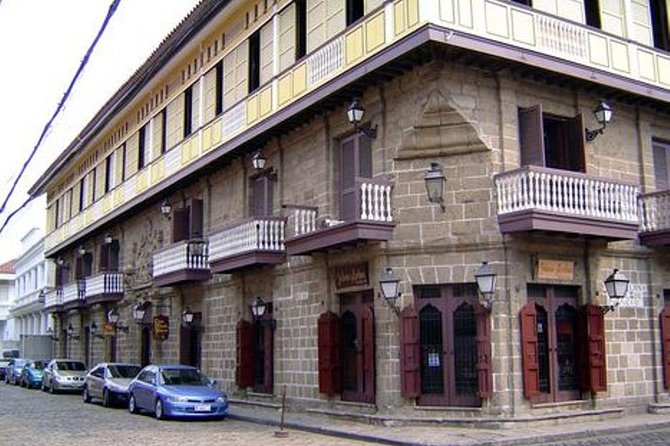
Intramuros is the point where Manila’s Spanish colonial past becomes most visible. The cobbled streets, old walls, religious buildings, and restored houses create a sharp contrast with the modern districts seen earlier. Even a short visit helps you understand that Manila is not one single city experience. It is a mix of newer commercial districts and older quarters shaped by colonial rule, war, and rebuilding.
The brief stop is described as a picture stop before continuing through the walled district. That makes this part useful as an introduction, but limited for anyone hoping to walk widely around Intramuros. You will see the character of the area, though you should not book this tour expecting a full walking exploration of every lane and building.
The private format helps here. Your guide can point out what deserves your attention as you pass through, and you can ask for a little more context about the walls or the buildings around you.
A few more Manila days worth comparing
- Manila: Old & New 4-Hour City Tour
★ 4.5 · 458 reviews - Manila Old and New: Sightseeing Tour Including Intramuros and Fort Santiago
★ 4.5 · 377 reviews - Spectacular Manila to Tagaytay: Full-Day Sightseeing Tour
★ 5.0 · 349 reviews - Makati Nightlife: VIP Access to Clubs, Rooftops & Go-Go Bars
★ 4.9 · 278 reviews
San Agustin Church and a living place of worship
San Agustin Church receives about 15 minutes, and admission is included. It is described as the oldest stone church in the Philippines, with a collection of ecclesiastical icons, vestments, and other religious objects.
This stop gives the tour a human and religious dimension. You are not looking only at old walls. You are seeing a church that remains part of Manila’s religious life. One group happened to watch a baptism taking place during the visit, a reminder that this is not merely a museum piece.
Because worship may be in progress, you should follow your guide’s instructions and behave respectfully. The short visit may let you see the church and some of its objects, but you should not count on a detailed museum-style examination of the collection.
San Agustin also works well beside Casa Manila. The church shows the public and religious side of colonial Manila, while the next stop looks at domestic life and the homes of the period.
Casa Manila and a recreated 19th-century home
Casa Manila is scheduled for about 30 minutes, with admission included. It is a reproduction of a 19th-century house furnished with East Asian and European decoration and Philippine antique furniture.
This is one of the most distinctive stops on the route. Instead of another monument or memorial, you get a look at how an affluent colonial-era interior might have been arranged. The blend of influences is the point: Philippine homes developed through contact among local traditions, Spain, and wider Asian trading connections.
One published account singled out Casa Manila as a favorite, along with the Chinese Cemetery, which is not part of the listed itinerary. That mention is useful in one way: it shows how much the guide may add through explanation and related city context. But you should not book this experience expecting a Chinese Cemetery visit, since it is not included in the stated stops.
Thirty minutes is a better allowance than the 15-minute visits earlier in the morning. You can look at the rooms, furniture, and decorative details without feeling quite as hurried. Still, the house is a reproduction, so visitors seeking untouched original interiors should set their expectations accordingly.
Fort Santiago and Manila’s darker chapters
Fort Santiago receives the longest listed visit, about 30 minutes, with admission included. The stone fort guarded the entrance to Manila from Manila Bay and served as a major line of defense against attacks from the sea.
This is the tour’s strongest historical stop. Fort Santiago connects military power, colonial control, imprisonment, and tragedy. It also links back to José Rizal, whose story becomes more meaningful when you see the setting associated with the final chapter of his life.
The fort is not presented as a simple old military structure. It carries memories of some of the most painful periods in Philippine history. A guide who can explain those events clearly adds real value, and Jonas was praised for doing just that while keeping the mood approachable.
Thirty minutes allows for a useful introduction and key photographs. It does not allow you to inspect every corner at a slow pace. If Fort Santiago is your main reason for visiting Manila, you may want a separate, longer visit later. If your goal is to understand the city’s basic historical arc, the stop does its job well.
What the private vehicle and guide add
The tour includes an English-speaking local guide, an air-conditioned vehicle, and hotel pickup and drop-off for Manila and Makati hotels. Food, drinks, and personal expenses are not included.
For Manila, the vehicle is not a minor convenience. The tour links Makati, Fort Bonifacio, Rizal Park, and Intramuros in one morning. Moving between them without local help can take time and energy, especially if you are trying to fit the route around a flight.
The driver and guide are separate roles, according to the description and published comments. Both were praised as friendly and personable, and the English was described as very good. Joan and Jonas are the guide names associated with the strongest comments, though you should not assume one of them will lead your departure.
A private tour also gives you some control over questions and attention. You cannot necessarily add extra stops, since the four-hour schedule is full, but you can ask for more explanation at the places that interest you most.
Is $121.80 per person a fair price?
At $121.80 per person, this is not the cheapest way to see Manila. The price includes private transportation, an English-speaking guide, hotel pickup and drop-off, entrance fees where listed, taxes, fees, and handling charges.
The value depends on your situation. For one person or a couple, the cost may feel high compared with joining a larger shared excursion or arranging selected visits on your own. For a family or small group, the private format may make more sense, especially since group discounts are offered.
I would consider the price reasonable for a long airport layover, a first morning in Manila, or a visitor who wants transport and historical explanation handled in one package. The tour is less compelling if you already know Intramuros, have plenty of time, or prefer to spend an hour or two at one site.
Since no meals are provided, plan to eat before or after the tour. The 8:30 am start gives you a useful morning schedule, but the experience itself is focused on sights and history rather than food or shopping.
Who should book this Manila tour?
I would choose this tour if you have limited time and want a broad first look at Manila. It suits first-time visitors, people staying in Makati, families who prefer a private vehicle, and passengers with a long airport layover.
It is also a good fit if you want a guide to explain José Rizal, Spanish colonial Manila, the wartime period, and the meaning of Fort Santiago. The praise for Joan and Jonas suggests that the guide can make the history lively rather than dry.
I would hesitate if you want a relaxed walking tour, long photo stops, or detailed time inside every Intramuros attraction. The schedule is efficient, but efficiency comes with short visits. You will see the city’s key historic points, not every corner.
Children can participate, but the child rate applies only when sharing with two paying adults, and children must be accompanied by an adult. Most people can take part, according to the supplied participation details.
Should you book it?
Book this tour if your Manila time is short, your hotel is in Manila or Makati, and you want history, transport, and major sights in one private morning. The combination of Fort Santiago, Casa Manila, and Rizal Park gives you a useful introduction to the city, while the American Cemetery adds important World War II context.
Skip it if you want to linger. Four hours and several 15-minute stops can feel brisk, especially inside Intramuros. For the right schedule, though, this is a practical way to get your bearings and understand why Manila’s past is written across forts, churches, memorials, and homes.
FAQ
How long does the tour last?
The tour lasts approximately four hours.
What time does the tour start?
The stated start time is 8:30 am.
Is hotel pickup included?
Yes. Free hotel pickup and drop-off are included for hotels in Manila and Makati.
Is this a private tour?
Yes. Only your group participates in the activity.
Are entrance fees included?
Admission is included for the listed paid attractions, including Intramuros, San Agustin Church, Casa Manila, and Fort Santiago. The American Cemetery and Rizal Park are listed with free admission.
Are food and drinks included?
No. Food, drinks, and personal expenses are not included.
Just added in Manila
- Underground River with Lunch★ 3.6 · 5 reviews
- Manila Night market and Street Food Tour★ 5.0 · 2 reviews
- Cruise Shore Excursion of Taal Volcano with Lunch★ 4.5 · 4 reviews
- Unforgettable Manila Fishing Village Day Excursion 2024★ 5.0 · 4 reviews
- Ultimate 8-Day Palawan Island Tour Package from Manila City★ 5.0 · 1 review
- Tagaytay + Hidden Valley Springs: A Scenic Escape w/ Transfers★ 4.0 · 4 reviews
- Tagaytay Day Tour sightseeing with Panoramic Taal volcano view★ 5.0 · 6 reviews
- 3 Days Private Tour in Banaue Ifugao visiting Batad Rice Terraces★ 3.5 · 3 reviews
Intramuros Walks, compared.

Intramuros, Manila: Historical Bamboo Bike Tour
Read our review →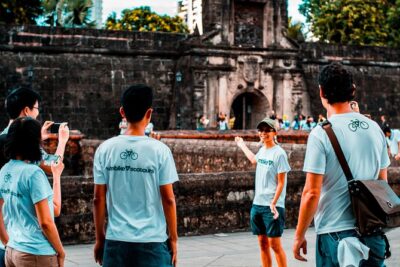
Experience Intramuros with Bamboo Bicycle – Ecotours
Read our review →Intramuros, Chinatown, and Old Manila Half-Day Tour
Read our review →
Manila Old and New: Sightseeing Tour Including Intramuros and Fort Santiago
Read our review →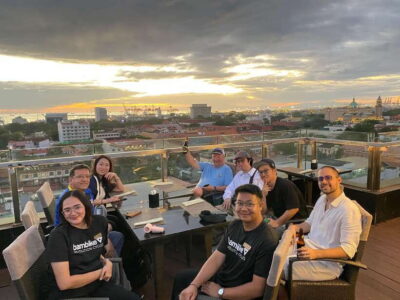

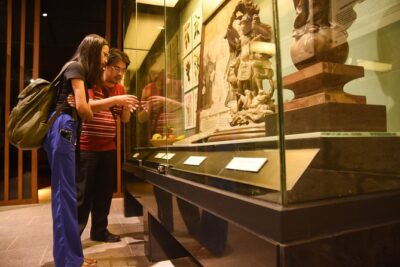
Explore Intramuros: Introduction to Philippine History
Read our review →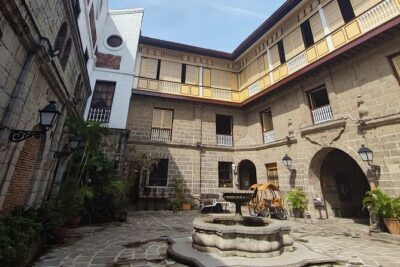
Experience Manila’s Heritage: Intramuros & More in Half a Day!
Read our review →Browse the lists this tour appears in