
Reviewed · FOOD & DRINK
Manila Food Tour: Explore World’s Oldest Chinatown
Old Manila tastes better one bite at a time. This three-hour walk through Binondo, the world’s oldest Chinatown, links small food stops with stories about Chinese-Filipino cooking and daily life. I like the smart mix of eight sweet and savory tastings and the easy return to the starting point, which leaves your afternoon open. I also like that guides such as Jian, Nel, Chloe, and Rian have made the food stops feel personal rather than formulaic.
The main caution is simple: come hungry, and do not expect a light snack walk. Several stops serve filling portions, and some people have struggled to finish everything. The tour is also not suitable for vegans, and the advertised group size needs clarification, since one description says a maximum of 10 while the additional details allow up to 15.
In This Review
- Key Things To Know Before You Go
- Starting Beside Binondo Church
- Carvajal Street: Fresh Lumpia and Kuchay Ah Pie
- Handmade Dumplings in Binondo
- Mami, Manila’s Comforting Noodle Soup
- Classic Dim Sum and More Savory Bites
- Hopia at a Historic Bakery
- What the $60 Price Really Covers
- Pace, Group Size, and Weather
- Who Will Enjoy This Food Walk Most
- Should You Book the Binondo Food Tour?
- FAQ
- Where does the Manila food tour begin?
- Where does the tour end?
- How long does the tour last?
- How many foods are included?
- Are drinks included?
- Is transportation included?
- Is the tour suitable for vegans?
- What happens if bad weather cancels the tour?
Key Things To Know Before You Go
- Binondo Church begins the story: You meet at the Minor Basilica and National Shrine of Saint Lorenzo Ruiz, a clear landmark in Plaza Lorenzo Ruiz.
- Eight foods make this a full meal: Expect a broad spread of Chinese-Filipino flavors, from fresh lumpia and dumplings to mami and hopia.
- Carvajal Street offers the first tastes: Fresh lumpia and Kuchay Ah Pie introduce you to local snacks made by neighborhood vendors.
- Small restaurants are part of the appeal: The route uses places you might not find on your own, including dumpling shops and classic dim sum stops.
- The pacing earns praise: The walk lasts about three hours, with food stops spaced well enough to keep the day moving.
- The $60 price buys more than food: You are paying for a guide, route planning, ordering help, cultural context, and access to busy local eateries.
Starting Beside Binondo Church
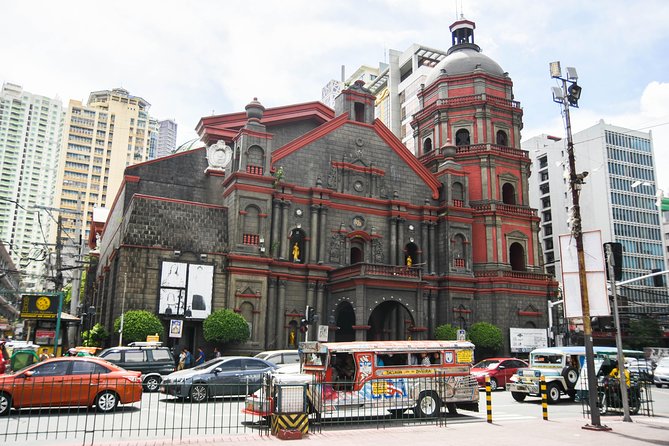
The tour begins at Binondo Church, officially the Minor Basilica and National Shrine of Saint Lorenzo Ruiz, at 1006 Plaza Lorenzo Ruiz. That gives you a simple meeting point in a busy part of Manila. You do not need to hunt for a restaurant entrance or decode a vague street corner.
The church also gives the walk a useful sense of place. Binondo is not just a dining district. It is a meeting ground for Chinese and Filipino traditions, and the tour uses food to explain how those cultures developed side by side.
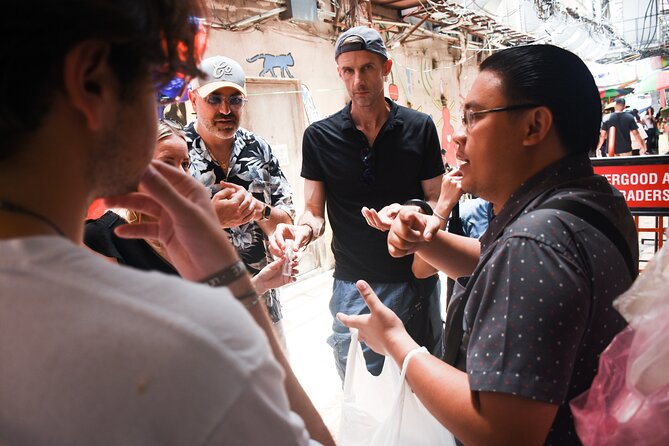
Your guide may be Jian, the owner who started the tour, or one of the other guides who lead it, including Nel, Chloe, Rian, or Pat. The strongest reports describe guides who explain ingredients, local customs, neighborhood history, and the reason each stop matters. That personal commentary is important because Binondo can otherwise feel like a fast-moving blur of signs, traffic, shops, and food counters.
This is a walking tour, and private transportation is not included. Public transportation is nearby, but you should arrange your own way to Binondo Church. Wear comfortable walking shoes. The pace has been praised as manageable, but you will spend the afternoon on foot and eating along the way.
More Food Tours in Manila
- Manila: Street Food and Drinks Walking Tour with Tastings
★ 4.8 · 114 reviews - Manila: Sightseeing and Food Walking Tour with Tastings
★ 4.7 · 68 reviews - Manila’s Culinary Expedition: The Ultimate Food and Market Tour
★ 5.0 · 42 reviews
Carvajal Street: Fresh Lumpia and Kuchay Ah Pie
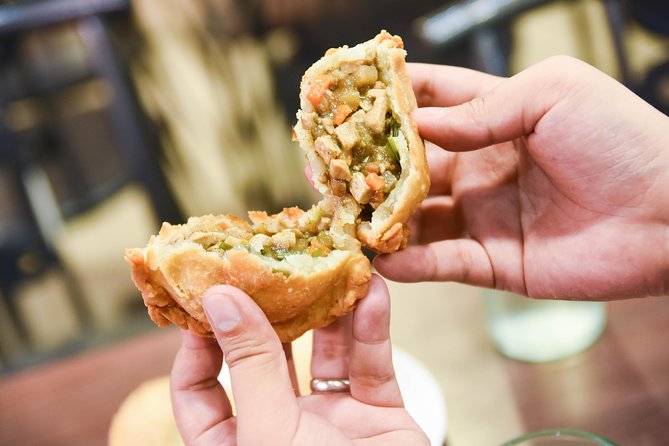
Carvajal Street is where the food portion gets going. The first tastes include fresh lumpia and Kuchay Ah Pie, a Chinese-Filipino pastry with chive filling. These are useful opening dishes because they show two sides of Binondo cooking: fresh ingredients wrapped in a soft roll, then a crisp or flaky snack with a savory filling.
Fresh lumpia is not the same as the fried spring rolls many visitors already know. Its softer wrapper and fresh filling make it a good way to notice the local style. Kuchay Ah Pie brings a different texture and a more compact, pastry-like bite.
The route uses neighborhood vendors rather than relying only on famous tourist restaurants. That is one of the best reasons to book with a guide. You may walk past these spots without knowing what to order, how to eat the food, or which items are worth your limited stomach space.
One practical point: the food comes quickly. The tour includes eight items, and the later stops become more filling. If you take a morning departure, skip breakfast. That advice appears repeatedly for a reason. Even sharing portions can leave you full by the end.
Handmade Dumplings in Binondo
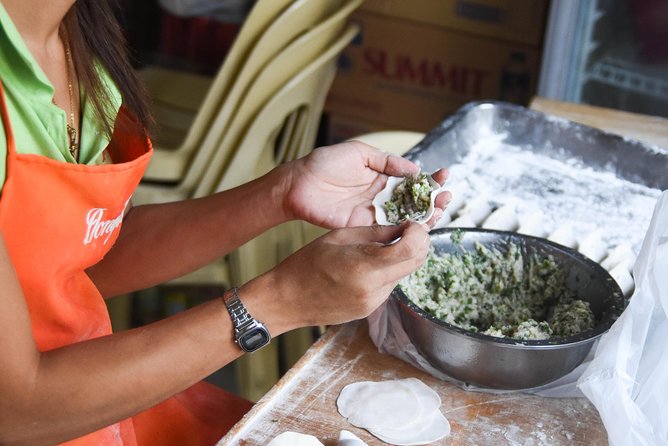
Dumplings are one of the strongest parts of the route. The tour visits a place where the dumplings are handmade, and the preparation itself becomes part of the experience. You are not simply receiving a plate of anonymous bites. You get a look at the care and skill behind a common Chinatown food.
The dumpling stop has earned especially warm praise. One guide was able to get the group served quickly despite a long queue, suggesting that the route and local relationships can save you time. Another visitor called the dumplings the best they had tried, including dumplings in the San Francisco Bay Area.
Do not read that as a guarantee that every bite will be your personal favorite. Food taste is personal, and the tour visits several places with different styles. Still, dumplings appear to be a major strength, and they offer one of the clearest links between Chinese cooking and the food culture that developed in Manila.
This is also a good point to tell your guide about restrictions. Nel has been praised for accommodating different food needs, but the tour is specifically listed as unsuitable for vegans. Vegetarian or other restrictions should be discussed before ordering, not after the plates arrive.
Mami, Manila’s Comforting Noodle Soup
The next major stop is mami, a noodle soup that has become part of Filipino comfort food. After pastries and dumplings, a bowl of hot soup changes the rhythm of the tour. It gives you something more substantial and helps explain how Chinese techniques became part of everyday Filipino eating.
Mami is a valuable stop because it is not just a Chinese dish served in Manila. It represents the way food travels, adapts, and becomes local. Your guide may explain the ingredients and the place of noodle soup in Filipino food culture, though the depth of the commentary can vary by guide.
That variation matters. Jian, Nel, Chloe, and Rian have all been praised for lively explanations about food and culture. One less enthusiastic account felt the tour delivered plenty of food but not enough information about Chinatown itself. If the historical side matters as much to you as the eating, tell your guide early that you would like more context as you walk.
A completely different kind of day out:
- Intramuros, Manila: Historical Bamboo Bike Tour
★ 4.8 · 583 reviews - Experience Intramuros with Bamboo Bicycle – Ecotours
★ 5.0 · 508 reviews - Manila: Intramuros, Chinatown, and Old Manila Half-Day Tour
★ 4.8 · 475 reviews - Manila: Old & New 4-Hour City Tour
★ 4.5 · 458 reviews
Classic Dim Sum and More Savory Bites
The route continues to a classic dim sum destination. This is where the meal shifts toward familiar Chinese restaurant fare, but the setting and preparation keep it tied to Binondo. You can expect more than one small tasting, and the selection may include dishes that are less common on standard tourist menus.
The tour is designed for sharing. Several groups split an order among multiple people, and even then the amount of food can be generous. One group shared a pigeon among seven people when that option was available. That detail tells you two things: ask about unusual choices, and do not assume you need a full portion for every person.
Fresh preparation has been a recurring strength. The food is served from places that are busy enough to turn over dishes, which matters in a walking food tour. You are not spending the whole afternoon waiting for a single meal. Instead, the stops keep the route moving while giving you time to eat, ask questions, and watch the neighborhood.
A guide is also useful in crowded restaurants. The route is planned around busy places, and guides can help with ordering, timing, and table arrangements. That service is easy to overlook when considering the price, but it can save a great deal of guesswork in an unfamiliar food district.
Hopia at a Historic Bakery
The final food stop is a bakery known for hopia. These flaky pastries come in several flavors and are a fitting finish because they connect Binondo’s Chinese culinary roots with Filipino bakery culture.
Hopia travels well compared with soup or dumplings, so it can also be a practical last taste for later. One group had leftovers wrapped carefully to take back to a hotel, using them as a late-night snack. You should not count on every stop providing take-home food, but it is sensible to ask your guide if you cannot finish something.
The hopia stop also brings the tour back to the idea of food as memory. Bakery items are often easier for visitors to understand than a complex savory dish, yet they still carry a local story. The range of flavors gives you a chance to compare textures and sweetness after several savory courses.
By this point, you may be full enough to treat the final pastry as a small bite rather than a dessert course. That is not a flaw in the tour. It is simply why the breakfast warning matters.
What the $60 Price Really Covers
At $60 per person, this is not the cheapest way to buy food in Manila. You can eat individual snacks and meals in Binondo for much less. The better question is what the tour adds to those purchases.
You are paying for eight food items, soft drinks, tea, and bottled water, along with a three-hour guided route. You also get someone to choose the stops, explain what you are eating, navigate the district, and manage ordering at places that may be crowded or unfamiliar.
I see the price as reasonable if you are new to Manila, want to sample widely, or have only a short time in the city. The food alone may not equal $60 in local terms, but the route can replace several hours of research and trial and error. It also lets you taste more dishes than you would likely order alone.
The value is weaker if you already know Binondo well, speak comfortably with restaurant staff, and prefer to choose every dish yourself. Locals have still enjoyed the experience, especially for the better versions of familiar foods, but independent eaters may prefer spending the same amount across several self-guided meals.
Group discounts may help reduce the cost for families or friends. Mobile tickets also make booking simple. The tour returns to the meeting point, so you do not need to plan around a distant finish.
Pace, Group Size, and Weather
The tour lasts about three hours, which is long enough for a serious sampling session without taking your whole day. You finish back at Binondo Church, leaving time for more sightseeing, shopping, or a quiet afternoon after your food coma.
The description presents it as a small group tour with a maximum of 10 people, while the additional information lists a maximum of 15. If a very small group matters to you, confirm the expected size before booking. A group of 10 can still feel social and manageable, while 15 may require more patience at narrow food counters.
The tour requires good weather. If poor weather forces cancellation, you are offered another date or a full refund. That is worth keeping in mind during Manila’s rainy periods.
You can cancel for a full refund if you do so at least 24 hours before the start time. Changes or cancellations inside that window are not accepted for a refund. These rules are standard enough, but they matter if your Manila schedule is unsettled.
Who Will Enjoy This Food Walk Most
I would recommend the tour to first-time visitors who want an immediate introduction to Binondo. You get a route, a meal, and a local explanation without having to build the day yourself.
It also suits curious eaters who want Chinese-Filipino food rather than a generic dim sum outing. The stops cover snacks, dumplings, soup, dim sum, and pastries, so you get a broad sample in one sitting.
Families and small groups may like the sharing format, especially if everyone wants to try many dishes. Guides have also helped wrap leftovers, which is useful when children or cautious eaters cannot finish every portion.
The tour is less suitable for vegans. It may also disappoint anyone seeking a relaxed, sit-down meal with long conversations at each restaurant. You will be moving between stops, and the main goal is variety.
Should You Book the Binondo Food Tour?
Book it if you want a guided first taste of Manila’s Chinese-Filipino food culture and like the idea of trying eight dishes without planning each stop. The strongest features are the dumplings, the variety, the sensible three-hour length, and guides such as Jian, Nel, Chloe, and Rian who add warmth and useful local context.
Go in with realistic expectations. Food quality appears consistently strong, but the amount of historical explanation may depend on your guide and the group. If you want the fullest experience, arrive early in the day, wear good shoes, skip breakfast, and ask questions as you walk.
At $60, this is a convenience and orientation purchase as much as a food purchase. For a first visit to Binondo, that can be money well spent. For experienced Manila diners who prefer to explore alone, the price may be harder to justify.
FAQ
Where does the Manila food tour begin?
It begins at the Minor Basilica and National Shrine of Saint Lorenzo Ruiz, also called Binondo Church, at 1006 Plaza Lorenzo Ruiz, Binondo, Metro Manila.
Where does the tour end?
The activity ends back at the meeting point at Binondo Church.
How long does the tour last?
The tour lasts approximately three hours, leaving the rest of the day free.
How many foods are included?
Eight different food items are included, with sweet, savory, and other types of tastings.
Are drinks included?
Yes. Soft drinks, tea, and bottled water are included.
Is transportation included?
No. Private transportation is not included. The meeting point is near public transportation.
Is the tour suitable for vegans?
No. The experience is listed as not suitable for vegans.
What happens if bad weather cancels the tour?
You will be offered a different date or a full refund if poor weather causes the experience to be canceled.
Just added in Manila
- Underground River with Lunch★ 3.6 · 5 reviews
- Manila Night market and Street Food Tour★ 5.0 · 2 reviews
- Cruise Shore Excursion of Taal Volcano with Lunch★ 4.5 · 4 reviews
- Ultimate 8-Day Palawan Island Tour Package from Manila City★ 5.0 · 1 review
- Unforgettable Manila Fishing Village Day Excursion 2024★ 5.0 · 4 reviews
- Tagaytay + Hidden Valley Springs: A Scenic Escape w/ Transfers★ 4.0 · 4 reviews
- Tagaytay Day Tour sightseeing with Panoramic Taal volcano view★ 5.0 · 6 reviews
- 3 Days Private Tour in Banaue Ifugao visiting Batad Rice Terraces★ 3.5 · 3 reviews
Food & Drink, compared.

Boracay Sunset Cruise with Party DJ & Unlimited Food and Drinks
Read our review →
Street Food and Drinks Walking Tour with Tastings
Read our review →
The Original Cebu City Historical and Food Walking Tour
Read our review →
Manila’s Culinary Expedition: The Ultimate Food and Market Tour
Read our review →
Makati Street Food Experience end with a Rooftop Bar
Read our review →
Intramuros & Chinatown Manila Tour – Walking, Food & Culture
Read our review →Browse the lists this tour appears in