
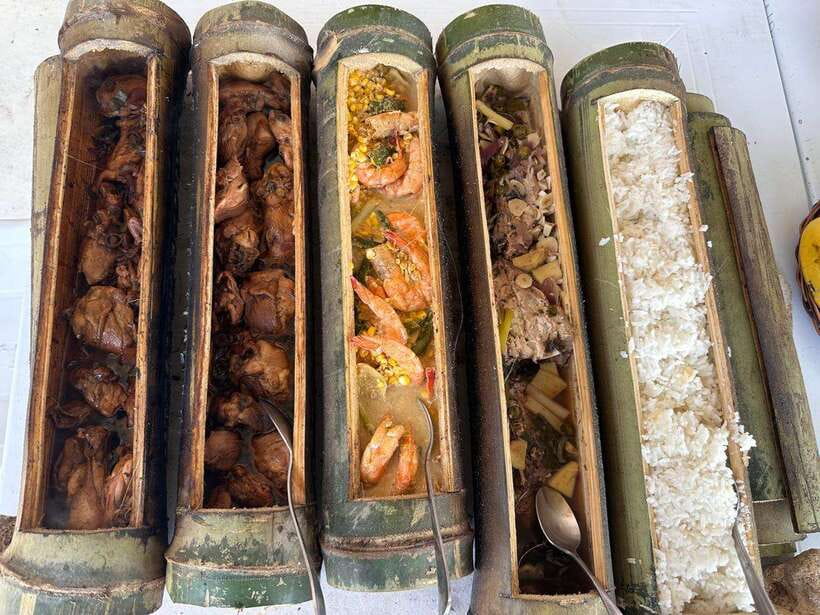
Reviewed · COOKING CLASSES
Cebu Traditional Bamboo Cooking Class
Food tastes better when you help make it.
At Hadsan Cove Resort in Marigondon, Lapu-Lapu City, you prepare three Filipino dishes with chicken, shrimp, and fish, then eat them beside the beach. I like the hands-on cooking, the charcoal method, and the chance to learn about Filipino food from an English-speaking instructor. I also like that the dishes are made without MSG and that recipes and photos are sent afterward. The main drawback is the timing: the activity is advertised as three hours in one place and four hours in another, so confirm the exact schedule before booking.
This is not a polished restaurant demonstration where you sit back and watch someone else do the work. You help prepare herbs and spices, wait for food to cook over charcoal, make a native garden salad, and finish with hanging rice and a local dessert. The beach setting adds real appeal, but bring proper sun protection and a change of clothes. You may swim while the food cooks, and the class runs rain or shine.
In This Review
- Key points to know before booking
- Arriving at Hadsan Cove Resort in Marigondon
- A short introduction to Filipino cooking
- Preparing chicken, shrimp, and fish dishes
- Why the bamboo and charcoal matter
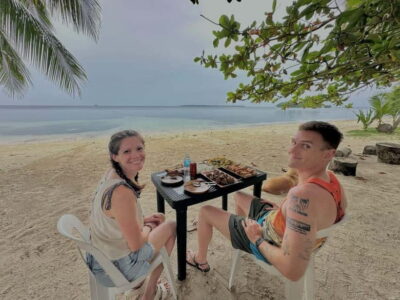
- Waiting by the water while dinner cooks
- Native salad, hanging rice, and local dessert
- Eating what you prepared
- Photos and recipes after the class
- Is $112 a fair price?
- Who will enjoy this Cebu cooking class?
- What to bring for a comfortable session
- Should you book the Cebu Traditional Bamboo Cooking Class?
- FAQ
- Where does the Cebu Traditional Bamboo Cooking Class take place?
- How long is the cooking class?
- What food will I prepare?
- Are the dishes made with MSG?
- Can I swim during the cooking class?
- How far in advance should I book?
Key points to know before booking
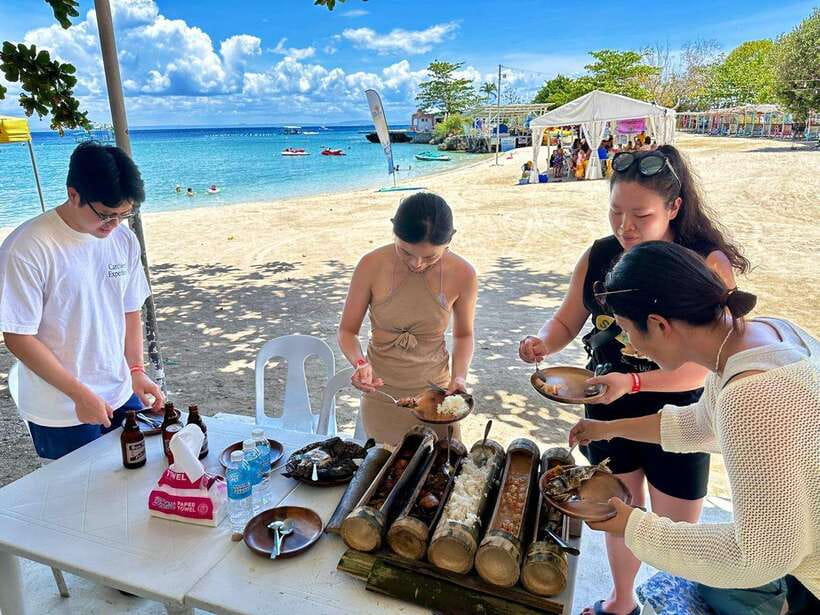
- Charcoal cooking gives the class its local character: Food is cooked in bamboo over charcoal, rather than on a modern kitchen range.
- Three main Filipino dishes are included: You prepare recipes featuring chicken, shrimp, and fish, along with salad, hanging rice, and dessert.
- The beach is part of the experience: You can swim while the food cooks, so pack beachwear and a change of clothes.
- The meal is prepared without MSG: Vegetarian dishes can be requested if you arrange this in advance.
- You receive useful take-home material: Recipes and all photographs taken during the class are sent by email afterward.
- Allow extra planning time: Bamboo must be ordered, so booking requires at least one week’s notice.
Arriving at Hadsan Cove Resort in Marigondon
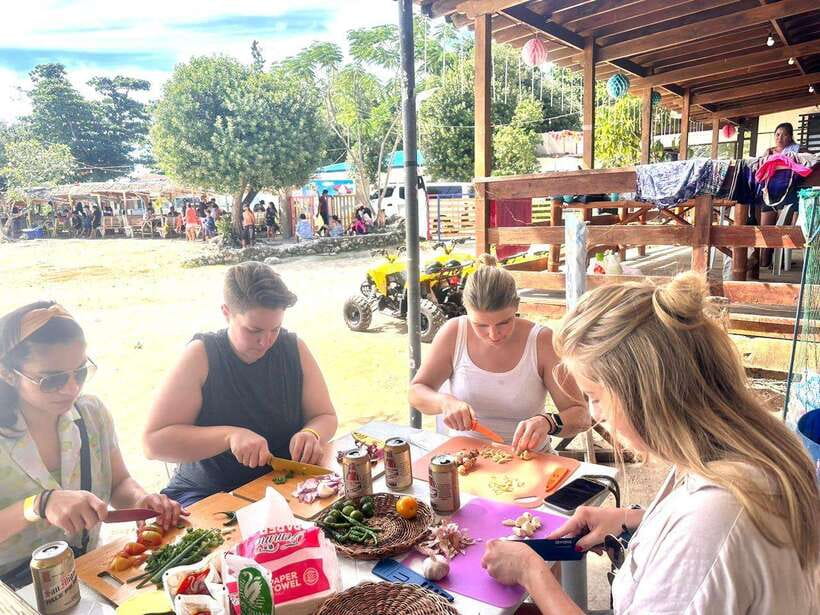
The class takes place at Hadsan Cove Resort in Marigondon, Lapu-Lapu City, on Cebu’s Visayas side. You meet at the designated location and should tell the guards that you are there for a bamboo cooking class. The activity ends back at the same meeting point.
That small arrival instruction matters. Resorts can have several activities happening at once, and saying exactly why you are there should save you from wandering around with a bag of ingredients or a sun hat in hand. The setting is in front of the beach, so you are not confined to an indoor classroom.
I would arrive ready for both cooking and water time. Comfortable clothes and shoes work well for the food preparation, while flip-flops, beachwear, sunglasses, a sun hat, and sunscreen make the waiting periods easier. A change of clothes is sensible if you swim or simply get splashed near the shore.
The class is taught in English. The available information does not give a fixed group size, hotel pickup plan, or transport arrangement, so you should not assume those are included. Plan to reach Hadsan Cove Resort independently unless your booking confirms another arrangement.
A few more Cebu days worth comparing
- Cebu Traditional Bamboo Cooking
★ 5.0 · 3 reviews - Manila Filipino Cooking Class: Meryenda Favorites
★ 5.0 · 80 reviews - Makati: Hands on Manila Cooking Class
★ 5.0 · 49 reviews
A short introduction to Filipino cooking
The session begins with a brief introduction to Filipino cooking history. This gives the class some needed context before you start chopping and seasoning.
That opening talk is valuable because Filipino food is not just a collection of recipes. The class connects the food to local preparation methods and ingredients, then puts those ideas into practice. You will not spend the entire morning in a lecture, though. The history portion is brief, leaving most of the time for preparation, cooking, and eating.
I appreciate this balance. A cooking class should explain why a dish is made in a certain way, but you also came to use your hands. If you want a long, formal lesson on Philippine food history, this will likely feel too light. If you want a practical introduction with some background, it fits better.
The instructor speaks English, which helps when you are learning unfamiliar ingredients and cooking steps. Still, cooking classes move quickly once preparation begins, so pay attention during the introduction and ask questions as you go.
Preparing chicken, shrimp, and fish dishes
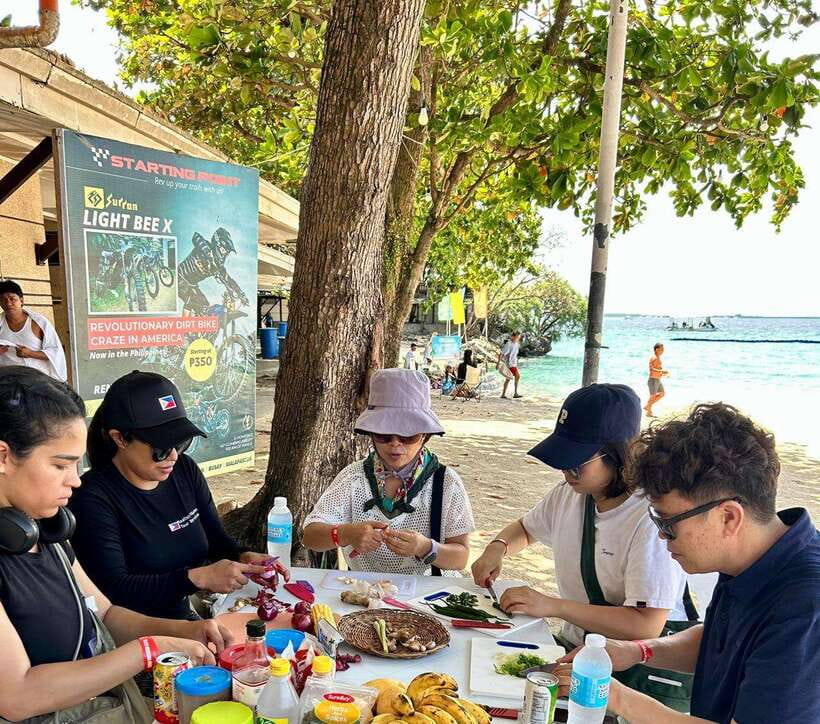
The central part of the class is the preparation of three traditional Filipino dishes. The menu features chicken, shrimp, and fish, giving you a useful range of Filipino cooking rather than three versions of the same meal.
You prepare the spices and herbs yourself. That step is more important than it may sound. In many cooking classes, the ingredients arrive measured and ready, which makes the process easy but removes much of the learning. Here, handling the seasonings helps you understand how the dishes are built before they go onto the charcoal.
The exact dish names and recipes are not specified in the available information, so do not book expecting a particular famous specialty. The clear promise is a trio of traditional dishes based on chicken, shrimp, and fish, not a fixed menu of named recipes. If one ingredient is important to you, ask before booking.
The meal is free of MSG. That is useful for anyone who prefers to avoid added monosodium glutamate, although you should still mention allergies or dietary concerns directly when arranging the class. Vegetarian dishes may also be requested, but the information says this should be arranged in advance rather than assumed on the day.
The seafood element makes this especially appealing if you want your Cebu food experience to include more than meat and rice. At the same time, anyone with seafood allergies should clarify the menu before paying. The standard class includes both shrimp and fish.
Why the bamboo and charcoal matter
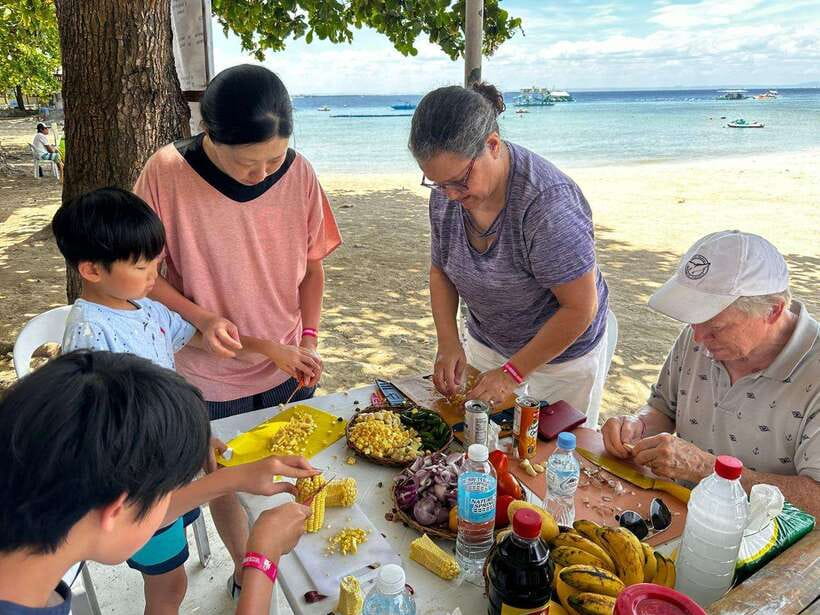
The cooking method gives the class its name and much of its appeal. The food is cooked on charcoal in bamboo, a traditional approach that takes patience and careful timing.
You are not simply placing a pot on a burner and waiting for a timer. Charcoal cooking creates a slower rhythm. You prepare the ingredients, set the food to cook, and allow time for the heat to do its work. That pause is when the beach becomes part of the meal rather than just a view behind the cooking table.
Bamboo also requires advance planning. The provider needs at least one week’s notice to order the necessary bamboo, so last-minute booking may not work. This is one of the most important practical details. If your Cebu schedule is tight, arrange the class early rather than trying to fit it in at the end of your stay.
The information does not explain exactly how each dish is enclosed or arranged in the bamboo, so I would avoid expecting a specific presentation. What you can count on is a cooking session centered on bamboo, charcoal, and Filipino ingredients.
Rain does not cancel the activity. That can be reassuring during a Cebu holiday, where weather can change quickly, but it also means you should be prepared for less ideal conditions. Pack light rain protection if needed, protect your camera, and bring clothes that are comfortable if the ground or cooking area becomes damp.
A completely different kind of day out:
- Cebu City: Whale Shark Swimming & Kawasan Falls Canyoneering
★ 4.7 · 665 reviews - Cebu Moalboal: Kawasan Canyoneering Adventure with Lunch
★ 4.9 · 630 reviews - Cebu City: Bohol Countryside Tour with Loboc Cruise Lunch
★ 4.5 · 488 reviews - Canyoneering Experience in Kawasan Falls with Lunch
★ 5.0 · 440 reviews
Waiting by the water while dinner cooks
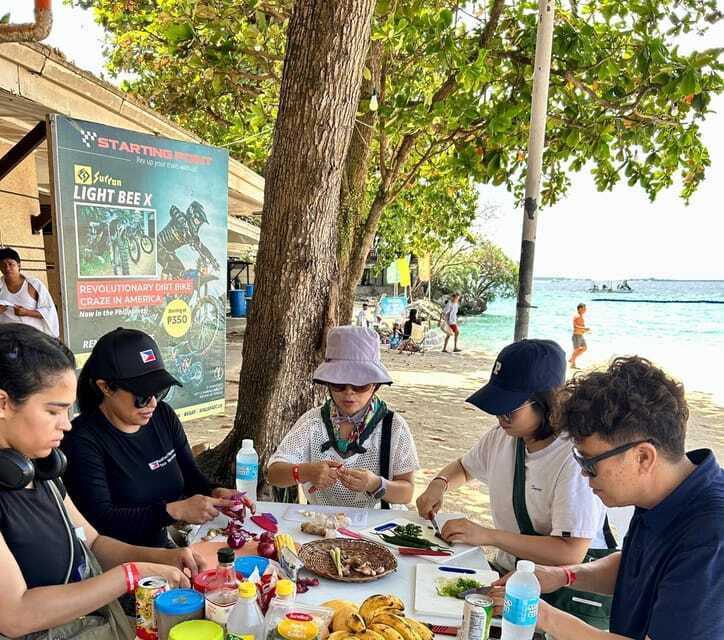
One of the class’s nicest features is the built-in waiting time. While the food cooks over charcoal, you can take a refreshing dip at the beach.
This changes the pace in a good way. You are not stuck watching food cook for an hour, and the class does not feel like a long block of kitchen work. You can cool off, enjoy the coast, and return when it is time to check the food.
Bring swimwear, a towel if you need one, sunscreen, and a change of clothes. The recommended packing list also includes snorkeling gear, though the activity does not promise snorkeling or describe a guided water session. Bring it only if you already want it for your own use.
The beach is a real part of the setting, but it should not be confused with a separate beach excursion. The central purpose remains the cooking class. You should book this for the food and cultural activity first, with swimming as a welcome extra.
Sun protection is especially important during the charcoal cooking period. A hat, sunglasses, sunscreen, and light comfortable clothes will make the experience more pleasant. Keep valuables at home, as valuables are specifically not allowed.
Native salad, hanging rice, and local dessert
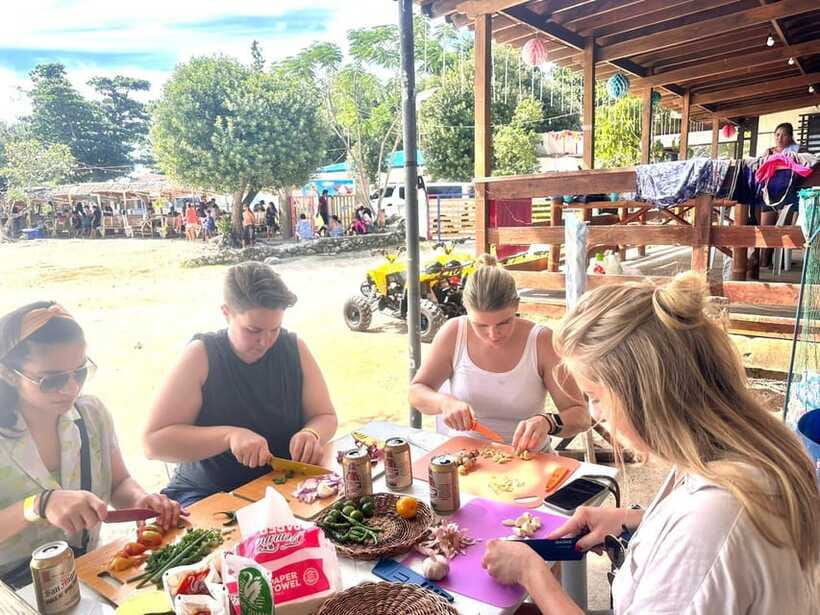
The meal includes more than the three main dishes. You also prepare a native Filipino garden salad and hanging rice, known locally as a traditional way of serving rice.
These additions make the meal feel more complete. The salad brings a fresh element to the chicken, shrimp, and fish, while hanging rice gives you a chance to see a familiar staple presented in a distinctly local form. The class is not only about mastering three recipes. It also shows how a Filipino meal is put together.
A local dessert made with seasonal fruits is prepared while the savory food cooks. Because the dessert uses local seasonal fruit, the exact ingredients may vary. That is a plus if you enjoy trying what is available locally, but it means you should not expect a fixed dessert from a menu.
The dessert preparation also makes good use of the charcoal cooking time. Instead of standing around waiting, you see another part of the meal come together. Then, once everything is ready, you sit down and taste the food you helped prepare.
Eating what you prepared
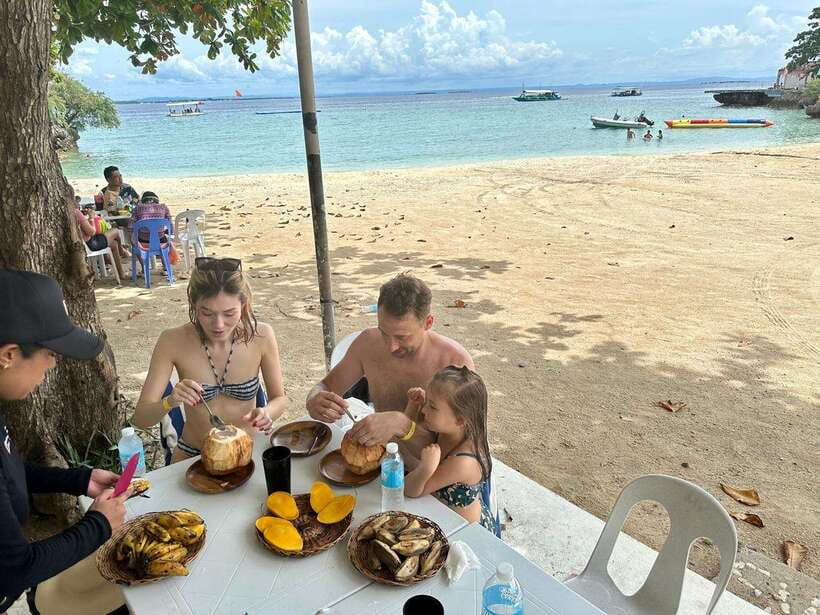
The final meal is the reward, but it also serves as the best lesson. You can taste how the herbs, spices, seafood, chicken, charcoal, and bamboo work together.
I like cooking classes that end with a proper shared meal rather than a small sample. Here, you try each dish, the salad, hanging rice, and dessert. The meal also creates room for conversation with the instructor and the rest of your group.
Two five-star ratings praise the overall experience, the food, and the conversation. One especially valued the chance to learn about Filipino history and called the setting beautiful and the experience unique in Cebu. Another praised the class taught by the company’s owner and appreciated supporting a woman entrepreneur.
Those comments point to the class’s strongest feature: personal contact. This is not only about collecting recipes. You spend time talking, preparing food together, and learning how the dishes fit into Filipino culture. If you enjoy social activities, that may be worth as much as the meal.
The review sample is small, so I would keep expectations sensible. The high ratings support the quality of the experience, but they do not tell us how the class works with large groups, children, severe dietary restrictions, or different weather conditions. Ask direct questions if any of those affect your plans.
Photos and recipes after the class
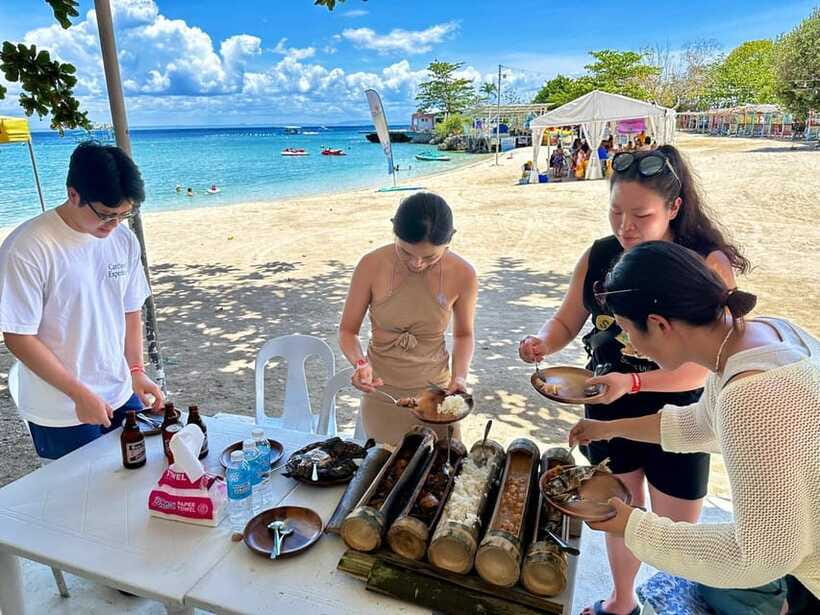
After the cooking session, the provider sends all photographs taken during the experience and the recipes by email.
That follow-up is a useful touch. A cooking class can be enjoyable in the moment but hard to repeat once you are home. Written recipes give you a better chance of recreating the dishes, while the photographs preserve the day and may help you remember the preparation steps.
Take your own camera too, as it appears on the suggested packing list. Just protect it from water and cooking smoke, and do not bring valuables you would worry about leaving near the beach. Drones and weapons or sharp objects are not allowed.
The email delivery also means you should provide a working address and check your inbox after the class. The information does not state how quickly the files arrive, so do not expect them at the table.
Is $112 a fair price?
The price is $112 per person. That is not a cheap lunch, so the value depends on how you use the experience.
You are paying for more than food. The price includes instruction in English, the preparation of three main dishes, salad, hanging rice, and dessert, plus the cultural introduction, charcoal cooking, beach setting, and final meal. Recipes and photographs are also sent afterward. For someone who wants a full half-day-style activity rather than a quick meal, that package has reasonable value.
The price is harder to justify if you only want to eat Filipino food. You can find less expensive meals in Cebu, and this class takes time and advance planning. Its value comes from participation, not portion size alone.
The duration needs clarification. The activity details describe three hours, while the fuller description says the cooking experience takes place within four hours. Check the available start times and confirm the expected end time before booking, especially if you have an evening flight, another tour, or a ferry connection.
Free cancellation is available up to 24 hours before the activity for a full refund, and you can reserve now and pay later. Those policies give you some flexibility, but they do not remove the need to provide one week’s notice for the bamboo. That advance requirement is the key planning issue.
Who will enjoy this Cebu cooking class?
I would recommend this experience to you if you enjoy food, local customs, and relaxed activities that mix learning with time outdoors. Couples, friends, solo visitors who like social classes, and families with an interest in cooking may all find it appealing, provided everyone is comfortable around charcoal, seafood, and a beach setting.
It is a particularly good choice if you want to support a small, personal operation and spend time with an instructor rather than move through a large sightseeing group. The owner-led class praised in the feedback suggests a warm, direct style, though the owner’s name is not provided.
You may want a different activity if you need a tightly timed schedule, a fully indoor kitchen, or a specific named recipe. The class runs rain or shine, the exact menu is not listed, and the water component may not suit anyone who does not want to swim or spend time in the sun.
Vegetarians should request additional dishes before booking. People with allergies should also ask for menu details in advance, since the standard meal includes shrimp, fish, and chicken. The class is free of MSG, but that does not by itself answer every dietary question.
What to bring for a comfortable session
Pack for two settings: a cooking area and a beach.
- Comfortable clothes and shoes
- Flip-flops and beachwear
- A change of clothes
- Sunglasses, sun hat, and sunscreen
- Camera
- Daypack
- Cash
- Hand sanitizer or tissues
- Snorkeling gear if you want it for personal use
Leave valuables, drones, weapons, and sharp objects behind. The class provides the cooking experience, but the suggested list makes clear that you should arrive prepared for sun, water, and an outdoor setting.
Should you book the Cebu Traditional Bamboo Cooking Class?
Book it if you want a hands-on Filipino meal, a beach break, and a personal cultural experience in one outing. The charcoal and bamboo cooking method, MSG-free dishes, owner-led atmosphere, recipes, and emailed photos give it more substance than a simple lunch stop.
I would skip it if you are watching your budget closely, need a precise three-hour schedule, or want a class built around a particular named recipe. Before paying, confirm the duration, ask about the menu, request vegetarian food if needed, and give at least one week’s notice for the bamboo.
For the right person, this is a pleasant way to slow down in Cebu. You learn by doing, eat what you make, and get a swim while the charcoal handles the waiting.
FAQ
Where does the Cebu Traditional Bamboo Cooking Class take place?
The class takes place at Hadsan Cove Resort in Marigondon, Lapu-Lapu City, in the Visayas region of the Philippines.
How long is the cooking class?
The activity information gives a duration of three hours, while the detailed description refers to a four-hour cooking period. Check availability and confirm the exact schedule before booking.
What food will I prepare?
You will prepare three traditional Filipino dishes featuring chicken, shrimp, and fish. The meal also includes a native Filipino garden salad, hanging rice, and a local dessert made with seasonal fruit.
Are the dishes made with MSG?
The dishes are free of MSG. Additional vegetarian dishes can be requested, but you should arrange this before the class.
Can I swim during the cooking class?
Yes. The class takes place in front of a beach, and you can swim while the food cooks over charcoal. Bring beachwear, sunscreen, and a change of clothes.
How far in advance should I book?
You need to provide at least one week’s notice so the necessary bamboo can be ordered. The activity also offers free cancellation up to 24 hours in advance and a reserve-now, pay-later option.
Just added in Cebu
- Whole Day and Private Car and Van Rental to Oslob from Cebu City or Mactan★ 5.0 · 1 review
- Whaleshark & Sumilon Is and Moalboal Sardines & Turtle Tour★ 5.0 · 2 reviews
- Whale Shark Watching & Tumalog Falls & Kawasan Falls★ 5.0 · 16 reviews
- Whale Shark Watching with Sumilon Sandbar and Kawasan Falls Tour★ 5.0 · 8 reviews
- Cebu Whale Shark Encounter, Moalboal Sardines & Tumalog Falls★ 4.0 · 18 reviews
- Whale Shark Watching and Sumilon Sandbar Private Tour Package★ 5.0 · 17 reviews
- Full Day Shark Watching and Canyoneering in Cebu★ 5.0 · 15 reviews
- Group Tour of Moalboal Sardines Run & Kawasan Canyoneering★ 4.5 · 9 reviews
Cooking Classes, compared.
Manila Filipino Cooking Class: Meryenda Favorites
Read our review →
Private Filipino cooking class in a local Manila Home
Read our review →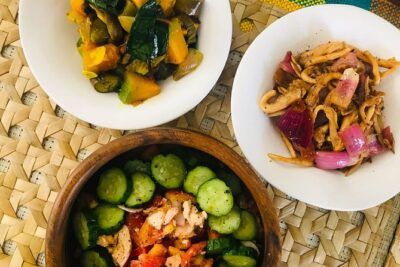
Private Market Tour and Filipino Cooking Class in Manila with Isi
Read our review →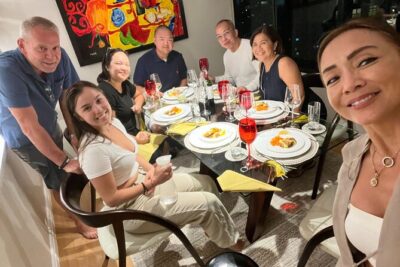
Private Filipino Cooking Class in the Heart of Manila,Makati City
Read our review →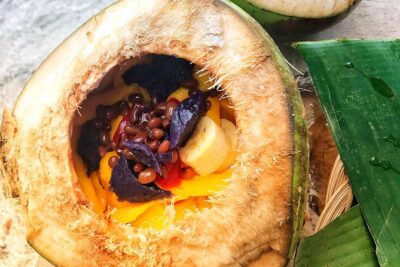
Browse the lists this tour appears in