
Reviewed · COOKING CLASSES
Makati: Hands on Manila Cooking Class
Come hungry, leave with recipes. This two-hour Filipino cooking class turns a simple afternoon into a generous meal, with hands-on practice making pancit, lumpia, and turon. I like the small groups, limited to four people, and I like the warm teaching style of Chyl, whose family stories and food trivia give the cooking real meaning. The main drawback is the outdoor setting, which can be awkward in rain, and the price of $60 is not the cheapest way to eat in Manila.
The class is friendly for beginners, yet still useful if you already cook. You prepare the ingredients, use the equipment yourself, and eat what you make at the end. Bring comfortable clothes, allow time to find the meeting point, and download Grab before you go.
In This Review
- Four things to know before booking
- What this Makati cooking class is really like
- Pancit, lumpia, and turon from one table
- Why Chyl’s teaching matters
- A well-paced two-hour itinerary
- The outdoor setting has a sunny side and a wet-weather problem
- How much value do you get for $60?
- Who should book this experience?
- What you can take home besides leftovers
- Booking advice and small details that matter
- Should you book the Makati cooking class?
- FAQ
- Where is the Filipino cooking class held?
- How long does the cooking class last?
- What dishes will I prepare?
- Is food included in the price?
- How many people can join?
- Is the class suitable for children?
- Can I cancel or pay later?
Four things to know before booking
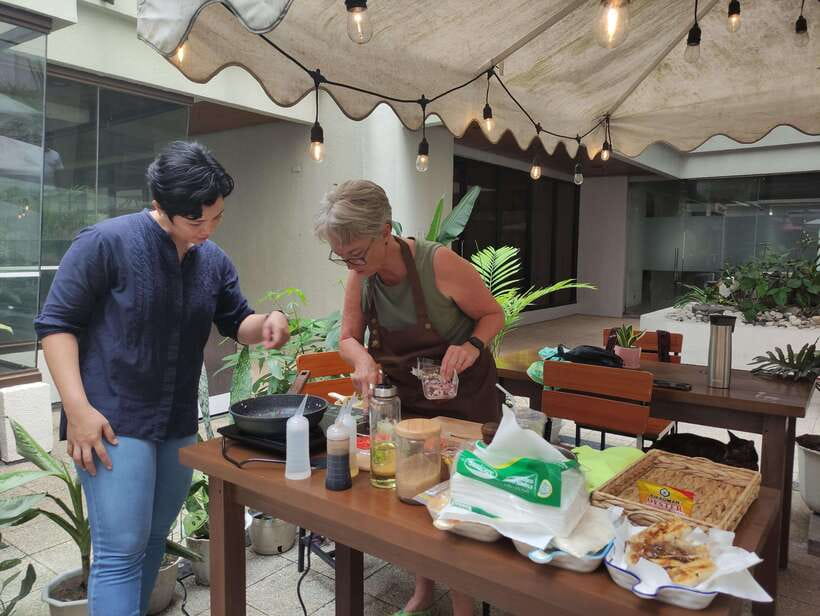
- Three substantial Filipino snacks: You prepare pancit noodles, savory lumpia spring rolls, and sweet turon, a banana dessert wrapped and fried.
- Chyl is the heart of the class: She teaches calmly, answers questions, and links each recipe to Filipino family life and food traditions.
- A true small-group format: With no more than four participants, you get your own cooking space and plenty of direct help.
- Two hours can mean a lot of food: The so-called meryenda, or snack, may feel closer to two meals than one light bite.
- Convenient but not foolproof location: The class is held outdoors in Makati, near the Peninsula Hotel and Greenbelt Mall, but the meeting point can be hard to spot.
- Rain is the main practical concern: The cooking area is not fully covered, so bad weather may require rearranging the setup.
What this Makati cooking class is really like
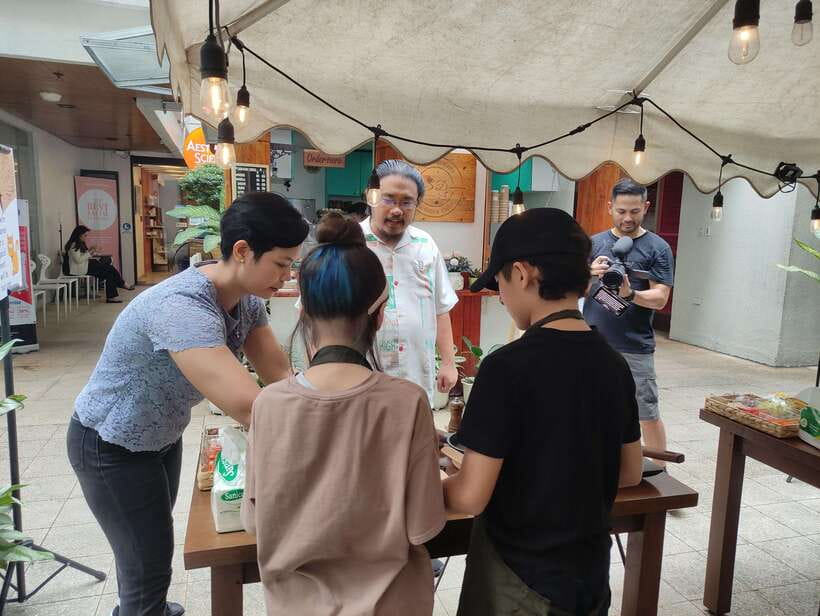
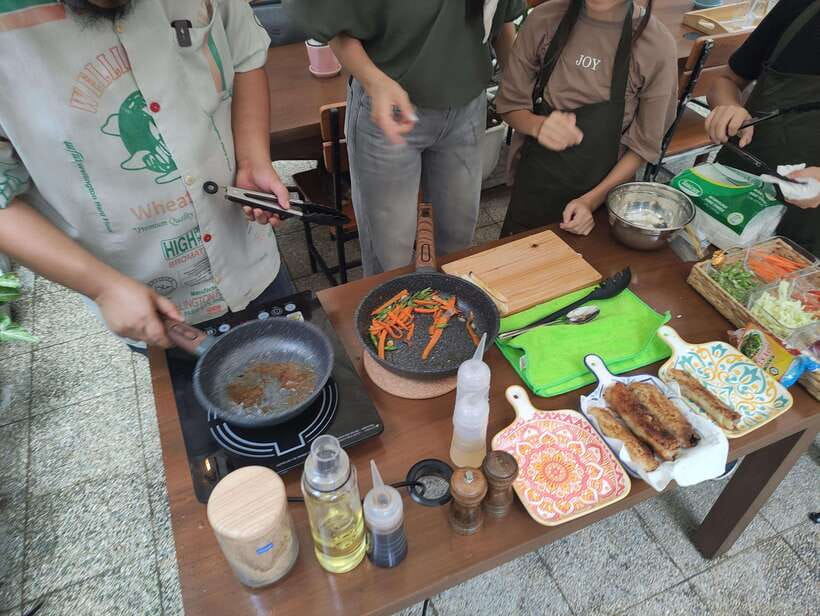
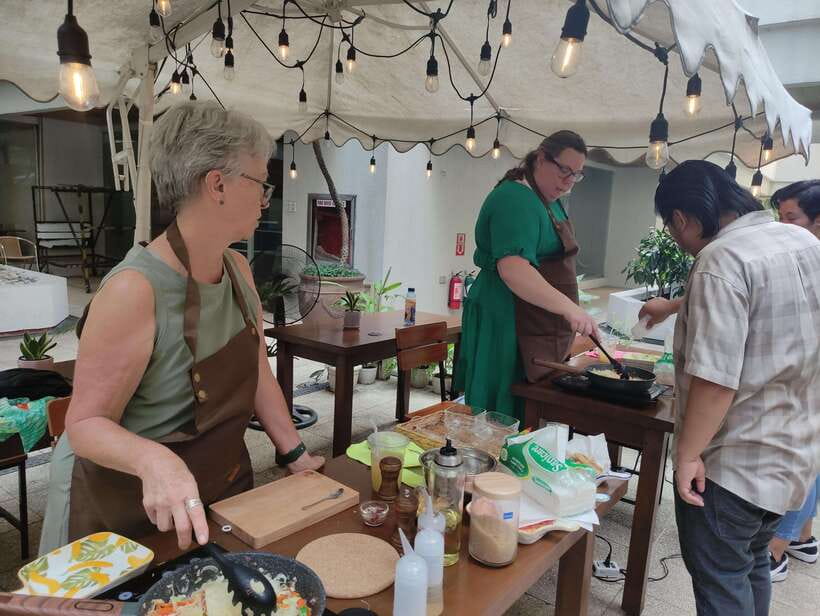
This is a practical introduction to Filipino home cooking, not a formal chef course. You are not simply watching someone prepare a dish while you take notes. You handle the ingredients, operate the cooker, use the pans and utensils, and assemble the food yourself.
The setting is an outdoor courtyard in the heart of Makati. Look for the instructor near the coffee kiosk, in the courtyard out front. That sounds simple, but the venue has been a little difficult to locate, so I would contact the organizer before the class and keep the meeting details handy.
The class is offered in English. It is limited to four participants, a useful size for cooking. You are likely to have your own table and a full set of ingredients and equipment. That arrangement matters because everyone can work at the same pace without standing behind one shared pan.
The equipment includes cooking tools, pans, utensils, and an induction cooker. Everything you need for the recipes is supplied, along with a nonalcoholic drink. A cold lemonade has been offered at the start, a small touch that makes sense in Manila’s heat.
A few more Makati days worth comparing
- Manila Filipino Cooking Class: Meryenda Favorites
★ 5.0 · 80 reviews - Private Filipino cooking class in a local Manila Home
★ 5.0 · 28 reviews - Private Market Tour and Filipino Cooking Class in Manila with Isi
★ 4.5 · 15 reviews
Pancit, lumpia, and turon from one table
The menu covers three familiar Filipino snacks, but the portions make the meal much more filling than the word snack suggests. You prepare a noodle dish, a savory spring roll, and a sweet fried banana treat.
Pancit introduces you to a Filipino noodle favorite. You work through the preparation and stir-frying, learning how a few everyday ingredients come together in a filling dish. It is the sort of recipe that can fit into a home kitchen after your trip, and it offers a useful first look at how Filipino cooking balances savory flavors and simple preparation.
Lumpia brings more hands-on work. You prepare the filling, wrap the spring rolls, and cook them until crisp. This is one of the most social parts of the class because rolling technique is easy to compare, and Chyl can correct your method before the rolls hit the pan.
Turon finishes the meal with something sweet. Bananas are wrapped and fried, often with a crepe-like wrapper in this class. The dish is simple, but the class uses it to explain how familiar ingredients and family recipes become popular Filipino snacks.
You finish by eating what you prepared. The result is not a few decorative samples. The portions can be so large that you may have food left for another meal. I would not schedule an elaborate lunch immediately before this class.
Why Chyl’s teaching matters
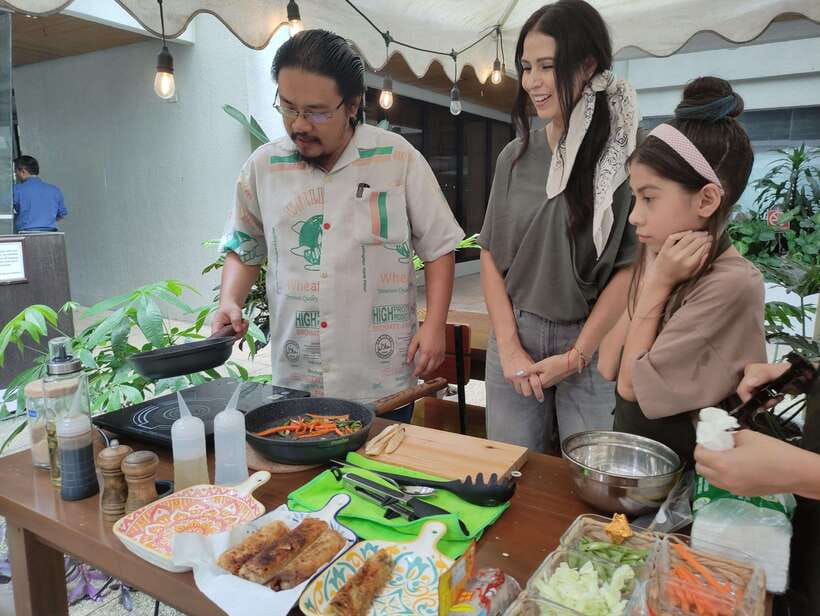
The strongest part of the experience is the instructor. Chyl is described as calm, patient, warm, and encouraging. Those qualities are especially useful for beginners, since the class lets you take the lead without leaving you stranded when a recipe needs attention.
If you have cooking experience, you can use the class as a conversation with a local food guide. One-on-one sessions have allowed time for many questions, while small groups still leave room for personal help. Chyl explains not just what to do, but why the food matters in Filipino homes and celebrations.
Her stories cover family life, childhood memories, food origins, and the place of meryenda in daily life. This helps you see the recipes as more than a list of steps. Filipino food developed across thousands of islands, with cooking shaped by local ingredients, geography, and generations of home cooks. The class gives you a modest but useful window into that larger picture.
I especially like the way the teaching connects food with ordinary life. You are not asked to memorize culinary theory. Instead, you learn how Filipino people enjoy familiar comfort food and why certain dishes appear at family occasions or in everyday snack time.
A well-paced two-hour itinerary
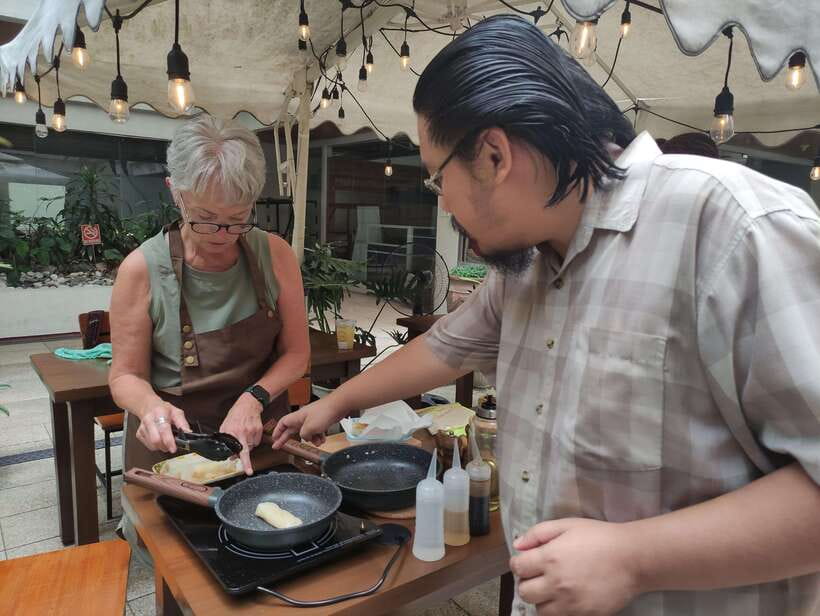
The class starts with the prepared cooking stations. Ingredients and equipment are laid out before you begin, so little time is lost on setup. After introductions, Chyl explains the dishes and gives background on the ingredients and their place in Filipino cooking.
The early part focuses on preparation. You chop, arrange, and ready the ingredients for the noodles and spring rolls. This is where beginners receive the most useful guidance because knife work, wrapping, and order of operations can decide how smoothly the cooking goes.
Next comes the hotplate work. You cook the pancit, prepare the lumpia, and fry the turon. Chyl guides the group through each stage, but the aim is for you to do the work rather than watch her do it. The recipes are forgiving enough to help you feel successful, yet there is still plenty to learn from timing, heat, and assembly.
The final portion is for eating and conversation. You compare how the dishes turned out and ask last questions about adapting them at home. Two hours is a sensible length for this format. A shorter class would feel rushed, while a much longer session might be too much for a casual afternoon activity.
A completely different kind of day out:
- Makati Nightlife: VIP Access to Clubs, Rooftops & Go-Go Bars
★ 4.9 · 278 reviews - Makati Rooftop and Hidden Bars Experience
★ 4.9 · 30 reviews - Makati Rooftop Barhopping with Local Guide
★ 4.8 · 26 reviews - Makati Street Food Tour Experience
★ 5.0 · 20 reviews
The outdoor setting has a sunny side and a wet-weather problem
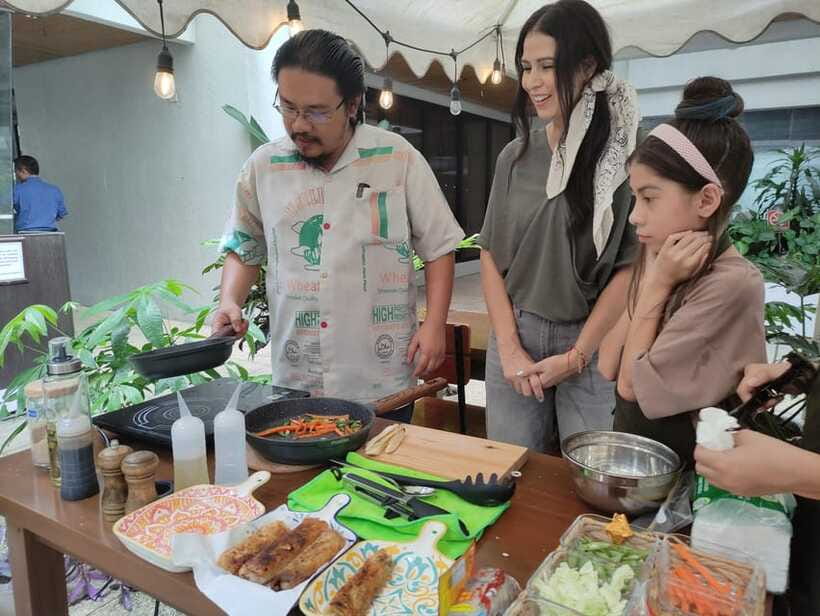
The open-air location is part of the appeal. It feels relaxed and informal, and the tables allow people to cook together without the enclosed feel of a commercial kitchen. The site is also convenient for anyone staying near Greenbelt Mall or the Peninsula Hotel.
The weakness is shelter. The cooking area is not fully protected from rain. If weather changes, the tables and equipment may need to be moved or dried, which can interrupt the flow. I would check the forecast and ask about the exact setup before booking during a rainy period.
The location information deserves one extra note. The experience is presented as a Makati activity, and the meeting point is described as the outdoor courtyard in front of a coffee kiosk. One summary also names Nueva Vizcaya, which does not match the Makati description. Because of that inconsistency, confirm the exact address or map pin with Explore Manila Tours before setting out.
Grab is the sensible way to reach the venue. The local ride-hailing app works much like Uber and can save you from trying to explain a courtyard and coffee kiosk to a taxi driver. Give yourself extra time, since a delayed car or heavy traffic can affect arrival.
How much value do you get for $60?
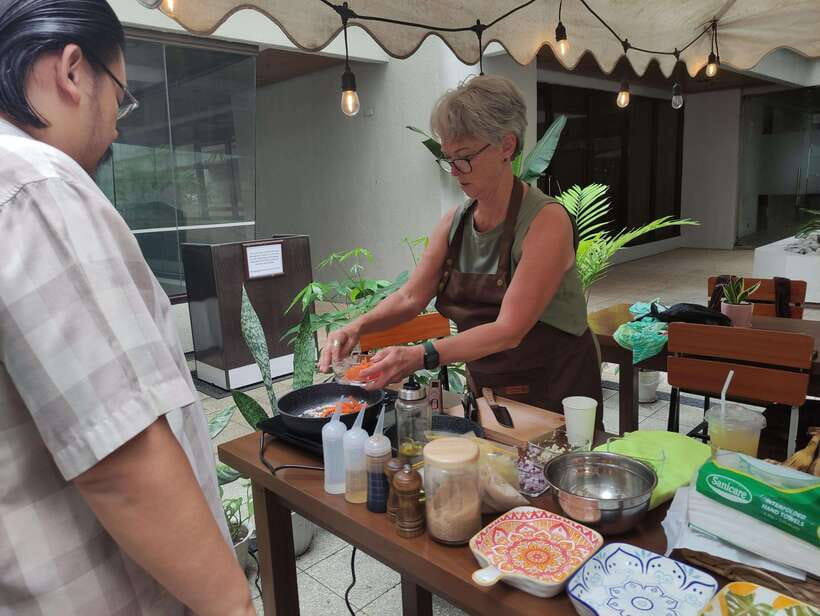
At $60 per person, this is not a budget lunch. You could eat Filipino food for far less in Manila. The price makes more sense if you value instruction, local conversation, and the chance to repeat the dishes at home.
You receive ingredients, equipment, a drink, and a two-hour activity. You also eat three substantial preparations. For a solo visitor, that can be a fair package because private or nearly private attention is possible. A pair of friends or family members may also find the cost worthwhile because the class gives you a shared activity, not just a meal.
The value is strongest for people who want to learn. If you mainly want to taste Filipino food, a good local restaurant will cost less and offer a wider menu. If you want to understand how pancit, lumpia, and turon are made, the class earns its price through practice and explanation.
One local participant considered the price somewhat high and suggested a lower rate. That is a fair criticism, especially for larger budgets or families. Still, the four-person limit, fresh ingredients, complete equipment, and personal instruction make the price easier to justify than a large demonstration class.
Who should book this experience?
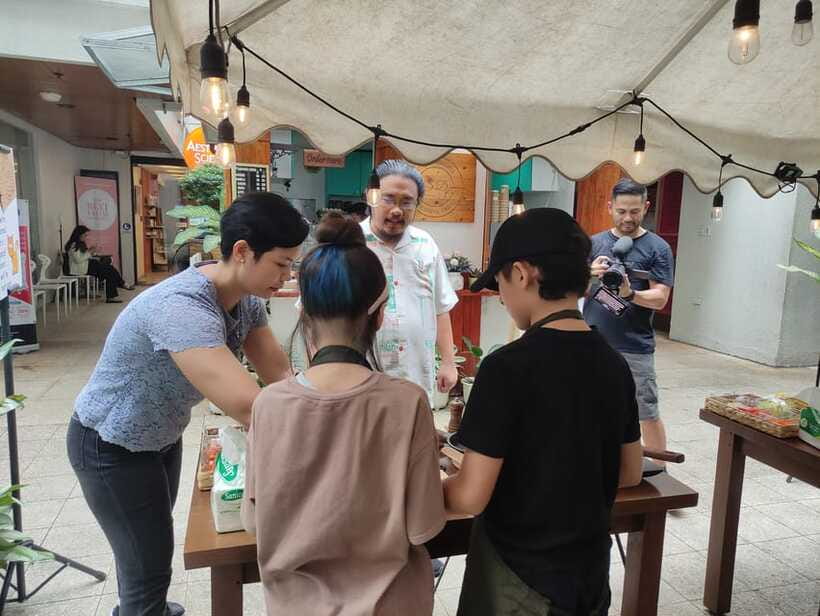
I would recommend it to solo visitors, couples, small groups, and families with older children. It works particularly well for someone who wants a gentle introduction to Filipino food without committing to a full-day culinary program.
The class is suitable for beginners because Chyl explains each stage carefully and stays nearby to help. It also suits confident cooks who enjoy asking questions and learning how another culture approaches familiar ingredients.
Children under nine are not accepted. The activity is wheelchair accessible, but it is not suitable for people with visual impairments. Comfortable clothes are the only listed clothing requirement, though cooking and frying make casual clothing the practical choice.
This is also a good rainy-day alternative only if the weather is manageable. Since the setup is outdoors and not fully covered, I would not treat it as a guaranteed shelter from a serious downpour.
What you can take home besides leftovers
The best souvenir is the ability to make the food again. Pancit, lumpia, and turon use ingredients and methods that can be adapted in a home kitchen. The class is designed around recipes that are approachable rather than fussy, which gives you a better chance of repeating them after returning home.
You also take away a clearer sense of how food fits into Filipino life. The stories about family, celebrations, childhood, and everyday meryenda add context that a restaurant menu cannot provide.
The class does not appear to cover every major Filipino dish. If you want specialties such as dinuguan or lelot balatong, this particular menu may not meet that goal. It is best understood as an introduction built around three accessible snacks, not a survey of the whole cuisine.
That limited menu is also a strength. You finish three dishes in two hours and have enough time to cook them yourself. A more ambitious menu would likely mean less practice and more watching.
Booking advice and small details that matter
The activity allows free cancellation up to 24 hours before the start time, with a full refund. You can also reserve and pay later, which helps if your Manila schedule is still shifting.
The meeting point is the outdoor courtyard in front of the coffee kiosk. Contact the organizer before the day, especially because one local attendee found the site difficult to locate and the supplied location descriptions are not fully consistent.
Plan your transport with Grab. One person arrived late after a traffic problem and trouble finding a car, but Chyl still allowed the full two hours. You should not count on that same flexibility, so leave a cushion in your schedule.
Finally, go hungry. The class may be labeled a snack-making session, but the combined noodle dish, spring rolls, and dessert can amount to two meals. A nonalcoholic drink is included, but hotel pickup and drop-off are not.
Should you book the Makati cooking class?
Book it if you want personal instruction, local stories, and recipes you can repeat at home. The small group size and Chyl’s friendly teaching style are the main reasons to choose it over a simple Filipino meal.
Skip it if you are looking for the lowest-cost food experience, a fully indoor kitchen, or a broad tour of Filipino cuisine. The outdoor venue needs better rain protection, the price is on the high side, and the menu focuses on three snack dishes.
For most people who want a hands-on cultural activity in Makati, I think the class is a good use of two hours. Just confirm the exact meeting point, check the weather, and arrive ready to eat.
FAQ
Where is the Filipino cooking class held?
It is offered in the heart of Makati, in an outdoor courtyard in front of a coffee kiosk. The experience information also includes Nueva Vizcaya in one location reference, so confirm the exact address or map pin with Explore Manila Tours before going.
How long does the cooking class last?
The class lasts two hours. Starting times vary, so you need to check availability for the date you want.
What dishes will I prepare?
You prepare pancit noodles, lumpia spring rolls, and turon, a sweet banana-based treat.
Is food included in the price?
Yes. Ingredients, cooking equipment, and a nonalcoholic drink are included. You also eat the dishes you prepare during the class.
How many people can join?
The class is limited to four participants, making it a small-group experience with room for individual help.
Is the class suitable for children?
Children under nine are not accepted. The activity is described as family-friendly for older children.
Can I cancel or pay later?
You can cancel up to 24 hours in advance for a full refund. The reservation option also allows you to book now and pay later.
Just added in Makati
- Poblacion Makati Bar Hopping Experience★ 5.0 · 4 reviews
- Manila Ultimate Nightlife Pub Crawl★ 4.9 · 10 reviews
- Manila Old & New City Private Tour★ 4.5 · 16 reviews
- Makati Street food walking tour with Dinner★ 5.0 · 3 reviews
- Makati Street food Tour, End with a Rooftop City View★ 4.7 · 9 reviews
- Makati Bar Crawl – Hidden Bar, Speakeasy and Pub★ 5.0 · 6 reviews
- Makati Hidden Bars and Rooftop Bars with Venus★ 5.0 · 4 reviews
- Makati Bar Crawl, GoGo Bar, Club, and Live Band★ 5.0 · 2 reviews
Cooking Classes, compared.
Manila Filipino Cooking Class: Meryenda Favorites
Read our review →
Private Filipino cooking class in a local Manila Home
Read our review →
Private Market Tour and Filipino Cooking Class in Manila with Isi
Read our review →
Private Filipino Cooking Class in the Heart of Manila,Makati City
Read our review →
Browse the lists this tour appears in