
Reviewed · COOKING CLASSES
Siargao Island Vegetarian Cooking Class
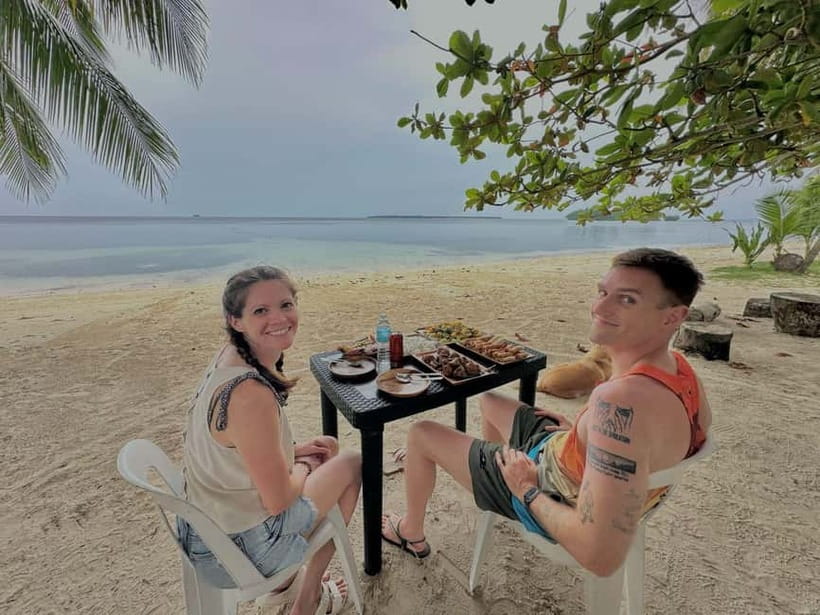
Good food tastes better by the sea. This four-hour cooking class at Malinao Seaview in General Luna gives you a hands-on way to understand Filipino food beyond the usual restaurant menu. I especially like the focus on vegetarian Filipino dishes and the use of produce grown on Siargao, along with the relaxed beach setting. The class also includes seven prepared dishes and resort entrance, which gives the $90 price more weight than a simple demonstration.
I also like the small group limit of 10 and English instruction. You should know, though, that the class needs at least two participants to operate, and the menu is not strictly vegan because some dishes use fish sauce and eggs. That matters if you follow a firm plant-only diet.
In This Review
- At a glance
- Why this class is different from a standard Siargao food tour
- The four-hour flow at Malinao Seaview
- Pinakbet: Filipino vegetables with coconut milk
- Grilled eggplant becomes a crisp fritter
- Bitter melon, eggs, garlic, and onions
- Sweet potato leaf salad keeps the menu fresh
- Vegetable lumpia brings Filipino street-food appeal
- Fresh fruit halo-halo inside coconut
- What the $90 price really includes
- Who should book this Siargao cooking class?
- Practical advice before you go
- FAQ
- Where does the Siargao vegetarian cooking class take place?
- How long does the cooking class last?
- How much does the experience cost?
- How many people can join the class?
- What language is used during the class?
- What dishes are included?
- Is the food fully vegan?
- What should I bring?
- Can I cancel the booking?
- Should you book it?
At a glance
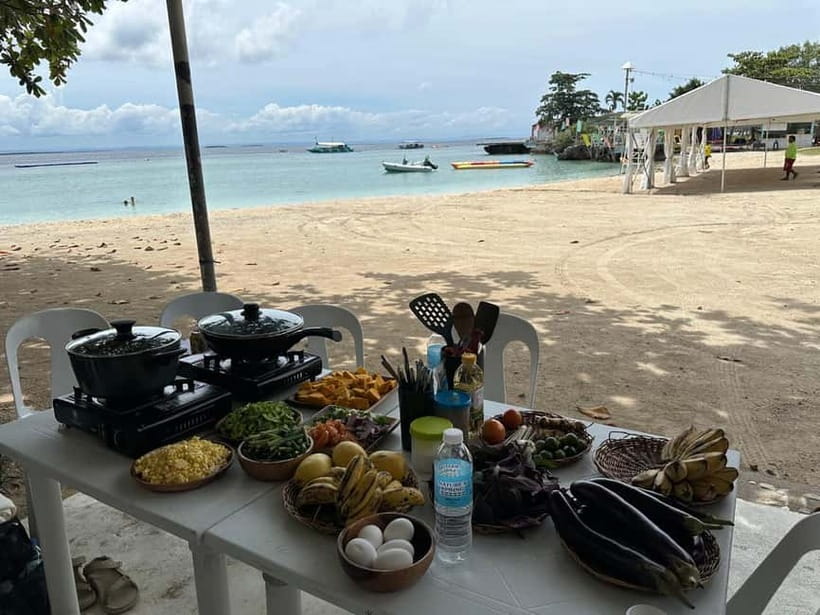
- Seven Filipino dishes in four hours: You prepare pinakbet, grilled eggplant, bitter melon with eggs, sweet potato leaf salad, vegetable lumpia, and fresh fruit halo-halo.
- Cooking beside the beach: Malinao Seaview supplies a scenic setting on Siargao Island, so the class is part food lesson and part resort outing.
- A useful vegetarian introduction: The menu shows how Filipino cooking uses coconut milk, garlic, onions, ginger, local vegetables, eggs, and fresh fruit.
- Small English-speaking group: Up to 10 people can join, making it easier to follow the cooking and ask questions.
- A few dietary limits: Fish sauce appears in the pinakbet, and eggs are used in several dishes, including the grilled eggplant fritter.
- Four hours at $90: The cost is high for a cooking class in the Philippines, but the number of dishes and resort access improve the overall value.
Why this class is different from a standard Siargao food tour
Many food activities ask you to sit, taste, and move on. This class gives you a reason to slow down. You learn how Filipino home-style dishes are built, then eat the results as part of the same session.
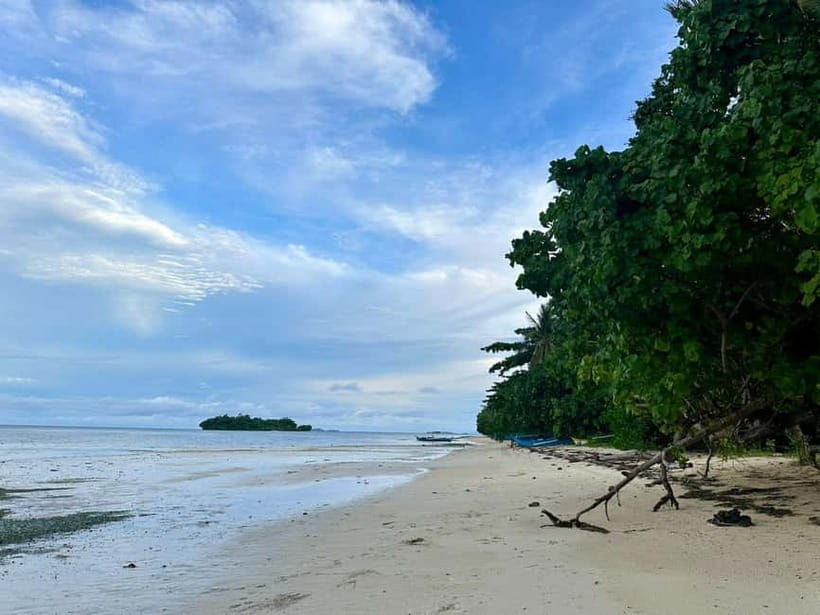
The setting adds another layer. Malinao Seaview is described as a resort surrounded by Siargao’s natural beauty, with the cooking taking place by the beach. You are not simply moving through a kitchen in town. You are spending four hours in a scenic spot while working with ingredients tied to the island.
That setting may appeal most to you if you want a calm break from surfing, island trips, and General Luna’s activity schedule. The class is also a practical choice for anyone who enjoys food but does not want a lesson aimed only at expert cooks. The host presents it as suitable for beginners and experienced home cooks alike.
A German participant named Nicole described her time as beautiful and said it offered a great look at Filipino cuisine. That praise fits the main strength here: you are not just handed a plate of food. You get a clearer sense of how several familiar Filipino ingredients work together.
More Siargao trips:
- Siargao:Lagoon,Cave Rock Pool, w/Lunch & Transfer
★ 4.5 · 11 reviews - Siargao Tour C (shared tour)
★ 3.8 · 4 reviews - Siargao Tour B (shared tour)
★ 4.1 · 4 reviews
The four-hour flow at Malinao Seaview
The exact order of the dishes is not specified, so you should think of the class as a four-hour cooking session rather than a fixed sightseeing itinerary. You meet at Malinao Seaview, enter the resort, and spend the session preparing the listed recipes under English instruction.
The beach location is a major part of the appeal, but it also shapes what you should bring. Comfortable clothes, beachwear, comfortable shoes, biodegradable sunscreen, and insect repellent are all sensible choices. A change of clothes is useful because the activity takes place near the water and may leave you smelling pleasantly of garlic, coconut, and fried food.
The class also suggests bringing a camera and a charged smartphone. Those items make sense for recording the dishes and the setting, though you should keep your phone protected around cooking surfaces and the beach.
A four-hour class gives enough time to work through several recipes without treating each one as a rushed sample. With a maximum of 10 participants, the group should remain small enough for direct participation, although the final feel will depend on how many people actually book.
Pinakbet: Filipino vegetables with coconut milk
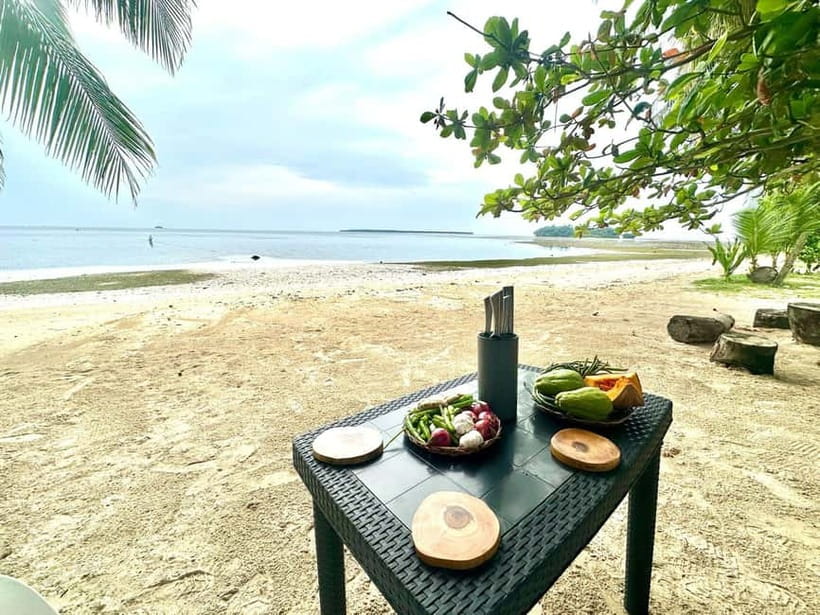
Pinakbet is one of the central dishes in this menu. It uses a mix of locally grown island vegetables, coconut milk, and fish sauce.
This is a useful dish for understanding Filipino cooking because it combines several textures and strong seasoning in one pot. Coconut milk adds body and a gentle sweetness, while fish sauce brings the salty, savory note that often gives Filipino food its depth.
There is an important dietary point here. Despite the class being promoted as vegetarian, the pinakbet includes fish sauce. If you eat eggs and dairy but avoid meat, poultry, and seafood, this may fit your diet. If you are vegan or avoid all animal products, you should ask the provider if a fish sauce substitute is possible before booking.
The use of island-grown vegetables is also a plus. You get to cook with ingredients connected to Siargao rather than a generic international menu. The exact vegetables are not listed, so the mix may depend on what is available locally.
Grilled eggplant becomes a crisp fritter
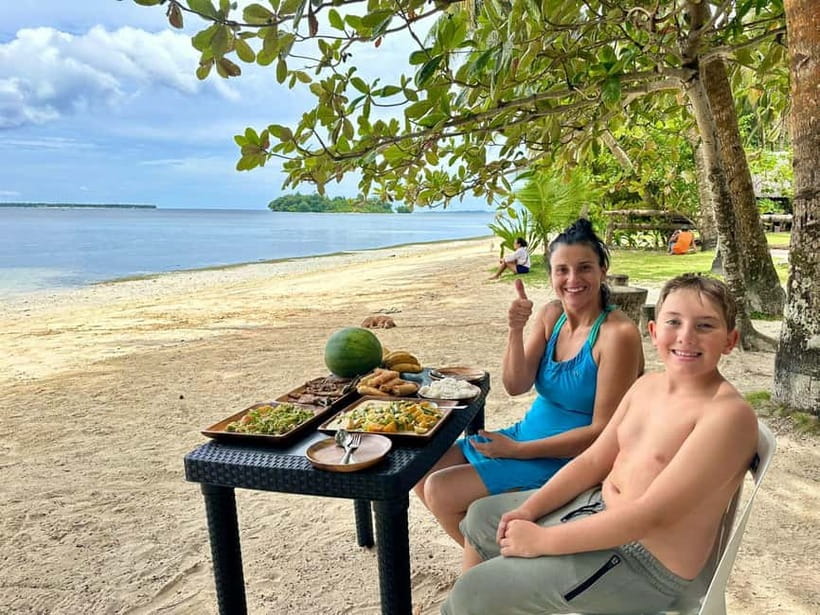
The grilled eggplant dish shows a clever change in texture. The eggplant is grilled first, dipped in eggs, and then pan-fried as a fritter.
That process turns a soft vegetable into something crisp and savory on the outside. It is the kind of recipe that helps you see Filipino cooking as more than stews and rice dishes. A simple vegetable becomes a satisfying centerpiece through heat, egg, and frying.
This is another dish that is vegetarian but not vegan. The egg coating is essential to the stated preparation. If you have dietary restrictions, ask about substitutions before the class starts.
For you, the real value is learning a method you can repeat at home. Eggplant is widely available, and the technique does not require rare equipment. It is a good example of a dish that can become part of your regular cooking after the holiday ends.
A few more Philippines days worth comparing
- Manila Filipino Cooking Class: Meryenda Favorites
★ 5.0 · 80 reviews - Makati: Hands on Manila Cooking Class
★ 5.0 · 49 reviews - Private Filipino cooking class in a local Manila Home
★ 5.0 · 28 reviews - Private Market Tour and Filipino Cooking Class in Manila with Isi
★ 4.5 · 15 reviews
Bitter melon, eggs, garlic, and onions
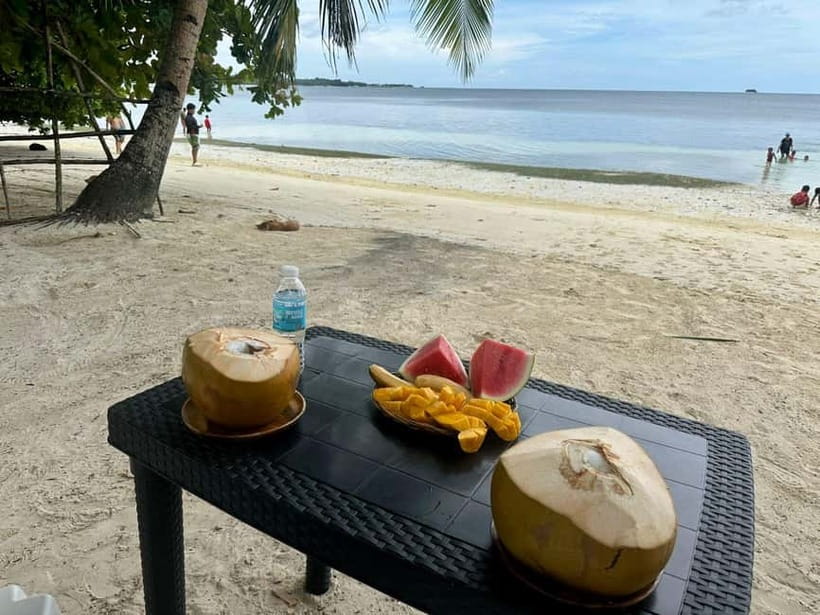
Stir-fried bitter melon with eggs is one of the more distinctive items on the menu. The dish combines bitter melon with onions, garlic, and eggs.
Bitter melon has a strong flavor that some people love and others find challenging. That makes this part of the class particularly useful. You get to try a vegetable that may be unfamiliar and see how Filipino cooks balance it with aromatic ingredients and egg.
The recipe is not presented as a complicated restaurant creation. Its appeal lies in everyday cooking: a few direct ingredients, a hot pan, and careful seasoning. If you want a better sense of what Filipino families might prepare at home, this dish offers more insight than a polished tasting plate.
Again, the use of eggs means this is not vegan. If bitter melon is new to you, approach it with an open mind, but do not expect a mild vegetable.
Sweet potato leaf salad keeps the menu fresh
The sweet potato leaves salad brings a lighter item to a menu that also includes fried food and coconut milk. It combines sweet potato leaves, tomato, ginger, onion, and lemon dressing.
This dish shows how Filipino meals can balance cooked and raw elements. The tomato and lemon should add freshness, while ginger and onion give the salad more character than a plain side dish.
You will likely appreciate this course if you want a break from rich food during a long cooking session. It also offers a practical lesson in using leaves that many kitchens overlook. The menu does not specify the exact preparation of the sweet potato leaves, so the class is your chance to see how they are handled.
Because the dressing is lemon-based and no animal ingredient is listed, this may be one of the easier dishes to adapt for a vegan diet. Still, confirm the ingredients with the instructor if that point is important to you.
Vegetable lumpia brings Filipino street-food appeal
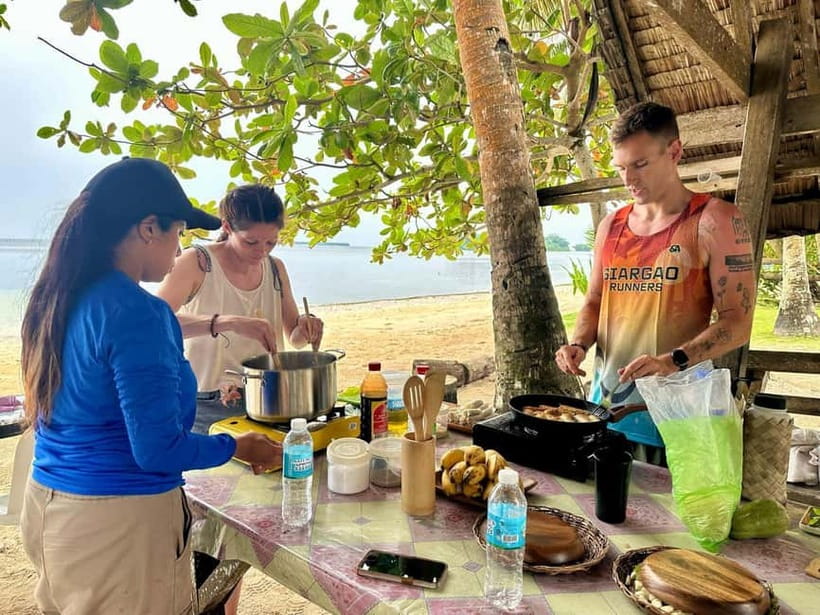
Vegetable lumpia, or Filipino spring rolls, is the most immediately familiar dish for many people. You prepare a vegetable filling, wrap it, and cook the rolls.
Lumpia is a useful class dish because it involves several stages. You see how the filling is assembled, how the wrapper is handled, and how the final roll gets its texture. It is also a recipe you can make for a group at home, making the lesson practical beyond Siargao.
The menu does not say exactly how the lumpia is cooked or which vegetables are used. You should not assume the filling is identical to every lumpia you have eaten elsewhere. Local produce may shape the recipe.
This is also the point where the class may feel most social. Rolling spring rolls side by side is less formal than watching a chef work alone, and a small group of up to 10 gives the activity a friendly scale without promising a private lesson.
Fresh fruit halo-halo inside coconut
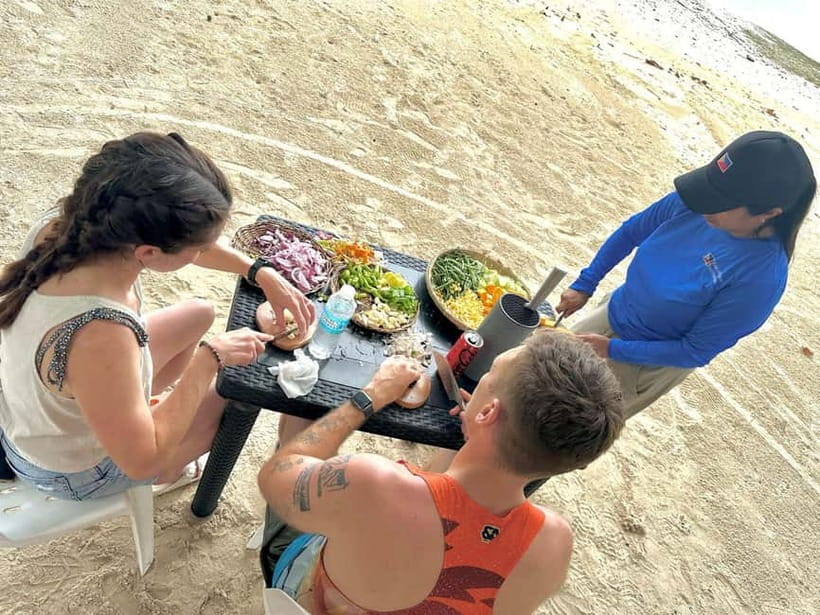
Dessert is fresh fruit halo-halo, made with a variety of seasoned fruits served together inside a coconut.
This is a fitting finish for a beachside class. The preparation is lighter than a baked dessert and lets the fruit carry the flavor. Serving it in a coconut adds a distinctly island touch, though the information provided does not specify which fruits are used or how they are seasoned.
Halo-halo can refer to a range of Filipino mixed desserts, so do not expect a single fixed formula everywhere. Here, the description points to a fresh-fruit version rather than a heavily layered shaved-ice dessert.
For you, this final course may be one of the nicest parts of the meal if you prefer fruit after a rich selection of cooked dishes. It also reinforces the class theme: Filipino food is not only about meat-based specialties. Produce, coconut, leaves, and tropical fruit all have a place.
What the $90 price really includes
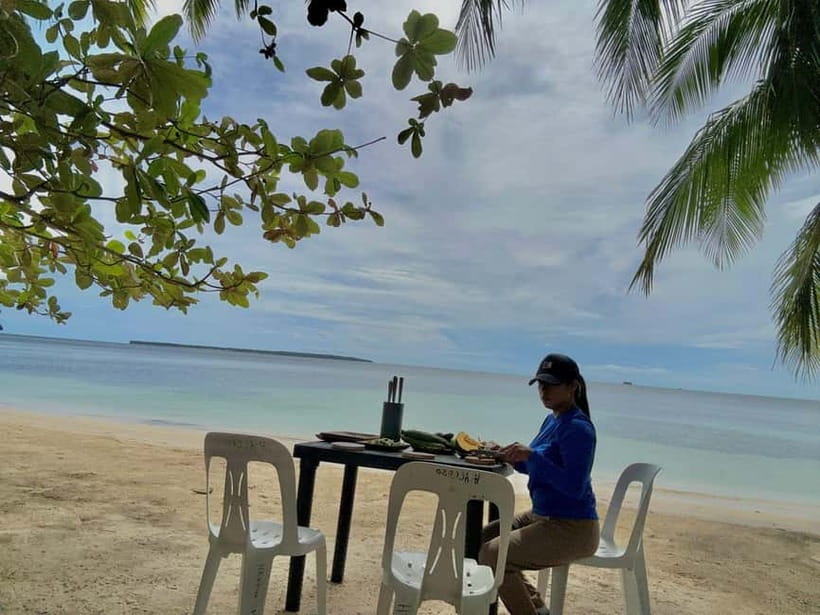
At $90 per person, this is not a budget activity. You are paying more than the cost of eating several inexpensive meals in General Luna, so the value depends on how much you want the hands-on lesson and the setting.
The price includes seven dishes:
- Pinakbet
- Grilled eggplant fritter
- Stir-fried bitter melon with eggs
- Sweet potato leaf salad
- Vegetable lumpia
- Fresh fruit halo-halo
- Resort entrance
That is a substantial menu for four hours. You are also paying for instruction, ingredients, the beach setting, and access to Malinao Seaview. If you mainly want lunch, the price will feel steep. If you want a cooking skill, a cultural food lesson, and a half-day outing in one booking, the calculation looks better.
The class is especially good value for you if vegetarian food is central to your trip. You get more than a token meat-free dish. The whole menu is built around vegetables, coconut, fruit, and Filipino cooking methods.
Still, do not book based on the word vegetarian alone. Fish sauce and eggs are included, so check whether the recipes can be changed to meet your needs.
Who should book this Siargao cooking class?
I would recommend this class to several types of visitors.
Vegetarians who eat eggs and fish sauce will find the menu well matched to their diet. It offers more variety than many standard Filipino food activities, which often center on meat, seafood, or grilled dishes.
Couples and friends are a natural fit because the class requires at least two people to proceed. The four-hour length gives you a shared activity rather than another quick stop between beach visits.
Beginner cooks should feel comfortable joining. The class is intended for novices as well as experienced cooks, and the menu uses recognizable ingredients and direct methods.
Food-focused visitors will get the most from the session. You will taste several dishes, but the bigger benefit is learning how Filipino flavors are assembled through coconut milk, fish sauce, aromatics, eggs, citrus, and fresh produce.
You may want to skip it if you are looking for a fast activity, a strictly vegan menu, or a private cooking lesson. The group can reach 10 people, and the class needs two participants to run.
Practical advice before you go
Wear clothes you can cook in and do not mind getting marked by oil, sauces, or food preparation. Comfortable shoes are listed, but beachwear is also recommended, so plan for a setting where you may move between cooking and the resort surroundings.
Bring biodegradable sunscreen and insect repellent. Those requests are especially sensible for an outdoor or beachside activity. A change of clothes gives you a clean option afterward.
Bring a camera or charged smartphone if you want to save pictures of the dishes and the setting. You may also want to record recipe notes, but do not rely only on photographs. Write down ingredient combinations and cooking methods while they are fresh.
If your diet is vegan, gluten-free, allergy-sensitive, or otherwise restricted, contact Realist Filipino Tour Services before booking. The listed menu confirms fish sauce and eggs, but it does not provide full ingredient or substitution details.
Cancellation is flexible up to 24 hours before the activity for a full refund, and you can reserve now and pay later. Check the available start times when selecting your date, since the session lasts four hours.
FAQ
Where does the Siargao vegetarian cooking class take place?
The class takes place at Malinao Seaview in Siargao, Surigao del Norte, Philippines.
How long does the cooking class last?
The class lasts four hours.
How much does the experience cost?
The price is $90 per person.
How many people can join the class?
It is a small-group activity limited to 10 participants.
What language is used during the class?
The instructor teaches in English.
What dishes are included?
The menu includes pinakbet, grilled eggplant fritter, stir-fried bitter melon with eggs, sweet potato leaf salad, vegetable lumpia, and fresh fruit halo-halo served inside a coconut.
Is the food fully vegan?
No. The pinakbet includes fish sauce, and eggs are used in the grilled eggplant dish and the bitter melon dish. Ask the provider about possible substitutions if you need a vegan menu.
What should I bring?
Bring comfortable shoes, comfortable clothes, beachwear, a change of clothes, a camera, biodegradable sunscreen, a charged smartphone, and biodegradable insect repellent.
Can I cancel the booking?
Yes. You can cancel up to 24 hours in advance for a full refund. You can also reserve the activity and pay later.
Should you book it?
Book this class if you want a real food activity with a scenic Siargao setting, not just another meal. The seven-dish menu, small group, English instruction, and resort entrance make the $90 price easier to justify for food-focused visitors.
I would be cautious if you need strictly vegan food or want a low-cost cooking lesson. For everyone else, this offers a pleasant way to spend half a day, learn several Filipino vegetable recipes, and leave with a better understanding of how coconut, local produce, aromatics, eggs, and citrus shape the food of the Philippines.
Just added in Philippines
- Trekking to see the beautiful view of Cebu City★ 3.3 · 4 reviews
- Tri island tour: Naked Island, Daku Island and Guyman Island★ 5.0 · 3 reviews
- Zamboanga Sta Cruz Island (pink Sand) Excursion★ 5.0 · 1 review
- Puerto Galera Inland Tour★ 5.0 · 1 review
- Davao Eden Nature Park Tour with snacks (6hrs)★ 5.0 · 1 review
- Zamboanga Pink Sand Escape With Lunch And Vinta Ride★ 4.5 · 2 reviews
- Siargao:Lagoon,Cave Rock Pool, w/Lunch & Transfer★ 4.5 · 11 reviews
- Siargao Tour D (Private Tour)★ 5.0 · 1 review
Cooking Classes, compared.
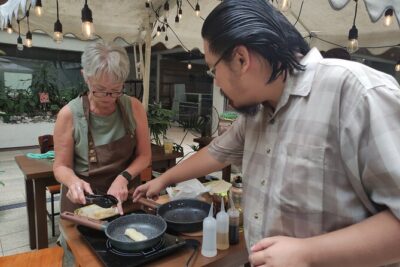
Manila Filipino Cooking Class: Meryenda Favorites
Read our review →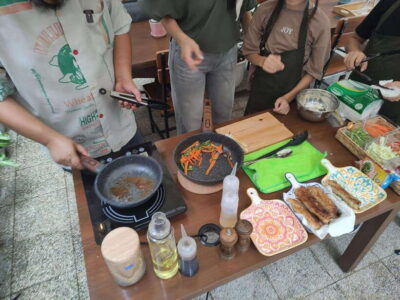
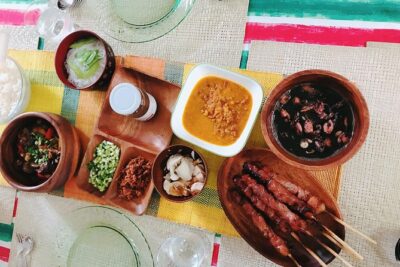
Private Filipino cooking class in a local Manila Home
Read our review →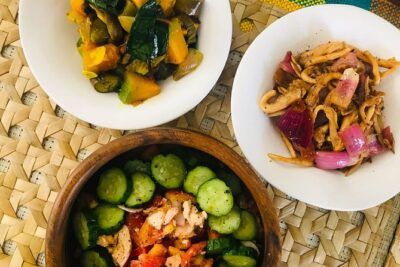
Private Market Tour and Filipino Cooking Class in Manila with Isi
Read our review →
Private Filipino Cooking Class in the Heart of Manila,Makati City
Read our review →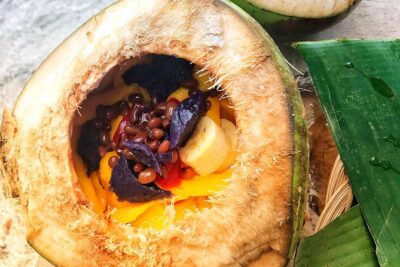
Browse the lists this tour appears in