
Reviewed · INTRAMUROS WALKS
Intramuros Walking Tour with Transportation by Don’t Skip Manila
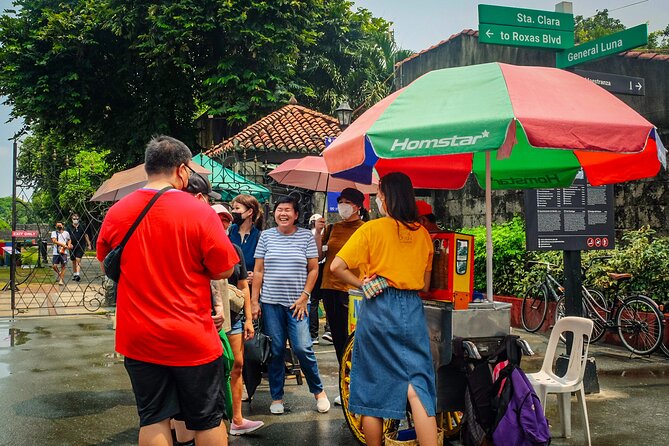
Manila’s past is packed into one walled district. This 4 to 5-hour tour by Don’t Skip Manila gives you a clear route through Intramuros, with Fort Santiago, the Rizal Shrine, Manila Cathedral, Casa Manila, and a horse-drawn carriage ride included. I like the small-group format and the way the tour connects Malay, Spanish, Japanese, and Filipino chapters of Manila’s story. I also like that museum fees, bottled water, and air-conditioned transportation are covered.
The main drawback is the heat. You will walk outdoors in a hot, humid city, and one part of the carriage ride may be hard to hear or see clearly. The tour is also offered on Saturday and Sunday mornings, with pickup listed between 7:30 and 8:30 AM, so it may not fit every schedule.
In This Review
- Key points to know before booking
- Why this tour works for a first look at Manila
- Air-conditioned transport and a small group
- Manila Bay and the opening view
- Fort Santiago: an hour inside Manila’s citadel
- Rizal Shrine: the personal cost of history
- Manila Cathedral and the role of faith
- Walking through the Walled City
- Casa Manila: a look inside colonial life
- The horse-drawn carriage ride
- The guide makes the difference
- Is $83.34 a fair price?
- Who should book this Intramuros tour?
- FAQ
- How long does the Intramuros tour last?
- What is included in the price?
- Is hotel pickup available?
- How many people are in the group?
- When does the tour operate?
- Can I cancel for a full refund?
- Should you book it?
Key points to know before booking
- Fort Santiago gives the tour its strongest historical anchor, with about an hour inside one of Intramuros’ best-known landmarks.
- Andre, Andrei, Anne, and Andrea have all been praised for lively storytelling, humor, and strong knowledge of Manila’s past.
- The horse-drawn carriage ride is included for groups of more than four, though the driver’s commentary may be difficult to follow.
- Pickup and an air-conditioned vehicle matter in Manila’s heat, especially when you are moving between outdoor stops.
- Casa Manila adds a home-life angle, showing how an upper-class Spanish colonial residence was arranged.
- The $83.34 price is easiest to justify if you value transport, entrance fees, and guided context rather than simply sightseeing on your own.
Why this tour works for a first look at Manila
Intramuros is the natural place to begin if you want to understand Manila beyond its traffic and modern commercial districts. The Walled City was the center of Spanish power in Manila, and its streets bring together military defenses, churches, museums, colonial homes, and memorials to the country’s national hero.
I like the way this tour moves through several kinds of history instead of stopping at one monument. Fort Santiago explains defense and colonial rule. The Rizal Shrine brings the story down to one person and his final hours. Manila Cathedral shows the continuing role of Catholicism, while Casa Manila gives you a glimpse of domestic life.
The guide is an important part of the experience. Anne has been praised for making the material interactive, while Andre and Andrei are described as animated, funny, and passionate about Manila and the Philippines. One guide used pictures and a speaker with related music to set the mood for different parts of the story. That kind of presentation can help keep a history tour from becoming a list of dates.
The tour also works well for a short stay or a long layover. One visitor used it during a 17-hour stop in Manila and found it a useful way to see the old city without having to arrange every detail alone.
More Intramuros walks:
- Intramuros, Manila: Historical Bamboo Bike Tour
★ 4.8 · 583 reviews - Experience Intramuros with Bamboo Bicycle – Ecotours
★ 5.0 · 508 reviews - Manila: Intramuros, Chinatown, and Old Manila Half-Day Tour
★ 4.8 · 475 reviews
Air-conditioned transport and a small group
Pickup is offered, and the tour includes an air-conditioned vehicle. That is not a minor perk in Manila. You will spend time outside on stone streets and open courtyards, so having a cool ride between stops gives you a needed break.
The tour is described as a small-group experience for 12 people or fewer, although the stated maximum is 24. I would confirm the group size when booking if a quieter outing matters to you. A group of 12 makes it easier to hear the guide and ask questions. A group closer to the maximum could feel less personal, especially inside narrow museum rooms.
Bottled water is included, but you should still plan for heat and humidity. A June visit was specifically described as hot and humid, and Manila’s warm conditions can make even a short walk feel longer. Wear light clothing and comfortable shoes. The route is designed for most people to take part, but you should be ready for outdoor walking and standing.
Manila Bay and the opening view
The route includes a stop along Manila Bay, a popular waterfront promenade known for sunsets, coconut trees, and views across the bay. The supplied schedule does not give a precise duration for this stop, so think of it as an introduction to Manila rather than the main event.
This brief waterfront look helps place Intramuros within the larger city. Manila is not only a walled Spanish district. It is also a port city shaped by the bay, trade, migration, war, and changing colonial powers.
If you are hoping for a sunset visit, note that the tour operates in the morning, with the listed meeting window between 7:30 and 8:30 AM on Saturday and Sunday. You should not expect the famous evening sunset during this tour. The value here is the setting and the guide’s explanation, not a long waterfront stroll.
Fort Santiago: an hour inside Manila’s citadel
Fort Santiago receives the longest scheduled visit, about one hour, and that is sensible. This citadel was first built by Spanish conquistador Miguel López de Legazpi for the newly established city of Manila. It became part of Intramuros’ defensive system and remains one of the most important places for understanding Spanish Manila.
You can expect the guide to explain how the fort fit into the larger Walled City, rather than treating it as an isolated monument. The walls, gates, and fortified layout make more sense when you know that Intramuros served as the seat of government and political power during the Spanish colonial period.
The Fort Santiago stop also leads naturally into the story of José Rizal, whose final hours are tied to the site. Admission is included, so you do not need to calculate extra museum costs during the morning.
An hour is enough for a guided introduction, but not enough for every corner or every historical detail. If Fort Santiago is your main interest, you may want to ask the guide how much independent time is available. This tour is meant to give you a strong overview of Manila, not to provide a full-day archaeological visit.
More Walking Tours in Manila:
- Manila: Street Food and Drinks Walking Tour with Tastings
★ 4.8 · 114 reviews - Viva Old Manila: Intramuros Walking Tour
★ 4.9 · 104 reviews - Manila’s Walled City: Intramuros Walking Tour
★ 5.0 · 82 reviews - Manila: Sightseeing and Food Walking Tour with Tastings
★ 4.7 · 68 reviews
Rizal Shrine: the personal cost of history
The Rizal Shrine is scheduled for about 30 minutes. The museum is dedicated to José Rizal’s life and work and is located in the building where he spent his final night. It is also connected with Mi último adiós, or My Last Farewell, the famous poem he hid in an oil lamp.
This is one of the most moving stops because it shifts the focus from buildings and empire to an individual facing execution. Rizal is a central figure in Filipino national identity, and the shrine gives the guide a chance to explain why his writing and final hours still matter.
Thirty minutes will not cover every object or document in detail. It is enough for a focused visit, especially when the guide supplies the larger political context. I would pay close attention here if you want to understand why the tour repeatedly returns to Filipino pride and identity.
One unusual benefit of a strong guide is the ability to connect Rizal’s story to the wider sequence of Malay, Spanish, Japanese, and Filipino history. The best comments about this tour describe exactly that kind of connection, with facts presented in a way that feels personal rather than academic.
Manila Cathedral and the role of faith
The Manila Cathedral stop lasts about 15 minutes. This is the first cathedral in the Philippines and a basilica in Intramuros dedicated to the Immaculate Conception, the principal patroness of the country.
The short visit is best treated as an architectural and cultural pause. You will not have a long time for quiet reflection or a detailed look at every feature. Still, the cathedral helps explain the religious force of Spanish rule and the lasting place of Catholic worship in Filipino public life.
The guide can also set the cathedral beside the fort and the colonial homes. That comparison is useful: Intramuros was not only a military center. It was also a place of government, religion, education, and social status.
Because this is a brief stop, check whether services or other restrictions affect access on the day of your tour. The listed experience includes admission fees, but exact access inside a working religious building can vary.
Walking through the Walled City
Intramuros is often called the Walled City, and during the Spanish colonial period it was effectively synonymous with Manila. The district served as the seat of government and political power, which explains why the tour spends so much time here.
Walking between the stops lets you see how the district functions as a connected historic area. The value is not just in checking off individual buildings. You begin to understand how walls, churches, official buildings, homes, and defensive sites formed one colonial center.
The condition of Intramuros is worth keeping in mind. One Spanish-language assessment praised the excursion but noted that the government should improve the district’s upkeep. You may find worn surfaces or areas that do not look as polished as a restored European old town. That roughness is part of the current reality, but it can also make the visit less visually tidy.
I prefer to see Intramuros with that context in mind. The district is not a perfect museum set. It is a living part of Manila, carrying layers of colonial rule, war, reconstruction, and modern use.
Casa Manila: a look inside colonial life
Casa Manila is scheduled for about 30 minutes. This museum presents colonial domestic life and is a copy of an 1850s San Nicolas House that once stood on Calle Jaboneros.
After the fort and cathedral, this stop changes scale. Instead of military power or national memory, you get rooms, furnishings, and the habits of people who lived within the Spanish colonial social order. It helps you picture how daily life operated behind Intramuros’ walls.
The museum is especially useful if you want more than battlefield and political history. A guide can point out how the house reflects class, cultural influence, and the Spanish colonial period. Thirty minutes should give you a focused look, though it is not a leisurely museum visit.
Casa Manila is also listed twice in the supplied route information, so do not interpret that as two separate visits. It is one scheduled museum stop.
The horse-drawn carriage ride
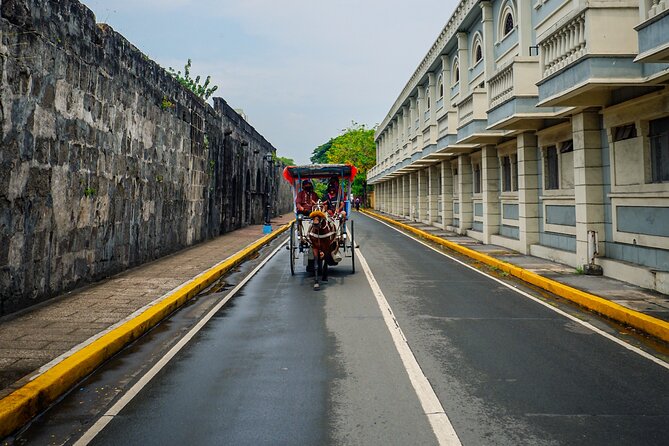
A horse-drawn carriage ride is included when the group has more than four tourists. It adds an old-fashioned way to see the streets and offers a change from walking.
There is one practical caution. During one carriage ride, the commentary was difficult to hear and it was hard to see what the driver was pointing toward. I would treat the carriage as a pleasant transport segment, not as the main source of historical explanation. Listen closely if you can, but rely on the main guide for the detailed story.
The carriage ride may also feel different depending on the group size and the route used that day. Since it is included only for groups of more than four, confirm how this feature applies to your booking if it is a major reason you are considering the tour.
The guide makes the difference
This experience earns its strongest praise for the guides’ delivery. Anne is described as well informed and engaging. Andre and Andrei are repeatedly praised for being friendly, enthusiastic, humorous, and deeply familiar with Manila’s past. Andrea is also described as both funny and well informed.
That range of names suggests that the exact guide may vary. The consistent point is the style: expect a guide who talks, explains, adds fun facts, and tries to make the subject feel alive. One guide used photographs and music, while another offered cheese and avocado ice cream during a hot day. The ice cream is not listed as an included feature, so consider it a possible personal touch rather than something to count on.
A good guide matters here because Intramuros can otherwise feel like a set of disconnected stops. The stories link the Spanish period to Japanese occupation, Filipino identity, and the long development of Manila. You should ask questions as you go. The small-group setup gives you a better chance to do that.
Is $83.34 a fair price?
At $83.34 per person, this is not the cheapest way to walk around Intramuros. You are paying for more than entry to the district. The price includes an air-conditioned vehicle, museum entrance fees, all taxes and fees, a tour guide, bottled water, and the carriage ride when the group has more than four people.
The value improves if you are staying outside Intramuros and want pickup. A direct transfer from areas such as Taguig has been provided, which can save you the trouble of planning transport in Manila traffic. It also makes the tour appealing during a short stay, when time matters more than finding the absolute lowest cost.
The price is less attractive if you want a slow, independent museum day. The itinerary moves through several places in four to five hours, and each stop has a set time. You will gain structure and context, but you will give up some freedom.
Group discounts are available, and the tour is booked an average of about 25 days ahead. That suggests you should reserve early for a preferred weekend, especially if you want to confirm pickup and group size.
Who should book this Intramuros tour?
I would choose this tour if you are visiting Manila for the first time, have limited time, or want the city’s history explained in plain language. It is also a good fit for people who prefer a guide to handle transport, tickets, and the route.
Families and mixed-age groups may appreciate the short museum visits and the carriage ride. History fans will value Fort Santiago and the Rizal Shrine, though you may want more time than this half-day schedule provides.
I would hesitate if you dislike heat, walking, or fixed itineraries. The tour is designed for most people, but Manila’s humidity is a real consideration. I would also reconsider if your main goal is a quiet, slow visit to churches and museums.
Free cancellation is available up to 24 hours before the start time. The tour requires good weather and a minimum number of participants. If poor weather or low enrollment causes cancellation, you are offered another date or experience, or a full refund.
FAQ
How long does the Intramuros tour last?
The experience lasts approximately 4 to 5 hours.
What is included in the price?
The price includes an air-conditioned vehicle, museum entrance fees, all fees and taxes, guide services, bottled water, and a horse-drawn carriage ride if there are more than four tourists.
Is hotel pickup available?
Pickup is offered, and the tour includes transportation in an air-conditioned vehicle. One confirmed route example included pickup from a hotel in Taguig.
How many people are in the group?
The tour is described as a small group of 12 people or fewer, while the stated maximum is 24 travelers. Confirm the expected group size when booking if this matters to you.
When does the tour operate?
The listed meeting window is Saturday and Sunday from 7:30 AM to 8:30 AM.
Can I cancel for a full refund?
Yes. You can cancel at least 24 hours before the experience start time for a full refund. Cancellations or changes made less than 24 hours before the start time are not refunded or accepted.
Should you book it?
Book this tour if you want an organized, story-led introduction to Manila with transport and entrance fees handled for you. The strongest reason to choose it is the guide’s delivery, especially if Andre, Andrei, Anne, or Andrea leads your group. Their humor, pictures, music, and personal passion can turn a hot morning among old walls into a memorable lesson.
Skip it if you want to explore at your own pace or spend a full day inside Fort Santiago and Casa Manila. For most first-time visitors, though, Don’t Skip Manila offers a practical way to meet Intramuros, hear why it matters, and leave with a clearer sense of the Philippines’ long and complicated past.
Just added in Manila
- Underground River with Lunch★ 3.6 · 5 reviews
- Manila Night market and Street Food Tour★ 5.0 · 2 reviews
- Cruise Shore Excursion of Taal Volcano with Lunch★ 4.5 · 4 reviews
- Ultimate 8-Day Palawan Island Tour Package from Manila City★ 5.0 · 1 review
- Unforgettable Manila Fishing Village Day Excursion 2024★ 5.0 · 4 reviews
- Tagaytay + Hidden Valley Springs: A Scenic Escape w/ Transfers★ 4.0 · 4 reviews
- Tagaytay Day Tour sightseeing with Panoramic Taal volcano view★ 5.0 · 6 reviews
- 3 Days Private Tour in Banaue Ifugao visiting Batad Rice Terraces★ 3.5 · 3 reviews
Intramuros Walks, compared.

Intramuros, Manila: Historical Bamboo Bike Tour
Read our review →
Experience Intramuros with Bamboo Bicycle – Ecotours
Read our review →Intramuros, Chinatown, and Old Manila Half-Day Tour
Read our review →
Manila Old and New: Sightseeing Tour Including Intramuros and Fort Santiago
Read our review →

Explore Intramuros: Introduction to Philippine History
Read our review →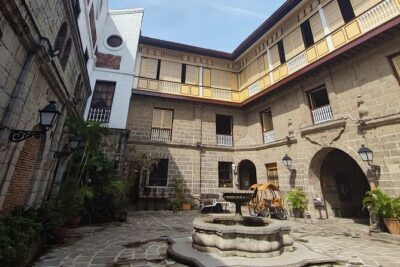
Experience Manila’s Heritage: Intramuros & More in Half a Day!
Read our review →Browse the lists this tour appears in