
Reviewed · INTRAMUROS WALKS
Viva Old Manila: Intramuros Walking Tour
History gets better on foot. Viva Old Manila gives you a clear, lively route through Intramuros, with a DOT-accredited English-speaking guide explaining the Spanish period, wartime destruction, and the life of Dr. Jose Rizal. I like the strong mix of major sights and personal stories, and I like that admission fees, bottled water, sunscreen, and mosquito repellent are included.
The main caution is the heat. You will walk across cobblestones and open plazas for three hours, so bring an umbrella, water, and a hat. The meeting point is also worth checking carefully: the guide meets you at the Fort Santiago entrance in front of the United Philippine Lines building on Sta. Clara Street, despite the location being listed as Nueva Vizcaya.
In This Review
- Key points to know before you go
- Why this three-hour walk works so well
- Meeting at the Fort Santiago entrance
- Intramuros: getting your bearings in the Walled City
- Fort Santiago and the dungeon: one hour of hard history
- The Rizal Museum and the final days of a national hero
- Manila Cathedral in a focused 15 minutes
- Memorare Manila 1945 and the cost of war
- San Agustin Church: architecture with a wider story
- Casa Manila and a glimpse of colonial home life
- The guides make the difference
- Heat, rain, walking pace, and comfort
- Is $27 a fair price?
- Who should book this walk?
- FAQ
- Where does the Viva Old Manila tour meet?
- How long does the Intramuros walking tour last?
- What language is the tour conducted in?
- Are admission fees included?
- What should I bring?
- Is the tour wheelchair accessible?
- Should you book Viva Old Manila?
Key points to know before you go
- Fort Santiago takes the biggest share of the tour: Expect about one hour inside Intramuros’ best-known fortress, including the dungeon and its wartime stories.
- The guides are the real strength: Russell, Steven, Jerome, Jonathan, Jimmy, and others are praised for clear explanations, humor, patience, and personal stories.
- You cover a lot without racing: The three-hour route includes Fort Santiago, the Rizal Museum, Manila Cathedral, Memorare Manila 1945, San Agustin Church, and Casa Manila.
- This is a history tour first: You get context about Spanish rule, the American period, the Japanese occupation, language, changing city life, and Philippine independence.
- Come ready for Manila weather: Complimentary water is provided, but you should carry extra water and use the supplied sunscreen and mosquito repellent if needed.
- The finish at Casa Manila is useful: You can continue exploring after the tour, and one booking noted that transport was easy to arrange from the San Agustin area.
Why this three-hour walk works so well
Intramuros is compact on a map, but its story is not simple. A short walk can take you from Spanish colonial rule to the final days of Rizal, then to the destruction of Manila during the Second World War. Without a guide, you can see the walls and buildings but miss the connections between them.
That is where this tour earns its keep. The route is structured, but the guides do not simply recite dates. Russell is praised for adding facts, myths, humor, and stories from local history. Steven is noted for explaining difficult stretches of Philippine history in a way that is easy to follow. Jerome has been praised for adapting his explanations to unusual questions and different interests.
You should expect a teaching style rather than a quiet architectural stroll. The best guides keep the tone light when the subject allows it, then slow down for painful episodes such as wartime deaths and Rizal’s execution. Several people found the three-hour length just right: enough time to learn a great deal, but not so much that the story becomes a lecture.
The tour is conducted in English. A private group option is available, which may suit families or small groups that want more time for questions and photos.
More Intramuros walks:
- Intramuros, Manila: Historical Bamboo Bike Tour
★ 4.8 · 583 reviews - Experience Intramuros with Bamboo Bicycle – Ecotours
★ 5.0 · 508 reviews - Manila: Intramuros, Chinatown, and Old Manila Half-Day Tour
★ 4.8 · 475 reviews
Meeting at the Fort Santiago entrance
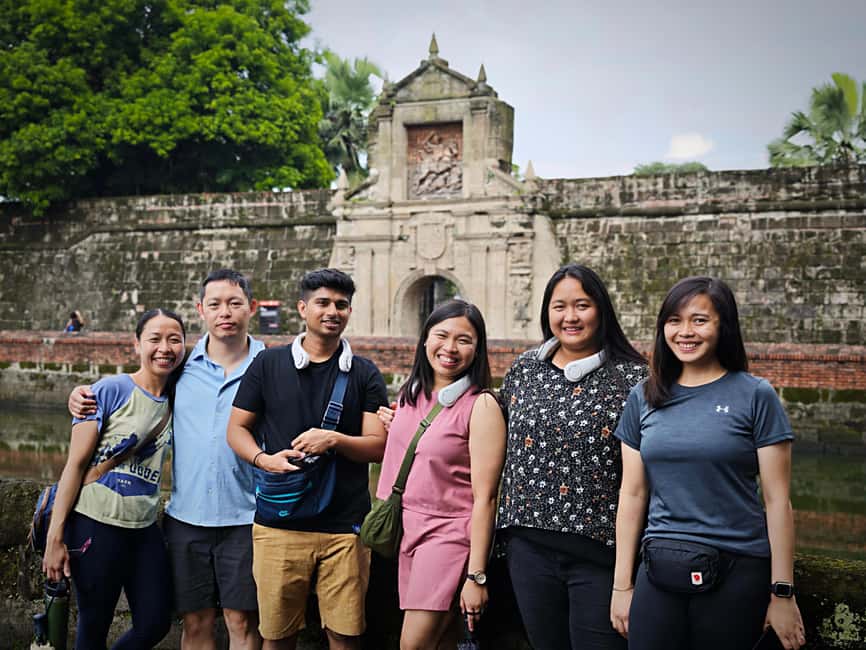
The starting point is the Fort Santiago entrance, in front of the United Philippine Lines building on Sta. Clara Street. Arrive at least 15 minutes early. One person found the meeting point a little confusing, although the guide was waiting at the gate and helped locate the group.
That is a useful warning. Do not simply type Intramuros into a ride app and assume you are at the right place. Use the United Philippine Lines building and the Fort Santiago entrance as your reference points. If you run into trouble, contact the operator through Viber or WhatsApp.
The tour does not include hotel pickup, drop-off, or transport. You will need to reach Intramuros yourself. One booking from Alabang reported paying about 650 Philippine pesos for a morning Grab ride, though your fare will depend on traffic and starting point.
Intramuros: getting your bearings in the Walled City
The first guided portion lasts about 30 minutes and introduces Intramuros itself. You begin with the shape and purpose of the old walled city before moving into its individual sites.
This opening matters because Intramuros can feel like a collection of separate attractions. The walls, gates, plazas, churches, and old houses make more sense once you understand that this was the colonial center of Manila. The guide helps connect the military, religious, civic, and residential parts of the district.
Expect cobblestone streets and old masonry. They make for good photographs, but they are not always easy underfoot. Wear shoes with a firm sole, and keep your attention on the ground while listening.
The 30-minute introduction is not meant to cover every corner. It gives you the basic frame, then the next stop supplies the detail.
Fort Santiago and the dungeon: one hour of hard history
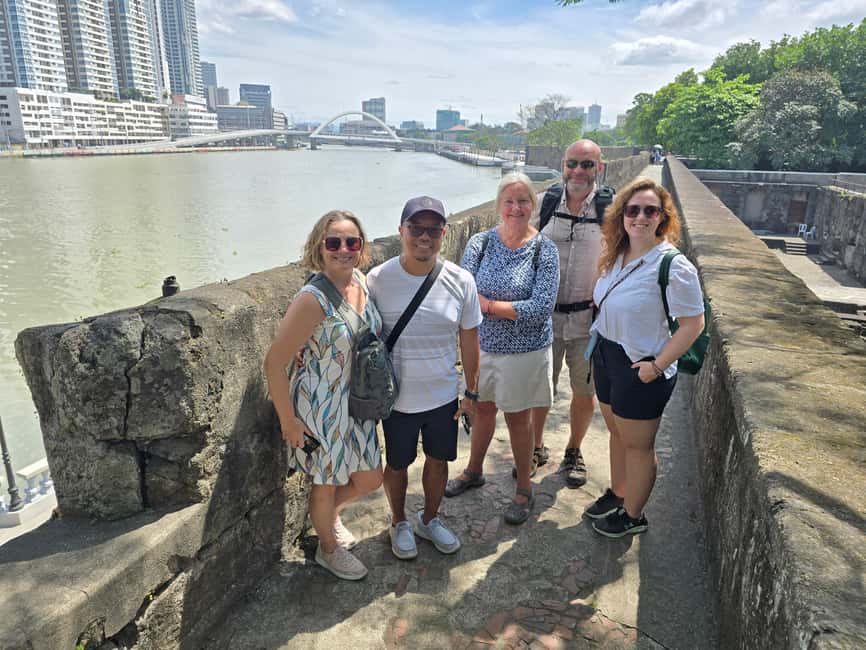
Fort Santiago receives the longest stop, about one hour, and rightly so. This citadel shaped Manila’s military and political story. You will explore its grounds and fortress walls, then hear about the people and conflicts tied to the site.
The dungeon is one of the tour’s most sobering parts. Its wartime stories bring the Japanese occupation and the final destruction of Manila into focus. This is not a decorative stop or a quick photo opportunity. You should expect difficult subject matter, presented as part of the city’s painful past.
The guides are especially useful here because dates alone can blur together. Russell and other guides have been praised for explaining the sequence of Spanish, American, and Japanese involvement, while adding old photographs, local details, and humor at suitable moments.
You will have time to take pictures, but this remains a group walk. Keep close to the guide. One person noted that stopping too long for photos can leave you searching for the rest of the group. That is an easy problem to avoid: take a few photos, then rejoin the explanation.
More Walking Tours in Manila:
- Manila: Street Food and Drinks Walking Tour with Tastings
★ 4.8 · 114 reviews - Manila’s Walled City: Intramuros Walking Tour
★ 5.0 · 82 reviews - Manila: Sightseeing and Food Walking Tour with Tastings
★ 4.7 · 68 reviews - Manila: Intramuros Walking Tour.
★ 4.9 · 63 reviews
The Rizal Museum and the final days of a national hero
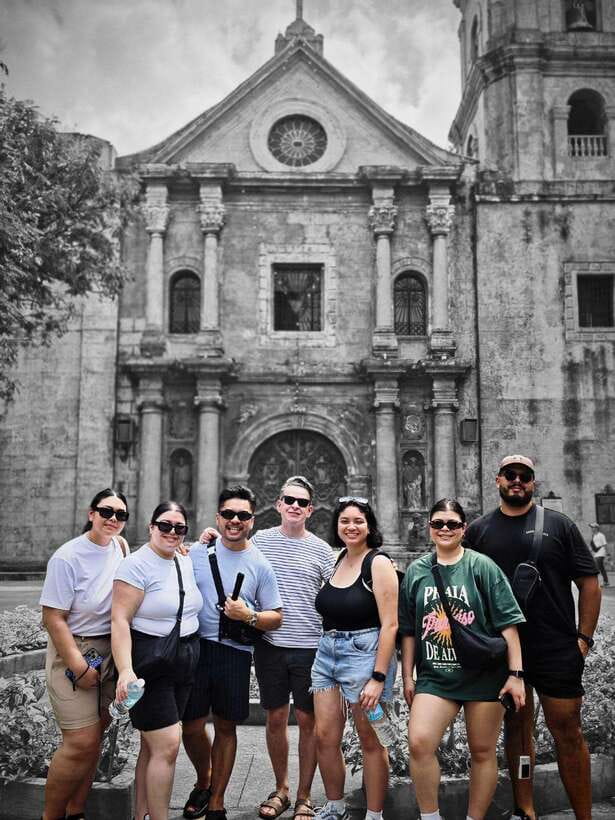
The next stop is the Museum of Jose Rizal, with about 30 minutes of guided time. The focus is Dr. Jose Rizal, whose final days are closely tied to Fort Santiago and Philippine national identity.
The value here is human scale. After the fortress and its military story, the Rizal stop narrows the focus to one individual. A strong guide can explain why his writings, imprisonment, and death matter far beyond the walls of Intramuros.
The supplied tour information also refers to the Rizal Shrine, so you should expect this section to center on the final stage of his life. It is a moving contrast to the earlier fortress walk. You are not just seeing another old building. You are following the last chapter of a life that became central to the country’s story.
If you enjoy biographies, political history, or the way national symbols are formed, this may be one of the most rewarding parts of the route. If you prefer architecture alone, the guide’s storytelling is what will make the stop meaningful.
Manila Cathedral in a focused 15 minutes

Manila Cathedral receives about 15 minutes. That is enough for a guided look, but not enough for a long, unhurried visit.
The cathedral helps show the religious power of colonial Manila and gives the tour a change of pace after Fort Santiago and the Rizal Museum. The guide can place the church within the larger story of Spanish rule rather than treating it as an isolated landmark.
Keep your expectations realistic. This is a highlights stop, not a full church study. You will hear the important context, take photographs if time allows, and move on to the next part of the route.
Memorare Manila 1945 and the cost of war
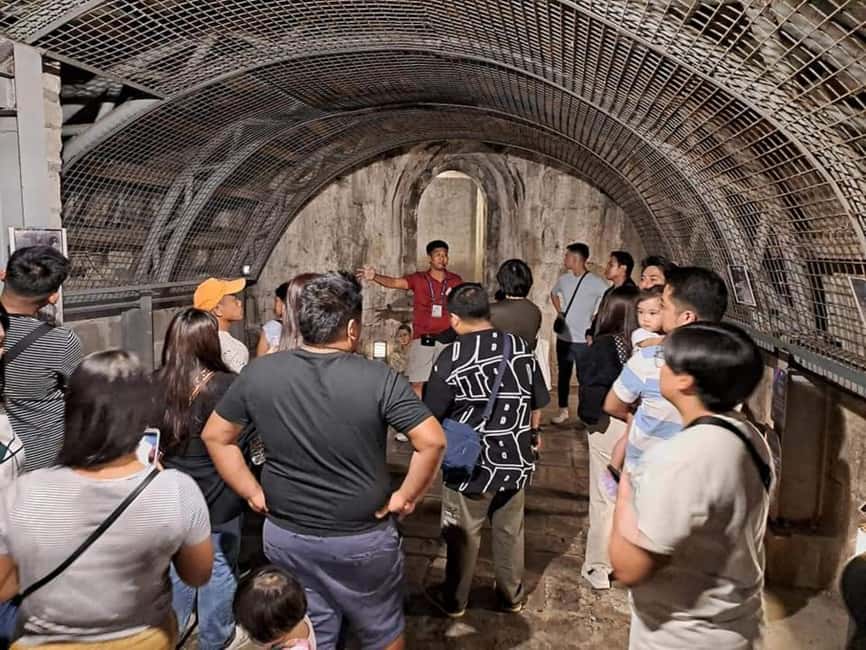
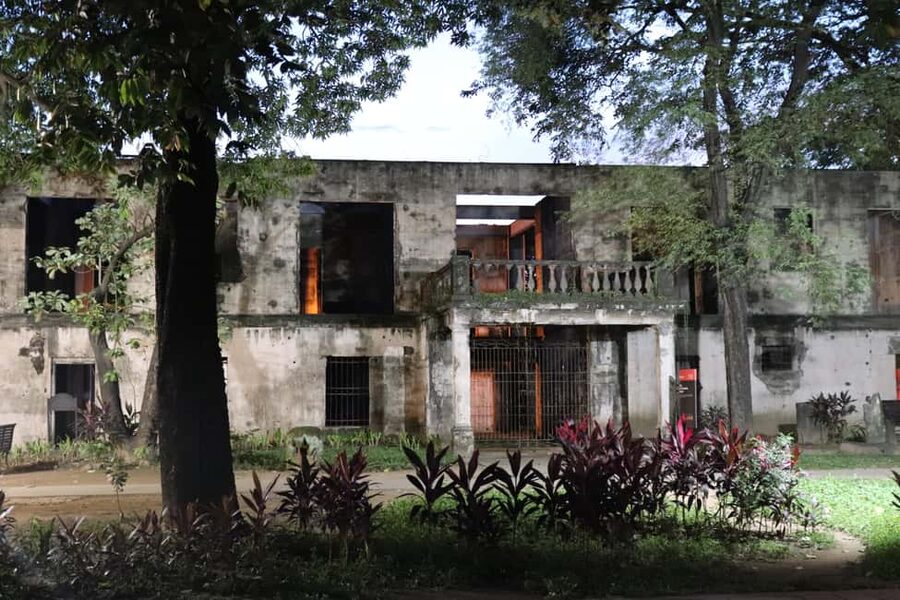
The 15-minute visit to Memorare Manila 1945 shifts the story toward the civilian cost of the Battle of Manila. It is a quiet counterpoint to the fortress. Fort Santiago shows military power, while this memorial points toward the human suffering caused by war.
This stop gives the tour emotional balance. You move from colonial institutions and national heroes to the people caught in the destruction of the city. The guides’ ability to explain the Japanese occupation and the wartime period is important here, since the site carries meaning that is easy to miss without context.
The short timing works because the memorial is part of a wider sequence. You do not linger for a long ceremony, but you are given enough explanation to understand why it belongs on an Intramuros route.
San Agustin Church: architecture with a wider story
San Agustin Church is another 15-minute guided stop. It brings you back to the religious and architectural side of old Manila.
You can expect a short introduction to the church and its place in Intramuros. The tour does not promise an extended art-history session, so think of this as a focused visit that adds variety to the route. After the heavy wartime sections, the church also gives you a chance to look closely at the built environment that survived.
One practical point: the tour information lists Casa Manila as the final stop, while a booking described the tour as ending around the San Agustin area. Treat Casa Manila as the official finish, but confirm the exact end point with your guide if you need to arrange a ride immediately afterward.
Casa Manila and a glimpse of colonial home life
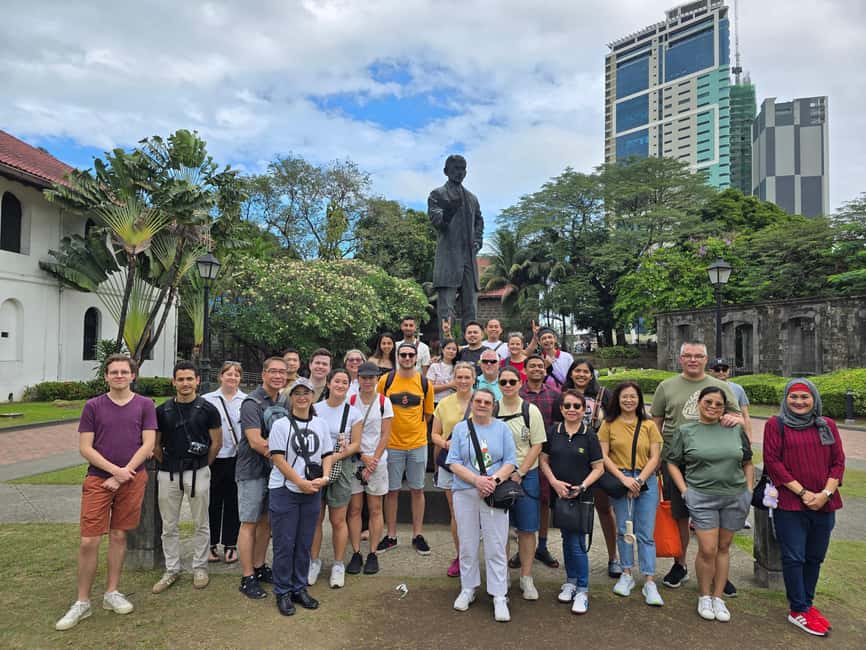
The final stop is Casa Manila, with about 15 minutes of guided touring. Instead of another military or religious site, you finish with domestic life.
That change is valuable. A fort tells you how a city was defended, and a church tells you how it worshipped. A traditional home museum suggests how colonial-era residents lived, furnished their rooms, and organized daily life.
Fifteen minutes is brief, so you will get an introduction rather than an exhaustive museum visit. Still, the stop rounds out the route nicely. You leave with a sense of Intramuros as a place where people lived, not only as a setting for battles and political events.
Because the tour finishes at Casa Manila, you can use it as a natural point to continue your own visit. Admission to the listed sites is included in the tour price, which is helpful if you want to avoid handling several separate ticket purchases during a morning walk.
The guides make the difference
The strongest pattern in the feedback is the quality of the guiding. People repeatedly praise the explanations as clear, detailed, lively, and easy to remember. The guides named in the bookings include Russell, Steven, Jerome, Jonathan, Jimmy, and Sedie.
Russell receives especially strong praise for his passion, humor, and ability to connect small facts with the larger story. Steven is described as patient, funny, and good at answering questions. Jerome is praised for adding a bit of sass and adjusting the tour to the group’s interests. Sedie is remembered for bringing energy to the Spanish occupation story.
That variety matters because guides change. You should book the experience for the operator’s approach, not with the expectation of one particular person. The common thread is an English-speaking local guide who knows the sites well and treats history as something to explain, not just display.
The humor is also worth noting. This is not a solemn lecture for three straight hours. The guides use levity to break up the difficult material, including facts, myths, legends, personal stories, and old photographs. That makes the material easier to retain, especially if you are visiting the Philippines for the first time.
Heat, rain, walking pace, and comfort
Three hours on foot in Manila requires basic preparation. Bring an umbrella, extra water, and a hat. Sunscreen and mosquito repellent are available for free, and one bottle of water is provided during the walk, but I would not rely on that single bottle.
Rain does not necessarily ruin the experience. One person completed the tour during wet weather and still enjoyed it. Even so, an umbrella will make the walk far more comfortable, especially during open-air sections.
The route is described as wheelchair accessible, but the tour includes cobblestones, fortress walls, historic grounds, and multiple sites. If you use a wheelchair or have limited mobility, confirm the practical route and conditions with the operator before booking. The stated accessibility is useful, but old historic districts can still present uneven surfaces.
Stay with the group when taking photos. The pace is generally described as relaxed and well judged, but the guide cannot pause indefinitely at every wall, doorway, or view.
Is $27 a fair price?
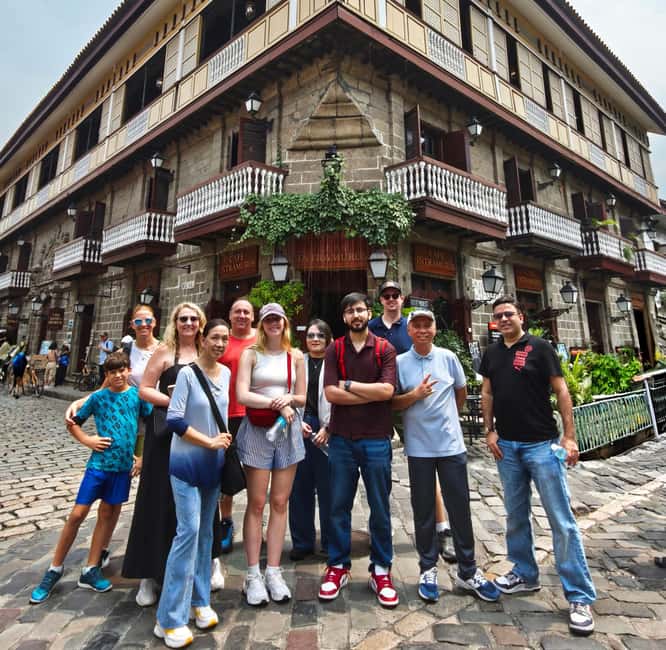
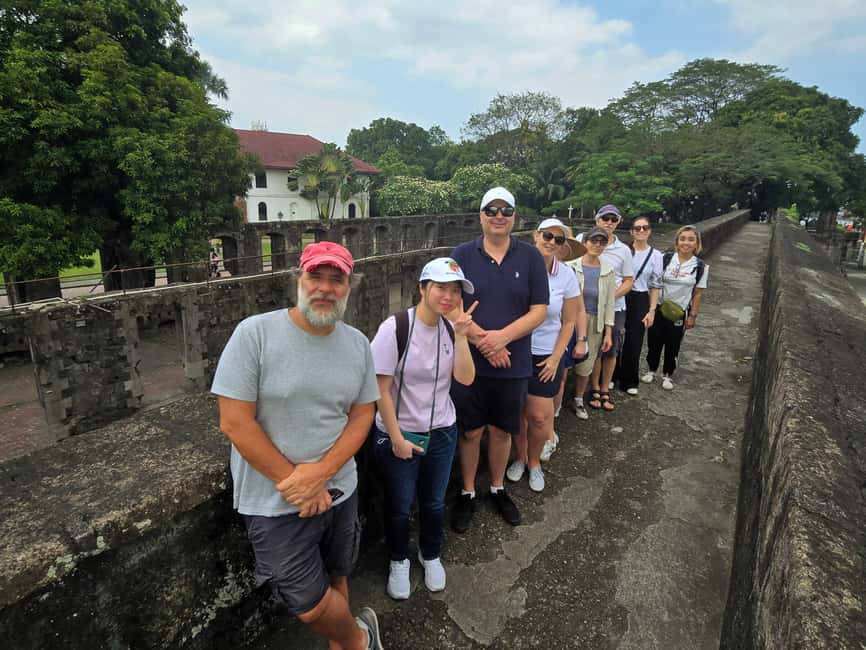
At $27 per person, the tour offers solid value if you want a guided introduction rather than a self-guided walk. You receive three hours with a local guide, admission fees to the listed sites, bottled water, sunscreen, mosquito repellent, and group photo opportunities at key landmarks.
The bigger value is the interpretation. Intramuros is easy to visit on your own, but the connections between Spanish rule, Rizal, wartime destruction, religion, and home life are harder to build without help. A good guide also saves you the trouble of finding the major sites in the right order.
The price is less attractive if you prefer to spend a long time inside one church or museum. The itinerary covers seven main stops after the initial introduction, and several receive only 15 minutes. You are paying for range, explanation, and a coherent route, not slow museum study.
Free cancellation up to 24 hours before the start and reserve-now, pay-later booking add useful flexibility. Private groups are available if you want a more personal pace, though the price for that option is not provided here.
Who should book this walk?
I would choose this tour for a first visit to Manila, especially if you have only one morning for Intramuros. It is also a good fit if you enjoy political history, wartime stories, historic churches, and the personal side of national history.
Families with older children and adults may appreciate the humor and clear storytelling. The tour also suits curious visitors who want to ask questions rather than simply follow a guidebook map.
You may want a different format if you dislike walking in hot weather, need long stops for photography, or want an in-depth museum tour. In that case, a shorter private visit or a self-guided day with fewer sites may feel less pressured.
FAQ
Where does the Viva Old Manila tour meet?
The guide meets participants at the Fort Santiago entrance in front of the United Philippine Lines building on Sta. Clara Street. Arrive at least 15 minutes early.
How long does the Intramuros walking tour last?
The tour lasts three hours. Starting times vary, so you should check availability when booking.
What language is the tour conducted in?
The tour is conducted in English by a live, DOT-accredited local guide.
Are admission fees included?
Yes. Admission fees to the sites included in the tour are covered.
What should I bring?
Bring an umbrella and water. A hat and extra water bottles are also sensible for the outdoor walk. Sunscreen and mosquito repellent are available for free during the tour.
Is the tour wheelchair accessible?
The activity is listed as wheelchair accessible. Since the route includes historic streets, fortress areas, and old buildings, confirm any specific mobility needs with the operator before the tour.
Should you book Viva Old Manila?
Yes, if you want Intramuros explained rather than merely photographed. The route covers the essential sights, the price includes admissions, and the guides have a strong record for clear history, humor, patience, and personal attention.
Book it early in your Manila stay so the wider story of the city has a place to settle. Just arrive early at the United Philippine Lines meeting point, wear comfortable shoes, carry water, and stay close when the camera comes out. For a compact introduction to old Manila, this is a well-priced and thoughtfully paced choice.
Just added in Manila
- Underground River with Lunch★ 3.6 · 5 reviews
- Manila Night market and Street Food Tour★ 5.0 · 2 reviews
- Cruise Shore Excursion of Taal Volcano with Lunch★ 4.5 · 4 reviews
- Unforgettable Manila Fishing Village Day Excursion 2024★ 5.0 · 4 reviews
- Ultimate 8-Day Palawan Island Tour Package from Manila City★ 5.0 · 1 review
- 3 Days Private Tour in Banaue Ifugao visiting Batad Rice Terraces★ 3.5 · 3 reviews
- Tagaytay + Hidden Valley Springs: A Scenic Escape w/ Transfers★ 4.0 · 4 reviews
- Tagaytay Day Tour sightseeing with Panoramic Taal volcano view★ 5.0 · 6 reviews
Intramuros Walks, compared.

Intramuros, Manila: Historical Bamboo Bike Tour
Read our review →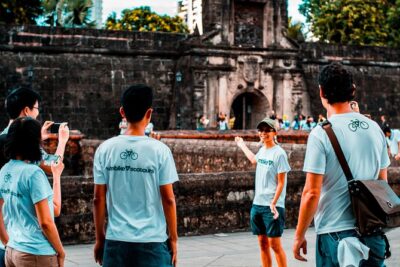
Experience Intramuros with Bamboo Bicycle – Ecotours
Read our review →Intramuros, Chinatown, and Old Manila Half-Day Tour
Read our review →
Manila Old and New: Sightseeing Tour Including Intramuros and Fort Santiago
Read our review →
Explore Intramuros: Introduction to Philippine History
Read our review →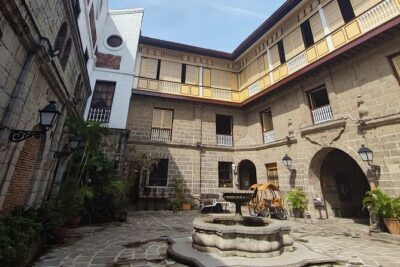
Experience Manila’s Heritage: Intramuros & More in Half a Day!
Read our review →Browse the lists this tour appears in