
Reviewed · INTRAMUROS WALKS
Manila: Filipino Historic Walking Tour in Intramuros
History comes alive behind Intramuros’ walls. This three-hour walk links Manila’s oldest stone church, an ornate 19th-century home, wartime memorials, the Cathedral, and Fort Santiago into one clear story of Spanish rule and Filipino independence. I especially like the small group of up to 15 people, which should make it easier to ask questions, and the fact that entrance fees to the main museums and Fort Santiago are included. The main drawback is the pace: several sites fit into three hours, so you should expect a focused introduction rather than a slow, detailed study of every room.
I also like that the route deals with more than Spanish architecture. It connects Catholic power, aristocratic life, World War II, and the Filipino fight for independence. Guides speak English or Tagalog, and past guide Jerome earned praise for being friendly, flexible, and well informed. You will need comfortable shoes, modest clothing, and reasonable mobility because this is a walking tour over historic streets and walls.
In This Review
- Key details before you book
- Why Intramuros makes a strong first history tour
- Starting at San Agustin Church and Museum
- Casa Manila and the life of Manila’s elite
- The walls and the quiet wartime memorial
- Manila Cathedral and the power of the Catholic Church
- Fort Santiago closes the story with independence
- What the $55 price really covers
- Practical matters that can affect your day
- Who will enjoy this Intramuros walk most?
- Should you book this Intramuros tour?
- FAQ
- Where does the tour begin?
- Where does the tour finish?
- How long does the walking tour last?
- What languages does the guide speak?
- Are entrance fees included?
- What should I wear and bring?
- Is the tour suitable for wheelchair users?
Key details before you book
- San Agustin Church begins the story: Meet inside the church museum lobby, then trace Manila’s colonial past from the country’s oldest stone church.
- Casa Manila shows the meeting of cultures: The restored 19th-century home brings together Spanish, Filipino, Chinese, and wider Asian design influences.
- Fort Santiago ends with independence and conflict: The old military garrison gives the tour a strong closing chapter.
- World War II is not skipped: Memorare Manila 1945 adds a sober look at the destruction and loss tied to Manila’s wartime role.
- The $55 price includes major admissions: Fort Santiago, San Agustin Church and Museum, and Casa Manila Museum are covered.
- This is best for active history lovers: The route is not suitable for wheelchair users or people with mobility impairments.
Why Intramuros makes a strong first history tour
Intramuros is not simply a collection of old buildings. Its walls hold several versions of Manila at once: a Spanish colonial center, a Catholic stronghold, a military post, an aristocratic neighborhood, and a place marked by wartime destruction.
That makes a guide useful. You can walk past a church, a cathedral, a wall, or a memorial on your own and see attractive old architecture. A good guide helps you understand why each place mattered and how the pieces fit together. This experience is built around that connection.
The tour also gives you a useful answer to a basic question: why did Spain establish such a strong presence in the Philippines? At San Agustin Church, the guide explains the Spanish arrival and the long occupation that followed. The focus is not just on dates. You hear about the lasting effects on religion, architecture, government, and Filipino culture.
The group limit of 15 is a practical advantage. It is small enough for the guide to keep the walk together without turning the outing into a private tour. Still, the quality of your experience will depend partly on the guide assigned that day. The available feedback points to strong guiding overall, with comments describing the guide as funny, friendly, motivated, and informed.
More History Tours in Manila
- Intramuros, Manila: Historical Bamboo Bike Tour
★ 4.8 · 583 reviews - Explore Intramuros: Introduction to Philippine History
★ 5.0 · 80 reviews - Experience Manila’s Heritage: Intramuros & More in Half a Day!
★ 5.0 · 76 reviews
Starting at San Agustin Church and Museum
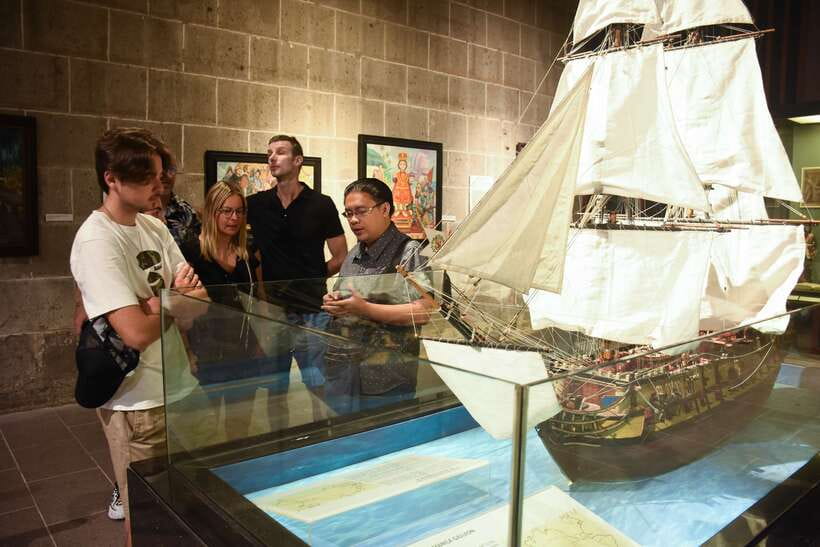
The meeting point is the lobby of the San Agustin Church Museum. You should arrive ready to walk, since the tour begins with one of Intramuros’ most important religious buildings rather than a general orientation outside the walls.
San Agustin Church is presented as the oldest stone church in the Philippines. That fact gives the opening real weight. You are not starting with a minor landmark. You are starting at a building that helps explain why Catholicism became so closely tied to colonial rule and public life in the country.
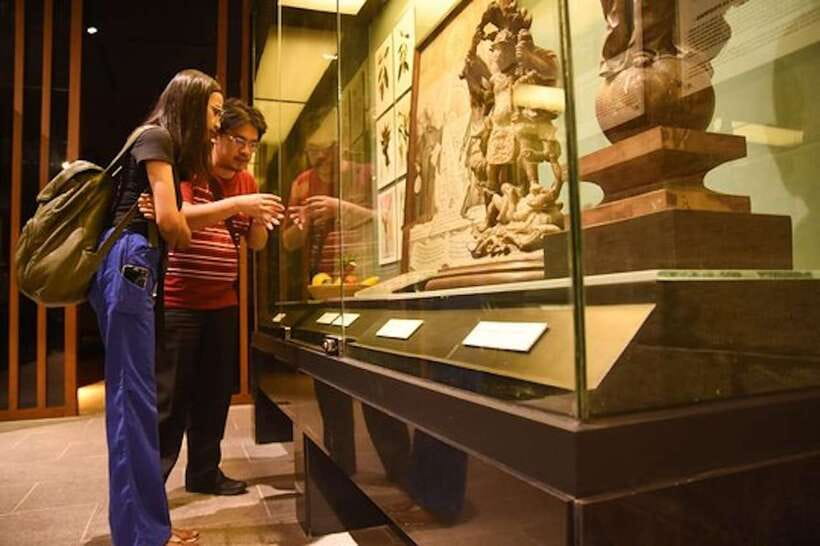
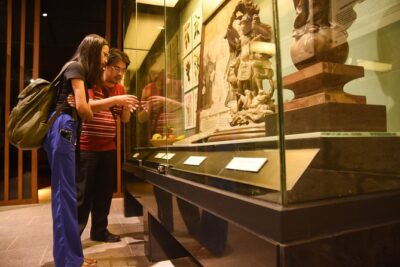
Inside the museum, old artifacts add something that streets and façades cannot. Objects give the past a human scale. You can look at what people made, used, and preserved, rather than only hearing about governors, priests, soldiers, and battles.
The church and museum are included in the $55 price, so this first stop contributes clear value. If you enjoy art, religious objects, and material culture, you will probably want to give this part your full attention. The limitation is time. With several more locations ahead, the guide has to keep the introduction moving.
The meeting instructions ask you to look for the guide through the tour provider’s WhatsApp contact number. Make sure your phone is ready for that contact, and pay close attention to the meeting point. The church museum lobby is more specific than simply being told to meet at Intramuros.
Casa Manila and the life of Manila’s elite
After San Agustin, you cross the street to Casa Manila. This restored 19th-century home shifts the story from church power to domestic life and social rank.
Casa Manila is valuable because it shows how colonial influence appeared inside a wealthy household. The furnishings and design reflect the meeting of east and west. You are looking at a home shaped by Spanish rule, Filipino life, and broader Asian connections, not a simple copy of a European house.
The setting helps you picture how Manila’s upper classes lived. Large rooms, decorative objects, and carefully arranged interiors reveal social habits that are difficult to grasp from a church or fortress alone. The home also helps explain that colonial society was not experienced in the same way by everyone. Class, religion, and access to power mattered.
The guided visit is included, which is important here. A restored historic house can easily become a parade of attractive furniture if nobody explains who used the rooms and what the design says about society. The guide gives the details a purpose.
You should expect a fairly brisk visit, since the full route lasts three hours. If Casa Manila is your favorite stop, you may wish for more time to examine the interior. That is the tradeoff for seeing several major Intramuros sites in one outing.
The walls and the quiet wartime memorial
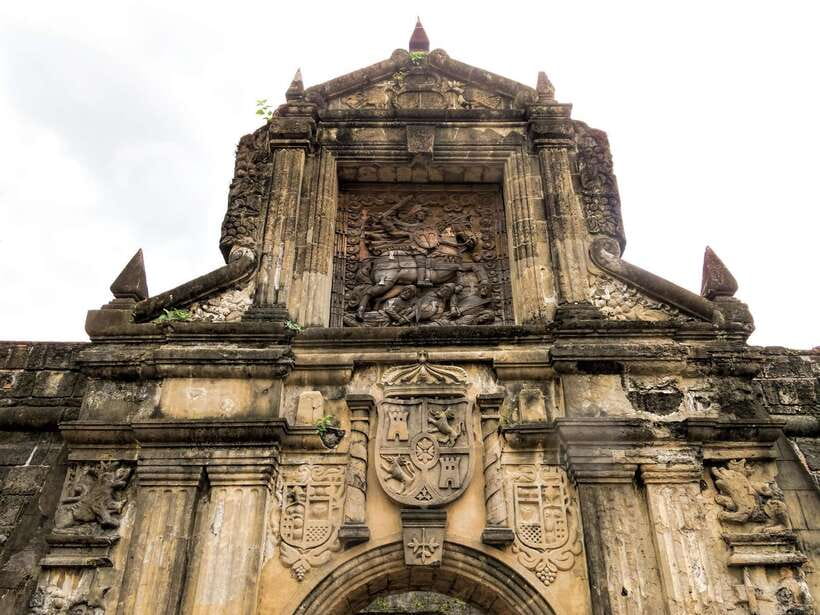
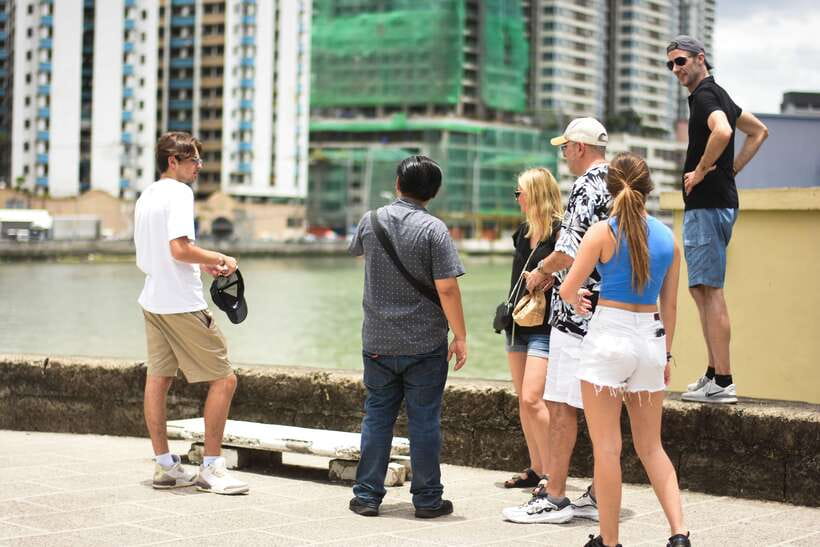
The route then moves toward a less commonly visited section of the Intramuros wall. This is a useful change of pace. Instead of only entering famous buildings, you get a closer sense of the defensive structure that shaped the old city.
The wall helps you understand Intramuros as a planned colonial settlement with boundaries and military purpose. From this part of the walk, the old city feels less like a museum route and more like a fortified place built to control movement and protect Spanish interests.
The stop at Memorare Manila 1945 brings the tone down. This memorial recalls the role of Manila and the Philippines during World War II. It is a short sightseeing stop, but it adds an important chapter that many colonial tours treat as an afterthought.
That wartime section matters because Intramuros is not frozen in the Spanish period. The old city also carries the memory of enormous destruction and loss. The guide’s job here is to connect the memorial with the wider story of Manila rather than treat it as a quick photo stop.
You may find this part emotionally heavier than the earlier buildings. That is not a weakness, but it does mean the tour is not a light stroll focused only on pretty architecture. It asks you to consider what happened to the city after centuries of colonial rule.
More Intramuros walks:
- Experience Intramuros with Bamboo Bicycle – Ecotours
★ 5.0 · 508 reviews - Manila: Intramuros, Chinatown, and Old Manila Half-Day Tour
★ 4.8 · 475 reviews - Manila Old and New: Sightseeing Tour Including Intramuros and Fort Santiago
★ 4.5 · 377 reviews - Manila: Guided Sunset Bamboo Bike Tour in Intramuros
★ 4.8 · 119 reviews
Manila Cathedral and the power of the Catholic Church
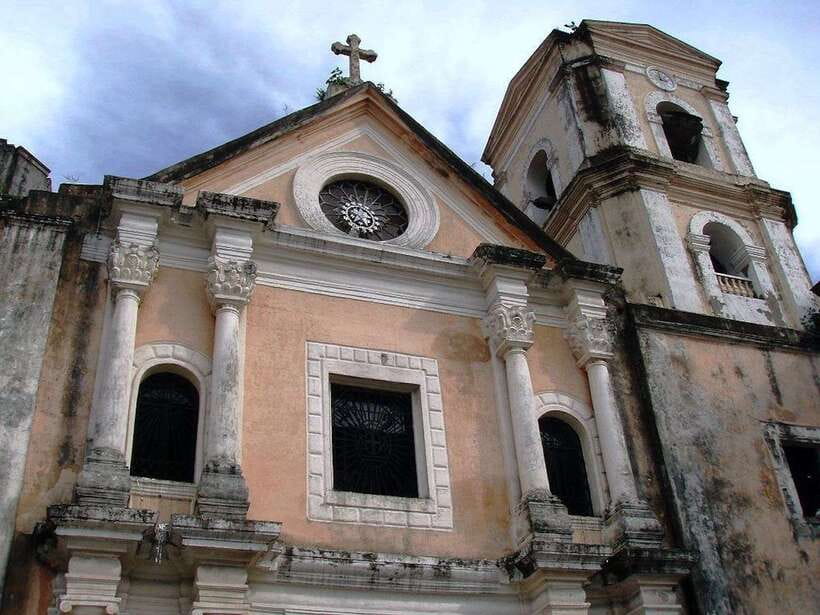
The next stop is Manila Cathedral, described as the seat of the Catholic Church in the Philippines. Its place in the route reinforces the importance of religion to the country’s colonial story.
The cathedral is not presented as an isolated church. It helps you see how Catholic institutions became part of political and social life. After more than 300 years of Spanish occupation, the influence was lasting, and the tour uses these religious sites to explain that legacy.
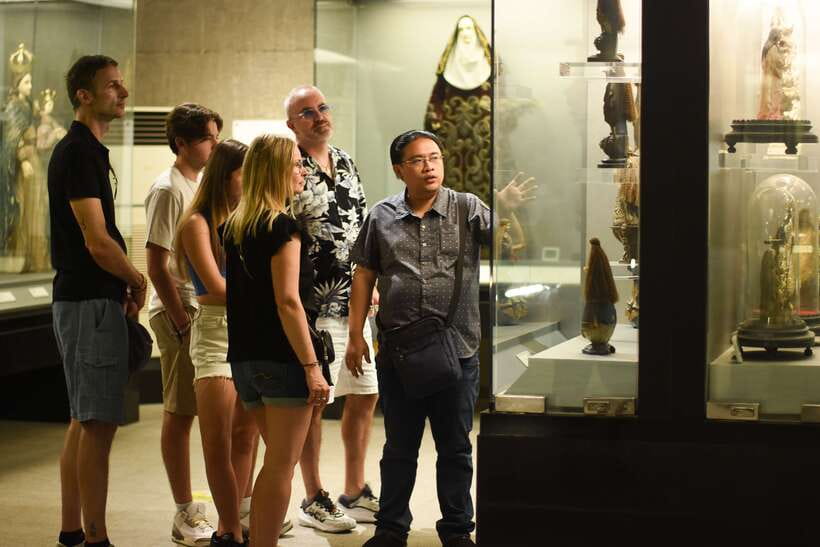
You will visit San Agustin first, then the cathedral later, so the two stops can be compared. San Agustin brings an older stone church and museum experience. The cathedral represents the institutional center of Catholic authority. Together, they give the religious part of the tour more depth than either building could offer alone.
This is another sightseeing stop rather than a lengthy interior exploration. That distinction matters if your main goal is church architecture. You will gain context and see a major landmark, but the schedule is designed to cover the entire route, not to spend an hour at every building.
The overall theme is clear: Intramuros was not only a military enclosure. It was also a center of faith, education, administration, and elite life. The cathedral helps complete that picture.
Fort Santiago closes the story with independence
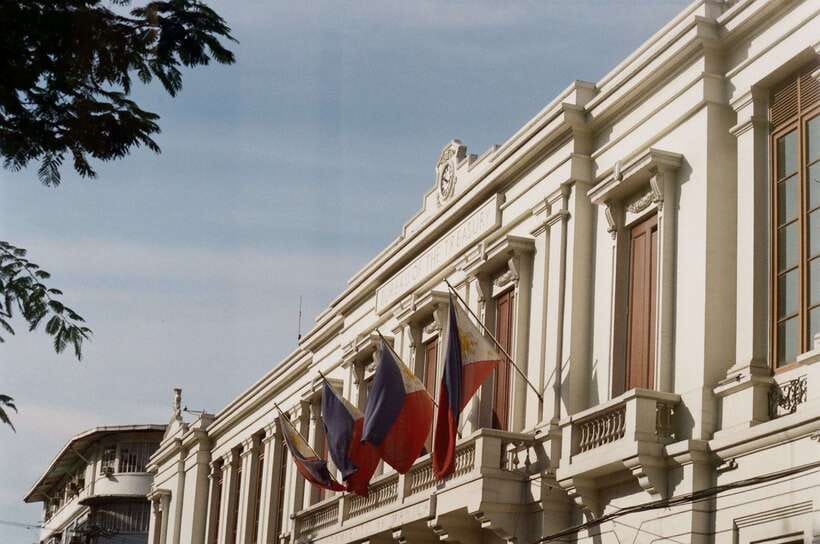
Fort Santiago is the final stop and the strongest place to discuss military rule and the Filipino struggle for independence. The old garrison gives the tour a direct connection to soldiers, imprisonment, resistance, and political power.
Because the visit is guided and admission is included, you get more than an exterior look. The guide explains how the fort fits into the long story of Spanish occupation and the later fight for Filipino independence. That makes it a fitting endpoint: the tour begins with the institution that helped shape colonial society and ends with resistance to foreign control.
Fort Santiago also gives the three-hour walk a different physical setting. Churches and homes show how people lived. The fort shows how authorities defended and controlled the city. Moving between those places helps you understand the structure of colonial Manila.
The stop is likely to be especially useful for anyone who wants a basic framework for Philippine history. You will not leave with every event or political figure memorized, but you should understand the main arc: Spanish arrival, more than three centuries of occupation, Catholic and cultural influence, war, and the movement toward independence.
Since Fort Santiago is the finish, you do not return to San Agustin Church. Plan your next activity from the fort rather than assuming the tour ends where it began.
What the $55 price really covers
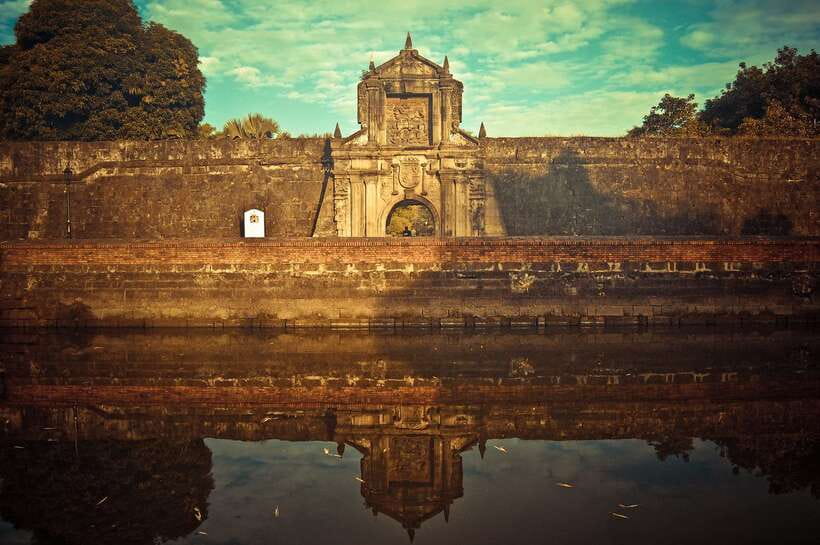
At $55 per person, this is not the cheapest way to walk around Intramuros. The price makes more sense when you count the included admissions to Fort Santiago, San Agustin Church and Museum, and Casa Manila Museum, along with three hours of live guiding.
The main value is structure. You could visit the buildings separately, but you would have to arrange your own route and create the links between colonial religion, elite domestic life, wartime Manila, the cathedral, and independence. Here, those connections are the point of the experience.
One past participant found a guided visit much more worthwhile than going alone. That matches the design of this tour. The buildings are accessible, but the historical meaning is not always obvious from what you see in front of you.
The price is easier to justify if you want a broad introduction on your first visit to Intramuros. It is less compelling if you have already studied Philippine colonial history or plan to spend a full day slowly exploring each museum. The tour is an efficient overview, not a specialist seminar.
The three-hour length also helps with value. It is long enough to cover the core sights but short enough to fit into a larger Manila day. One participant said the tour lasted just under three hours and felt like the right amount of time. That sounds about right for a route with this many stops.
Practical matters that can affect your day
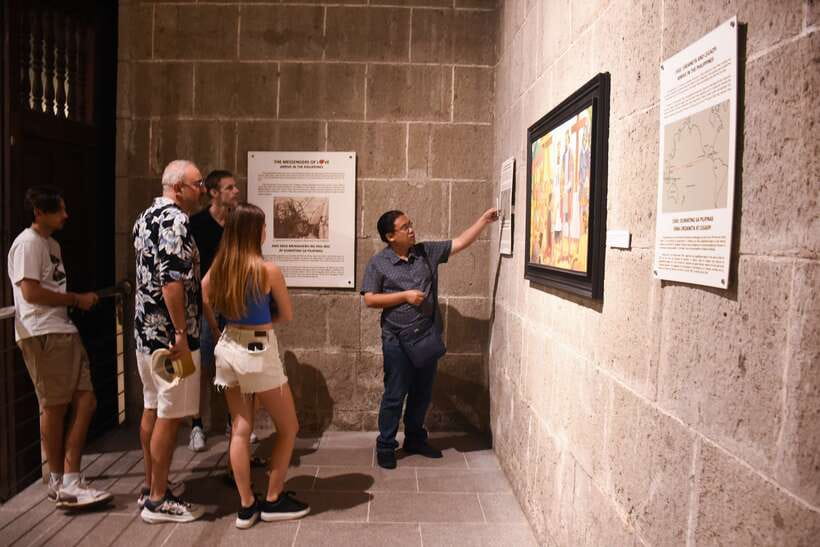
Wear comfortable shoes. The tour includes walking through historic streets and reaching a section of the old wall, so soft footwear will serve you better than fashion shoes.
Modest clothing is required. Short skirts and sleeveless shirts are not allowed, which is especially relevant because the route includes major Catholic sites. Dress in a way that respects the churches and avoids a problem at the meeting point.
The route is not suitable for wheelchair users or people with mobility impairments. That is an important limitation, not a minor footnote. Historic areas can include uneven surfaces, narrow passages, and access challenges, and this experience is built around walking.
Weather matters. If poor weather forces cancellation, you can take another date or receive a full refund. The activity also allows cancellation up to 24 hours before the start for a full refund, and you can reserve now and pay later.
The listed location information deserves a quick check. The tour route, meeting point, and finish are all in Intramuros, Manila, while the supplied location field identifies Nueva Vizcaya. Confirm the exact booking details before you go so you are not planning around the wrong province.
Guiding is available in English and Tagalog. If you want the fullest benefit from the historical explanations, choose the language in which you can comfortably follow a fast-moving discussion.
Who will enjoy this Intramuros walk most?
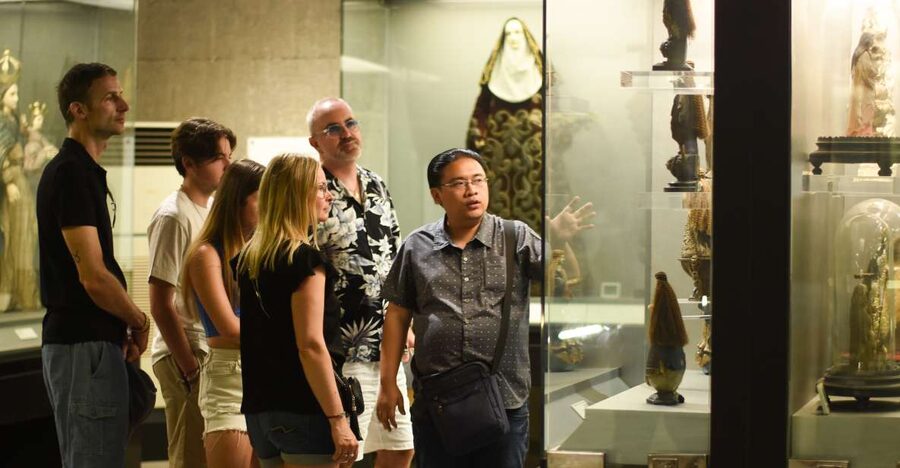
I would recommend this tour to a first-time Manila visitor who wants a solid historical foundation without spending an entire day in museums. It also suits people who prefer a guide to explain the meaning behind buildings instead of simply collecting photographs.
You will get the most from it if you enjoy seeing history through different settings. San Agustin gives you religious artifacts, Casa Manila gives you household life, the wall gives you military geography, Memorare Manila 1945 addresses war, the cathedral shows Catholic authority, and Fort Santiago brings in independence.
Families with older children may also find the route useful, especially if the children can manage three hours of walking and listening. The mix of churches, rooms, walls, memorials, and a fort is more varied than a tour made up of similar buildings.
I would hesitate to recommend it to anyone seeking a slow architectural study. The schedule is full, and the group moves through several sites. You may get a good explanation at each stop, but you will not have unlimited time to linger.
The guide is also part of the equation. Jerome was praised for being friendly, informed, and flexible, and another guide was described as funny and engaging. One day had a small problem when a Marian parade changed the usual situation and created some confusion, though the guide was still considered well informed. Events around Intramuros can affect the route, so a little flexibility helps.
Should you book this Intramuros tour?
Book it if you want the major Intramuros sights arranged into one readable story. The best reasons are the included admissions, the manageable three-hour length, the small group cap, and the mix of colonial, religious, wartime, and independence history.
Skip it if you need step-free access, dislike walking, or want to study one site at length. You should also check the location details carefully because the route is in Intramuros, Manila, despite the separate Nueva Vizcaya location entry.
For most first-time visitors who want context rather than a quick walk past old buildings, I think the $55 cost is fair. Wear sensible shoes, dress modestly, arrive at the San Agustin Museum lobby, and come ready to listen. Intramuros makes far more sense when somebody helps you connect its walls, churches, homes, and memorials.
FAQ
Where does the tour begin?
The tour begins in the lobby of the San Agustin Church Museum.
Where does the tour finish?
The tour finishes at Fort Santiago.
How long does the walking tour last?
The scheduled duration is three hours. One participant said the tour lasted just under three hours and found that length ideal.
What languages does the guide speak?
The live guide speaks English and Tagalog.
Are entrance fees included?
Yes. Admission to Fort Santiago, San Agustin Church and Museum, and Casa Manila Museum is included.
What should I wear and bring?
Bring comfortable shoes. Short skirts and sleeveless shirts are not allowed, so modest clothing is required.
Is the tour suitable for wheelchair users?
No. The activity is not suitable for wheelchair users or people with mobility impairments.
More Walking Tours in Manila
- Manila: Street Food and Drinks Walking Tour with Tastings
★ 4.8 · 114 reviews - Viva Old Manila: Intramuros Walking Tour
★ 4.9 · 104 reviews - Manila’s Walled City: Intramuros Walking Tour
★ 5.0 · 82 reviews - Manila: Sightseeing and Food Walking Tour with Tastings
★ 4.7 · 68 reviews
Just added in Manila
- Underground River with Lunch★ 3.6 · 5 reviews
- Manila Night market and Street Food Tour★ 5.0 · 2 reviews
- Cruise Shore Excursion of Taal Volcano with Lunch★ 4.5 · 4 reviews
- Unforgettable Manila Fishing Village Day Excursion 2024★ 5.0 · 4 reviews
- Ultimate 8-Day Palawan Island Tour Package from Manila City★ 5.0 · 1 review
- Tagaytay + Hidden Valley Springs: A Scenic Escape w/ Transfers★ 4.0 · 4 reviews
- Tagaytay Day Tour sightseeing with Panoramic Taal volcano view★ 5.0 · 6 reviews
- 3 Days Private Tour in Banaue Ifugao visiting Batad Rice Terraces★ 3.5 · 3 reviews
Intramuros Walks, compared.

Intramuros, Manila: Historical Bamboo Bike Tour
Read our review →
Experience Intramuros with Bamboo Bicycle – Ecotours
Read our review →Intramuros, Chinatown, and Old Manila Half-Day Tour
Read our review →
Manila Old and New: Sightseeing Tour Including Intramuros and Fort Santiago
Read our review →
Explore Intramuros: Introduction to Philippine History
Read our review →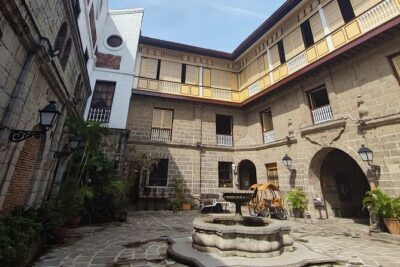
Experience Manila’s Heritage: Intramuros & More in Half a Day!
Read our review →Browse the lists this tour appears in