Reviewed · FOOD & DRINK
Manila Night Market and Street Food Experience
Manila comes alive after sunset. This two-hour evening outing links Divisoria Market, Binondo’s Chinese-Filipino streets, Jones Bridge, and the Pasig River in a compact introduction to old Manila. I like the mix of food, local commerce, and city history, and I also like the tuk-tuk ride, which saves time between stops. The main consideration is the price: at $65 per person, this is not a cheap food walk, especially since the tour details do not say that food is included.
You begin at 6:00 pm in Tondo and finish near SM Manila in front of Manila City Hall. A licensed guide leads the way, and the group is limited to 12 people. That small size should make it easier to hear the guide and ask questions, though two hours gives you only a quick taste of each district.
In This Review
- Key points before you book
- Starting in Divisoria at 6:00 pm
- Riding toward Binondo Church
- Walking Ongpin Street for Chinese street food
- Crossing Jones Bridge after dark
- Ending beside the Pasig River Esplanade
- Is $65 a fair price for two hours?
- Who will enjoy this Manila night tour?
- Booking details worth knowing
- Should you book the Divisoria and Binondo route?
- FAQ
- Where does the Manila Night Market and Street Food Experience begin?
- What time does the tour start?
- Where does the tour end?
- How long does the experience last?
- What transportation is included?
- Is a guide included?
- How many people can join the tour?
- Is food included in the price?
- Is the tour suitable for most people?
- Can I cancel for a full refund?
Key points before you book
- Divisoria after dark: Begin among Manila’s crowded market lanes, where commerce and street life take center stage.
- Binondo Church and Ongpin Street: See the historic church, then explore Chinatown’s food stalls, apothecaries, jewelry shops, and restaurants.
- Chinese-Filipino culture: Binondo was founded in 1594 and remains one of Manila’s strongest links to its Chinese-Filipino past.
- Tuk-tuk transport: The included ride connects the stops without requiring you to arrange transport across central Manila.
- Jones Bridge views: Cross a grand neoclassical bridge for views of the Pasig River and the illuminated city.
- Small evening group: The maximum of 12 people is useful in tight market lanes and along busy streets.
Starting in Divisoria at 6:00 pm
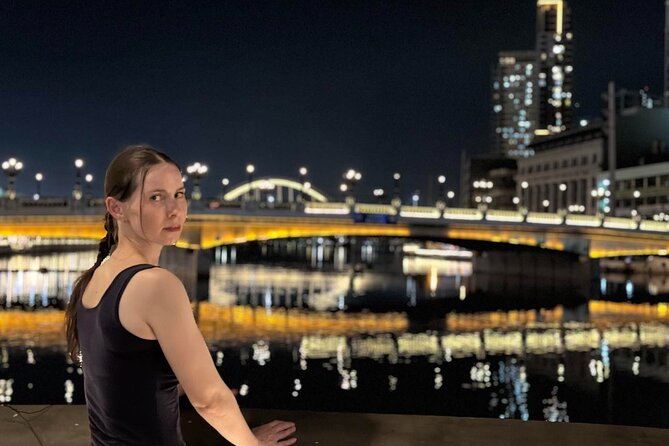
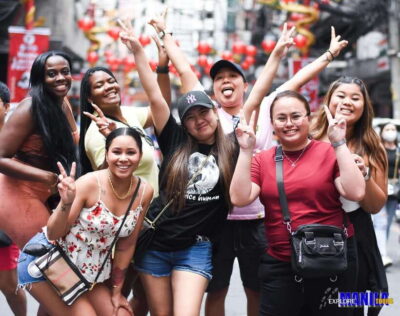
The tour begins in Tondo, at Divisoria Market. This is a practical place to start because Divisoria is less about polished sightseeing and more about the working life of Manila. Stalls, vendors, goods, smells, and narrow streets create a strong first impression.
The market grew into an important trading center during the Spanish colonial period. Chinese merchants, many with roots in Fujian province, sold textiles, spices, ceramics, and imported goods here. They often served as links between Spanish colonists and Filipino communities, helping make Divisoria a major part of Manila’s commerce.
That background gives the market more meaning than a simple shopping stop. You are seeing a district shaped by trade, migration, and contact between cultures. The narrow lanes can feel chaotic, but that is part of the point. This is not a tidy open-air museum. It is a working market with a long commercial past.
You receive about an hour at the first part of the route. That is enough time to get a strong sense of the area, but not enough for a slow, detailed shopping expedition. I would treat this section as an introduction to Manila’s street life rather than a chance to browse every stall.
A guide is especially useful here. Without local context, Divisoria can seem like a wall of signs, people, and merchandise. With explanations about its role in Manila’s economy, the crowded lanes become easier to read. The one published comment about this experience gave particular praise to the guide’s knowledge of the sites and local history, which is important on a route built around districts rather than famous single monuments.
Wear shoes that are comfortable for walking and keep your belongings secure. Those are sensible habits in any crowded market, though the tour information does not provide a detailed packing list. Since the outing starts in the evening, the market should be experienced under night lighting rather than the heat and glare of midday.
More Evening Tours in Manila
- Intramuros Sunset Tours by Bambike
★ 5.0 · 33 reviews - Manila Night Market Experience with Local Guide
★ 5.0 · 10 reviews - Manila Night Market and Food tour experience with Local guide
★ 5.0 · 2 reviews
Riding toward Binondo Church
After Divisoria, you board a tuk-tuk and travel toward Binondo Church. This short ride is one of the useful features of the experience. Manila’s historic districts are close together on a map, but moving between them can be less simple once you add traffic and busy streets.
The tuk-tuk also changes the pace. You have time to watch the city pass by instead of walking every stretch. It is not presented as a sightseeing ride with a long commentary, so think of it as practical transport between parts of the evening route.
Binondo Church is an important stop because it reflects the Chinese-Filipino Catholic community. The church combines Spanish and Chinese architectural influences, making it a fitting doorway into Binondo’s layered identity.
The evening setting should give the building a calmer mood than the market. The route description places emphasis on its illuminated appearance and quiet beauty. That contrast matters: Divisoria supplies noise and movement, while the church offers a brief pause before the food and shopping streets of Chinatown.
The itinerary gives Binondo and the later Chinatown portion roughly another hour. The exact time at the church is not specified, so do not expect a long formal visit or an extensive architectural lecture. The value here is the connection between place and community. You are not looking at a church in isolation. You are seeing it in the district where Chinese-Filipino culture has shaped Manila for centuries.
Walking Ongpin Street for Chinese street food
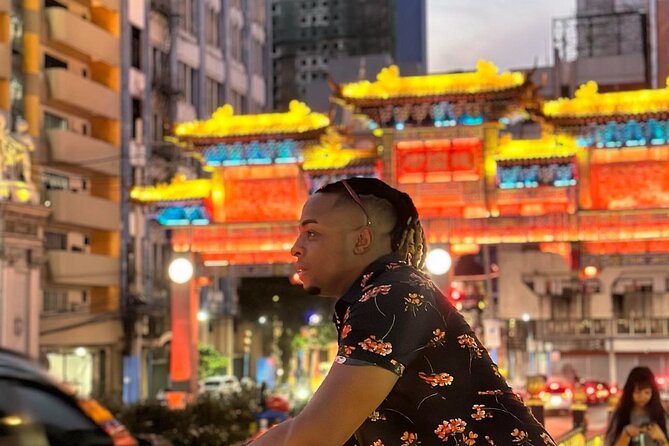
From Binondo Church, the route continues along Ongpin Street, the center of Binondo’s evening activity. Neon signs, food stalls, traditional apothecaries, jewelry shops, and Chinese restaurants give this part of the tour a different feel from Divisoria.
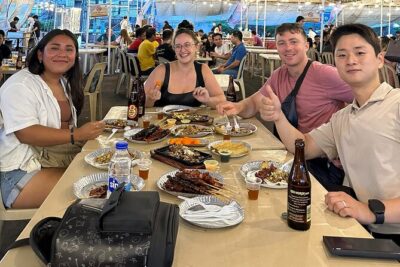
This is where the experience becomes most clearly a food tour. You can try Chinese street food and local Chinatown specialties such as dim sum and hopia. The supplied information does not list specific dishes, serving sizes, or a food allowance, so you should budget separately for anything you want to eat.
That point matters when judging the $65 price. The fee covers a licensed guide and tuk-tuk transportation, but the information does not confirm that snacks or meals are included. If you are expecting a full dinner, ask the operator before booking. If you see the food stops as guided access to a historic district, cultural explanation, and transport, the cost may make more sense.
I like that the food is tied to the neighborhood rather than separated from it. You are not simply seated in a restaurant and handed a menu. You are walking through the streets where traditional shops and restaurants operate side by side. The smells and visual clutter are part of the experience, and one published response praised the range of tastes, smells, and impressions.
Ongpin can also be the most demanding section for visitors who prefer quiet or highly organized sightseeing. Shops and food stalls create a strong sensory load, and the two-hour schedule means the walk will move at a steady pace. Keep the group in sight, listen for the guide’s instructions, and avoid assuming that every stop will allow plenty of time to order and eat.
The maximum group size is 12. That is a helpful limit in tight lanes, where a much larger group would be harder to keep together. It also gives you a better chance to ask about the food, the shops, and the Chinese-Filipino traditions connected to the area.
Crossing Jones Bridge after dark
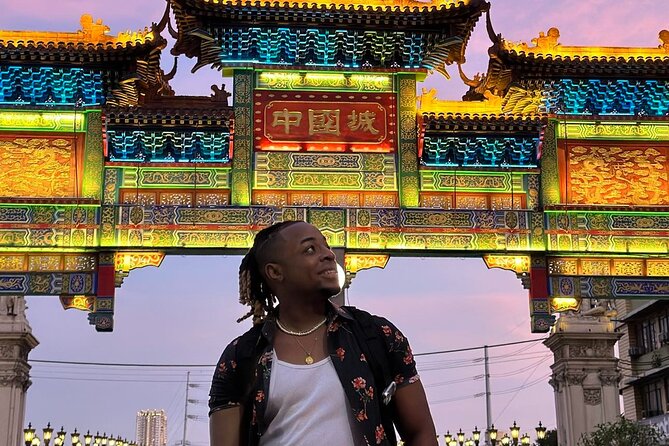
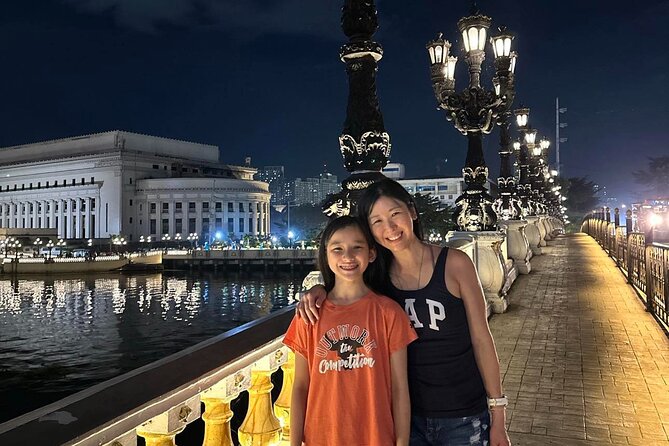
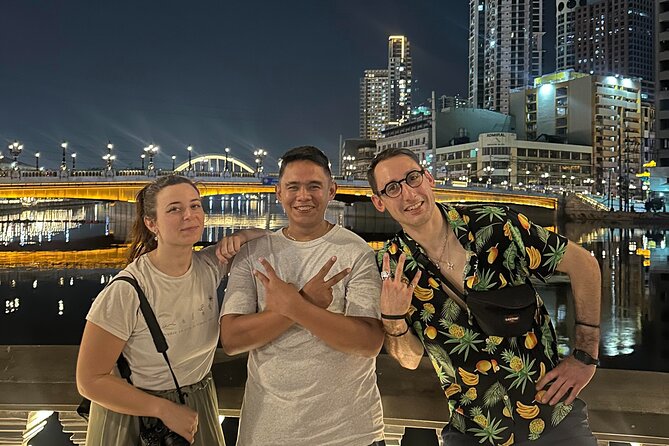
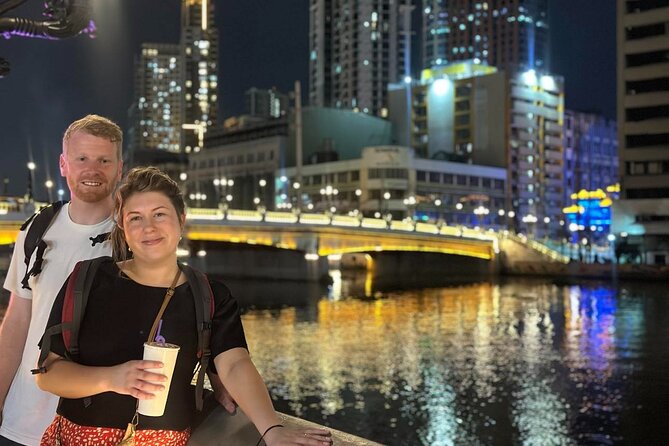
The route then heads across Jones Bridge. Built in a neoclassical style, the bridge provides one of the clearest visual changes of the evening. After the close quarters of the market and Chinatown, you get open views of Manila’s skyline and the Pasig River.
This is the natural photo stop. The city lights, bridge design, and river create a broad nighttime view that you do not get in the market lanes. The stop is also a useful reminder that Manila is not just a collection of busy streets. Its rivers and civic buildings help explain the shape of the city.
The lighting will depend on conditions, and the experience requires good weather. If rain or poor weather forces a cancellation, the operator offers another date or a full refund. That policy is reassuring, but it also tells you that the outdoor portions are central to the experience, not optional extras.
Do not expect a long photography session. The whole tour lasts about two hours, and the bridge is one part of a compact route. You will have time to take in the view and capture a few photographs, but the guide must keep the group moving toward the final stop.
More Food Tours in Manila
- Makati Street Food Experience end with a Rooftop Bar
★ 5.0 · 33 reviews - Intramuros & Chinatown Manila Tour – Walking, Food & Culture
★ 4.5 · 32 reviews - Makati Street Food tour Experience
★ 5.0 · 16 reviews - Binondo Bites Manila Food Tour with 15+ Tastings
★ 5.0 · 5 reviews
Ending beside the Pasig River Esplanade
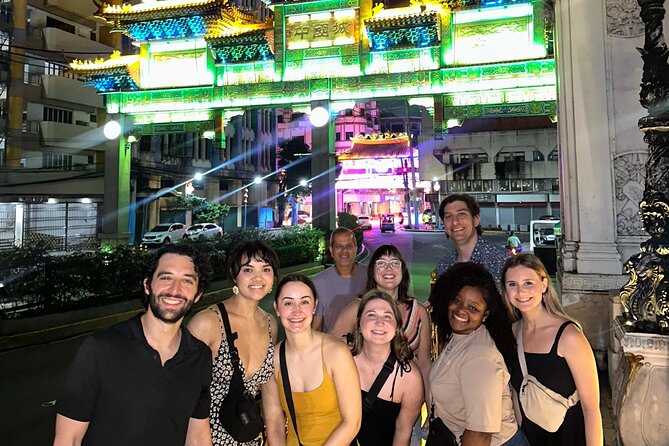
The evening ends with a ride along the Pasig River Esplanade and a drop-off near SM Manila, in front of Manila City Hall. The final stretch is meant to be quieter than the first half. After the market, church, Chinatown streets, and bridge, the riverside offers a slower finish.
The Esplanade gives you a chance to look back on the route. You have moved through a market shaped by trade, a church linked to Chinese-Filipino Catholic life, a Chinatown food street, and a major bridge over the river. That sequence gives the experience a clear story, even though the schedule is short.
The endpoint is useful if you are continuing around central Manila, but it is not the same as returning to Tondo. The tour begins in Tondo and ends by Manila City Hall, so you should plan your next trip from the endpoint rather than assuming you will be taken back to your starting place.
The supplied details describe the end as SM Manila in front of Manila City Hall. The formal address is Padre Burgos Avenue in Ermita. Since the wording gives both SM Manila and Manila City Hall, confirm the precise meeting and drop-off spot if you need to coordinate another booking or a pickup.
Is $65 a fair price for two hours?
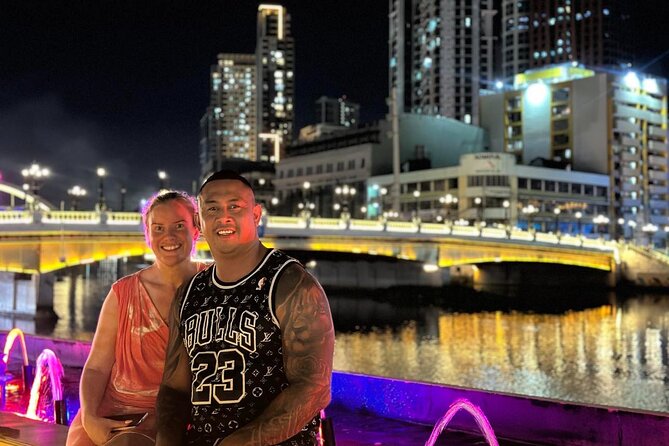
At $65 per person, this is a premium price for a two-hour outing in Manila. You are paying for more than food samples. The package includes a licensed guide, tuk-tuk transport, a small group capped at 12, and a route that combines several districts and landmarks.
The value depends on what you want from an evening. If you are comfortable finding Binondo, Ongpin Street, and Jones Bridge on your own, you could likely spend less by arranging your own transport and buying food directly. The tour makes a stronger case for itself if you want someone to explain the cultural links between the places and handle the movement between them.
The food cost is the main unknown. The route says you can enjoy dim sum, hopia, and other Chinese street food, but it does not state that tastings are included. Ask before booking if the price includes any food, or plan to pay for your own purchases.
The group limit helps protect the experience from becoming unwieldy. So does the fixed route, which lets you see several parts of central Manila in a short evening. Still, two hours is brief. You receive an overview, not a long food crawl or a detailed walking tour of every historic site.
Who will enjoy this Manila night tour?
I would recommend it to a first-time visitor who wants a quick, guided introduction to Manila’s older commercial districts. It suits you if street food, local markets, Chinese-Filipino culture, and nighttime city views sound more appealing than a formal museum visit.
It is also a good match if you want transportation built into the evening. The tuk-tuk removes some of the work of getting between Tondo, Binondo, Jones Bridge, and Manila City Hall.
You may want a different experience if you need a substantial meal, prefer a slow pace, or want extensive time for shopping and photography. The route is compact and active, with several stops packed into two hours.
The one available rating was five out of five, and the praise focused on the guide’s command of the sites and history. That is the feature I would value most here. Markets and food streets are easy to visit on your own, but a good guide can show you how they fit into Manila’s past and present.
Booking details worth knowing
Confirmation is provided when you book, and the experience accepts mobile tickets. It runs near public transportation, starts at 6:00 pm, and is described as suitable for most people. The tour has a maximum of 12 participants.
Free cancellation is available if you cancel at least 24 hours before the start time. Cancellations made less than 24 hours before the 6:00 pm departure are not refunded, and late changes are not accepted. The cut-off follows local Manila time.
Because the tour depends on good weather, poor conditions can lead to a date change or full refund. If you are building a tight itinerary around this evening, leave some flexibility.
Should you book the Divisoria and Binondo route?
Book this tour if you want a guided snapshot of Manila after dark, with market life, Chinese-Filipino culture, street food, bridge views, and river scenery in one short outing. The licensed guide and tuk-tuk are the strongest practical benefits, and the small group should make the crowded sections easier to manage.
Skip it if $65 feels high for two hours or if you want food included without having to ask. You can also choose another option if you prefer a slower, longer meal-focused tour.
For the right visitor, this is a lively introduction rather than a full exploration. Go for the guide’s local context, the contrast between Divisoria and Binondo, and the shift from crowded lanes to the lit Pasig River. Plan to buy any food separately, arrive ready to walk, and remember that the night ends at Manila City Hall, not back in Tondo.
FAQ
Where does the Manila Night Market and Street Food Experience begin?
It begins in Tondo, Manila, Metro Manila, Philippines.
What time does the tour start?
The tour starts at 6:00 pm.
Where does the tour end?
It ends at SM Manila in front of Manila City Hall, on Padre Burgos Avenue in Ermita, Manila.
How long does the experience last?
The tour lasts approximately two hours.
What transportation is included?
A tuk-tuk is included for transport between parts of the route.
Is a guide included?
Yes. A licensed guide is included.
How many people can join the tour?
The maximum group size is 12 people.
Is food included in the price?
The provided details do not confirm that food is included. You can enjoy Chinese street food, dim sum, and hopia along Ongpin Street, but ask the operator about food costs before booking.
Is the tour suitable for most people?
Yes. The information says most people can participate, and the experience is near public transportation.
Can I cancel for a full refund?
Yes, if you cancel at least 24 hours before the experience start time. Cancellations made less than 24 hours before the start time are not refunded. If poor weather causes the operator to cancel, you can receive a different date or a full refund.
More Shopping Tours in Manila
- Private Market Tour and Filipino Cooking Class in Manila with Isi
★ 4.5 · 15 reviews - Manila: Guided Night Market Experience
★ 5.0 · 54 reviews - Manila’s Culinary Expedition: The Ultimate Food and Market Tour
★ 5.0 · 42 reviews - Explore Manila Slums and Hidden Market
★ 4.9 · 41 reviews
More Places to Eat in Manila
- Cultural Dance Show with Dinner in Manila
★ 4.5 · 28 reviews - Makati: Street Food Experience with a Local Guide
★ 4.6 · 14 reviews - Cultural Dinner and Show in Manila
★ 5.0 · 4 reviews - Makati Street food walking tour with Dinner
★ 5.0 · 3 reviews
Just added in Luzon
- Private Filipino Cooking Class in the Heart of Manila,Makati City★ 5.0 · 5 reviews
- Villa Escudero Tour with Lunch From Manila (SHARED)★ 5.0 · 5 reviews
- VILLA ESCUDERO DAY TOUR with Carabao Cart Ride and Bamboo from Manila★ 4.0 · 6 reviews
- Villa Escudero Coconut Plantation Day Trip from Manila★ 3.5 · 9 reviews
- Skip the Line: Villa Escudero Plantation & Resort Day Pass Ticket★ 4.5 · 11 reviews
- Tagaytay Day Tour From Manila★ 5.0 · 1 review
- The Jeepney & Tuk Tuk Adventure ride with Local Guide★ 4.5 · 4 reviews
- Pagsanjan Falls Adventure with Lunch and Rapids Experience★ 4.5 · 3 reviews
Food & Drink, compared.
Boracay Sunset Cruise with Party DJ & Unlimited Food and Drinks
Read our review →
Manila Food Tour: Explore World’s Oldest Chinatown
Read our review →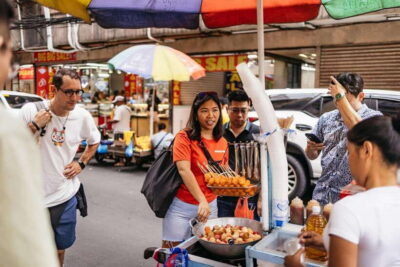
Street Food and Drinks Walking Tour with Tastings
Read our review →
The Original Cebu City Historical and Food Walking Tour
Read our review →
Manila’s Culinary Expedition: The Ultimate Food and Market Tour
Read our review →