
Reviewed · INTRAMUROS WALKS
A Step Back in Time: Intramuros Walking Tour
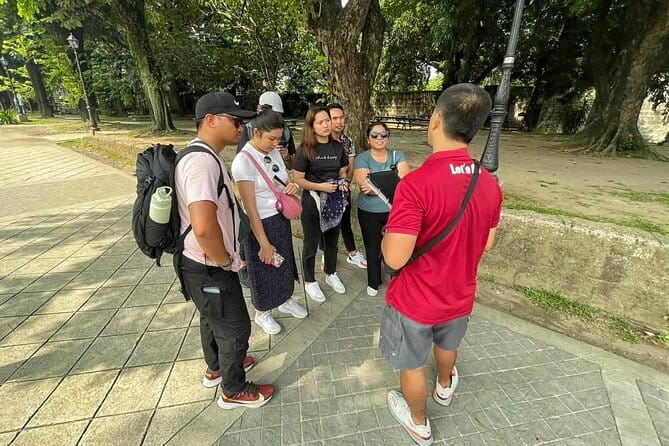
History feels close here. This three-hour walk through Intramuros brings together Fort Santiago, the Rizal Shrine, Manila Cathedral, San Agustin Church, and Casa Manila in one well-planned morning. I like the focus on major sites, and I like that a Department of Tourism-accredited guide supplies the stories that turn old walls into meaningful places.
The guide Russell Leyco is praised for his humor, empathy, and strong storytelling. I also appreciate the small group limit of 30 people, which should make it easier to hear the guide and ask questions. The main drawback is the pace: six stops in three hours leaves limited time for lingering, taking photographs, or exploring each museum at length.
- Fort Santiago opens the tour with Manila’s strongest historical setting: You’ll see the dungeon, the Rizal Shrine, and other attractions within the old fort.
- The Rizal Shrine adds a personal side to Philippine history: Personal items, photographs, and artwork help explain José Rizal’s life and final days.
- San Agustin Church is the architectural highlight: This UNESCO World Heritage church offers a fine look at Manila’s Spanish-era religious art and design.
- The route covers both famous and sobering sites: The Memorare Manila Monument introduces the Japanese invasion and Manila Massacre.
- Casa Manila ends the morning indoors: The museum recreates an earlier Manila home and gives the tour a quieter final chapter.
- The $25 price includes admissions and a guide: You pay separately for food, drinks, and your own transport.
In This Review
- Why Intramuros Works Best With a Guide
- Starting at Fort Santiago at 9:00 a.m.
- Twenty Minutes With José Rizal
- Manila Cathedral and the Catholic Story
- Remembering the Manila Massacre
- San Agustin Church, the Morning’s Visual Highlight
- Casa Manila Brings the Tour Indoors
- What the $25 Price Really Covers
- Pace, Group Size, and Practical Comfort
- The Guide’s Storytelling Is the Main Strength
- Should You Book the Intramuros Walking Tour?
- FAQ
- How long does the Intramuros Walking Tour last?
- What time does the tour begin?
- Where does the tour begin?
- Where does the tour end?
- Are admission fees included?
- Is transportation included?
- Are food and drinks included?
- How many people can join the tour?
- Can I cancel for a full refund?
Why Intramuros Works Best With a Guide
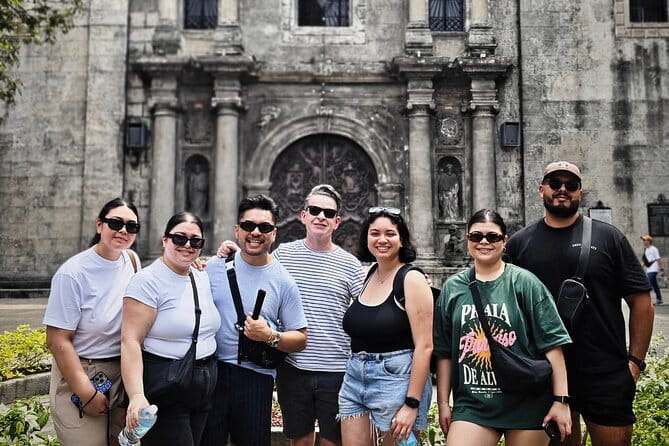
Intramuros is compact enough to walk, yet its story is not simple. Spanish rule, the Catholic Church, Philippine independence, the Japanese invasion, and the destruction of Manila all meet within a few streets. Without context, you may see attractive stone buildings and fortified walls but miss why they matter.
This tour gives you a clear route through that story. It does not try to cover every corner of Intramuros. Instead, it links six important places, moving from Fort Santiago to Casa Manila while shifting between political history, religion, domestic life, and wartime memory.
I like that balance. You are not spending three hours on monuments alone. You get a fort, a shrine, a cathedral, a memorial, a church, and a house museum. Each stop gives you a different way to understand the old walled city.
The guide matters here. Russell Leyco is described as lively, considerate, and good at making serious subjects approachable. One account also identifies the guide as Sir Rasa, so guide assignment may vary. If Russell is leading your group, expect plenty of stories, humor, and practical suggestions for the rest of your time in the Philippines.
Starting at Fort Santiago at 9:00 a.m.
The tour begins at United Philippine Lines, One Fort Santiago 1 on Sta. Clara Street. The meeting point is inside the Intramuros area, and the tour starts at 9:00 a.m. Arrive ready to walk, since the route is conducted on foot and private transport is not included.
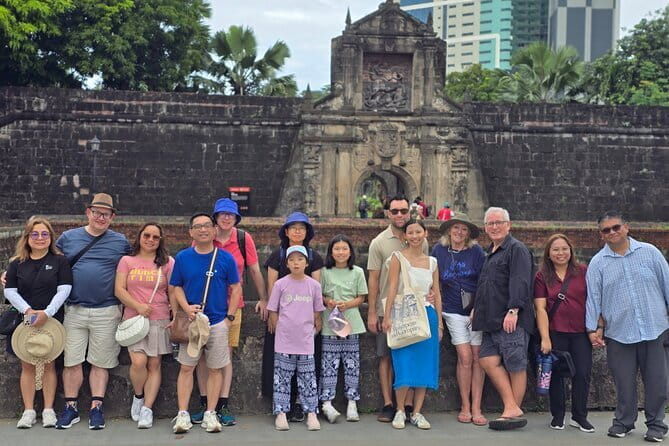
Fort Santiago receives the largest share of the morning, about one hour. That is sensible. It is one of Intramuros’ most important historic sites, and it offers enough to keep the opening section from feeling rushed.
Inside, the guide introduces the fort’s role in Manila’s past and takes you to attractions including the dungeon and a Lego museum. The mix may sound unusual, but it gives the visit some variety. You can move from heavy historical subjects to a more accessible visual display without spending the whole hour reading plaques.
The fort is also the right place to begin because it gives you a physical sense of Intramuros as a fortified city. Look closely at the masonry, gateways, and enclosed spaces. The value is not only in the individual displays. It is in seeing how power, defense, and government once occupied this part of Manila.
Your guide’s narration will shape this stop. Ask questions if you want more detail about the fort’s different uses. A group of up to 30 people is not tiny, so staying close and speaking up will help you get the most from the visit.
More Intramuros walks:
- Manila Old and New: Sightseeing Tour Including Intramuros and Fort Santiago
★ 4.5 · 377 reviews - Manila’s Walled City: Intramuros Walking Tour
★ 5.0 · 82 reviews - Express Bamboo Bike Tour inside Intramuros
★ 4.5 · 66 reviews
Twenty Minutes With José Rizal
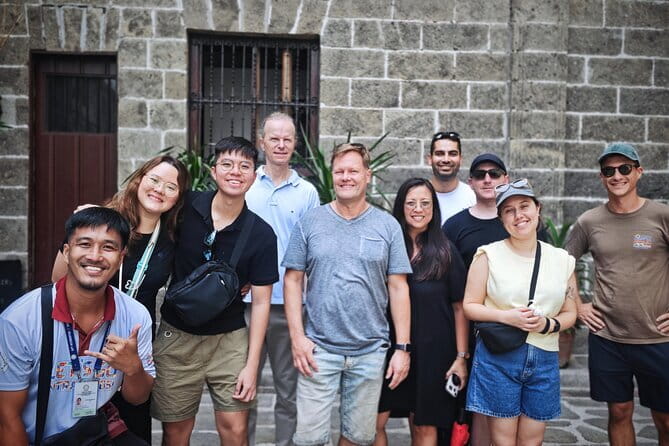
The Rizal Shrine is inside Fort Santiago, so it fits naturally into the opening stop. The separate 20-minute visit focuses on Dr. José Rizal, the Philippines’ national hero.
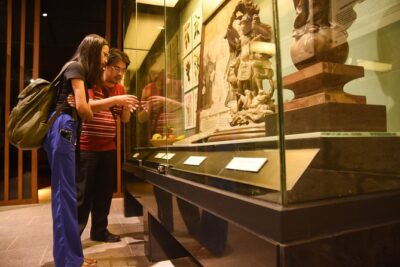
The museum presents personal belongings, photographs, and artwork connected with Rizal’s life, writing, and role in the struggle for independence. It also explains his time at Fort Santiago before his execution and the effect his death had on the Philippine revolution.
This is one of the most useful stops for anyone arriving with little background. Instead of meeting Rizal only as a name on a monument, you see the person through objects and images. The guide can then connect those personal details to the wider political story.
The time allowance is short but workable for an introduction. You probably will not study every display in detail. If Rizal’s life is a main reason for your visit, you may want to return later with more time. For a first visit, though, the shrine gives the morning an important human focus.
I especially like the way this stop follows Fort Santiago. The fort supplies the setting, and the shrine explains how one individual became tied to the country’s fight for independence.
Manila Cathedral and the Catholic Story
After Fort Santiago, the group spends about 20 minutes at Manila Cathedral. The visit focuses on the Philippines’ mother church and its place in the country’s religious life.
You should expect a guided introduction rather than a long independent museum visit. The guide’s explanation is the main reason to include the cathedral. It helps you understand why this church matters beyond its appearance and location.
The cathedral also changes the mood of the walk. Fort Santiago and the Rizal Shrine center on military power and political change. Here, the focus shifts to faith, worship, and the Catholic influence that has shaped Philippine culture.
Twenty minutes is enough to hear the main points and look around, but not enough for a slow architectural study. Keep your expectations practical. This is one chapter in a larger route, not a full church tour.
Remembering the Manila Massacre
The Memorare Manila Monument receives about 15 minutes. It is the shortest stop, but it deals with some of the most painful material on the route: the Japanese invasion and the Manila Massacre.
This pause gives the tour a needed wartime dimension. Intramuros is often presented through Spanish walls and colonial buildings, yet Manila’s twentieth-century destruction is also central to understanding the city. The monument offers a place to hear that story without turning the whole experience into a list of dates.
The subject may be difficult, particularly after the lighter movement through the fort and museum displays. A considerate guide is important here. Russell is praised for presenting history with empathy, and that quality is especially useful at a memorial.
Because the stop lasts only 15 minutes, you will receive an overview rather than a full account of the invasion and massacre. Still, it is an important inclusion. Leaving it out would make the story of Intramuros incomplete.
More Walking Tours in Luzon:
- Manila Intramuros Walking tour with Local Tour Guide
★ 5.0 · 33 reviews - Intramuros & Chinatown Manila Tour – Walking, Food & Culture
★ 4.5 · 32 reviews - Manila: Binondo Walking Tour ( Oldest Chinatown )
★ 5.0 · 30 reviews - Manila Old & New City Walking Tour With A Guide
★ 4.0 · 9 reviews
San Agustin Church, the Morning’s Visual Highlight

The route then reaches San Agustin Church, also known as the Immaculate Conception Parish. You spend about 20 minutes at this UNESCO World Heritage Baroque church.
For many people, this will be the most visually memorable stop. The church represents the Spanish colonial era through its religious design and decoration. The guide’s explanation adds meaning to what you see, helping you notice the church as a historical place rather than simply a photogenic building.
The 20-minute visit is enough to grasp the church’s importance and enjoy its interior, though again, the schedule does not invite a long, quiet inspection. If you care strongly about architecture, art, or church history, note what catches your eye and consider allowing extra time in Intramuros after the tour.
San Agustin also gives the itinerary a strong sense of progression. You have seen defense, imprisonment, national identity, and wartime memory. Now you encounter a building shaped by religious practice and colonial rule.
Casa Manila Brings the Tour Indoors

The walk ends at Casa Manila, within the Plaza San Luis Complex on General Luna Street. This museum recreates an earlier Manila residence and lets you step away from the broad political story for a look at domestic life.
That change is valuable. Large events can make history feel distant. A house museum brings it down to the scale of rooms, furnishings, and daily routines. You get a sense of how Manila’s upper-class home life was presented and organized during the period represented by the museum.
Casa Manila receives about 20 minutes and is also the final point of the tour. The ending makes practical sense because you finish with a self-contained indoor attraction rather than returning to the starting point.
You might want to plan lunch nearby after the tour. One guide suggestion is Barbara’s Heritage Restaurant, which is described as a good way to continue the experience after Casa Manila. Lunch is not included, so treat this as an optional follow-up rather than part of the tour.
What the $25 Price Really Covers
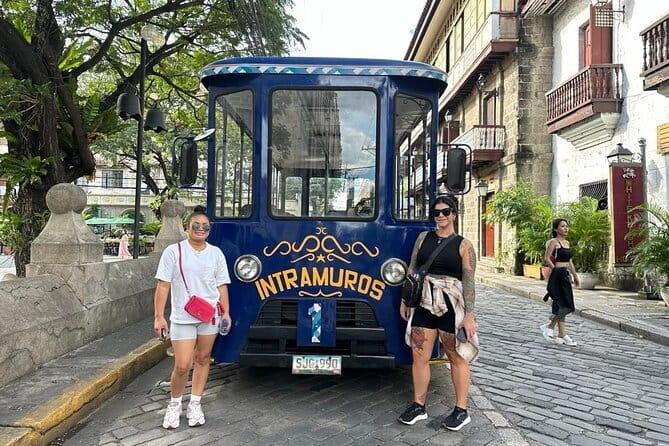
At $25 per person, the tour is reasonably priced for a guided three-hour visit with admissions included. You are paying for a Department of Tourism-accredited guide plus entry fees for Fort Santiago and Casa Manila. Admission to the Rizal Shrine, Manila Cathedral, the Memorare monument, and San Agustin Church is listed as free.
The value comes from the combination. You could walk around Intramuros independently, but you would need to arrange your own route, pay the applicable entrance fees, and supply the historical background yourself. The tour saves planning time and gives the sites a connected story.
It is not an all-inclusive outing. Food and drinks are not included, and there is no hotel pickup or drop-off. You will also handle your own transportation to the starting point and away from Casa Manila.
One account describes water being provided, but this is not listed as an included feature. I would bring your own bottle rather than count on refreshments. That is especially sensible for a three-hour walking tour in Manila.
Pace, Group Size, and Practical Comfort
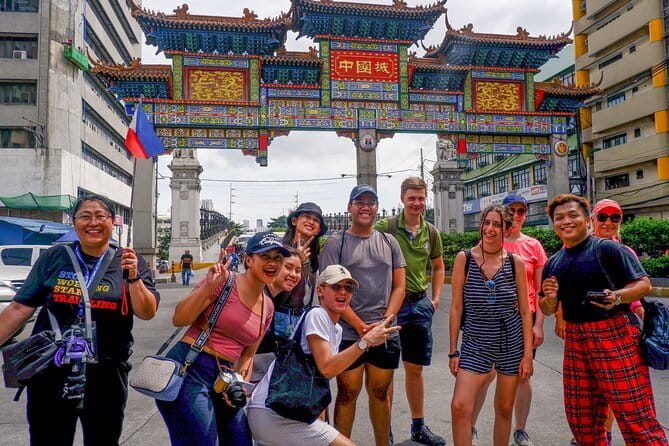
The route lasts approximately three hours and includes six stops. The schedule is clear:
- Fort Santiago: one hour
- Rizal Shrine: 20 minutes
- Manila Cathedral: 20 minutes
- Memorare Manila Monument: 15 minutes
- San Agustin Church: 20 minutes
- Casa Manila: 20 minutes
The numbers add up to two hours and 35 minutes, leaving roughly 25 minutes for walking between stops, gathering the group, and transitions. That is a useful detail. The tour is not six separate museum visits. It is a guided walk with short visits woven into a larger route.
Wear comfortable shoes and expect to stay with the group. The description says most people can participate, and the route is near public transportation. Still, the tour’s walking format means you should be prepared for time on your feet and for outdoor movement between indoor sites.
A maximum of 30 people keeps the experience from becoming a huge procession, but it is still a moderate-sized group. If you prefer a private, slow-paced visit, this may feel too structured. If you want a dependable introduction without arranging every detail yourself, the format makes sense.
The start time is another advantage. Beginning at 9:00 a.m. gives you a full afternoon afterward for lunch, more sightseeing, or a return visit to a place that caught your attention.
The Guide’s Storytelling Is the Main Strength
The strongest feature is not any single building. It is the way the guide connects them.
Russell Leyco is repeatedly praised for being informative, entertaining, and inspiring. The most useful description is that he tells stories in an engaging and sympathetic way. That matters because Intramuros includes difficult subjects, and a good guide needs to handle them without flattening them into slogans.
You can also expect practical help beyond the formal route. Russell is described as offering tips for the rest of a stay in the Philippines. Ask about places to eat or other sights if the timing allows, but remember that the scheduled stops come first.
The experience seems particularly suited to first-time visitors and residents who have not yet learned much about Philippine heritage. It also works for families, couples, and solo visitors who want company and context while walking.
History specialists may find the schedule too brief. The tour gives you a strong framework, but it will not replace a full museum day or a detailed academic visit. Think of it as a well-organized introduction that helps you decide what deserves a closer look later.
Should You Book the Intramuros Walking Tour?
I would book this tour if you want a clear, story-led introduction to Old Manila and prefer seeing the major sites in one morning. The $25 fee is fair because it includes site admissions, a qualified guide, and a route that moves beyond postcard views.
Book it especially if Philippine history is new to you, or if you want help understanding how Fort Santiago, José Rizal, Catholic heritage, wartime loss, and domestic life fit together. Russell’s lively style should suit you if you learn best through stories rather than silent displays.
Choose another option if you want a private tour, long photography breaks, or hours inside each museum. The route is brisk, and the 30-person maximum still allows for a fairly social group experience.
For most curious visitors, this is a smart first morning in Intramuros. Bring water, wear good shoes, arrive before 9:00 a.m., and leave room afterward for lunch at Barbara’s or a slower return to the place that interested you most.
FAQ
How long does the Intramuros Walking Tour last?
The experience lasts approximately three hours.
What time does the tour begin?
The tour starts at 9:00 a.m.
Where does the tour begin?
The meeting point is United Philippine Lines, One Fort Santiago 1, Sta. Clara Street, Intramuros, Manila.
Where does the tour end?
The tour ends at Casa Manila Museum, located in the Plaza San Luis Complex on General Luna Street.
Are admission fees included?
Yes. Admission fees to the included sites are covered. The listed included admissions are for Fort Santiago and Casa Manila, while the Rizal Shrine, Manila Cathedral, Memorare Manila Monument, and San Agustin Church are listed as free.
Is transportation included?
No. Private transportation and hotel pickup or drop-off are not included.
Are food and drinks included?
No. Food and drinks are not included in the tour price.
How many people can join the tour?
The activity has a maximum group size of 30 people.
Can I cancel for a full refund?
Yes. You can cancel at least 24 hours before the local start time for a full refund. Cancellations or changes made less than 24 hours before the start time are not accepted for a refund.
Just added in Luzon
- Private Filipino Cooking Class in the Heart of Manila,Makati City★ 5.0 · 5 reviews
- Villa Escudero Tour with Lunch From Manila (SHARED)★ 5.0 · 5 reviews
- VILLA ESCUDERO DAY TOUR with Carabao Cart Ride and Bamboo from Manila★ 4.0 · 6 reviews
- Villa Escudero Coconut Plantation Day Trip from Manila★ 3.5 · 9 reviews
- Skip the Line: Villa Escudero Plantation & Resort Day Pass Ticket★ 4.5 · 11 reviews
- Tagaytay Day Tour From Manila★ 5.0 · 1 review
- The Jeepney & Tuk Tuk Adventure ride with Local Guide★ 4.5 · 4 reviews
- Pagsanjan Falls Adventure with Lunch and Rapids Experience★ 4.5 · 3 reviews
Intramuros Walks, compared.

Intramuros, Manila: Historical Bamboo Bike Tour
Read our review →
Experience Intramuros with Bamboo Bicycle – Ecotours
Read our review →Intramuros, Chinatown, and Old Manila Half-Day Tour
Read our review →
Manila Old and New: Sightseeing Tour Including Intramuros and Fort Santiago
Read our review →

Explore Intramuros: Introduction to Philippine History
Read our review →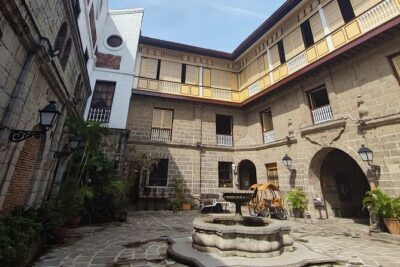
Experience Manila’s Heritage: Intramuros & More in Half a Day!
Read our review →Browse the lists this tour appears in