
Reviewed · WALKING TOURS
Manila: Binondo Chinatown Guided Walking Tour
Come hungry, leave better oriented. This two-hour Binondo tour brings together Chinese-Filipino food and old Manila streets in a way that is easy to appreciate, especially with a local guide who knows where to stop. I like the mix of historic buildings, merchant stories, and small food tastings, and I also like that the group is capped at 10 people.
The main consideration is simple: food is not included in the $50 price, and the tour description refers both to a walking tour and a tuk-tuk adventure. You should confirm the exact meeting and transport format before booking. The walking itself may also be tiring for anyone with mobility or heart concerns.
In This Review
- Key points at a glance
- Why Binondo is worth your time
- Starting through Binondo’s narrow streets
- The old buildings and merchant story
- Eating your way through Chinese-Filipino Binondo
- What two hours really feels like
- The value of the $50 price
- Small-group help, photographs, and local conversation
- Practical details before you book
- Who should book this Binondo tour?
- Should you book it?
- FAQ
- Where does this tour take place?
- How long is the Binondo tour?
- What languages does the guide speak?
- How large is the group?
- Is food included in the $50 price?
- What is included?
- Is this a walking tour or a tuk-tuk tour?
- Is the tour suitable for wheelchair users?
- Can I cancel for a full refund?
Key points at a glance
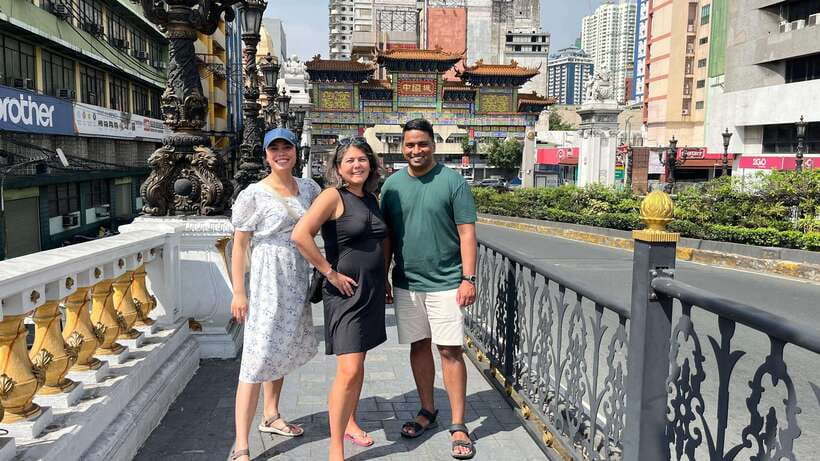
- Binondo combines food and history: You see old buildings, Chinese-Filipino businesses, local markets, and streets that tell the story of Chinese merchants in the Philippines.
- Guide Mari earns repeated praise: She is described as friendly, energetic, helpful, and good at explaining both food and local culture.
- Come with an empty stomach: Suggested stops can include dumplings, soup noodles, dessert, coffee, and cake.
- The small group matters: With no more than 10 people, it is easier to hear the guide and ask questions in crowded streets.
- Budget extra for food: Tastings are not part of the $50 tour fee, though one participant felt buying food locally was still inexpensive for international visitors.
- Allow for a full two hours: The route is packed, and one reported tour ran longer than two hours.
Why Binondo is worth your time
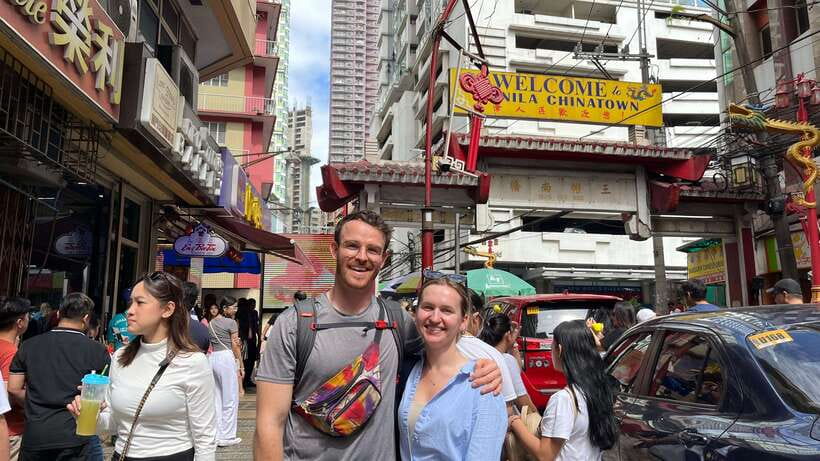
Binondo is Manila’s Chinatown and is widely described as one of the oldest Chinatowns in the world. Its appeal is not based on one grand sight. Instead, you get a close look at streets shaped by trade, migration, religion, family businesses, and food.
That makes this a useful tour early in a Manila visit. You are not just checking off a landmark. You are learning how Chinese merchants settled in the Philippines and how Chinese traditions blended with Filipino daily life. The result is a neighborhood where food, language, architecture, and commerce all sit close together.
I especially like that the tour does not treat Binondo as a backdrop for eating alone. The guide also points out historic landmarks and some of the oldest buildings in the district. You get more from the experience if you are curious about the buildings above the shopfronts, the old streets, and the way Spanish-era architecture appears alongside Chinese commercial traditions.
More Walking Tours in Manila:
- Manila: Street Food and Drinks Walking Tour with Tastings
★ 4.8 · 114 reviews - Viva Old Manila: Intramuros Walking Tour
★ 4.9 · 104 reviews - Manila’s Walled City: Intramuros Walking Tour
★ 5.0 · 82 reviews
Starting through Binondo’s narrow streets
The tour is designed as a small-group experience with a live guide in English or Tagalog. A maximum of 10 participants is a sensible limit for Binondo, where narrow streets, food stalls, shops, and traffic can make a large group awkward.
Expect a walking route through alleys and busy local streets rather than a polished sightseeing circuit. That is part of the point. You are close to the everyday side of Manila, with the sounds, smells, and activity of a working commercial district around you.
The supplied description also presents the experience as a tuk-tuk adventure using eco-friendly three-wheeled vehicles. At the same time, the title and several detailed comments describe a walking and food tour. Because those formats are different, I would confirm whether the tuk-tuk is included, used for part of the route, or simply included in a broader description of the activity. Do not assume the entire two hours will be spent riding.
A bottle of water is included as a welcome drink. That is useful in Manila’s heat, but it is not a substitute for bringing your own water if you are sensitive to hot weather or plan to walk at a steady pace.
The old buildings and merchant story
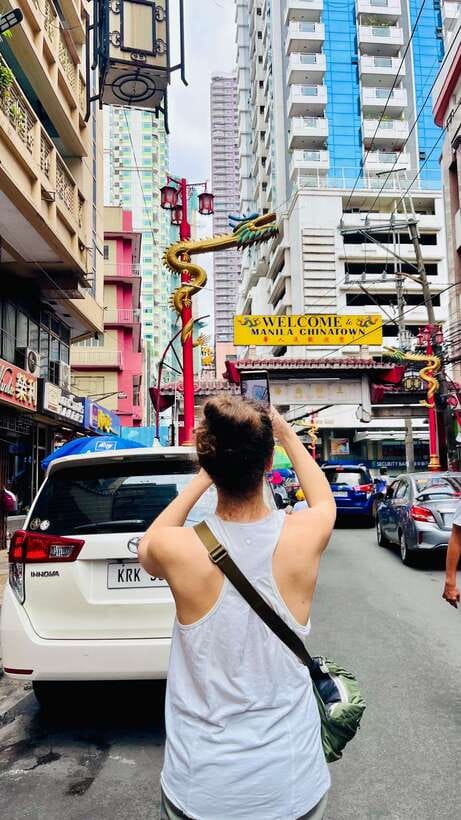
The strongest cultural feature is the guide’s explanation of how Chinese merchants settled in the Philippines. This gives Binondo context beyond the usual food tour. You can begin to understand why Chinese-Filipino business, family, and cuisine have such a visible place in Manila.
The exact buildings on the route are not listed, so I would not book this expecting a fixed set of named monuments. Instead, think of the architecture as part of the street experience. You may see older structures, shopfronts, and buildings that show the district’s layered past.
One participant particularly enjoyed discussing older buildings and Spanish-influenced architecture. That detail matters because Binondo is not culturally separate from the rest of Manila. Chinese traditions, Filipino life, and the city’s Spanish colonial past meet in the same streets.
Your guide makes the difference here. Mari is repeatedly praised for explaining history clearly, answering questions patiently, and keeping the tour enjoyable. She is also described as passionate about her culture. That personal connection can turn an ordinary walk past an old building into a useful story about the people who built, occupied, and used it.
Eating your way through Chinese-Filipino Binondo
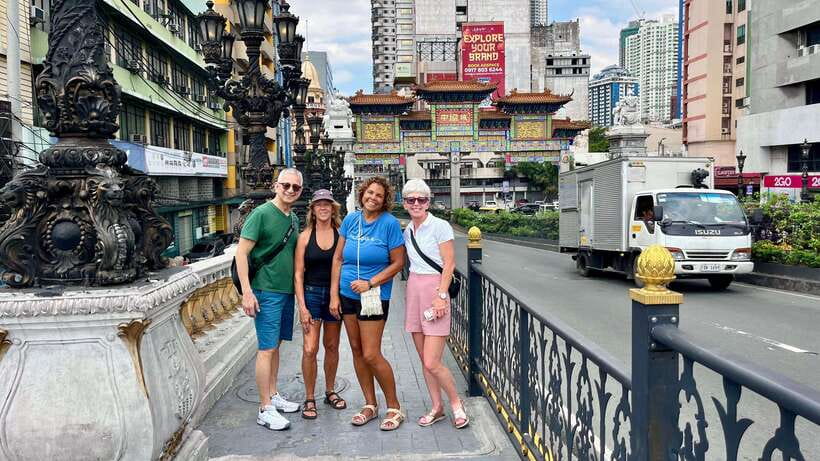
Food is likely the main reason many people book this experience. The route can include dumplings, soup noodles, dessert, and other Chinese-Filipino fare. Some participants also finished with coffee and cake, which gives the meal a relaxed final stop rather than a rushed series of bites.
The food is not included in the tour price. You should bring extra money for anything you want to taste, and you may want to ask the guide at the start how many purchases are expected. Since the tasting plan can affect your budget, this is not an all-inclusive food tour.
That said, the food guidance appears to be one of the best values of the experience. Mari is praised for knowing good places in Binondo, including spots that are difficult to locate on your own. She can also help you choose local dishes that represent the district’s mixed Chinese-Filipino character instead of sending you to generic restaurant food.
I like the fact that the food is not presented as an isolated performance. You eat while learning how the area works. The dumplings, noodles, sweets, coffee, and cake become part of a wider lesson about local taste and daily life.
Come with a very light breakfast or an empty stomach. One account described the route as offering a lot to try, while another called the two hours tightly packed. If you eat a large meal beforehand, you may spend more time watching than tasting.
A few more Manila days worth comparing
- Intramuros, Manila: Historical Bamboo Bike Tour
★ 4.8 · 583 reviews - Experience Intramuros with Bamboo Bicycle – Ecotours
★ 5.0 · 508 reviews - Manila: Intramuros, Chinatown, and Old Manila Half-Day Tour
★ 4.8 · 475 reviews - Manila: Old & New 4-Hour City Tour
★ 4.5 · 458 reviews
What two hours really feels like
Two hours is enough to get a strong introduction, but it is not enough to understand every corner of Binondo. The route appears to move at a good pace, with several food stops and historical explanations packed into a short window.
That is good news if you have limited time in Manila. You can get an organized introduction without giving up half a day. It is also useful if you are nervous about finding the right food stalls or navigating the district alone.
The drawback is that the schedule may feel busy. One participant reported that the tour lasted longer than two hours and felt this was helpful because two hours could be tight. If you have a flight, appointment, or fixed afternoon plan, leave a buffer after the scheduled finish.
The pace can also be adjusted for older participants. One person specifically appreciated the guide’s care with elders and her willingness to match the walking speed to the group. Still, the activity is not suitable for wheelchair users, and people with heart problems are advised not to join.
The value of the $50 price
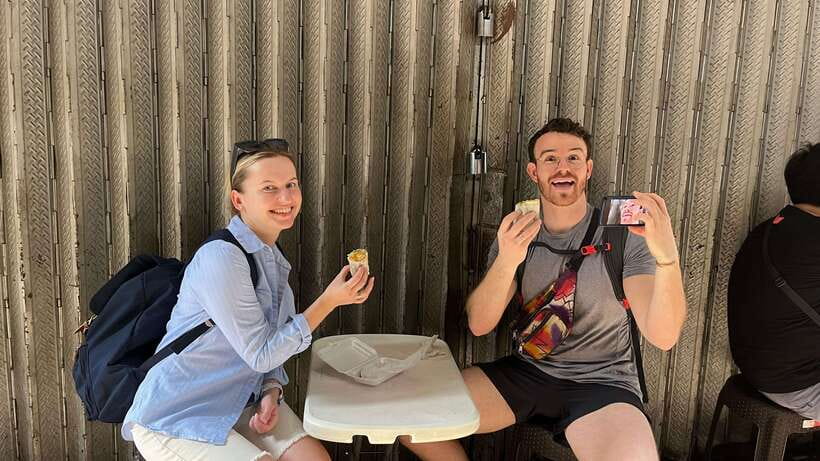
At $50 per person, this is not the cheapest way to walk around Binondo. The fee covers a local guide and a small group, but not food. Its value depends on how much you want help with navigation, local context, and choosing places to eat.
For a first visit, I can see the appeal. You are paying for access to a guide who knows the district, can explain its past, and can lead you to food places you might otherwise miss. The small group also gives the tour a more personal feel than a large coach excursion.
Food costs are extra, but one participant noted that the overall expense still felt reasonable for international visitors. That will depend on how much you order and how many stops you make. If you only want to see the streets and take photographs, the price may feel high. If you plan to eat your way through Binondo anyway, the guide’s help adds more value.
The rating is listed as 5 out of 5 from 27 reviews, and the praise is unusually consistent around the guides’ friendliness, food knowledge, pacing, and ability to explain the area. Mari receives the most detailed comments, while Maria is also praised for being professional, friendly, and a skilled photographer. If your guide is Mari or Maria, expect an attentive and personable approach.
Small-group help, photographs, and local conversation
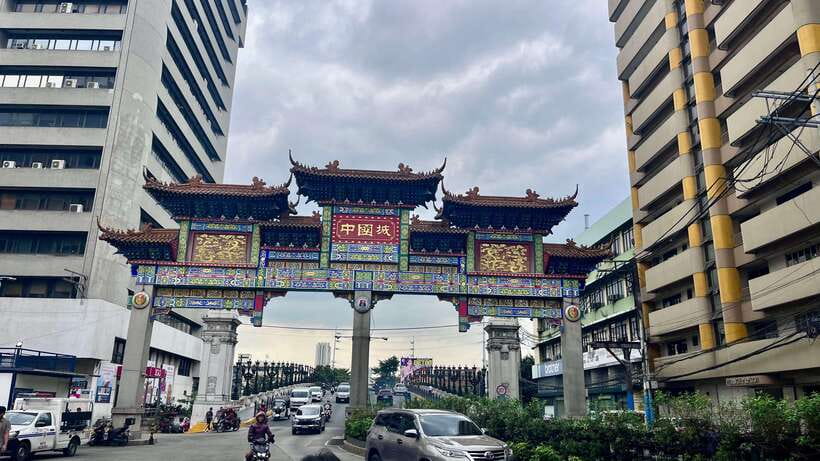
A good neighborhood tour depends heavily on the guide’s personality. Here, the repeated strengths are clear: Mari is cheerful, energetic, patient, and attentive. She is also praised for taking photographs, so you can ask her to capture pictures during the outing.
That small touch can matter if you are traveling alone or want photos that include the whole group. It is not listed as a formal inclusion, so treat it as a helpful extra rather than a guaranteed photography service.
The conversation can also move beyond dates and buildings. One participant enjoyed talking about pop culture and current topics over coffee and cake. That suggests the experience can feel more like time with a local host than a memorized lecture.
Still, guide quality can vary by date. The published languages are English and Tagalog, and the guide’s role is central to the experience. If you need a highly specialized architectural tour or a detailed academic history, this is probably not the right fit. It is better suited to an informal, food-led introduction with useful historical context.
Practical details before you book
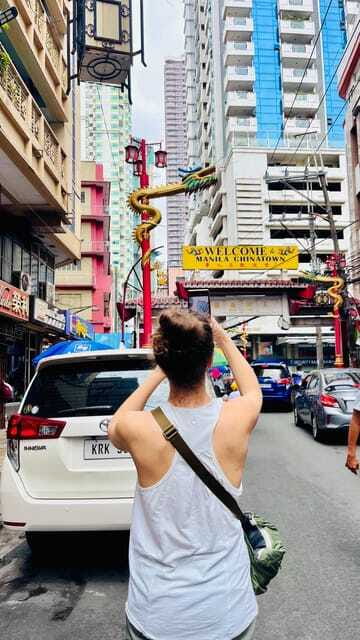
The tour costs $50 per person and lasts two hours. It is offered as a small group with up to 10 participants, and live guiding is available in English and Tagalog.
You receive a local guide and a bottle of water. Food tastings are not included, so plan for additional spending. The tour is not suitable for wheelchair users or people with heart problems, and the walking format may not suit anyone who struggles with heat, crowds, or uneven urban streets.
Cancellation is flexible up to 24 hours before the start for a full refund. You can also reserve now and pay later, which helps if your Manila schedule is still changing.
The location information deserves a check. The experience is clearly presented as a Manila and Binondo activity, but the supplied location field says Nueva Vizcaya. I would verify the meeting point and city before paying, especially if you are arranging transport from another part of the Philippines.
Who should book this Binondo tour?
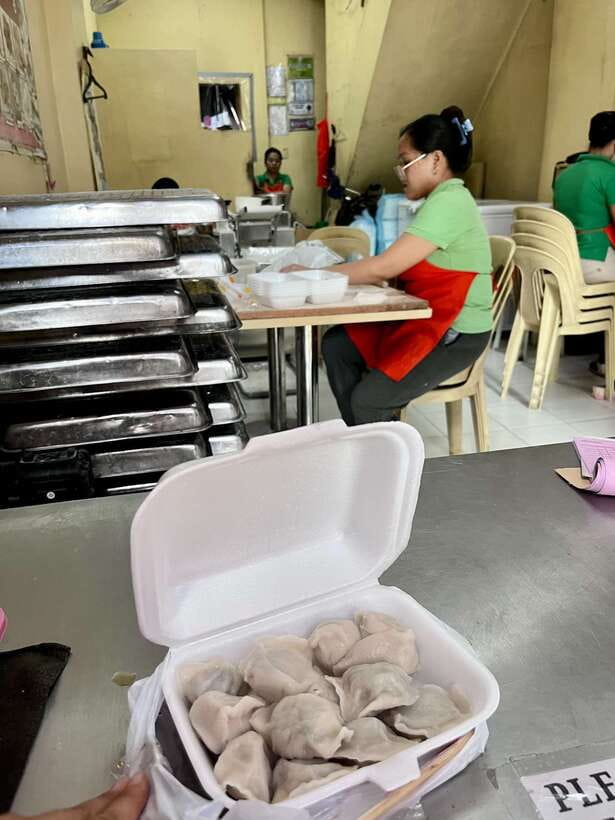
I would recommend it to first-time Manila visitors who want a guided introduction to Chinatown without spending a full day on a formal city tour. It is also a strong choice for people who enjoy street food but do not want to guess which stalls are worth trying.
Families can benefit from the guide’s ability to adjust the pace, though children should be comfortable walking and sampling unfamiliar food. Solo visitors may appreciate the small group and the chance to have photographs taken.
Food-focused visitors should book with appetite. History-minded visitors should book with realistic expectations: you will get useful stories about Chinese settlement, old buildings, and local culture, but the route is not presented as a specialist architecture lecture.
I would skip it if you want an all-inclusive food tour, a wheelchair-accessible route, or a quiet sightseeing experience. I would also ask about the tuk-tuk wording before booking, since the activity is described both as a walking tour and as a tuk-tuk adventure.
Should you book it?
Book this tour if you want Binondo’s food and history together, and if you value a local guide more than a fixed list of major monuments. The strongest reason to go is Mari’s reported ability to combine good food stops with clear stories, friendly conversation, photographs, and flexible pacing.
At $50, it is fair value when you use the guide’s local knowledge and buy several tastings. Just budget separately for food, wear comfortable walking shoes, leave extra time after the two-hour schedule, and confirm the meeting location and tuk-tuk details. For a compact, personal introduction to Manila’s Chinatown, this is a sensible choice.
FAQ
Where does this tour take place?
The experience is presented as a tour of Binondo Chinatown in Manila, Philippines. The supplied location field also says Nueva Vizcaya, so confirm the exact meeting point and city before booking.
How long is the Binondo tour?
The scheduled duration is two hours. One account indicated that the experience ran longer than two hours, so leave some extra time afterward.
What languages does the guide speak?
The live tour guide speaks English and Tagalog.
How large is the group?
The activity is limited to 10 participants, making it a small-group tour.
Is food included in the $50 price?
No. Food tasting is not included, so you need to pay separately for dishes and drinks you choose to try.
What is included?
The price includes a local tour guide and a bottle of water as a welcome drink.
Is this a walking tour or a tuk-tuk tour?
The title and several details describe a guided walking tour, while the activity description also refers to a tuk-tuk adventure. Confirm the exact transport arrangement before booking.
Is the tour suitable for wheelchair users?
No. The activity is listed as unsuitable for wheelchair users.
Can I cancel for a full refund?
Yes. You can cancel up to 24 hours in advance for a full refund. You can also reserve now and pay later.
Just added in Manila
- Underground River with Lunch★ 3.6 · 5 reviews
- Manila Night market and Street Food Tour★ 5.0 · 2 reviews
- Cruise Shore Excursion of Taal Volcano with Lunch★ 4.5 · 4 reviews
- Unforgettable Manila Fishing Village Day Excursion 2024★ 5.0 · 4 reviews
- Ultimate 8-Day Palawan Island Tour Package from Manila City★ 5.0 · 1 review
- Tagaytay Day Tour sightseeing with Panoramic Taal volcano view★ 5.0 · 6 reviews
- 3 Days Private Tour in Banaue Ifugao visiting Batad Rice Terraces★ 3.5 · 3 reviews
- Tagaytay + Hidden Valley Springs: A Scenic Escape w/ Transfers★ 4.0 · 4 reviews
Walking Tours, compared.
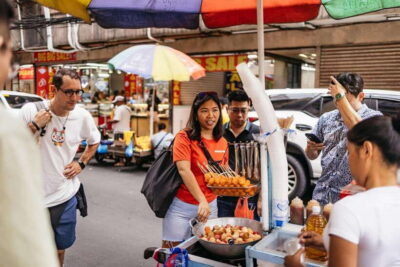
Street Food and Drinks Walking Tour with Tastings
Read our review →
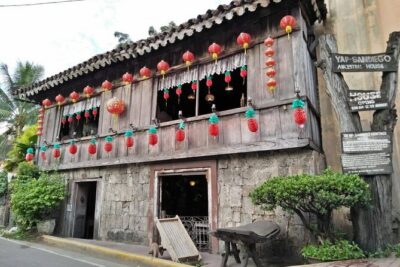
The Original Cebu City Historical and Food Walking Tour
Read our review →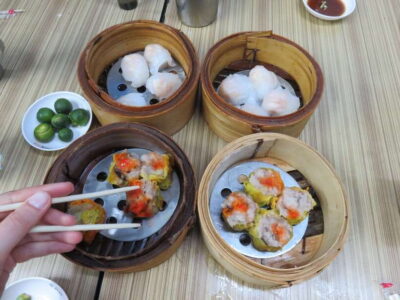
Intramuros Walking Tour with Transportation by Don’t Skip Manila
Read our review →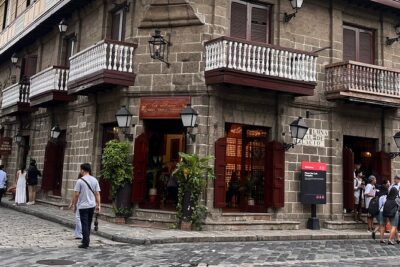
Manila Intramuros Walking tour with Local Tour Guide
Read our review →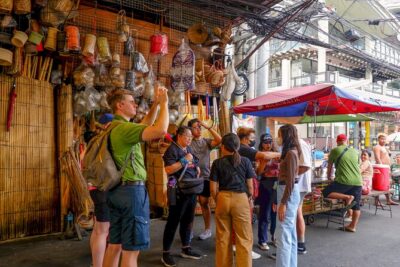
Intramuros & Chinatown Manila Tour – Walking, Food & Culture
Read our review →Browse the lists this tour appears in