
Reviewed · FOOD & DRINK
Manila Food Tour Experience with Local Guide
Manila tastes best from the sidewalk. This two-hour food walk takes you through Tondo and Binondo, pairing local dishes with the guidance of someone who knows how to move through Manila’s busy streets. I like the mix of Filipino favorites, Chinese-Filipino food, and market atmosphere, and I also like that the group is kept small. The main consideration is that the food selection depends on what is available that day, so you should expect variety rather than a fixed tasting menu.
I especially like that this tour reaches Tondo and Tutuban, areas many first-time visitors may not find on their own. I also like the personal touch provided by guides such as V, also referred to as Venus, who has helped solo visitors feel safe, taken excellent photos, and found small corners away from the usual sightseeing route. The $70 price is not cheap for two hours, so the value depends on how much you want local guidance and how many tastings are included.
In This Review
- Five things to know before booking
- Why this Manila food walk is worth considering
- Tondo: Filipino food in a local setting
- Binondo: Manila’s Chinese-Filipino food connection
- From kwek kwek to halo-halo
- What the guide adds to the experience
- Is $70 a fair price for two hours?
- Who will enjoy this tour most?
- Practical advice for a smoother food walk
- Should you book the Manila Food Tour Experience?
- FAQ
- Where does the Manila food tour start?
- Where does the activity finish?
- How long does the tour last?
- How many food tastings are included?
- What foods might I try?
- How many people can join the tour?
- Can I cancel for a full refund?
Five things to know before booking
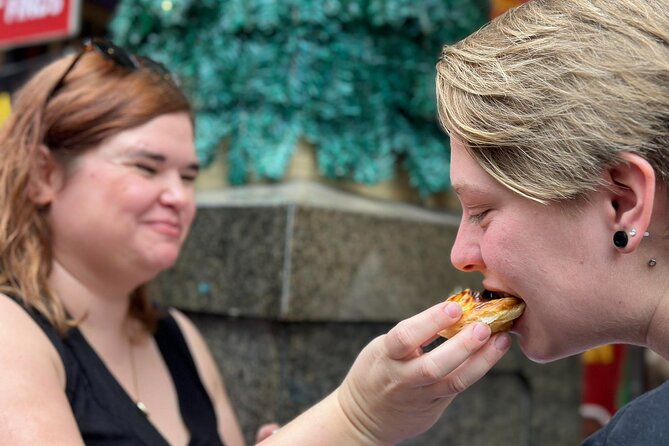
- Six to 10 food tastings: The selection can include kwek kwek, adobo, biko, siopao, dumplings, halo-halo, and other food available that day.
- Tondo comes first: You begin among local markets and street stalls, with about one hour focused on traditional Filipino food.
- Binondo adds Chinese-Filipino flavors: The second hour brings noodle houses, bakeries, tea shops, and foods such as siopao and dumplings.
- A guide makes the difference: V, or Venus, is praised for her local knowledge, friendly manner, photography, and ability to help visitors feel secure.
- Small groups are a plus: The tour is described as limited to 12 people, while the additional details list a maximum of 8. Confirm the current group size when booking if that matters to you.
Why this Manila food walk is worth considering
Manila can be hard to read at first. Its food culture is spread through markets, roadside stalls, neighborhood shops, bakeries, and old commercial streets. A dish may be simple in appearance but tied to a Filipino habit, a Chinese influence, or a local way of eating that is easy to miss when you are on your own.
This tour gives you a short, practical introduction. You are not spending half a day moving between far-flung restaurants. Instead, you get roughly two hours of eating and walking in two districts with very different identities. That makes it useful early in a Manila visit, especially if you want help deciding what to order for the rest of your stay.
The food is not presented as a polished restaurant meal. That is part of the point. You might sample something from a street stall, then move on to a sweet snack or a small bakery item. The exact list changes with availability, which can be a benefit if you want food that reflects the day rather than a prearranged menu.
I would not book this expecting long formal explanations about every dish. The value lies in access, local judgment, and the chance to try several foods without having to work out the route yourself.
More Food Tours in Manila
- Makati Street Food Experience end with a Rooftop Bar
★ 5.0 · 33 reviews - Intramuros & Chinatown Manila Tour – Walking, Food & Culture
★ 4.5 · 32 reviews - Makati Street Food tour Experience
★ 5.0 · 16 reviews
Tondo: Filipino food in a local setting
The first hour takes place in Tondo, with the meeting point in Metro Manila. The area is known here through its markets, street stalls, and local food stops. You can expect the guide to lead you through places where daily life is happening around you, rather than through a dining district designed for sightseeing.
The planned food range includes savory adobo and sweet, sticky biko. Adobo is one of the best-known Filipino dishes, usually built around meat seasoned with soy sauce, vinegar, garlic, and other ingredients. Biko offers a different experience, with sticky rice and sweetness that makes it a useful contrast to the savory foods served earlier.
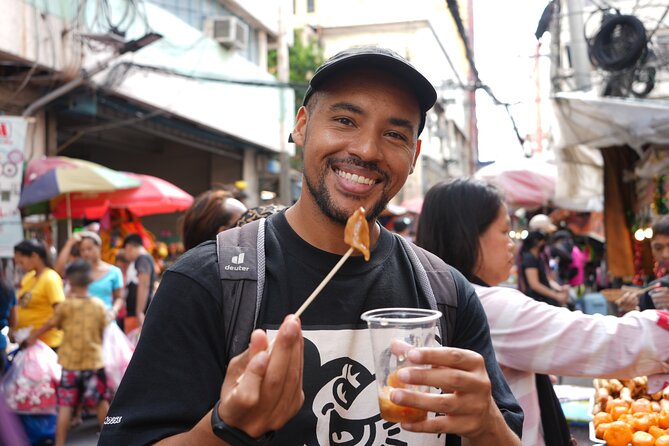
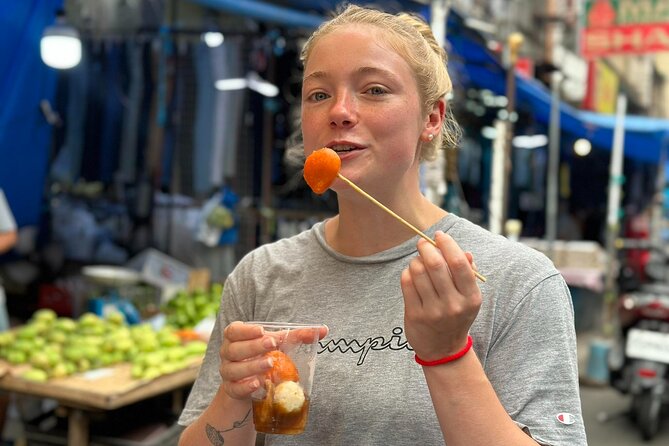
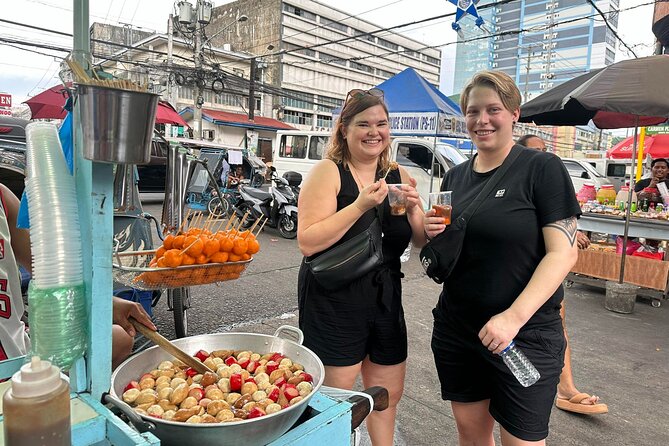
Street snacks can include kwek kwek, a small quail egg covered in orange batter and fried. It is often served with a dipping sauce, and it gives you a quick introduction to the playful, snack-sized side of Filipino food. You may also encounter other items depending on what is being sold during the tour.
The setting matters as much as the food. You will be walking through local market areas and food stalls, so the experience may feel crowded, noisy, or less polished than a restaurant visit. That is a strength if you want a direct look at Manila’s everyday food culture. It may be less comfortable if you prefer air-conditioned rooms, fixed seating, or a quiet meal.
One useful detail comes from the experience with Venus, who showed a visitor lesser-known corners of Tutuban. Tutuban is closely associated with the Tondo portion of this route, so you may get more than a series of tastings. The guide can help you notice the small streets and local corners that you might otherwise pass without understanding.
Binondo: Manila’s Chinese-Filipino food connection
After Tondo, the route continues to Binondo, often identified as the world’s oldest Chinatown. The area adds a different layer to the food story. Filipino cuisine has long been shaped by Chinese influence, and Binondo lets you taste that connection in a concentrated part of the city.
The foods listed for this portion include siopao and dumplings. Siopao is a soft steamed bun filled with meat or another savory filling. Dumplings bring their own range of textures and fillings, and both foods show how Chinese cooking traditions have become part of everyday Filipino eating.
You may also pass noodle houses, tea shops, and bakeries along the older streets. These stops help you see that Binondo is not simply a place with a few Chinese restaurants. It is a working food district where different culinary traditions sit next to one another.
The second hour is a good counterpoint to the first. Tondo focuses more directly on Filipino street food and neighborhood stalls. Binondo shows how food from China was adapted into local habits and became part of Manila’s own food identity.
The route description notes that an admission ticket is not included for Binondo. The tour details do not explain exactly which ticket this refers to, so ask the operator what, if anything, requires separate payment. Do not assume every food item or paid entry is covered by the $70 price unless the provider confirms it.
From kwek kwek to halo-halo
The appeal of this tour is the range. Six to 10 tastings over two hours gives you enough food to sample several styles without committing to a full serving at every stop. That can be especially helpful if you are curious but cautious about unfamiliar dishes.
The possible foods cover several useful categories:
- Kwek kwek for a fried street snack
- Adobo for a classic savory Filipino dish
- Biko for sticky rice with a sweet finish
- Siopao for a Chinese-Filipino steamed bun
- Dumplings for another Binondo staple
- Halo-halo for a cold, colorful Filipino dessert
Halo-halo is a fitting final taste if it appears on your route. The name means mix-mix, and the dessert combines shaved ice with sweet ingredients, often including fruit, beans, jellies, milk, and a topping. The exact ingredients can vary, just as the rest of the tour can change with the day’s supply.
You should arrive ready to try small portions and ask questions. If you have dietary restrictions, tell the provider before booking or as soon as you meet the guide. The supplied information does not promise vegetarian, vegan, allergy-safe, or halal substitutions, so you should not rely on them without direct confirmation.
The tour is also a good place to learn your own preferences. You may discover that you prefer savory snacks to sweets, or Binondo’s dumplings to Tondo’s street food. That information can guide your meals after the tour.
More Food Tours in Luzon:
- Binondo Bites Manila Food Tour with 15+ Tastings
★ 5.0 · 5 reviews - Manila Night Market and Food tour experience with Local guide
★ 5.0 · 2 reviews - Manila Night Market and Street Food Experience
★ 5.0 · 1 review - Manila Street food and Drinks with local guide
★ 5.0 · 1 review
What the guide adds to the experience
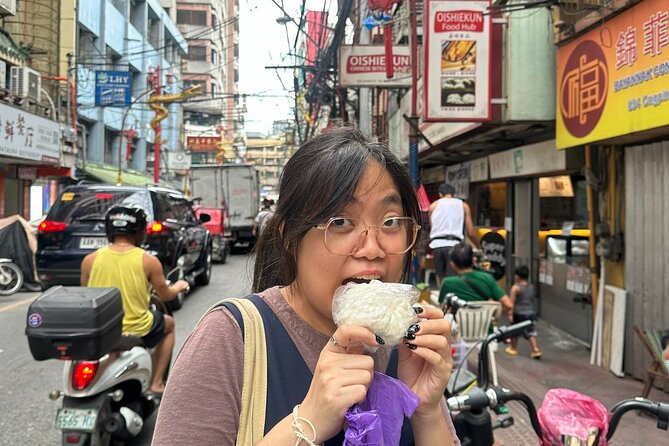
Food tours work best when the guide does more than point at a dish and name it. Here, the strongest feature is the local connection. V, also called Venus in one account, is described as easy to talk to, enthusiastic, and good at navigating Manila.
That navigation matters. Tondo and Binondo are not presented as simple, polished visitor zones. A guide can help you move through unfamiliar streets, decide where to stop, and avoid wasting your short visit on places that do not match the tour’s purpose.
For solo visitors, the guide may be especially useful. One solo participant received what was effectively a private tour because no one else had booked. That is not guaranteed, but it shows how a small booking can create a more personal experience. The same account praised V’s photography and friendly manner, so you might also come away with useful photos of your food walk.
Safety is another practical benefit. A guide cannot remove every concern in a busy city, but having someone familiar with the area can make you feel more at ease. One participant specifically appreciated feeling safe while exploring parts of Manila that would have been difficult to find alone.
The group size is worth checking. The experience is advertised as intimate and limited to 12 participants, while the additional booking information states a maximum of 8. Either size is fairly manageable for a food walk, but the difference could affect how personal the tour feels.
Is $70 a fair price for two hours?
At $70 per person, this is priced as a guided cultural experience, not simply as two hours of snacks. If you only want to buy street food cheaply, you can spend far less on your own. The fee makes more sense if you value a local guide, several tastings, route planning, and the confidence to enter areas you might otherwise skip.
The number of tastings affects the value. Six items gives you a decent introduction, while 10 makes the price easier to justify. Since the food depends on availability, you should ask whether the tasting count is fixed or approximate and what the price includes.
The route also adds value. Visiting both Tondo and Binondo in one short session gives you two different food settings and a wider view of Manila’s cuisine. You are paying for the link between the districts as much as for the individual bites.
I would compare this tour with the cost of a private guide, a taxi-heavy food hunt, and the food you would buy separately. For a solo visitor who wants help, photos, and local conversation, $70 may be reasonable. For a couple or family mainly interested in inexpensive food, the price may feel high.
The tour is booked an average of 59 days ahead, which suggests you should not leave it until the last moment if your Manila dates are fixed. Free cancellation is available up to 24 hours before the start time. Changes or cancellations made within 24 hours are not accepted for a refund.
Who will enjoy this tour most?
I would recommend it most strongly to:
- First-time Manila visitors who want a quick introduction to local food
- Solo visitors who value a guide, company, and help with navigation
- Food-focused visitors who prefer several small tastings to one restaurant meal
- Curious eaters who want both Filipino and Chinese-Filipino flavors
- People with limited time who can spare two hours but not a full-day food program
It may not suit you if you need a fully fixed menu, guaranteed dishes, or a quiet indoor setting. It is also not the best match for someone who wants only famous sights and no market or street-stall atmosphere.
The tour is listed as suitable for most people, but the supplied details do not explain walking distance, seating, restroom access, or specific arrangements for mobility needs. Ask the operator directly if any of those points affect your plans.
Practical advice for a smoother food walk
Wear comfortable shoes. The experience takes place in Tondo and Binondo, and both hours are built around moving between food stops and streets rather than sitting in one place.
Keep your schedule flexible after the tour. Two hours is an approximate duration, and food availability or the pace of the group may affect the finish. The activity ends back at the meeting point in Tondo, so allow time to continue your day from there.
Come hungry, but not starving. Six to 10 tastings can add up, and rushing into the first stop without eating all day may leave you too full before the second district. Small bites are easier to enjoy when you pace yourself.
Bring an open mind and a few questions. Ask how a dish is normally eaten, what sauce goes with it, or how Filipino versions differ from Chinese originals. That conversation is one of the main reasons to choose a guided food walk instead of simply buying snacks on your own.
Should you book the Manila Food Tour Experience?
Book it if you want local food, personal guidance, and a look at Tondo and Binondo in one compact outing. The strongest reasons are the range of six to 10 possible tastings, the mix of Filipino and Chinese-Filipino dishes, and the warm reports about V or Venus.
Think twice if the $70 price feels high for a two-hour activity or if you need a guaranteed menu. The changing food selection is part of the experience, but it also means you will not know every dish in advance.
For a solo visitor or a first visit to Manila, I think the guide and route can justify the cost. For confident eaters who already know the city, spending the same money independently could buy more food. Ask what is included, confirm the current group limit, and book early if this is a priority.
FAQ
Where does the Manila food tour start?
The tour starts in Tondo, Manila, in Metro Manila, Philippines.
Where does the activity finish?
The activity ends back at the meeting point in Tondo.
How long does the tour last?
The tour lasts approximately two hours, with about one hour in Tondo and one hour in Binondo.
How many food tastings are included?
The experience includes approximately six to 10 tastings. The exact selection depends on what is available on the street that day.
What foods might I try?
Possible foods include kwek kwek, adobo, biko, siopao, dumplings, and halo-halo. The exact dishes are not guaranteed.
How many people can join the tour?
The experience is described as a small-group tour limited to 12 participants. Additional booking information lists a maximum of 8 people, so confirm the current limit when booking.
Can I cancel for a full refund?
Yes. You can cancel at least 24 hours before the local start time for a full refund. Cancellations or changes made less than 24 hours before the start time are not accepted for a refund.
Just added in Luzon
- Private Filipino Cooking Class in the Heart of Manila,Makati City★ 5.0 · 5 reviews
- Villa Escudero Tour with Lunch From Manila (SHARED)★ 5.0 · 5 reviews
- VILLA ESCUDERO DAY TOUR with Carabao Cart Ride and Bamboo from Manila★ 4.0 · 6 reviews
- Villa Escudero Coconut Plantation Day Trip from Manila★ 3.5 · 9 reviews
- Skip the Line: Villa Escudero Plantation & Resort Day Pass Ticket★ 4.5 · 11 reviews
- Tagaytay Day Tour From Manila★ 5.0 · 1 review
- The Jeepney & Tuk Tuk Adventure ride with Local Guide★ 4.5 · 4 reviews
- Manila ATV Mountain Trail Adventure(with Transfers***)★ 4.5 · 19 reviews
Food & Drink, compared.

Boracay Sunset Cruise with Party DJ & Unlimited Food and Drinks
Read our review →
Manila Food Tour: Explore World’s Oldest Chinatown
Read our review →
Street Food and Drinks Walking Tour with Tastings
Read our review →
The Original Cebu City Historical and Food Walking Tour
Read our review →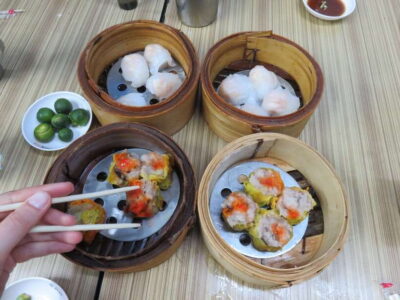
Manila’s Culinary Expedition: The Ultimate Food and Market Tour
Read our review →
Makati Street Food Experience end with a Rooftop Bar
Read our review →Browse the lists this tour appears in