
Reviewed · FOOD & DRINK
Manila Street food and Drinks with local guide
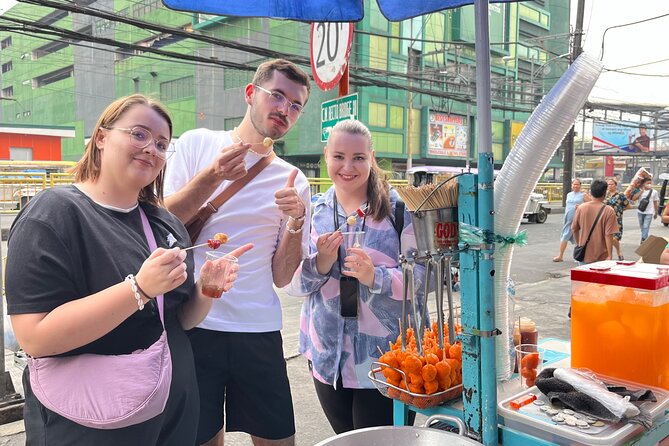
Come hungry, leave curious. This 2.5-hour Manila food walk links Binondo, Chinatown, Escolta, and Quiapo through small bites, local transport, and stories about the city. I like the mix of bold Filipino flavors and old Manila neighborhoods, and I like the small group size, capped at 10 people.
The tour also gives you a chance to try foods many visitors might skip on their own, including isaw, dugo, and balut. The main consideration is price: at $70 per person, this is not the cheapest way to eat in Manila, especially since the food inclusions are not listed in detail. You are paying for the guide, route, tasting experience, and cultural context as much as the snacks.
In This Review
- Key points to know before booking
- Why this food walk works for curious eaters
- Meeting at Grand Cafe 1919 in Binondo
- Sweet and sour tastes in Manila Chinatown
- Escolta Street and the bolder bites
- Walking toward Quinta Market and Quiapo
- Halo-halo, the cool finish
- The tricycle ride back to Binondo
- What the $70 price really buys you
- Who should book this Manila food tour?
- Booking details and cancellation
- FAQ
- Where does the Manila street food tour start?
- Where does the activity end?
- How long does the tour last?
- How many people can join the tour?
- What foods are included?
- Does the tour include a tricycle ride?
- Can I cancel for a full refund?
- Should you book it?
Key points to know before booking
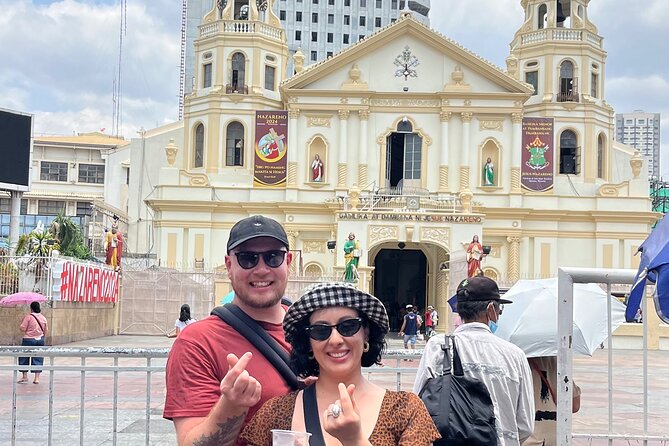
- Starts at Grand Cafe 1919 in Binondo: The meeting point is 1919 Grand Cafe at 117 Juan Luna Street, a practical place to begin in Manila’s Chinatown district.
- Includes several strong Manila flavors: Expect sweet, sour, spicy, and tangy tastes, with foods such as isaw, dugo, balut, and halo-halo included in the experience.
- Covers four distinct areas: The route moves through Binondo, Chinatown, Escolta Street, and Quinta Market near Quiapo.
- Keeps the group intimate: A maximum of 10 participants should make it easier to ask questions and stay together on city streets.
- Ends with a Filipino tricycle ride: The final ride back to the meeting point adds a local transport experience to the food stops.
- Guide Mari adds cultural context: A food tasting becomes more useful when someone explains what you are eating and how it fits into Manila life.
Why this food walk works for curious eaters
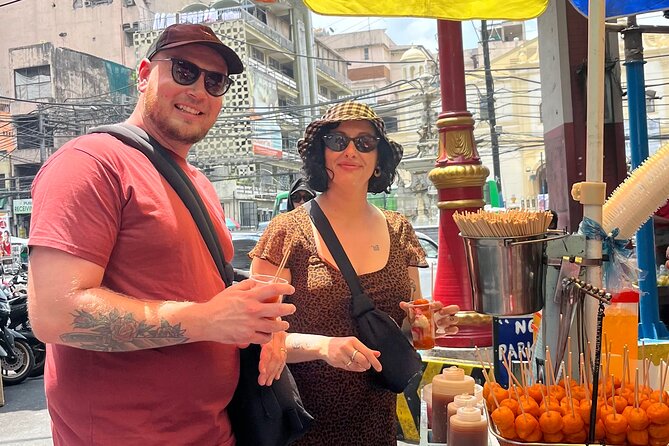
Manila street food is not one single style. It covers grilled snacks, sweets, savory dishes, unusual textures, and familiar ingredients used in surprising ways. This tour gives you several chances to test your limits without having to plan a route through the city yourself.
I like the range. You move from sweet and sour food in Chinatown to isaw and dugo in Escolta, then finish with halo-halo in the Quiapo area. That progression gives you a useful sense of how varied Filipino snack culture can be.
The setting matters too. Food tastes different when you eat near stalls and markets rather than inside a hotel restaurant. You will see where people gather, shop, chat, and pick up quick food during the day. The tour description presents these stops as places where daily city life is part of the experience, not just scenery between tastings.
This is also a guided walk, not a restaurant meal. You should expect movement, city noise, and a changing pace. If you prefer a long, seated lunch with a fixed menu, this will feel less polished. If you want help deciding what to try, the format makes good sense.
More Food Tours in Manila
- Makati Street Food Experience end with a Rooftop Bar
★ 5.0 · 33 reviews - Intramuros & Chinatown Manila Tour – Walking, Food & Culture
★ 4.5 · 32 reviews - Makati Street Food tour Experience
★ 5.0 · 16 reviews
Meeting at Grand Cafe 1919 in Binondo
The tour begins at 1919 Grand Cafe, at 117 Juan Luna Street in Binondo, Manila. The first stop is listed as 15 minutes, with no separate admission charge.
Starting at a cafe gives you a clear landmark in an area that can feel confusing when you first arrive. Binondo is also a logical place for a food tour because the route begins among Manila’s Chinatown streets and then continues toward other central districts.
The cafe is described as a cool meeting spot, so you get more than a random street corner for the introduction. This first pause should give you time to meet the guide, gather the group, and prepare for the food ahead.
The meeting point is near public transportation, which helps if you are making your own way there. The tour ends at the same location, so you do not need to arrange a return trip from a distant neighborhood.
Sweet and sour tastes in Manila Chinatown
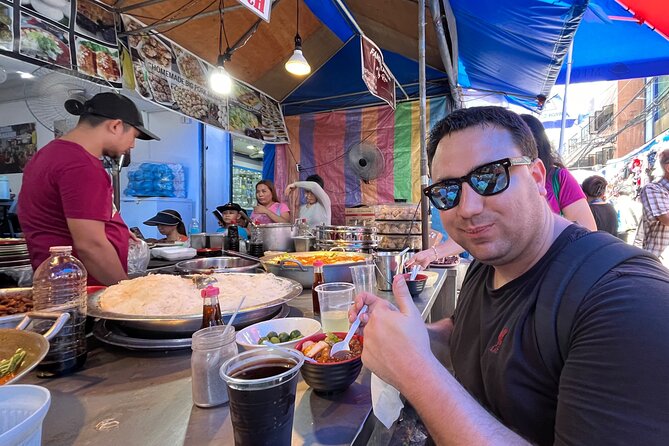
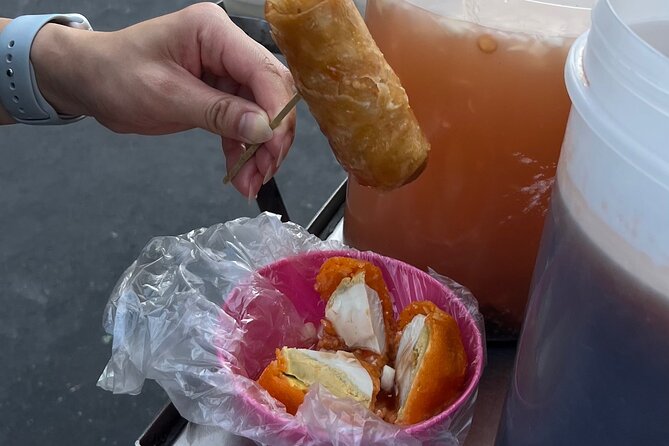
The Chinatown portion lasts about 30 minutes. Here, you begin tasting Filipino street food with sweet and sour flavors.
The appeal of this stop is contrast. Filipino food often plays with opposing tastes, so sweet and sour dishes can prepare your palate for the stronger flavors later in the route. You are not simply eating one famous dish and moving on. You are sampling a style of cooking that balances sugar, acidity, salt, and spice.
The walk through Chinatown also gives the food some context. You are eating in one of Manila’s best-known food districts rather than hearing about local snacks in a classroom. The streets, stalls, and conversations around you help explain why quick food is such a visible part of city life.
The exact dishes at this stop are not specified, so you should not expect a fixed list of every bite. That can be a small drawback if you need to plan around allergies, dietary rules, or strong dislikes. Ask the operator about current food choices before booking if you need precise ingredient information.
Escolta Street and the bolder bites
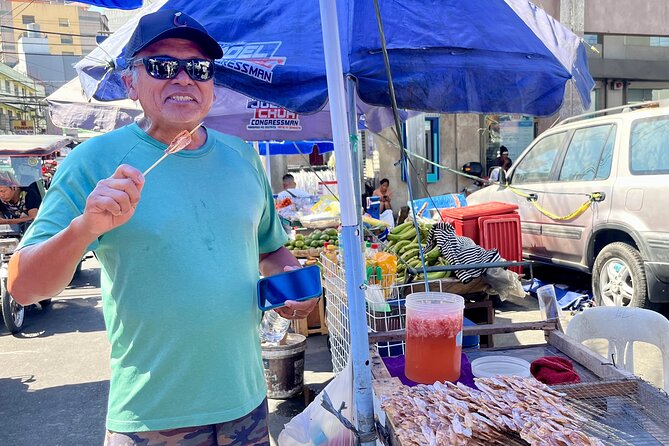
The next stop is Escolta Street, with about 30 minutes set aside. The route uses the street to connect food with Manila’s commercial past.
Escolta was a major business area in the late 1800s and early 1900s. It had grand buildings, shops, and trading activity, and it helped shape Manila’s economy and culture. That background gives the walk more depth than a simple snack crawl.
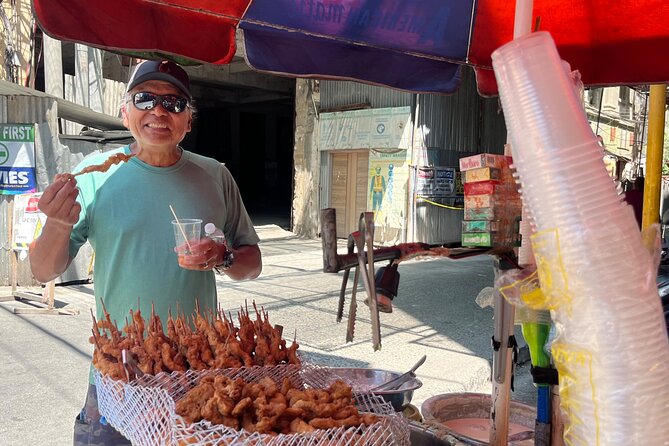
Here, the featured foods include isaw, grilled chicken intestine, and dugo, a black pudding. These are the kinds of dishes that can make a food tour memorable, but they are not gentle introductions for every palate.
Isaw is known for its chewy texture, while dugo brings a very different experience. The value of having a guide becomes clear here. You can ask what you are eating, how it is prepared, and how locals approach it instead of guessing from a stall display.
A previous experience on this route also included balut, a famous Filipino delicacy. It is worth noting that balut appears in the account of the food experience, but it is not formally listed as a guaranteed stop or item. Treat it as a possible tasting rather than a promise.
If you are nervous about unusual food, you can still benefit from this section. You do not have to pretend every bite is your new favorite. A good food tour lets you look, smell, taste, and decide. That is part of learning how a place eats.
More Food Tours in Luzon:
- Binondo Bites Manila Food Tour with 15+ Tastings
★ 5.0 · 5 reviews - Manila Food Tour Experience with Local Guide
★ 5.0 · 4 reviews - Manila Night Market and Food tour experience with Local guide
★ 5.0 · 2 reviews - Manila Night Market and Street Food Experience
★ 5.0 · 1 review
Walking toward Quinta Market and Quiapo
The longest section comes at Quinta Market, with about one hour allotted. The route continues on foot toward Quiapo, an area known for its crowded marketplace and wide mix of goods.
You might find religious items, textiles, electronics, and street food sold in the same general market zone. That mix is useful for understanding the neighborhood. Quiapo is not presented as a quiet sightseeing stop. It is a busy place where shopping, food, religion, and ordinary city errands overlap.
The extra time here allows the tour to slow down. After the short Chinatown and Escolta sections, an hour gives you more room for food, conversation, and market observation. The route may feel less like a checklist and more like a walk through a working part of Manila.
Crowds are part of the setting. During religious festivals and events, Quiapo can become especially busy. You should be ready to stay close to the group, watch your footing, and keep your belongings secure. The information provided does not promise a private route or a quiet market visit.
For some people, this will be the most interesting part of the tour. You get to see the ordinary trade and movement of central Manila while trying local food. For others, the noise and crowds may be tiring, particularly after a warm walk and several tastings.
Halo-halo, the cool finish
The Quiapo section ends with halo-halo, one of the Philippines’ best-known mixed desserts.
Halo-halo is a fitting finish because it brings together several sweet elements in one cold dessert. The tour describes it as a famous delicacy, and it gives you a gentler ending after the stronger flavors of isaw and dugo.
This final food stop also helps balance the tour. You are not asked to spend the full two and a half hours trying salty or unusual snacks. The route includes sweet, sour, spicy, and tangy tastes, then closes with something refreshing.
The description does not provide a specific serving size or say whether every tasting is included in the $70 price. That is one of the key questions I would ask before booking. The price may represent a broad tasting package, but the exact food allowance is not explained.
The tricycle ride back to Binondo
The tour ends back at the Grand Cafe 1919 meeting point. Before returning, you ride one of the Philippines’ local forms of transportation, described here as a Lamborghini Tricycle.
The playful nickname gives the final leg some character, but you should read it as a local tricycle experience, not a luxury vehicle. It is a small detail, yet it adds something that a standard walking food tour would miss.
Transport is usually where a city tour becomes more than a list of addresses. You get to see how the route connects, and you finish with a practical slice of local life. Since the activity returns to its starting point, the ride also brings the outing to a neat close.
The transport portion is listed at about 15 minutes. It is not a major sightseeing ride, but it rounds out the experience and saves you from walking the entire route back.
What the $70 price really buys you
At $70 per person, this is a mid-to-high-priced street food activity for a 2.5-hour outing. The price makes the most sense if you value a guide, a planned route, several tastings, and the convenience of ending where you began.
You are also paying for access to foods and neighborhoods that may be harder to navigate alone. A local guide can help explain an unfamiliar dish, keep the group moving, and add stories about Binondo, Escolta, and Quiapo. The experience account specifically praises the food selection and the Manila culture and history explained by Mari.
Still, you should compare the cost with what is clearly included. Admission is free at each listed stop, and the exact number of food portions is not stated. Drinks are included in the experience title, but the provided information does not name the drinks or explain how many are served.
That does not make the tour poor value. It simply means you should book it for the guided food-and-culture package, not because you expect $70 worth of restaurant food alone. If you want a structured introduction and do not want to make several food decisions on your own, the cost may feel fair.
Group discounts are available, which could improve the value if you are traveling with friends or family. The group limit of 10 is another positive. A small group should make it easier to hear Mari, ask questions, and move through market streets without becoming a large crowd.
Who should book this Manila food tour?
I would recommend it to you if you are curious about Filipino food and want more than the safest, most familiar choices. Isaw, dugo, and possible balut make this better for adventurous eaters than for someone who wants a predictable tasting menu.
It also suits first-time visitors who want orientation through several central Manila districts. The route gives you a starting point in Binondo, a look at Chinatown, a stop in Escolta, time around Quinta Market and Quiapo, and a return by tricycle.
The experience may work well for a small group of friends because the food choices can become a shared challenge. Group discounts may help, and a maximum of 10 people keeps the outing from feeling like a large bus excursion.
You should think twice if you have strict dietary restrictions or need a guaranteed menu. The available information does not identify ingredients, allergy procedures, vegetarian alternatives, or drink selections. It also does not give a detailed accessibility statement, though most participants can take part and the route is near public transportation.
Wear practical walking clothes and arrive ready to eat in stages. The description says to come hungry, but do not arrive so hungry that you rush through the first tastings. You will get more from the route if you treat each stop as a small lesson rather than one large meal.
Booking details and cancellation
Confirmation is provided at the time of booking, and mobile tickets are available. The activity has free cancellation if you cancel at least 24 hours before the start time.
Cancellations made less than 24 hours before the start are not refunded, and changes within that period are not accepted. The cut-off follows Manila local time, so check the time carefully if you are booking from another country.
FAQ
Where does the Manila street food tour start?
It starts at 1919 Grand Cafe, located at 117 Juan Luna Street in Binondo, Manila, 1006 Metro Manila, Philippines.
Where does the activity end?
The tour ends back at the Grand Cafe 1919 meeting point.
How long does the tour last?
The experience lasts approximately 2 hours and 30 minutes.
How many people can join the tour?
The activity has a maximum group size of 10 participants.
What foods are included?
The route includes Filipino street food with sweet, sour, spicy, and tangy flavors. Named examples include isaw, dugo, and halo-halo. Balut is described as part of the food experience, but the supplied details do not confirm it as a guaranteed item.
Does the tour include a tricycle ride?
Yes. The experience ends with a local tricycle ride back to the meeting point, listed at about 15 minutes.
Can I cancel for a full refund?
Yes. You can receive a full refund by canceling at least 24 hours before the experience start time. Cancellations made later are not refunded.
Should you book it?
Book this tour if you want a guided introduction to Manila street food, enjoy trying unfamiliar dishes, and value stories about the neighborhoods you pass through. The strongest features are the small group, the range of stops, the chance to try isaw and other bold foods, and the personal cultural explanation associated with guide Mari.
Skip it if you want a cheap, self-guided snack crawl or a fixed menu with every ingredient listed in advance. At $70, the experience asks you to pay for guidance, context, and convenience. For a curious eater who wants Manila served in several local settings, that can be a fair trade.
Just added in Luzon
- Private Filipino Cooking Class in the Heart of Manila,Makati City★ 5.0 · 5 reviews
- Villa Escudero Tour with Lunch From Manila (SHARED)★ 5.0 · 5 reviews
- Skip the Line: Villa Escudero Plantation & Resort Day Pass Ticket★ 4.5 · 11 reviews
- VILLA ESCUDERO DAY TOUR with Carabao Cart Ride and Bamboo from Manila★ 4.0 · 6 reviews
- Villa Escudero Coconut Plantation Day Trip from Manila★ 3.5 · 9 reviews
- Tagaytay Day Tour From Manila★ 5.0 · 1 review
- The Jeepney & Tuk Tuk Adventure ride with Local Guide★ 4.5 · 4 reviews
- Pagsanjan Falls Adventure with Lunch and Rapids Experience★ 4.5 · 3 reviews
Food & Drink, compared.

Boracay Sunset Cruise with Party DJ & Unlimited Food and Drinks
Read our review →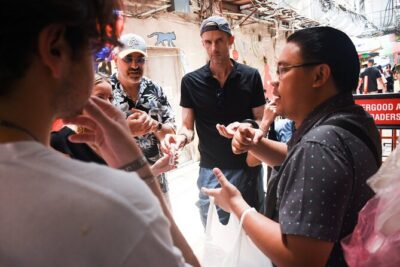
Manila Food Tour: Explore World’s Oldest Chinatown
Read our review →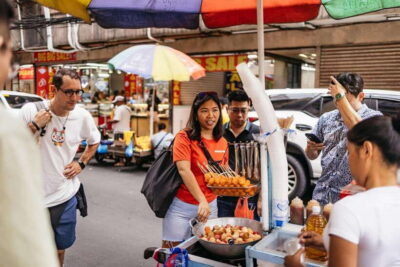
Street Food and Drinks Walking Tour with Tastings
Read our review →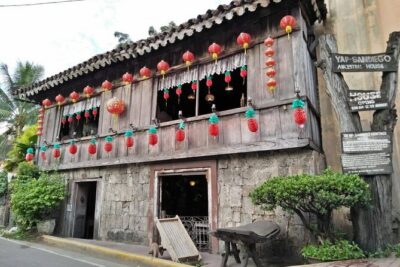
The Original Cebu City Historical and Food Walking Tour
Read our review →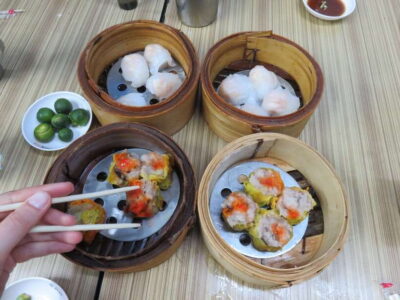
Manila’s Culinary Expedition: The Ultimate Food and Market Tour
Read our review →
Makati Street Food Experience end with a Rooftop Bar
Read our review →Browse the lists this tour appears in